民营医院

Search documents
莲池医院冲击港股IPO,有望成“山东民营医院第一股”
Sou Hu Cai Jing· 2026-01-13 14:28
Core Viewpoint - Lianchi Hospital Group Co., Ltd. has submitted a listing application to the Hong Kong Stock Exchange, with China Galaxy International as the joint sponsor, aiming to expand its specialized medical services in China [3]. Company Overview - Lianchi Hospital is a Chinese boutique specialized medical group that emphasizes a patient-centered approach and operates five hospitals and one elderly care facility by September 30, 2025 [4]. - The company focuses on the "One Elderly, One Child" high-potential sector, aligning with the national "Healthy China" strategy [4]. - Lianchi Hospital has established a well-defined hospital network, including Zibo Lianchi Hospital, Qingdao Lianchi Maternal and Child Hospital, Hefei Xinhai Maternal and Child Hospital, Zibo Lianchi Orthopedic Hospital, and Chongqing Great Wall Orthopedic Hospital [4][5]. Competitive Position - Each hospital within the Lianchi Hospital Group holds a unique competitive advantage and enjoys a prominent market position in their respective regions [5]. - Zibo Lianchi Hospital is recognized as a second-level hospital and has been awarded various local health education and service quality recognitions [5]. - Qingdao Lianchi Maternal and Child Hospital is the first private hospital in Qingdao to receive international JCI certification [6]. - Chongqing Great Wall Orthopedic Hospital is recognized as a leading private orthopedic hospital in Southwest China based on revenue [7]. Financial Performance - The company has shown significant revenue growth, with revenue increasing from RMB 356 million in 2023 to RMB 418 million in 2024, representing a 17.4% growth [10]. - For the nine months ending September 30, 2025, revenue further increased by 20.3% to RMB 359 million compared to the same period in 2024 [10]. - The gross profit margin improved from 32.9% in 2023 to 36.1% in 2024, with a slight decrease to 35.6% for the nine months ending September 30, 2025 [10]. - Net profit rose from RMB 56.7 million in 2023 to RMB 67.6 million in 2024, marking a 19.2% increase [11]. Market Demand - The aging population in Shandong and Chongqing provinces is driving the demand for orthopedic services [11]. - The private orthopedic hospital market in Southwest China is highly fragmented and competitive [11]. IPO Fund Utilization - The funds raised from the IPO are intended for upgrading and expanding existing hospital service capabilities, consolidating the company's position in the specialized field [11]. - The company plans to use the funds for mergers, acquisitions, or investments to deepen its "One Elderly, One Child" strategic layout [11]. - Additional allocations will be made for establishing a group research center and introducing advanced medical technologies and smart medical systems [11].

莲池医院冲击港股IPO,2025年前三季度收入3.59亿元,有望成“山东民营医院第一股”
Sou Hu Cai Jing· 2026-01-13 13:47
Core Viewpoint - Lianchi Hospital Group has submitted an application for listing on the Hong Kong Stock Exchange, aiming to expand its specialized medical services in response to China's healthcare strategy focusing on elderly and pediatric care [3][9]. Company Overview - Lianchi Hospital is a specialized medical group in China, operating five hospitals and one elderly care facility by September 30, 2025, with a focus on high-potential sectors of elderly and pediatric care [3][4]. - The company emphasizes a patient-centered approach and has developed a well-known medical brand, "Lianchi Medical," recognized for its unique service models [3][4]. Hospital Network - The hospital network includes: - Zibo Lianchi Hospital, a secondary hospital recognized for health education and quality service [4]. - Qingdao Lianchi Maternal and Child Hospital, the first private hospital in Qingdao to receive international JCI certification [4]. - Hefei Xinhai Maternal and Child Hospital, part of the Anhui Children's Hospital network [5]. - Zibo Lianchi Orthopedic Hospital, a national academic headquarters specializing in complex orthopedic surgeries [5]. - Chongqing Great Wall Orthopedic Hospital, recognized as a leading private orthopedic hospital in Southwest China [5][8]. Financial Performance - The company's revenue grew from 356 million RMB in 2023 to 418 million RMB in 2024, marking a 17.4% increase, and further increased by 20.3% to 359 million RMB in the first nine months of 2025 [8]. - Gross profit margin improved from 32.9% in 2023 to 36.1% in 2024, with a margin of 35.6% in the first nine months of 2025 [8]. - Net profit rose from 56.7 million RMB in 2023 to 67.6 million RMB in 2024, with a further increase to 55.5 million RMB in the first nine months of 2025 [9]. Market Position - Zibo Lianchi Orthopedic Hospital ranks first in Shandong Province and third nationally in private knee surgery volume as of 2024 [8][9]. - Chongqing Great Wall Orthopedic Hospital is the top private orthopedic hospital in Southwest China based on revenue [8][9]. IPO Fund Utilization - The funds raised from the IPO will be used for upgrading and expanding existing hospital services, business expansion through mergers and acquisitions, establishing a research center, and improving operational efficiency [9].
民营医院为骗取医保设“围猎”专款 9名公职人员沦陷
Xin Lang Cai Jing· 2026-01-13 13:36
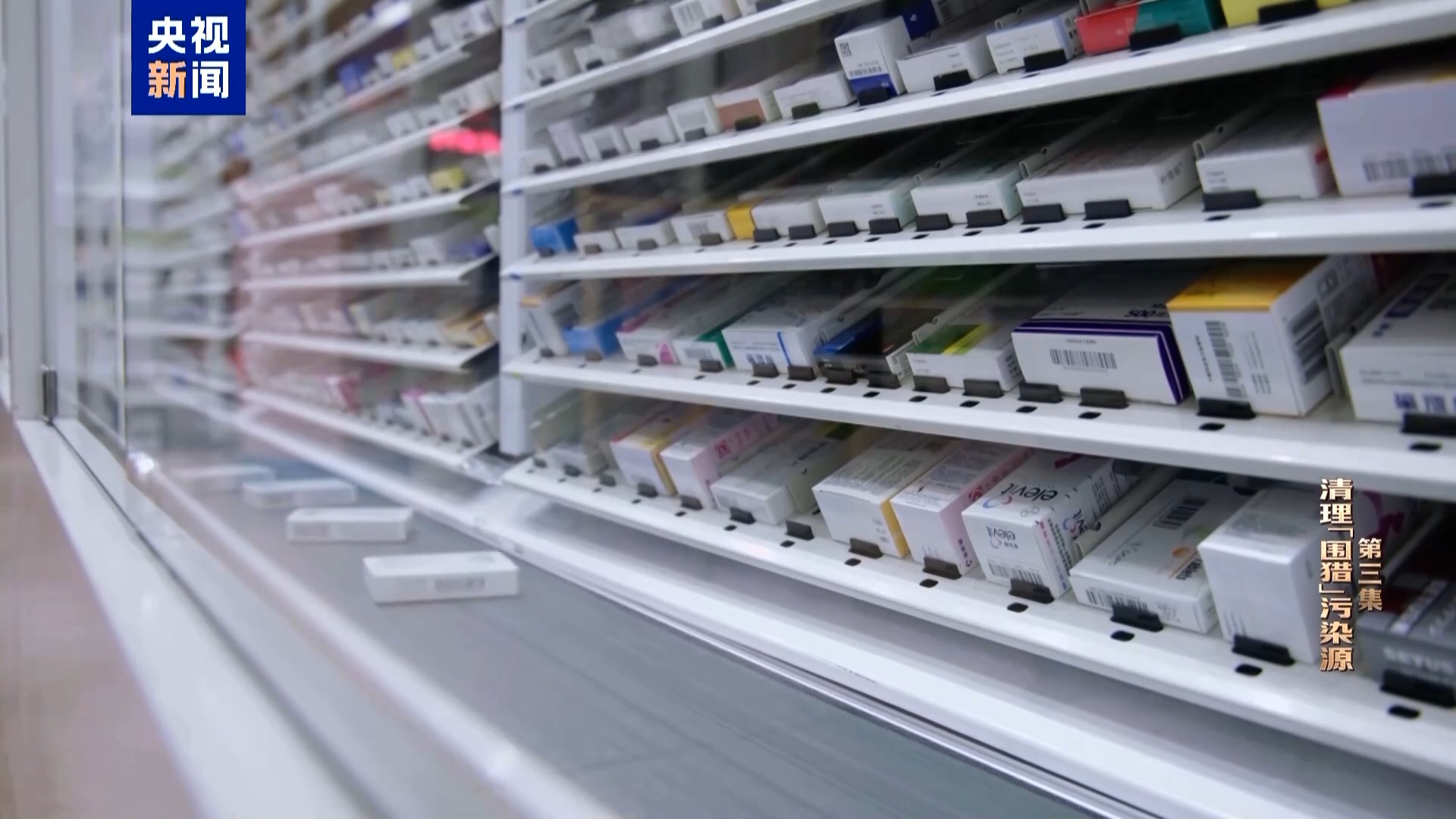
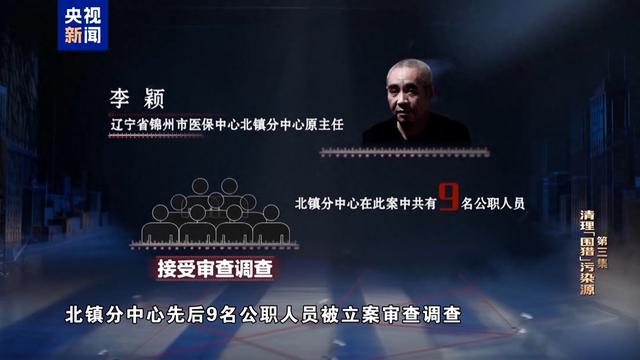
Group 1 - The article discusses the issue of corruption and malpractice in the medical insurance sector, particularly focusing on the "hunting" behavior that undermines the political ecology and harms public interests [1][3] - The Central Commission for Discipline Inspection and the National Supervisory Commission are intensifying efforts to address corruption related to medical insurance fund management, emphasizing accountability among public officials [3][25] - A case in Liaoning Province highlights the collusion between public officials and private medical institutions, leading to significant losses in medical insurance funds [5][29] Group 2 - The investigation revealed that the North Town Medical Insurance Service Center's former director, Li Ying, was a key target of "hunting" by private hospital representatives, leading to collective corruption among public officials [5][6] - The private hospital, Xin Shuzguang Hospital, employed various deceptive practices to defraud the medical insurance system, including creating fictitious medical records and unnecessary hospitalizations [12][16] - The fraudulent activities resulted in substantial financial losses for the medical insurance fund, with Li Ying reportedly receiving bribes totaling 685,000 yuan while causing significant losses to the fund [29][25] Group 3 - The article emphasizes the importance of maintaining the integrity of the medical insurance system to protect public health and ensure that funds are used appropriately [27][39] - Measures are being implemented to enhance oversight and accountability within the medical insurance sector, including regular monitoring of risk indicators and public reporting of issues [35][37] - The ongoing efforts aim to create a fair and transparent environment for medical services, ultimately benefiting the public and restoring trust in the healthcare system [39][41]
一民营医院竟将骗保当主营业务
Xin Lang Cai Jing· 2026-01-13 13:36
Group 1 - The core issue revolves around a private hospital, Xin Zhuguang Hospital, in Beizhen City, Liaoning Province, which has been engaging in fraudulent activities to obtain medical insurance funds as its main business strategy since 2014 [1] - The hospital's management, led by Xu Hongmei, devised a comprehensive scheme to defraud the insurance system, incentivizing medical staff to recruit patients and bribing officials at the local medical insurance center to facilitate these actions [1] - The shift in the hospital's operational focus from patient care to insurance fraud was marked by regular meetings among key personnel to strategize on how to maximize fraudulent claims, with a significant portion of resources allocated to these activities [1] Group 2 - Legal repercussions have followed, with the former director of the Beizhen Medical Insurance Service Center, Li Ying, sentenced to three years in prison, while Xu Hongmei has been transferred to the prosecution for bribery charges, alongside other implicated public officials facing disciplinary actions [1]
医保监管人员被金钱“拿下”,骗保竟成某民营医院主业
Xin Lang Cai Jing· 2026-01-13 13:35
Core Viewpoint - The documentary highlights the issue of corruption in the medical insurance sector, particularly focusing on how certain private medical institutions engage in fraudulent activities that harm public interests and undermine the integrity of the medical insurance system [1][21]. Group 1: Corruption in Medical Insurance - The documentary reveals that some private medical institutions have organized schemes to "hunt" officials in charge of medical insurance, leading to significant financial losses for the medical insurance fund and directly affecting public health rights [1][3]. - A specific case in Jinzhou, Liaoning Province, involves the North Town branch of the Medical Insurance Service Center, where nine public officials were investigated for colluding with a private hospital to defraud the medical insurance fund [3][5]. Group 2: Methods of Fraud - The fraudulent activities included creating "shadow accounts" with fixed percentages of medical insurance payouts (2% to 5%) designated for bribing public officials [5][18]. - The private hospital, Xin Shuzguang Hospital, employed various deceptive tactics, such as fabricating patient records and conducting unnecessary procedures to claim reimbursements from the medical insurance fund [11][13]. Group 3: Role of Officials - Key officials, including Li Ying, the former director of the North Town Medical Insurance Center, were targeted for bribery, with payments escalating from simple gifts to a fixed commission agreement of 1% to 2% of the funds received [7][20]. - The collusion between the hospital and public officials facilitated a system where fraudulent claims were processed without proper oversight, allowing the hospital to prioritize profit from insurance fraud over legitimate medical services [16][20].
技术风暴席卷,2026年医疗生态大洗牌
Guo Ji Jin Rong Bao· 2026-01-07 07:45
Group 1: Overall Industry Outlook - In 2026, the pharmaceutical industry is expected to experience a surge in innovative drugs, a recovery in the CXO sector, transformation in traditional Chinese medicine, contraction of retail pharmacies, restructuring of hospitals, and a wave of mergers and acquisitions, leading to increased industry differentiation and stronger players remaining dominant [1] Group 2: Innovative Drugs - A total of 76 innovative drugs were approved in 2025, marking a 58% increase from the previous year, with over 150 licensing transactions totaling more than $130 billion, indicating robust growth in China's innovative drug sector [3] - Approximately 20 major innovative drugs are anticipated to be approved in China in 2026, covering various therapeutic areas including oncology and rare diseases, with notable examples such as BL-B01D1 for esophageal squamous carcinoma [3][4] Group 3: CXO Sector - The CXO (Contract Research Organization) industry is experiencing a recovery driven by external factors such as U.S. interest rate cuts and increased R&D investments from multinational pharmaceutical companies, alongside domestic demand for CRO services [5][6] - The penetration rate of outsourcing in areas like ADCs and oligonucleotides is expected to rise to 65%, with companies like WuXi AppTec and Kelun Biotech showing strong growth in these segments [6] Group 4: Traditional Chinese Medicine - The Chinese medicine sector is entering an era of refined management, driven by policy upgrades and market innovations, with a focus on quality and cost balance in procurement [7][9] - By the end of 2026, China aims to establish 180 domestic and 30 international standards for traditional Chinese medicine, with the market expected to exceed 1 trillion yuan for the first time in 2024 [9] Group 5: Medical Devices - The medical device industry is shifting from price suppression to innovation-driven growth, with domestic companies rapidly advancing in high-end imaging, surgical robots, and AI medical devices [10] - Chinese medical device companies are increasingly expanding into international markets, with a notable rise in export volumes expected by 2026 [10] Group 6: Retail Pharmacies - The offline pharmacy sector is projected to contract significantly due to the growth of O2O and B2C models, with over 15,975 stores closing by September 2025, reflecting a 73% year-on-year increase in closures [12][13] Group 7: Private Hospitals - Private hospitals are facing severe challenges, with an average of 1.4 closures per day in 2024, and this trend is expected to continue into 2026 due to regulatory pressures and financial difficulties [14][15]
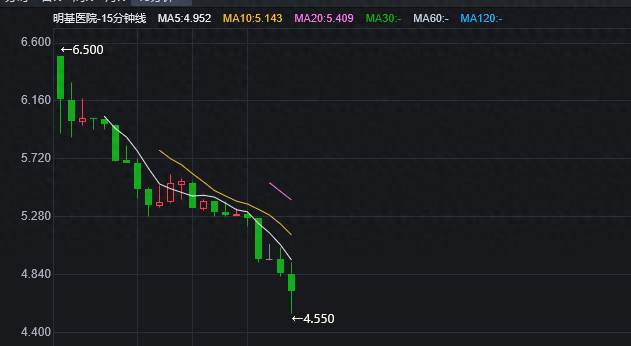
明基医院跌超8%创上市新低 较招股价已跌超55%
Zhi Tong Cai Jing· 2025-12-30 07:19
Core Viewpoint - Ming Kee Hospital's stock price has dropped over 8%, reaching a new low of 4.12 HKD, which is more than a 55% decline from its IPO price of 9.34 HKD, marking the worst debut performance for a new stock on the Hong Kong Stock Exchange this year [1] Financial Performance - The company reported revenues of 2.34 billion CNY, 2.69 billion CNY, 2.66 billion CNY, and 1.31 billion CNY for the years 2022, 2023, 2024, and the six months ending June 30, 2025, respectively [1] - Corresponding net profits for the same periods were 89.55 million CNY, 170 million CNY, 110 million CNY, and 48.7 million CNY [1] Market Reaction - The public offering of Ming Kee Hospital received a lukewarm response, with the Hong Kong public offering portion being subscribed only 6.28 times and the international placement subscribed 1.28 times, both significantly lower than recent popular new stocks [1] - Analysts noted that the company's price-to-earnings (PE) ratio during the IPO phase was 29.8 times, which is substantially higher than the average PE ratio of 16.7 times for the private hospital sector in Hong Kong, indicating that the pricing was too high and contributed to the significant drop in share price [1]
四闯港股上市,首日破发近50%,明基医院高估值神话为何崩塌?
Sou Hu Cai Jing· 2025-12-23 07:25
Core Viewpoint - Ming Chi Hospital's debut on the Hong Kong Stock Exchange was disastrous, with its stock price plummeting nearly 50% on the first day, leading to a market capitalization loss of over half [2]. Company Overview - Ming Chi Hospital was established in 2003 through a joint investment by Taiwan's BenQ Group and Nanjing State-owned Assets Group [3]. - The hospital group operates two main facilities: Nanjing Ming Chi Hospital and Suzhou Ming Chi Hospital, which began operations in 2008 and 2013, respectively [4]. - In 2015, the state-owned shareholders exited, and the hospital became a wholly-owned subsidiary of Jiasida Technology [5]. Financial Performance - Revenue figures for 2022 to 2024 were reported as 2.336 billion, 2.688 billion, and 2.659 billion yuan, indicating a stagnation in growth with a 1.07% decline projected for 2024 [7]. - Profitability has sharply declined, with net profit dropping from 0.9 billion yuan in 2022 to 1.67 billion yuan in 2023, and then falling to 1.09 billion yuan in 2024, a staggering 34.73% year-on-year decrease [7]. - The gross profit margin also decreased from 18.9% in 2023 to 18.1% in 2024, highlighting a trend of declining revenue and profit [7]. IPO Journey - The IPO process faced multiple setbacks, with the initial application submitted in April 2024 failing to progress, leading to a reapplication in October 2024 and a final successful submission in April 2025 [8]. - The IPO utilized a "mechanism B" issuance model, with only 10% of shares available for public sale, which limited retail investor participation [8]. Market Reaction - On December 23, 2025, the stock price fell to 4.76 HKD, a 49% drop from the issue price, reflecting weak market confidence [9]. - The high price-to-earnings (PE) ratio of 29.8 during the IPO was significantly above the average of 16.72 for similar companies, indicating a disconnect between valuation and intrinsic value [9]. Industry Context - Ming Chi Hospital's struggles are indicative of broader challenges facing China's private hospital sector, which has seen significant financial losses across many institutions [11]. - The introduction of the DRG payment system has severely impacted profitability, with average hospitalization costs dropping significantly, while operational costs continue to rise [11]. - The competitive landscape is dominated by public hospitals, which benefit from policy advantages, making it difficult for private hospitals like Ming Chi to differentiate themselves [11]. Compliance and Operational Challenges - The hospital has faced numerous compliance issues, including 231 medical disputes, with 54 resulting in patient deaths, raising concerns about operational quality [12]. - Daily operational challenges include high patient complaint rates regarding service efficiency and staff attitudes, indicating a gap between service quality and the standards expected of a "tertiary first-class" hospital [12]. Conclusion - The challenges faced by Ming Chi Hospital reflect a critical juncture for private healthcare institutions in China, necessitating a shift from merely presenting a compelling investment narrative to demonstrating actual profitability and sustainable growth [13].
明基医院在港上市
Nan Jing Ri Bao· 2025-12-23 03:12
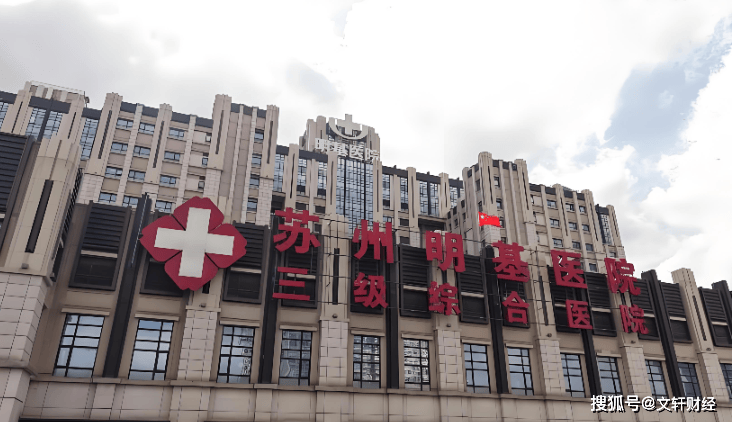
Group 1 - Mingji Hospital Group successfully listed on the Hong Kong Stock Exchange, raising over HKD 620 million, marking it as a significant private hospital value sample from Nanjing [1] - Mingji Hospital is the largest private profit-oriented comprehensive hospital group in East China, operating Nanjing Mingji Hospital and Suzhou Mingji Hospital, with a total building area of approximately 400,000 square meters and 1,850 registered beds [1] - The funds raised will be used for hospital expansion, upgrading smart hospital systems, and acquisition reserves, with a focus on enhancing regional medical resource supply and smart medical service capabilities [1] Group 2 - Nanjing Mingji Hospital, operational since 2008, is recognized as Jiangsu Province's first private tertiary hospital and is the third largest private profit-oriented comprehensive hospital in China, with projected total revenue of CNY 2.659 billion in 2024 [2] - The financial sector in Nanjing has shown growth, with a financial value added of CNY 179.989 billion in the first three quarters of the year, representing a year-on-year increase of 7.7% [2] - Nanjing aims to enhance its capital market construction, focusing on optimizing resource allocation and supporting high-quality economic development, with plans to accelerate the listing process for local enterprises [2]
上市即“腰斩”!华东最大民营医院首日暴跌近50%
Xin Lang Cai Jing· 2025-12-22 15:13
Core Viewpoint - Ming Kee Hospital, known as the largest private profit-oriented general hospital group in East China, faced a significant drop in stock price on its debut on the Hong Kong Stock Exchange, closing nearly 50% lower than its IPO price, reflecting broader challenges in the private healthcare sector [1][10]. Financial Performance - The hospital's revenue for 2022, 2023, and 2024 was reported as 2.336 billion, 2.688 billion, and 2.659 billion yuan respectively, with net profits of 90 million, 167 million, and 109 million yuan, indicating a concerning trend of declining profitability [3][4]. - A projected 34.95% decline in net profit for 2024 raises questions about the hospital's long-term value, compounded by a 1.07% drop in revenue [3][5]. Market Context - The hospital's high price-to-earnings (PE) ratio of 29.8, compared to the average of 16.72 for private hospitals in Hong Kong, was identified as a direct reason for its poor market performance [1][3]. - The ongoing DRG (Diagnosis-Related Group) payment reform has significantly impacted revenue, with average hospitalization costs decreasing while operational costs continue to rise, creating a challenging financial environment [5][10]. Compliance and Legal Issues - Ming Kee Hospital has faced 231 medical disputes, including 54 involving patient deaths, which poses a significant compliance risk and has affected investor confidence [6][10]. Capital Structure and Investor Sentiment - The hospital is backed by a strong capital structure, with its major shareholder holding 95.02% of the shares, but the lack of strong institutional interest during the IPO has raised concerns about its market appeal [7][9]. - The IPO's structure, which favored institutional investors, did not attract sufficient demand, leading to a lack of support from retail investors [9]. Industry Challenges - The difficulties faced by Ming Kee Hospital are reflective of broader challenges in the private healthcare sector in China, where many private hospitals are struggling to maintain profitability amid increasing competition and regulatory pressures [10].