
烟草制品

Search documents
国家烟草局制定《境内免税市场烟草制品管理办法》
Di Yi Cai Jing· 2025-09-12 08:40
Core Viewpoint - The National Tobacco Administration has implemented a management approach for tobacco products in the domestic duty-free market to enhance regulatory oversight as per the State Council's directives [1] Group 1: Regulatory Framework - The National Tobacco Administration has established the "Management Measures for Tobacco Products in the Domestic Duty-Free Market" to ensure compliance with the State Council's requirements [1] - The State Council's tobacco monopoly administrative department will manage the import and export of duty-free tobacco products uniformly under state trading methods [1] Group 2: Business Operations - Retail enterprises engaged in duty-free tobacco product sales must submit order requests to wholesale enterprises, which will then procure from supply enterprises [1] - The procurement and import/export of duty-free tobacco products must adhere to the regulations governing state trading of tobacco goods [1]
我国香烟又迎大变革,10元以下的烟会越来越少,3.5亿人或无烟可吸?
Sou Hu Cai Jing· 2025-09-03 22:34
Core Insights - The cigarette market in China is undergoing significant changes, with average retail prices expected to rise by 23.7% from 2024 to 2025, surpassing the 7.2% increase in consumer goods prices during the same period [1][2] - The production of low-end cigarettes (below 50 yuan) has decreased by 42% in the first quarter of 2025 compared to the same period in 2023, while high-end cigarettes (above 100 yuan) have seen a 28% increase in production [1] Market Trends - The shift in cigarette pricing and product structure is leading to a reduction in the availability of low-end cigarettes, impacting approximately 3.5 billion smokers in China, 78% of whom earn less than 6,000 yuan per month [2] - The increase in cigarette prices is seen as a potential effective smoking control measure, with studies indicating that a 10% price increase can lead to a 3.5% decrease in smoking rates [2][5] Health Implications - The reduction in tobacco consumption is viewed positively from a health perspective, with the World Health Organization stating that effective tobacco control could save millions of lives [5] - A decrease in smoking rates by 10% could potentially reduce lung cancer cases by 200,000 and cardiovascular disease cases by 150,000 annually in China [5] Economic Impact - Despite fluctuations in cigarette production, the overall revenue of the tobacco industry has not declined, with sales reaching 1.72 trillion yuan in 2024, a 5.3% increase from 2023 [5] - The economic benefits of reducing smoking rates include savings of approximately 25 billion yuan in medical costs and an increase in labor productivity valued at 32 billion yuan for every 1% reduction in smoking rates [9] Consumer Behavior - Many smokers are adapting to rising prices by reducing their consumption or seeking alternatives, with 27.3% citing high prices as a reason for quitting, second only to health concerns [3][7] - The younger generation shows a significant decline in smoking rates, with the percentage of smokers aged 18-25 dropping from 29% in 2015 to 17% in 2025 [9] Support and Resources - Various resources and support systems are available for smokers looking to quit, including over 3,000 medical institutions offering cessation services, which have a success rate of 42% compared to 23% for those quitting without assistance [7][8] - The use of smoking cessation apps has been shown to increase success rates by 31% over three months, highlighting the role of technology in supporting quitting efforts [8]

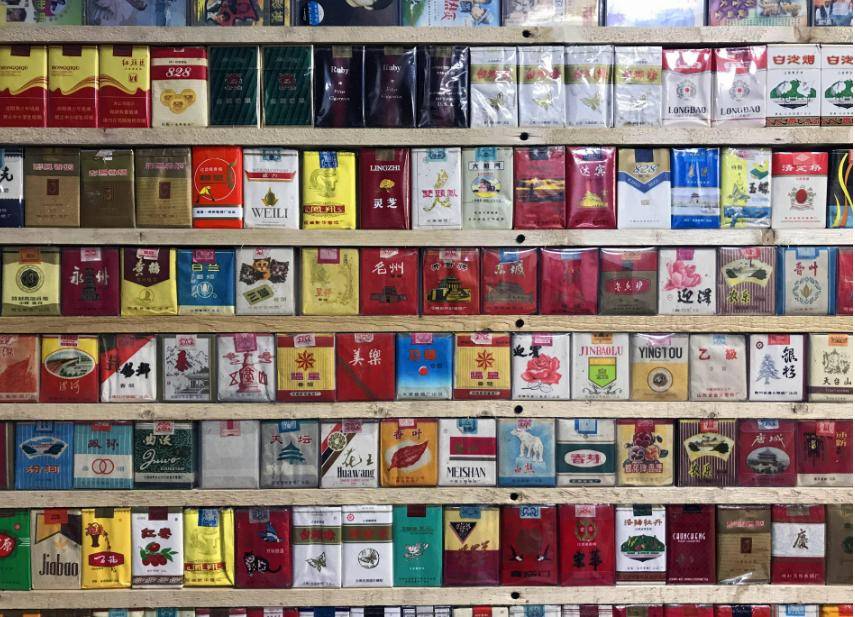
国家烟草专卖局就《境内免税市场烟草制品管理办法》公开征求意见
智通财经网· 2025-07-25 09:00
Core Viewpoint - The National Tobacco Monopoly Administration has solicited opinions on the draft regulations for the management of tobacco products in the domestic duty-free market, aiming to strengthen supervision and ensure compliance with national laws and regulations [1]. Group 1: General Principles - The regulations are designed to implement the State Council's requirements for strengthening the supervision of the domestic duty-free tobacco market and to ensure the orderly operation of this market [2]. - The regulations apply to the supply of duty-free tobacco products in the domestic market, wholesale and retail operations, and the supervision of these activities [2]. - Duty-free tobacco products include cigarettes (excluding heated tobacco), cigars, and tobacco leaves supplied to designated retail locations for specific consumers [2]. Group 2: Management of Operations - The State Council's tobacco monopoly administration will manage the import and export of duty-free tobacco products under a unified national trade model [5]. - Retail enterprises must submit procurement requests to wholesale enterprises, which will then procure from supplying enterprises according to national regulations [6]. - Retail enterprises' annual procurement requests must not exceed the approved annual procurement plan [9]. Group 3: Compliance and Conditions - Enterprises involved in supplying duty-free tobacco products must meet specific conditions, including compliance with national laws and quality standards [10]. - Wholesale enterprises must be listed in the national trade enterprise directory and obtain an annual sales plan for duty-free tobacco products [11]. - Retail enterprises must have the necessary qualifications to operate duty-free goods and obtain an annual procurement plan [12]. Group 4: Traceability and Supervision - Duty-free tobacco products must be marked with a special logo and the phrase "for export only" [12]. - A QR code traceability system will be implemented to ensure the integrity of the supply chain and compliance with regulations [13]. - Local tobacco monopoly administrations will collaborate with other departments to supervise the operations of duty-free tobacco products and report any illegal activities [14]. Group 5: Violations and Penalties - Enterprises that violate the regulations may face penalties, including suspension of trading rights based on the severity of the violations [16][17]. - Retail enterprises that exceed procurement limits or sell products not listed in the approved catalog will face reductions in their future procurement plans [19]. - New tobacco products, such as heated tobacco and e-cigarettes, are prohibited from being sold in the domestic duty-free market [20].
能者上位VS家族传承,中企接班同城不同路
3 6 Ke· 2025-07-07 06:59
Group 1 - The core point of the article discusses the contrasting succession strategies between Alibaba, a private enterprise, and Wahaha, a state-owned enterprise, highlighting the differences in leadership transitions and governance structures [1][2][7][29] - Alibaba has embraced an open succession model, allowing capable individuals like Jiang Fan to rise to power, reflecting a meritocratic approach [1][2][8] - In contrast, Wahaha's leadership transition is complicated by its state-owned background, where power shifts occur within the family, specifically from Zong Qinghou to his daughter Zong Fuli [3][4][5][20] Group 2 - The article emphasizes the challenges Wahaha faces in balancing state asset preservation with family interests, particularly under the leadership of Zong Fuli [6][25][28] - Wahaha's ownership structure is complex, with state capital as the largest shareholder, yet the operational control remains largely with the Zong family [5][20][21] - The article notes that Wahaha's brand value reached 89.609 billion in 2024, indicating significant market presence despite internal governance challenges [22] Group 3 - The succession issue at Wahaha is sensitive, as the state capital should theoretically have a significant say in the selection of the successor, yet the Zong family has maintained control [33][34] - Zong Fuli's leadership has faced resistance from other shareholders, particularly regarding management changes and employee interests, leading to internal conflicts [39][40][41] - The article contrasts this with the smoother succession process in the Chutian family, where the transition was uncontroversial and aligned with family ownership [42][44]

1至5月成都市规上工业增加值同比增长8.0%
Xin Hua Cai Jing· 2025-06-23 13:23
Economic Performance - Chengdu's industrial added value for the first five months of the year increased by 8.0% year-on-year, with a product sales rate of 96.8% among large-scale industrial enterprises [1] - Among different economic types, state-owned enterprises saw a 5.3% increase, foreign and Hong Kong, Macao, and Taiwan-invested enterprises grew by 20.9%, and private enterprises increased by 10.7% [1] - Out of 37 major industries, 24 experienced growth in added value, with notable increases in the automotive manufacturing sector (26.2%), computer, communication, and other electronic equipment manufacturing (18.2%), and electrical machinery and equipment manufacturing (12.9%) [1] Fixed Asset Investment - Fixed asset investment in Chengdu (excluding rural households) grew by 7.0% year-on-year, with private investment increasing by 9.7% [1] - Investment in the primary industry rose by 12.5%, while the secondary industry saw a significant increase of 72.4%, with industrial investment specifically growing by 73.7% [1] Consumer Market - The total retail sales of consumer goods in Chengdu reached 465.0 billion yuan, marking a year-on-year growth of 6.5% [2] - Key product categories showed substantial growth, including telecommunications equipment (92.2%), household appliances and audio-visual equipment (31.3%), and gold and silver jewelry (27.0%) [2] Foreign Trade - Chengdu's total foreign trade import and export volume for the first five months was 351.5 billion yuan, reflecting a year-on-year increase of 10.4% [2] - Exports totaled 205.8 billion yuan, up by 13.7%, while imports reached 145.7 billion yuan, growing by 6.1% [2] Financial Sector - As of the end of May, the balance of deposits in Chengdu's financial institutions was 65.739 billion yuan, an increase of 7.5% year-on-year [2] - The balance of loans in financial institutions was 70.729 billion yuan, reflecting a growth of 10.6% [2]
成都:1至4月规上工业增加值同比增长8.1%
Xin Hua Cai Jing· 2025-05-23 06:35
Economic Growth - Chengdu's industrial added value for the first four months of the year increased by 8.1% year-on-year, with collective enterprises growing by 24.9% and joint-stock enterprises by 6.0% [1] - Among 37 major industries, 25 reported growth, with the automotive manufacturing sector growing by 27.4%, computer, communication, and other electronic equipment manufacturing by 18.8%, and electrical machinery and equipment manufacturing by 11.8% [1] Investment Trends - Fixed asset investment in Chengdu (excluding rural households) rose by 7.9% year-on-year, with private investment increasing by 10.6% [1] - Investment in the primary industry grew by 16.6%, while the secondary industry saw a significant increase of 72.8%, with industrial investment specifically rising by 74.2% [1] Consumer Market - The total retail sales of consumer goods in Chengdu reached 364.46 billion yuan, marking a 6.1% year-on-year increase [1] - Urban retail sales amounted to 320.46 billion yuan, growing by 6.1%, while rural retail sales reached 44 billion yuan, with a growth of 6.4% [1] Consumption Breakdown - Restaurant revenue was 44.93 billion yuan, up by 4.5%, while commodity retail sales were 319.53 billion yuan, increasing by 6.4% [2] - Notable growth in retail categories included telecommunications equipment at 125.0%, gold and silver jewelry at 19.7%, and home appliances and audio-visual equipment at 19.1% [2] Foreign Trade - Chengdu's total foreign trade import and export volume reached 275.98 billion yuan, reflecting an 11.2% year-on-year increase [2] - Exports totaled 161.08 billion yuan, growing by 11.9%, while imports were 114.9 billion yuan, increasing by 10.1% [2]
受贿数额特别巨大、滥用职权 国家烟草专卖局原局长凌成兴一审被判十六年
news flash· 2025-05-21 09:04
Core Points - The former head of the State Tobacco Monopoly Administration, Ling Chengxing, was sentenced to 16 years in prison for bribery and abuse of power [1] - Ling Chengxing received a 13-year sentence for bribery and a 5-year sentence for abuse of power, with a total fine of 4 million RMB [1] - The court ordered the confiscation of Ling Chengxing's illicit gains and their proceeds, which will be submitted to the national treasury [1]
美股前瞻 | 三大股指期货齐涨,受特朗普和马斯克发言提振
智通财经网· 2025-04-23 12:22
Market Overview - US stock index futures rose significantly before the market opened, with Dow futures up 1.69%, S&P 500 futures up 2.20%, and Nasdaq futures up 2.61% [1] - European indices also showed positive movement, with Germany's DAX up 2.34%, UK's FTSE 100 up 2.01%, France's CAC40 up 1.09%, and the Euro Stoxx 50 up 2.36% [2] Commodity Prices - WTI crude oil increased by 0.25% to $63.83 per barrel, while Brent crude oil rose by 0.22% to $67.59 per barrel [3] Corporate News - Boeing (BA.US) reported better-than-expected Q1 results, with free cash flow of $2.3 billion and an adjusted loss per share of $0.49, which was better than market expectations. The company plans to increase the production of the 737 MAX to 38 aircraft per month and aims for 42 by year-end [8] - Philip Morris (PM.US) exceeded Q1 earnings expectations, with net revenue up 15% year-over-year and a significant contribution from its smoke-free products, leading to a stock price surge of over 4% [9] - AT&T (T.US) attracted more wireless users than expected in Q1, adding 324,000 mobile users, surpassing analyst forecasts [10] - New Oriental (EDU.US) reported a slight increase in net profit for Q3, with a 2% decline in total revenue but a 21.2% increase in revenue excluding certain segments [11] - Tesla (TSLA.US) experienced a 40% drop in Q1 profits, with revenue of $19.335 billion, which was below analyst expectations [12] - Volvo (VLVLY.US) reported a 7% decline in Q1 revenue, attributing the drop to a weakened North American truck market [13] - SAP (SAP.US) demonstrated resilience with Q1 profits exceeding expectations, reporting total revenue of €9.013 billion, a 12% year-over-year increase [14] Economic Indicators - The US economy is facing a potential recession risk of nearly 50%, according to Pimco, due to supply chain disruptions and tariff impacts [7] - Concerns over US Treasury bonds have increased, with a significant rise in put option premiums indicating heightened fear in the market [6]
