
生物医用材料

Search documents
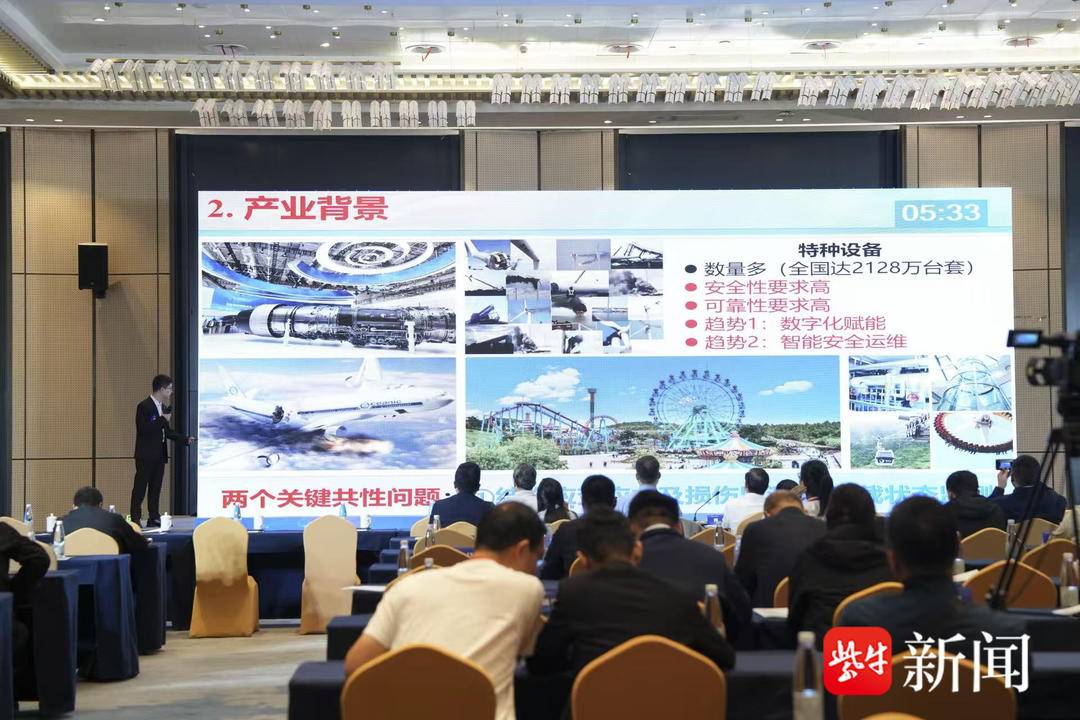
第10届“科创江苏”创新创业大赛新材料领域决赛在徐州沛县举办
Yang Zi Wan Bao Wang· 2025-10-19 08:31
Core Insights - The 10th "Innovation and Entrepreneurship Competition" in the new materials sector concluded successfully, aiming to integrate innovation and industry for high-quality development in Jiangsu [1][8] - A total of 30 high-quality projects competed in two categories, showcasing advancements in high-performance metals, new energy materials, biomedical materials, and energy-saving polymers [3] Competition Highlights - The competition awarded 6 first prizes, 10 second prizes, and 13 third prizes, highlighting projects with leading technologies and clear business models [3] - The first prize in the innovation category was awarded to a project focused on a new green smelting process for high-carbon ferrochrome, addressing issues like complex production processes and high carbon emissions [3] - The first prize in the entrepreneurship category was given to a project developing laser-etched anti-counterfeiting flexible labels, combining polymer composites with nanomaterials for various high-security applications [3] Policy and Support - Jiangsu's provincial officials emphasized the importance of new materials as a foundation for manufacturing and technological innovation, urging researchers to focus on key technologies and deepen industry-academia collaboration [4] - The Peixian Economic Development Bureau introduced local industrial policies aimed at building a modern industrial system and attracting innovative talent [6] Future Directions - The competition has established itself as a vital platform for promoting innovation and the integration of technology and economy in Jiangsu, with plans to continue focusing on strategic emerging industries [8]


【投资视角】启示2025:中国生物医用材料行业投融资及兼并重组分析(附投融资事件、产业基金和兼并重组等)
Qian Zhan Wang· 2025-10-09 09:08
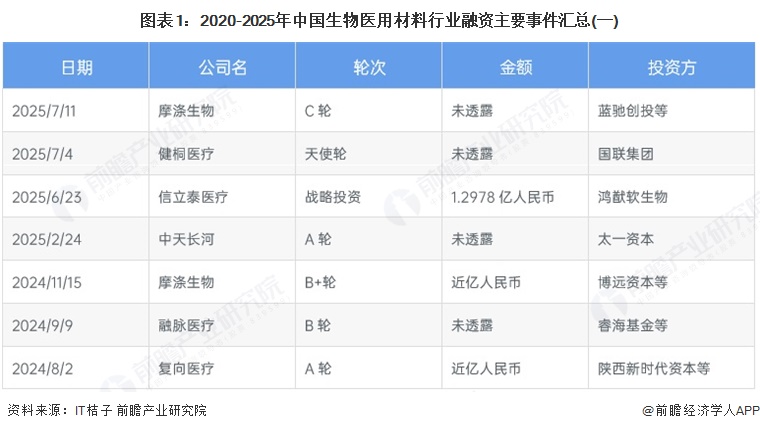
Group 1: Core Insights - The article discusses the financing status and trends in the biomedical materials industry in China from 2020 to 2025, highlighting significant investment events and the overall investment landscape [1][5][19]. Group 2: Financing Events Summary - A summary of major financing events in the biomedical materials industry from 2020 to 2025 is provided, detailing various companies, funding rounds, amounts, and investors [2][3][4]. - Notable financing events include: - Xintai Medical received 129.78 million RMB in strategic investment on June 23, 2025 [2]. - SupiraMedical raised 40 million USD in a D round on November 22, 2023 [3]. - Multiple companies, such as MoDi Bio and Rongmai Medical, have engaged in various funding rounds, indicating a vibrant investment environment [2][3][4]. Group 3: Financing Scale Analysis - The financing scale in the biomedical materials manufacturing industry shows a trend of "initial rise, peak, and subsequent adjustment," with financing occurrences peaking at 13 in 2021 and dropping to 4 in the first half of 2025 [5]. - The total financing amount reached a peak of 5.473 billion RMB in 2021, followed by a significant decline to 201 million RMB in the first half of 2025 [5]. Group 4: Financing Rounds Analysis - Since 2020, early-stage financing rounds have dominated, with A rounds being the most active at 15 occurrences, followed by angel rounds at 9 [7]. - Early-stage rounds (angel, Pre-A, A, and A+ rounds) accounted for over 60% of total financing events, indicating a preference for investing in early-stage companies [7]. Group 5: External Investment Landscape - The primary regions for external investments by major biomedical materials companies in China are Beijing and Shanghai, with 30 and 25 investments, respectively [10]. - The industry investment layout shows that scientific research and technical services account for 42%, manufacturing for 23%, and wholesale and retail for another 23% [11]. Group 6: Mergers and Acquisitions - The mergers and acquisitions market in the biomedical materials sector is characterized by continuous growth, with horizontal mergers being the primary focus, supported by policy incentives and industry demands [12]. - Recent notable transactions include: - SINOCERA's acquisition of DEKEMA for 10.21 million RMB, enhancing its product layout in the dental field [15]. - The acquisition of SPIDENT by SINOCERA for 704 million RMB, aimed at expanding its presence in the dental medical field [15]


重磅!2025年中国及31省市生物医用材料行业政策汇总及解读(全)
Qian Zhan Wang· 2025-09-12 02:45
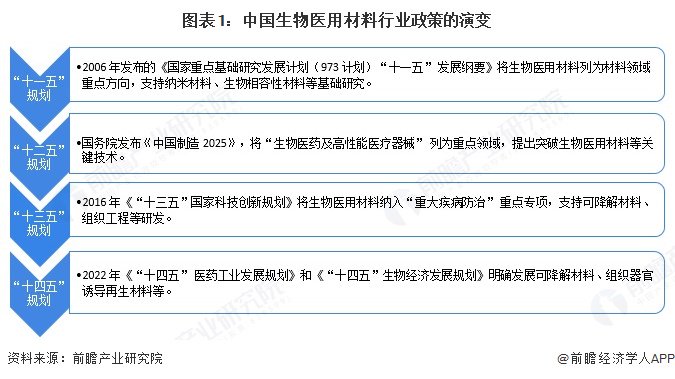
Core Insights - The article discusses the evolution of policies supporting the development of the biomedical materials industry in China, highlighting a shift from basic research support to industrialization, innovation-driven growth, and high-quality development [1][3]. Policy Overview - Since 2015, multiple government departments, including the State Council and the National Health Commission, have issued various policies to support and regulate the biomedical materials industry, focusing on technology development, industry upgrades, quality standards, and centralized procurement [3][4]. - Key policies include the 2024 notification on centralized procurement of high-value medical consumables, aimed at enhancing procurement efficiency and reducing costs [4][5]. - The "14th Five-Year Plan" emphasizes the development of high-end medical devices and key technologies, aiming to improve supply capabilities and address gaps in high-end medical equipment [9][10]. Development Goals - The focus is on technological innovation in high-end implantable products, such as biodegradable vascular stents and artificial joints, as well as new materials like recombinant collagen and biodegradable materials [8][9]. - The government aims to optimize approval processes, promote bulk procurement, and enhance collaboration among academia, industry, and healthcare to boost competitiveness and domestic production levels [8][10]. - By 2025, the goal is to achieve comprehensive coverage of DRG/DIP payment methods in all eligible medical institutions, ensuring a more efficient healthcare financing system [10]. Regional Policies - Various provinces have introduced policies to promote the biomedical materials industry, with a focus on centralized procurement for orthopedic implants and other high-value medical consumables [12][13]. - Cities like Beijing and Shanghai are encouraging the development of new biomedical materials and technologies, including advanced manufacturing techniques and 3D bioprinting [13][14]. - The policies aim to strengthen the local manufacturing capabilities and foster innovation in the biomedical materials sector [14][17].
国家生物医用材料“揭榜挂帅”名单公布江苏20个项目入围 入围数全国第一
Xin Hua Ri Bao· 2025-09-10 23:28
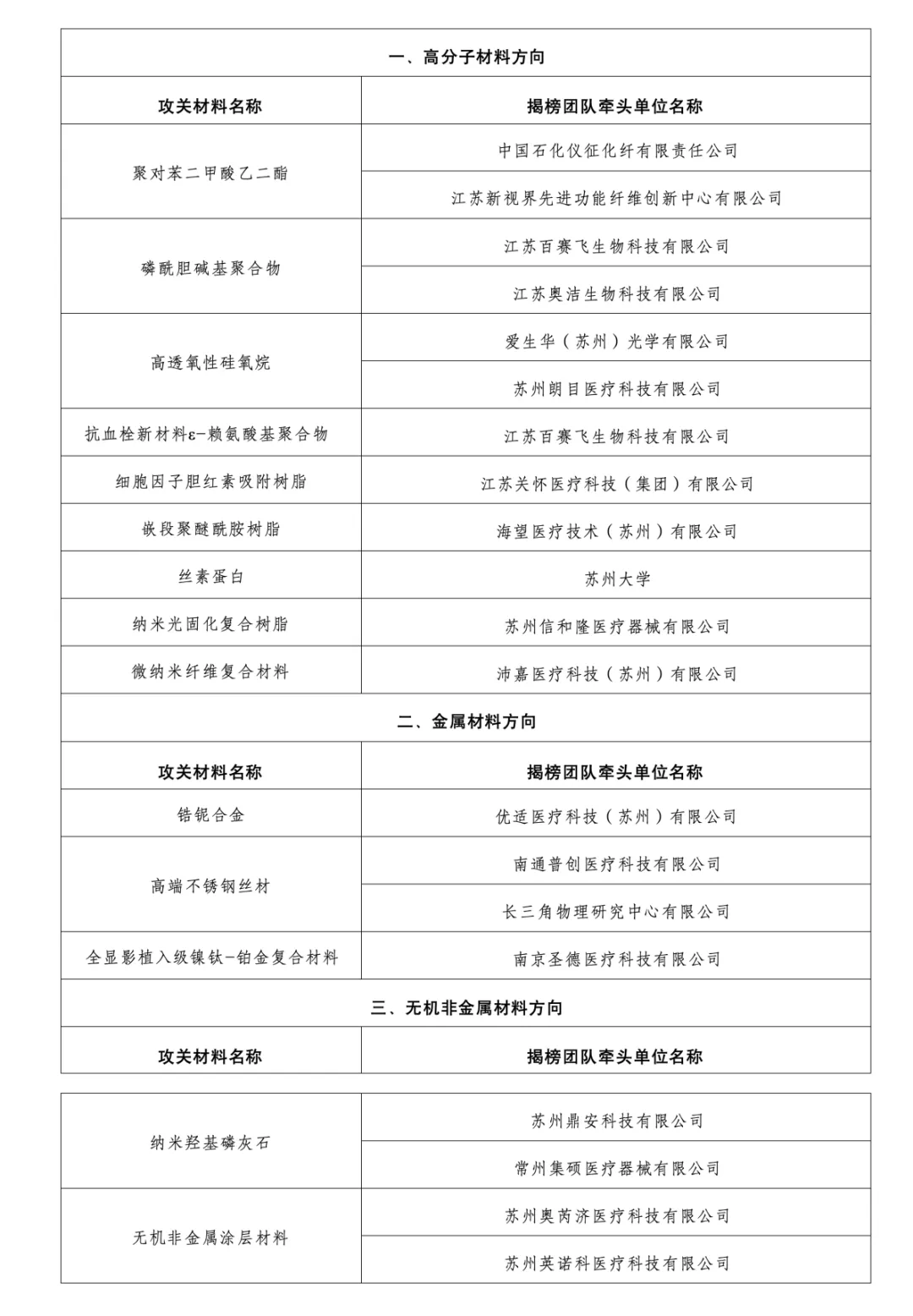
Core Viewpoint - The Ministry of Industry and Information Technology and the National Medical Products Administration have announced the list of selected units for the second batch of the innovative task for biomedical materials, highlighting Jiangsu's leading position in this field with 20 projects selected, the highest in the country [1] Group 1: Project Overview - The biomedical materials innovation task aims to address critical technological challenges in the field and select the most capable innovators for focused breakthroughs in high-end medical materials [1] - Jiangsu's selected projects cover 14 categories of biomedical materials across three directions: inorganic non-metallic materials, polymer materials, and metal materials [1] Group 2: Application and Market Potential - These biomedical materials are widely used in high-value medical devices such as artificial joints, vascular stents, artificial bone repair, oral repair, and wound repair, indicating significant clinical application value and market promotion potential [1] - The increase in the number of applications and selections from Jiangsu compared to the previous round demonstrates substantial growth and potential for new growth points in the integration of new material clusters and biomedicine clusters [1] Group 3: Support and Development - Selected enterprises will receive policy support in financing, review, and registration after completing their tasks, which will accelerate the market launch process of biomedical materials and medical device products in Jiangsu [1]
江苏20个项目入围 入围数全国第一
Xin Hua Ri Bao· 2025-09-10 23:28
Core Insights - Jiangsu province has demonstrated a leading advantage and innovative strength in the field of biomedical materials, with 20 projects successfully selected from 86 total projects in the second batch of the national "Innovation Task" initiative [1] Group 1: Project Overview - The "Innovation Task" project is a major national innovation initiative aimed at addressing critical technological challenges in the biomedical materials sector [1] - The selected projects from Jiangsu cover 14 categories of biomedical materials, including inorganic non-metallic materials, polymer materials, and metal materials [1] Group 2: Applications and Market Potential - The biomedical materials have significant clinical application value and market promotion potential, being widely used in high-value medical devices such as artificial joints, vascular stents, artificial bone repair, oral repair, and wound repair [1] - The increase in the number of applications and selections from Jiangsu indicates a substantial improvement compared to previous submissions, highlighting the province's growing capabilities in this sector [1] Group 3: Support and Development - Selected companies will receive policy support in financing, evaluation, and registration after completing their innovation tasks, which will accelerate the market launch of biomedical materials and medical device products in Jiangsu [1]
江苏20个项目入围国家生物医用材料创新任务“揭榜挂帅” 入选数量全国第一
Yang Zi Wan Bao Wang· 2025-09-10 14:45
Core Insights - Jiangsu Province has successfully entered 20 projects in the second batch of the national bio-medical materials innovation task, ranking first in the country and accounting for nearly 1/4 of the total 86 projects nationwide, highlighting its leading advantage and innovative strength in the field of bio-medical materials [1] Group 1: Polymer Materials - The projects include various polymer materials such as polyethylene terephthalate, phosphocholine-based polymers, and E-lysine-based anti-thrombus materials, with leading units like Sinopec Yizheng Chemical Fiber Co., Ltd. and Jiangsu Baisei Biotechnology Co., Ltd. [2] - Other notable entries include high oxygen permeability silicone and silk protein, indicating a diverse range of applications in the medical field [2] Group 2: Metal Materials - The metal materials category features projects like the mirror alloy and high-end stainless steel wire, led by companies such as Youshi Medical Technology (Suzhou) Co., Ltd. and Nantong Puchuang Medical Technology Co., Ltd. [2] Group 3: Inorganic Non-Metallic Materials - In the inorganic non-metallic materials direction, projects include nano-hydroxyapatite and inorganic non-metallic coating materials, with leading units like Suzhou Ding'an Technology Co., Ltd. and Suzhou Aorij Medical Technology Co., Ltd. [4] Group 4: Market Potential and Support - The selected projects are expected to have significant clinical application value and market promotion potential, contributing to the integration of new material clusters and biomedicine clusters in Jiangsu Province [5] - The Ministry of Industry and Information Technology and the National Medical Products Administration are providing policy support for financing, review, and registration to accelerate the market entry of these bio-medical materials and medical device products [5]
【前瞻分析】2025年生物医用材料行业区域、企业竞争分析
Sou Hu Cai Jing· 2025-09-03 10:15
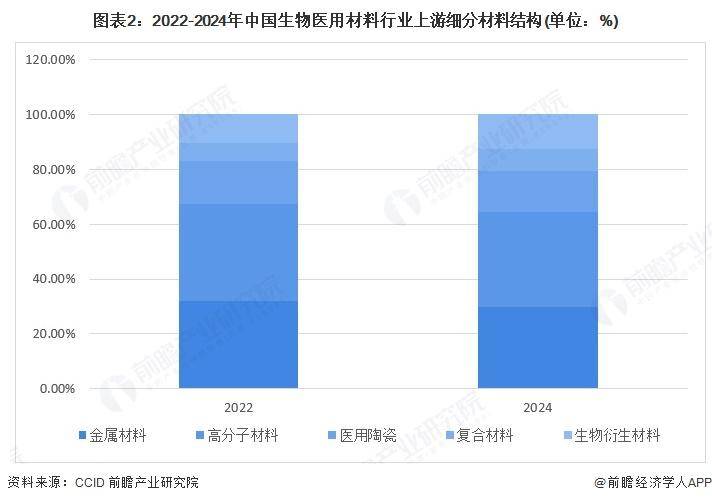
Industry Overview - In 2022, the structure of the upstream materials in China's biomedical materials industry showed a high proportion of metal and polymer materials. By 2024, composite materials and bio-derived materials are expected to gain market share due to advancements in 3D printing technology and increased demand in the medical aesthetics sector, while metal materials, polymer materials, and medical ceramics may see slight declines in market share due to substitution effects and market competition [1][2]. Competitive Landscape - The competitive landscape of the biomedical materials industry can be divided into three tiers based on revenue: - Tier 1 companies have revenues exceeding 2 billion yuan, including companies like Lepu Medical, Haohai Biological, and Dabo Medical. - Tier 2 companies have revenues between 1 billion and 2 billion yuan, represented by Weigao Orthopedics, Xinmai Medical, and Blue Sail Medical. - Tier 3 companies have revenues below 1 billion yuan, including Guoci Materials, Bairen Medical, and Zhenghai Biological [3][6]. Business Layout Comparison - Companies such as Aojing Medical, Weigao Orthopedics, and Haohai Biological derive nearly 100% of their revenue from biomedical materials, while others have a relatively low proportion of revenue from this segment [5][6]. Business Planning and Innovation - The business planning in the biomedical materials sector is characterized by diversification, focusing on technological innovation, market expansion, and industry chain integration. Leading companies are investing in R&D and international expansion, while smaller firms are seeking breakthroughs through differentiated technologies such as regenerative medicine and 3D printing. Future competitive cores are expected to revolve around biodegradable materials, smart devices, and precision medicine [7][9]. Company-Specific Strategies - Guoci Materials focuses on new material platforms, achieving a 70% market share in nano-alumina materials for dental implants and high-end aesthetic restorations, with products entering over 20 countries [9]. - Aojing Medical specializes in regenerative repair implants, with products widely used in various surgical fields and a strong international market presence [9]. - Weigao Orthopedics is adjusting its business model to address procurement policies and is expanding into new fields such as minimally invasive spine and arthroscopic surgery [10]. - Lepu Medical's core business is cardiovascular intervention materials, with products like the NeoVas bioabsorbable stent and MemoSorb® fully degradable occluders [10]. - Xinmai Medical is focusing on drug-coated stents and has entered special review channels for innovative medical devices [10]. Revenue and Market Share Insights - The revenue of key companies in the biomedical materials sector varies significantly, with Weigao Orthopedics reporting 14.51 billion yuan from its orthopedic materials, representing 100% of its total revenue [6]. - Lepu Medical generated 33.27 billion yuan from cardiovascular system materials, accounting for 54.51% of its total revenue [6]. Future Trends - The industry is expected to see increased emphasis on biodegradable materials and smart medical devices, driven by policy support and technological advancements [7].
2025年中国生物医用材料上游市场现状分析 金属和高分子材料应用更广【组图】
Qian Zhan Wang· 2025-09-02 08:30
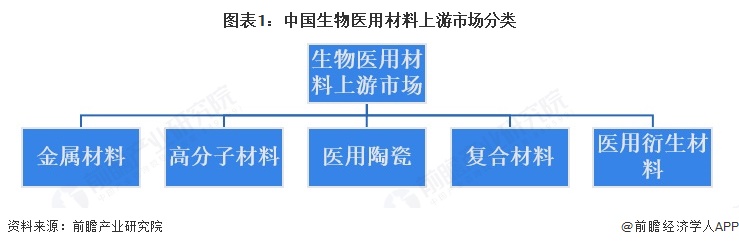
Core Viewpoint - The article discusses the current state and future trends of the biomedical materials industry in China, highlighting the competitive landscape and the significance of various material types in the market [1][3]. Group 1: Industry Overview - The biomedical materials industry is categorized into five main types: metal materials, polymer materials, medical ceramics, composite materials, and medical-derived materials [1]. - In 2022, metal and polymer materials held a significant share in the biomedical materials market, while composite and bio-derived materials are expected to gain market share due to technological advancements and increased demand in the medical aesthetics sector [3]. Group 2: Innovation and Competitiveness - The Ministry of Industry and Information Technology and the National Medical Products Administration have initiated a collaborative innovation task for biomedical materials, with a notable number of polymer material companies leading in the selection of innovation tasks [6]. - Companies from Beijing and Shandong provinces have shown strong competitiveness, as they have the highest number of selected units in the first batch of innovation tasks [7]. Group 3: Market Development Trends - The development trends for various types of biomedical materials in China are as follows: - Metal materials are focusing on high-strength, low-modulus, bioactive modifications, and biodegradable alloys to enhance long-term compatibility of implants and reduce the need for secondary surgeries [13]. - Polymer materials are evolving towards high functionality, smart responsive designs, and biodegradable controls to meet the precise needs of medical applications [13]. - Medical ceramics are enhancing bioactivity, nanoscale modifications, and optimizing porous structures for complex tissue engineering applications [13]. - Composite materials are centered on low-cost mass production and high-performance multifunctional integration for advanced medical devices [13]. - Medical-derived materials are transitioning from passive repair to active induction through intelligent regeneration systems, integrating personalized medicine and tissue regeneration technologies [13].
第二批生物医用材料创新名单公布 苏州市入选数占全国六分之一
Su Zhou Ri Bao· 2025-09-02 00:10
Core Insights - The Ministry of Industry and Information Technology and the National Medical Products Administration announced the second batch of selected units for the innovative task of biomedical materials, with Suzhou securing 15 positions, representing 17.4% of the national total and 75% of Jiangsu Province's entries, highlighting Suzhou's strong innovation capabilities in the biomedical materials sector [1][2]. Group 1: Innovations in Biomedical Materials - Peijia Medical's micro-nano fiber composite material was selected, showcasing its uniqueness in the valve industry and addressing critical clinical challenges in heart valve applications [1][2]. - Peijia Medical's new polymer valve technology, which uses non-biological, inorganic materials, significantly reduces production costs and is expected to have a longer lifespan than current biological valves, potentially decreasing the need for repeat surgeries [2]. - Haiwang Medical's newly developed block polyether amide resin aims to break the reliance on imported medical polymer materials, targeting a market previously dominated by French companies, with a market size exceeding 10 billion [2]. Group 2: Support for New Material Development - Suzhou has implemented the "Guidance Directory for the First Batch of Key New Material Application Demonstration," providing recognition support and financial incentives to stimulate enterprise investment in key material research [3]. - The new materials industry has emerged as Suzhou's third trillion-level industrial cluster, following electronic information and equipment manufacturing [3].
奥精医疗(688613.SH)揭榜挂帅可降解半水硫酸钙项目 国产高端骨修复材料迎破局时刻
Xin Lang Cai Jing· 2025-08-28 02:38
Core Viewpoint - The Ministry of Industry and Information Technology and the National Medical Products Administration have announced the second batch of selected units for the innovative task of biomedical materials, with Aojing Medical (688613.SH) leading the "degradable semi-hydrated calcium sulfate" project [1][2]. Industry Overview - Biomedical materials are referred to as the "chip of medical devices" and are crucial for the localization of high-end medical equipment. However, China faces significant challenges in the fields of degradable bone repair materials and magnesium alloys, with over 60% of the high-end bone repair materials market being occupied by imported products [1][2]. - The current market for bone repair materials is dominated by foreign companies that monopolize core technologies, leading to high prices and clinical standard dominance, which exacerbates accessibility issues for domestic patients [1]. Company Positioning - Aojing Medical is recognized as a leading enterprise in the field of mineralized collagen bone repair materials, with a strong commitment to long-term R&D investment and a multidisciplinary research team [2][3]. - The company has accumulated substantial technical reserves in key areas such as high-end regenerative medical materials and advanced manufacturing processes, and has undertaken numerous national and provincial major R&D projects [2]. Strategic Importance - The successful selection in the "revealing the list" initiative signifies national endorsement of Aojing Medical's technological route and R&D capabilities, positioning the company as a leader in the domestic high-end bone repair materials sector [3][4]. - Aojing Medical aims to collaborate with universities and hospitals to tackle key technical challenges, conduct multi-center clinical trials, and establish clinical standards, thereby shortening product launch cycles and enhancing the overall value of China's biomedical materials industry [3]. Market Potential - The market for bone repair materials in China is projected to exceed 35 billion yuan by 2030, with a domestic production rate expected to surpass 70%. The share of degradable materials is anticipated to increase from 15% to 40% [3].
