老年教育

Search documents
多彩老年教育点亮“银龄”生活 “老有所乐”“老有所学”成为银发经济增长新引擎
Yang Shi Wang· 2026-01-17 09:11
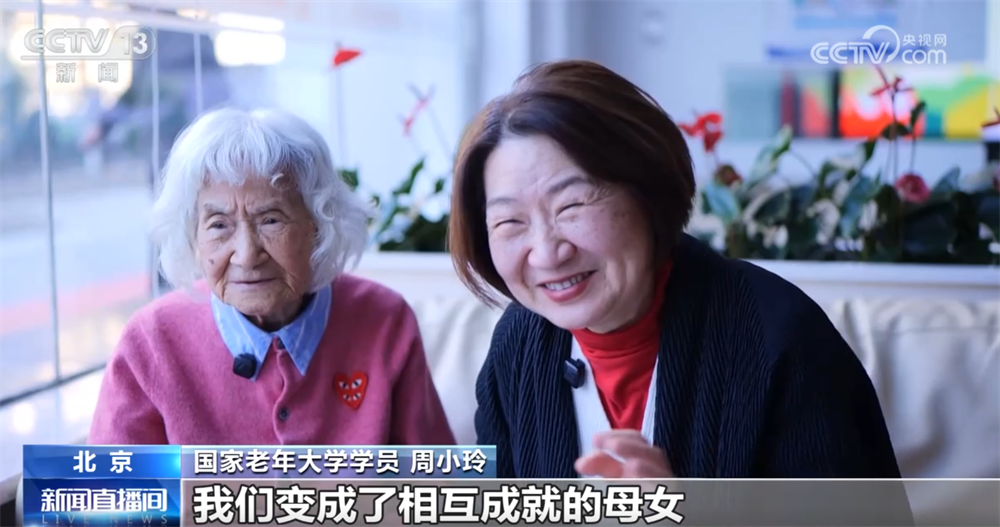
Core Viewpoint - China is entering a moderately aging society, with the elderly population expected to exceed 390 million in the coming years, leading to an upgrade in elderly education that focuses on fulfilling their spiritual needs and learning desires, transforming it into a new stage for many seniors to expand social connections and realize their value [1] Group 1: Elderly Education Development - The National Open University has established the National Elderly University as a platform for sharing educational resources and public services, which has seen a significant increase in enrollment and course offerings, including traditional and modern subjects [11][13] - The elderly education sector is transitioning from meeting basic learning needs to providing diverse and high-quality learning services, with a notable increase in enrollment numbers, such as 5,165 enrollments in the Beijing campus for 2025 [11][19] - Community-based elderly education initiatives, such as the "Silver Age Classroom" in Guizhou, have been successful in attracting over 7,000 elderly residents, demonstrating the effectiveness of localized learning opportunities [15][17] Group 2: Innovative Learning Approaches - The concept of "study tours" for the elderly is gaining popularity, integrating deep experiences, cultural insights, and social interactions into educational travel, moving beyond traditional classroom settings [20][26] - The National Elderly University has launched various study tour projects, including photography and pottery, to enrich the learning experience while traveling [20][24] - The elderly study tour model not only enhances educational engagement but also stimulates related industries such as transportation and accommodation, contributing to the silver economy [26][29] Group 3: Personal Stories and Impact - Personal stories, such as that of 85-year-old Lian Suhua and her daughter Zhou Xiaoling, highlight the intergenerational learning experience and the positive impact of education on their lives, fostering closer family bonds and enhancing quality of life [2][4] - The journey of Zhao Juan, who transitioned from a student to a teacher, exemplifies how elderly individuals can leverage their skills and passions to create new opportunities and contribute to their communities [5][7] - Liu Xuedong's use of AI technology to document family history illustrates how learning can empower seniors to engage with their past and share their stories, enriching their lives and those of future generations [8]

山东首个老年教育地方标准发布,推动老年教育规范化发展
Da Zhong Ri Bao· 2026-01-12 01:50
标准夯实了服务机构在资质、场地、环境与数字化能力方面的基础,并对管理、教学及志愿者队伍的专 业能力提出明确要求。在服务内容上,强调"因需设课",鼓励灵活设置课程,明确多种学习形式,支持 开展学校社团、成果展示、志愿服务等活动,促进老年人"学以致用、老有所为"。标准还细化了从招生 入学到教学评价的全流程服务要求,倡导建立多方参与的质量评价与持续改进机制。 目前,山东全省已初步构建起覆盖省、市、县、乡镇、村五级的老年教育办学服务体系。 下一步,山东省教育厅将积极推动各类老年教育机构依据标准进行对标建设与改进,促进服务水平整体 提升,并建立健全标准动态修订机制,确保其科学性、规范性和时效性。 多知1月12日消息,近日,山东省市场监督管理局发布公告,正式批准发布《老年教育机构建设规范》 《老年教育服务规范》两项山东省地方标准。 两项标准由山东省教育厅指导,山东开放大学与山东老年大学共同编制完成。 《老年教育机构建设规范》立足"适老化、差异化、数字化"原则,系统构建了覆盖五级机构的老年教育 机构建设与运行标准。 标准全面贯彻老年友好理念,对机构的选址布局等提出明确要求;根据不同层级的机构功能,差异化明 确办学规模与人员 ...
全省首个老年教育地方标准发布
Da Zhong Ri Bao· 2026-01-05 00:57
目前,全省已初步构建起覆盖省、市、县、乡镇、村五级的老年教育办学服务体系。下一步,省教 育厅将积极推动各类老年教育机构依据标准进行对标建设与改进,促进老年教育行业服务水平的整体提 升,密切跟踪老年教育发展实际,建立健全标准动态修订机制,在评估论证基础上适时对标准内容进行 调整更新,确保其科学性、规范性和时效性。(记者 曹儒峰 通讯员 纪富冉) 《老年教育机构建设规范》立足"适老化、差异化、数字化"原则,系统构建了覆盖五级机构的老年 教育机构建设与运行标准。标准全面贯彻老年友好理念,对机构的选址布局等提出明确要求;根据不同 层级的机构功能,差异化明确办学规模与人员配备,并鼓励基层机构充分整合利用各类社会资源。标准 还对数字化建设路径与管理体系建设提出明确要求,旨在推动老年教育机构向智能化、规范化方向发 展。 《老年教育服务规范》围绕服务全链条,对人员、内容、过程、保障及评价改进等关键环节提出规 范化要求。标准夯实了服务机构在资质、场地、环境与数字化能力方面的基础,并对管理、教学及志愿 者队伍的专业能力提出明确要求。在服务内容上,强调"因需设课",鼓励灵活设置课程,明确多种学习 形式,支持开展学校社团、成果展示、 ...
枣庄推动老年教育服务拓面提质增效
Da Zhong Ri Bao· 2025-12-26 02:52
Core Viewpoint - The city of Zaozhuang is focusing on "learning for the elderly" by establishing 254 local senior universities and creating 43 remote education teaching points for senior citizens across the province, enhancing educational services for the elderly [1] Group 1: Educational Infrastructure - Zaozhuang has upgraded and transformed 6 new era civilization practice centers, 65 sites, and 2,172 stations to provide new venues for educational activities aimed at the elderly [1] - The city has innovatively launched "industry-type" senior universities, with branches in municipal hospitals, health care centers, and Xinhua bookstores, exploring new educational paths combining culture and health [1] Group 2: Faculty Development - A teacher resource system has been established, combining professional teachers, industry experts, and senior lecturers, with over 70 members from various age groups forming a diverse faculty pool [1] - The city employs a "four batches" model for faculty recruitment, including social recruitment, organizational recommendations, industry invitations, and student training [1] Group 3: Psychological Support - The "Heart Care Without Worries" brand for elderly psychological support has been developed, with 28 psychological care studios established and over 80 themed care activities conducted, benefiting more than 20,000 individuals [1] Group 4: Cultural and Educational Activities - The "Yiyun Shiguang" travel study theme activities have been launched to deepen the "travel and study" educational model, creating a new paradigm for cultural elderly care [1]
以高质量老年教育激活银发经济新引擎
Hai Nan Ri Bao· 2025-12-24 01:35
Core Viewpoint - The aging population is driving the "silver economy," with elderly education being a crucial component to activate this economic sector. Hainan is looking to learn from Hong Kong's experiences in elderly education to enhance its own silver economy through innovative mechanisms and integration of education with industry [1]. Group 1: Establishing a Collaborative Elderly Education System - Hong Kong has integrated elderly education into its overall aging policy framework, creating a multi-departmental collaborative policy system. In contrast, Hainan lacks a unified leadership structure for elderly education, which is currently managed by three separate entities without effective communication [2]. - A long-term mechanism should be established in Hainan to optimize resource allocation among different educational institutions and clarify the responsibilities of governing bodies [2]. Group 2: Demand Management System for Elderly Education - The new generation of educated seniors in Hong Kong is becoming a significant force in driving new consumption models. Hainan's elderly education should focus on creating social and economic value for seniors, particularly younger seniors [3]. - A dynamic demand research system is recommended, including the establishment of a Silver Economy Research Institute in Hainan to conduct ongoing surveys and publish a "Silver Economy Skills Demand White Paper" [3]. Group 3: Integrating Education with Industry - The experience from Hong Kong indicates that a curriculum closely aligned with industry needs is essential for stimulating the silver economy. Hainan should move away from traditional interest-based courses to develop a curriculum that is market-driven and industry-empowered [4]. - Courses should be tailored to Hainan's regional characteristics, such as collaborating with local heritage centers to teach traditional crafts alongside e-commerce skills [5]. Group 4: Promoting Cross-Border Elderly Care and Learning - The cooperation between Hainan and Hong Kong presents new opportunities for cross-border elderly care and educational programs, including a "Hainan-Hong Kong Interactive" cross-border elderly care plan [6]. - A "Hainan-Hong Kong Silver Learning" brand should be developed, offering themed educational travel products that cater to the interests of elderly participants from both regions [7].
建设老年人“15分钟学习圈”
Xin Lang Cai Jing· 2025-12-23 22:12
Core Insights - Sichuan aims to enhance its elderly education system during the "14th Five-Year Plan" period, targeting a 20% participation rate among the elderly in learning activities by 2026 [1][2] Group 1: Development Goals - The province will focus on three main objectives: expanding participation, improving quality, and increasing efficiency in elderly education [1] - A comprehensive coordination mechanism will be established, involving various departments such as the elderly affairs, civil affairs, and finance to address cross-departmental challenges [1] Group 2: Curriculum and Resources - The curriculum will be developed around high-frequency scenarios such as health care, smart living, cultural leisure, and financial fraud prevention, creating a "basic general + specialized + practical skills" course system [1] - Initiatives like "experts as teachers" and "smart assistance for the elderly" will be implemented to recruit qualified instructors, including retired teachers and industry experts [1] Group 3: Current Status - Since the beginning of the "14th Five-Year Plan," Sichuan has established a five-level elderly education system, with 1,919 institutions and a teaching staff of 10,100 [2] - The number of participants in elderly education activities has reached 1.8279 million, with the enrollment rate for elderly individuals exceeding the national average [2]
“一体双翼”绘就银龄幸福图景
Xin Lang Cai Jing· 2025-12-21 01:09
Core Insights - The article highlights the development of Ma'anshan Senior University, emphasizing its dual focus on hardware improvement and cultural construction to enhance the quality of elderly education [1][2]. Group 1: Infrastructure and Facilities - Ma'anshan Senior University has established a well-equipped campus with functional classrooms, two tennis courts, and four gateball courts, along with a reading room designed for elderly needs [2]. - The university has expanded since its establishment in 1986, now comprising three campuses and 18 teaching points, accommodating approximately 25,000 students annually [2]. - A new campus is set to open in 2026, which will be the first comprehensive elderly care complex in the province, capable of serving nearly 20,000 students simultaneously [2]. Group 2: Educational Programs and Curriculum - The university focuses on building a strong cultural foundation through various activities and courses, including psychology, drone photography, and traditional Chinese cooking [3]. - It has developed a range of specialized courses and has created high-quality teaching materials, such as textbooks on social dance and classical poetry for seniors [3]. - The introduction of short-term classes and small group teaching aims to meet the specific needs of elderly learners, transitioning from traditional entertainment-focused education to empowerment-oriented learning [3]. Group 3: Recognition and Achievements - The university has received multiple national awards, including being named a "National Demonstration Senior University" and a "National Advanced Senior University" [4]. - In 2024, it was recognized as one of the first "National Standard Demonstration Schools for Senior Universities" [4].
奋楫“十五五”,资本与国策共创
Sou Hu Cai Jing· 2025-12-03 01:52
Core Insights - The focus of national development is shifting from "quantitative recovery" post-pandemic to "qualitative leap" in the "15th Five-Year Plan" [1] - The "15th Five-Year Plan" emphasizes "high-level technological self-reliance" and aims for a dual goal of "effective qualitative improvement and reasonable quantitative growth" [5][11] Group 1: Economic and Industrial Strategy - The national strategy is entering a new cycle centered on innovation efficiency, industrial structure, and regional collaboration, marking a shift from "policy following" to "system co-creation" [4] - The plan aims to build a modern industrial system with advanced manufacturing as the backbone, focusing on future industries like quantum technology, biomanufacturing, and hydrogen energy [11] - The transition from "incremental manufacturing" to "efficiency manufacturing" indicates a shift in focus from merely increasing production to optimizing resource allocation [12] Group 2: Investment Opportunities - Hard technology investment, including semiconductors and advanced materials, is positioned as a foundational logic for "systematic breakthroughs" [10] - Investment institutions are encouraged to engage in pre-financing and result transformation for national technology tasks, fostering capital co-creation [10] - The emphasis on "entrepreneurial investment + risk-sharing mechanisms" presents opportunities for investment firms to participate in national innovation initiatives [10] Group 3: Green Development - The "15th Five-Year Plan" elevates green development from a secondary goal to a structural institution, influencing all industrial allocations [17] - The integration of green issues into financial and market mechanisms signifies a shift in perspective, making green development a capital issue [17] - Sustainable investment opportunities in green infrastructure and carbon asset management are expected to grow [20] Group 4: Consumer and Market Dynamics - The plan positions consumption upgrade as a core driver of economic structural transformation, moving from recovery to quality enhancement [22] - The "silver economy" is recognized as a significant industrial opportunity, transforming aging issues into growth engines [22][25] - Investment opportunities in healthcare, elder care, and technology-assisted living are anticipated to rise due to demographic shifts [25] Group 5: Regional Development - The focus of regional policy is shifting from "development gradient" to "structural coordination," promoting a unified market and efficient resource allocation [27] - Investment institutions are encouraged to collaborate with local guiding funds to strengthen project foundations and facilitate new industry development in less developed regions [30] Group 6: Financial Market Reforms - The "15th Five-Year Plan" emphasizes structural improvements in capital markets, transitioning from a focus on financing to a comprehensive investment-funding-exit cycle [32] - Direct investment institutions are identified as key players in building a strong financial nation, with multiple exit pathways being developed [35] - The plan aims to enhance the inclusivity and adaptability of capital market systems, promoting direct financing methods [31] Strategic Summary - The "15th Five-Year Plan" outlines new engines for China's economic growth, including technological innovation and green transformation, while establishing a more inclusive capital market system [36] - Investment institutions are encouraged to align their strategies with national planning, leveraging professional judgment to identify promising sectors and companies for investment [36]

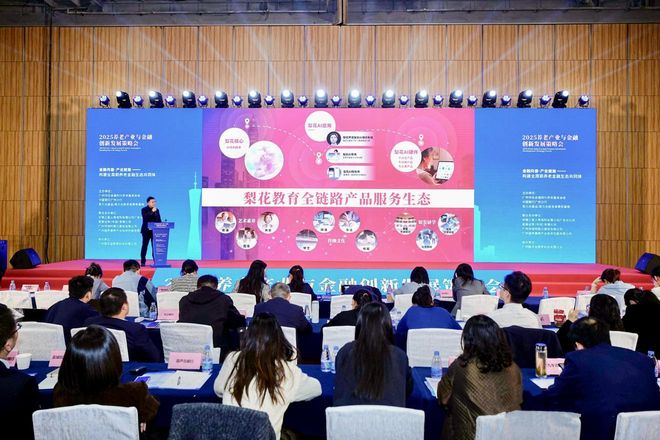
开启文化素养智慧服务新程,梨花教育发布首款AI声学学习机
Xin Jing Bao· 2025-11-28 15:11
Group 1 - The core viewpoint of the articles highlights the transformation of the elderly care industry from material support to spiritual care, emphasizing the growing demand for cultural and technological integration in services for the elderly [2][6] - The launch of the Pear Blossom AI Acoustic Learning Machine aims to address the challenges faced by the elderly in using technology, featuring a fully elderly-friendly design and a comprehensive learning ecosystem [3][5] - The Pear Blossom Education has upgraded its platform to a "Cultural Literacy Wisdom Service Platform," focusing on providing diverse cultural services and integrating AI technology to enhance the spiritual and cultural needs of the elderly [2][4] Group 2 - The "New Elderly" demographic, defined as individuals born in the 1960s and 1970s, is becoming a significant consumer force in the silver economy, with increasing attention to spiritual and cultural life [6][7] - A white paper co-authored by Pear Blossom Education and the Communication University of China outlines the trends in the spiritual cultural needs of the elderly, indicating a shift from optional to essential aspects of daily life [6][7] - The white paper identifies three core trends in the silver economy: the integration of AI as a foundational infrastructure, the necessity for a collaborative network to address supply shortages, and the transition of cultural care from a niche interest to a mainstream lifestyle [7]
从 “养老” 到 “享老”,梨花教育发力银发文教新赛道
Xin Jing Bao· 2025-11-28 02:31
Core Insights - The aging population in China is shifting from traditional "elderly care" to actively pursuing cultural and spiritual life, indicating a demand for a new type of "enjoyable aging" [1][3] - The new elderly demographic, particularly those born in the 1960s and 1970s, is characterized by high education, modern views, and a strong desire for quality living, leading to increased spending on cultural and educational activities [3][4] Industry Trends - The silver economy is experiencing growth driven by the demand for cultural education, with a significant increase in spending on travel, elderly education, and outdoor leisure activities [3] - There is a notable gap in supply, with only 49,000 elderly schools available for a population of 300 million elderly individuals, leading to unmet needs for continuous learning and value realization [3] - The industry is transitioning from being "content providers" to "methodology providers," focusing on the importance of feedback, companionship, and emotional value in learning experiences [3][4] Technological Integration - AI is becoming a foundational infrastructure in the silver economy, with applications such as AI tutors and AI companions enhancing the learning experience for the elderly [4] - The integration of technology is evolving from being merely assistive tools to becoming essential components of service delivery, ensuring that it is user-friendly and trustworthy for the elderly [4] Market Potential - The silver cultural education economy is not only a rapidly growing sector but also plays a crucial role in enabling elderly individuals to continue learning, engage socially, and create value in their lives [4] - As of November 2025, the company has served over 22 million users, indicating a strong market presence and the potential for further growth in this demographic [4]