芯片封装

Search documents
新恒汇(301678.SZ):公司的物联网eSIM芯片封装主要是面向物联网身份识别芯片
Ge Long Hui· 2025-08-12 07:19
Group 1 - The core viewpoint of the article is that Xin Henghui (301678.SZ) focuses on the packaging of IoT eSIM chips primarily for IoT identity recognition [1] - The downstream application areas for the company's IoT eSIM chips include wearable devices, IoT consumer electronics, and industrial IoT [1]
群智咨询:BT基板短缺致BGA封装产能紧张 车载CIS封装方案加速转型
智通财经网· 2025-07-31 09:11
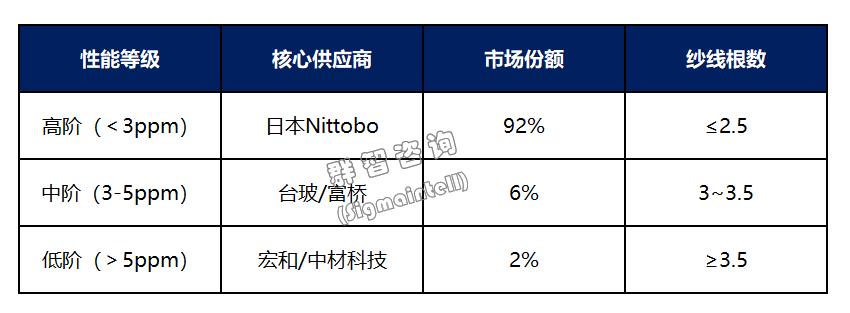
Core Viewpoint - The shortage of BT substrates is causing a continuous tightening of BGA packaging capacity, leading to delivery cycles extending beyond 20 weeks, while COB packaging is gaining preference due to its cost-effectiveness and stable raw material supply [1] Group 1: BT Substrate Overview - BT resin substrates are essential for BGA packaging, providing mechanical reliability under extreme temperature cycles due to their low thermal expansion coefficient [2] - BGA packaging typically uses multi-layer stacked structures (6-8 layers) for high-reliability chip support [2] Group 2: Causes of BT Substrate Shortage - The surge in AI server demand is straining BT material capacity, with TSMC's advanced packaging expansion prioritizing ABF substrate orders, which share raw materials with BT substrates [3] - Apple has mandated its memory chip suppliers to use BT substrates for the iPhone 17 series, increasing future demand for this packaging solution [3] - Supply-side issues include extended delivery times for key materials like copper foil substrates and high-grade fiberglass cloth, with delays of 4-5 months reported [3] - Geopolitical factors and tariff uncertainties have led to stockpiling by manufacturers, amplifying short-term demand [3] Group 3: Domestic Replacement Progress - Domestic BT substrate manufacturers are still in a technology ramp-up phase, relying on imported materials and equipment, with a highly concentrated supply of low CTE fiberglass cloth [4] - Japanese companies dominate the high-end low CTE fiberglass market, holding 92% market share, while domestic alternatives face significant technical challenges [4] Group 4: Future Supply Outlook - A turning point in BT substrate supply is expected in the second half of 2026, driven by capacity ramp-up and technological advancements in East Asia [5] - Key milestones include the certification of Taiwanese fiberglass suppliers and the ramp-up of domestic production, which will significantly increase supply [5] - By Q3 2026, the shortage rate is projected to narrow to 5%-7%, although challenges remain in high-end sectors due to certification processes and non-linear growth in AI server demand [6]

晶方科技:预计2025年上半年净利润同比增长36.28%-58.99%
news flash· 2025-07-11 09:35
Core Viewpoint - The company expects to achieve a net profit attributable to shareholders of 150 million to 175 million yuan for the first half of 2025, representing a year-on-year growth of 36.28% to 58.99% [1] - After excluding non-recurring gains and losses, the expected net profit is approximately 135 million to 155 million yuan, with a year-on-year increase of 49.54% to 71.69% [1] Company Performance - The company is experiencing significant growth in the automotive intelligent sector, particularly in the automotive CIS chip market [1] - The scale and technological advantages of the company's packaging business in the automotive CIS field are continuously improving [1]

合肥400亿产业巨头,下场搞CVC
投中网· 2025-07-04 09:07
Core Viewpoint - Hefei is intensifying its efforts in the semiconductor sector with the establishment of the "Hefei Jinghui Chuangxin Investment Fund," which has a scale of 300 million RMB, backed by three publicly listed companies in the semiconductor industry [4][10]. Group 1: Fund Establishment and Structure - The "Hefei Jinghui Chuangxin Investment Fund" was jointly established by three companies: Jinghe Integrated Circuit, Huicheng Co., and Guanggang Gas, with a total market capitalization of approximately 60 billion RMB [4][5]. - Jinghe Integrated Circuit contributed 200 million RMB, while Huicheng Co. and Guanggang Gas each contributed 50 million RMB [5]. - The fund is managed by "Hefei Jinghe Huixin," a private equity investment institution formed by a partnership between Jinghe Integrated Circuit and Huicheng Co. [4][8]. Group 2: Industry Context and Trends - The establishment of this fund reflects a growing trend of corporate venture capital (CVC) in the primary market, indicating that industry giants are increasingly participating in equity investment [6][11]. - Hefei's industrial ecosystem is evolving, with local industry leaders like Changxin Storage and Chery Automobile becoming key players in the investment landscape [4][12]. - The fund's creation is part of a broader initiative by Anhui province to promote investment in emerging industries, including artificial intelligence, new energy vehicles, and semiconductors [12][13]. Group 3: Company Profiles - Jinghe Integrated Circuit is the third-largest wafer foundry in China and the largest in Hefei, achieving a revenue increase from 230 million RMB in 2018 to over 10 billion RMB in 2022, culminating in a 40 billion RMB valuation upon its IPO in 2023 [7][8]. - Huicheng Co. specializes in advanced packaging for display driver chips and became the first domestic company to achieve mass production of 12-inch wafer gold bump packaging [8][10]. - Guanggang Gas is the largest supplier of high-purity electronic gases in China, holding a 15.3% market share in the electronic gas sector as of 2024 [10][11]. Group 4: Investment Strategy and Impact - The fund aims to leverage the expertise and resources of its founding companies to identify and invest in promising startups within the semiconductor industry [10][12]. - The establishment of this fund is indicative of a strategic shift in Anhui's investment landscape, where local industry leaders are expected to play a significant role in nurturing and supporting the growth of the regional startup ecosystem [12][14].
台积电先进封装,再度领先
半导体行业观察· 2025-03-27 04:15
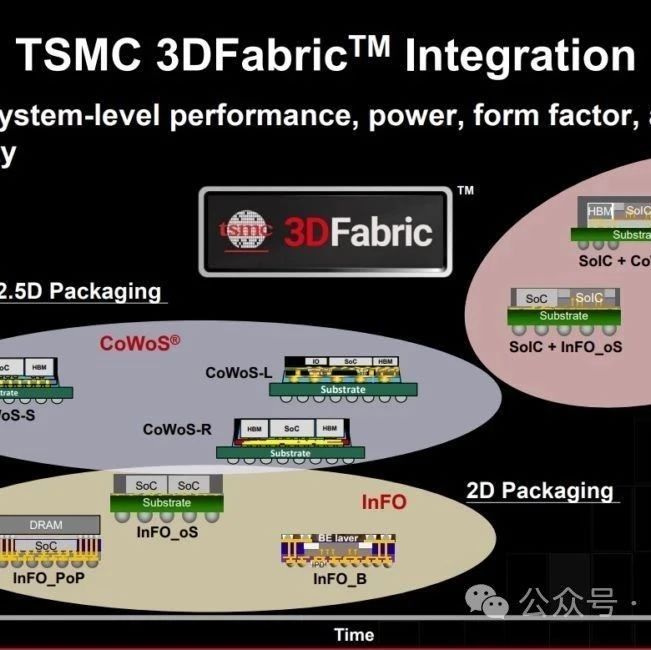
Core Viewpoint - NVIDIA's next-generation Rubin AI architecture will utilize the company's first SoIC packaging, indicating a significant shift in the hardware market with the integration of advanced components like HBM4 [1][5] Group 1: SoIC Packaging Development - TSMC is rapidly constructing factories in Taiwan to shift focus from advanced packaging (CoWoS) to SoIC, with expectations for NVIDIA, AMD, and Apple to release next-generation solutions based on this design [1][2] - SoIC allows for the integration of different chips, reducing internal circuit layout space and lowering costs, with AMD being an early adopter and Apple expected to follow with its M5 chip [2][3] - TSMC's SoIC production capacity is projected to reach 15,000 to 20,000 wafers by the end of this year, with plans to double that capacity next year [2][6] Group 2: NVIDIA's Rubin Architecture - The Rubin GPU will separate the GPU and I/O die, utilizing N3P and N5B processes respectively, and will integrate these components using SoIC packaging [2][5] - The Vera Rubin NVL144 platform is expected to deliver up to 50 PFLOPS of FP4 performance with 288 GB of HBM4 memory, while the NVL576 will provide up to 100 PFLOPS and 1 TB of HBM4e capacity [5] Group 3: Workforce and Production Adjustments - TSMC plans to adjust its workforce from 8-inch fabs to support advanced packaging facilities, aiming to recruit 8,000 new employees this year to reach a target of 100,000 [3] - The company is actively preparing for the integration of SoIC technology, which is seen as crucial for future developments in semiconductor packaging [3][6]