
锂电池回收

Search documents
天奇股份:公司锂电池循环板块再生利用业务专注于三元锂电池及磷酸铁锂电池再生利用
Zheng Quan Ri Bao Wang· 2025-12-31 08:42
Core Viewpoint - The company, Tianqi Co., Ltd. (002009), is focusing on the recycling of lithium batteries, specifically ternary lithium batteries and lithium iron phosphate batteries, which allows for the recovery of battery materials and has achieved full elemental recycling of lithium batteries with traceable carbon footprints in the production process [1] Group 1 - The company has established a processing capacity of 100,000 tons of waste lithium batteries, consisting of 50,000 tons of ternary lithium and 50,000 tons of lithium iron phosphate [1] - Main products include cobalt sulfate, nickel sulfate, manganese sulfate, battery-grade lithium carbonate, and battery-grade lithium iron phosphate [1] - The increase in prices of main products positively impacts the profitability of the company's recycling segment [1]

锚定“双碳”目标促进“十五五”时期低碳产业发展
Zhong Guo Huan Jing Bao· 2025-12-09 03:25
Core Viewpoint - The "14th Five-Year Plan" period is crucial for China to achieve its carbon peak goal, emphasizing the development of low-carbon industries as a pathway for comprehensive green and low-carbon transformation of the economy and society [1] Group 1: Policy Optimization for Low-Carbon Industry Development - The "14th Five-Year" period requires a focus on time-sensitive carbon reduction efforts while capturing potential development opportunities, considering industry interconnections and overall carbon reduction [2] - Emphasis on orderly replacement of high-carbon industries, particularly in key sectors like electricity, non-ferrous metals, and chemicals, while enhancing carbon efficiency [2] - Policies should balance ecological impacts and carbon emissions, transforming challenges into opportunities, such as developing competitive lithium battery recycling industries [2] Group 2: Regional Advantages and National Policy Support - Regions rich in ecological resources should leverage their advantages to become national "carbon neutrality" pilot zones, exploring clean energy supply, carbon trading, and low-carbon industry cultivation [3] - A new production model should integrate industrial, innovation, talent, funding, and policy chains to promote high-quality regional development characterized by low-carbon efficiency [3] Group 3: Encouraging Diverse Participation in Low-Carbon Innovation - Innovation is essential for low-carbon industry development, requiring participation from government, enterprises, research institutions, and society [4] - The government should focus on supporting "dual carbon" technology research and enhancing green financial support for innovation [4] - Financial institutions are encouraged to engage in green technology innovation through investment and insurance products, fostering a supportive environment for small and innovative tech companies [4] Group 4: Supporting High-Quality Development through Innovation - Innovation goals should align with "dual carbon" objectives, particularly in key industries and technologies, such as deep processing of agricultural products in rural areas [5] - The integration of artificial intelligence and digital platforms is vital for optimizing resource utilization and enhancing product value [5] Group 5: Promoting Green Consumption - The "14th Five-Year" plan suggests establishing a green consumption incentive mechanism to promote energy-saving and low-carbon lifestyles [6] - Policies should include subsidies and tax reductions to lower the initial costs of green products, stimulating market demand [7] - A market-driven incentive mechanism should be developed to reward consumers for low-carbon behaviors, creating a positive cycle of ecological and economic benefits [7] Group 6: Infrastructure and Cultural Promotion for Green Consumption - Infrastructure for green consumption, such as electric vehicle charging networks, should be improved to alleviate consumer concerns [8] - Clear standards and labels for green products are necessary to facilitate consumer choices and promote recycling [8] - Public awareness campaigns should be conducted to embed green concepts into daily life, fostering a culture of sustainability [8]
天奇股份:公司围绕“致力于服务汽车全生命周期”的企业愿景,聚焦三大主业发展
Zheng Quan Ri Bao· 2025-12-02 12:08
Core Viewpoint - Tianqi Co., Ltd. aims to serve the entire lifecycle of automobiles, focusing on three main business areas: intelligent equipment for automobiles, lithium battery recycling, and robotics [2] Group 1: Business Focus - The company centers its development on intelligent equipment, which is the cornerstone of its performance and sustainable growth [2] - The lithium battery recycling business represents a direction for future sustainable development [2] - The robotics business is a strategic priority, with plans to concentrate talent and capital on technology research and development, team building, and market development [2] Group 2: Business Segments - Intelligent equipment business includes smart warehousing logistics and recycling equipment for multi-dimensional applications [2] - Lithium battery circular economy focuses on recycling, remanufacturing, and secondary utilization of lithium batteries [2] - Robotics business encompasses manufacturing of robotic bodies, data collection, training, and scene algorithm development [2]

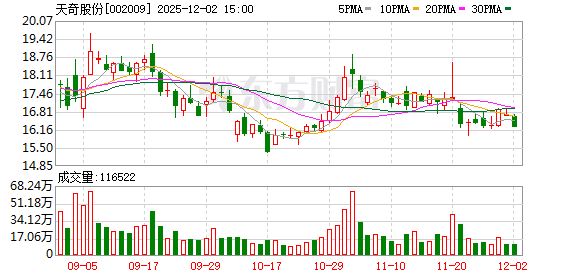
天奇股份:公司锂电池循环业务涵盖电池回收、梯次利用、破碎及再生利用
Zheng Quan Ri Bao· 2025-12-02 12:08
Core Insights - Tianqi Co., Ltd. announced its lithium battery recycling business, which includes battery recovery, cascade utilization, crushing, and regeneration [2] - The core subsidiary, Tianqi Jintai, has over 20 years of experience in lithium battery resource utilization and is a leading enterprise in the domestic recycling whitelist [2] - The company has established a processing capacity of 100,000 tons of waste lithium batteries, with 50,000 tons for ternary batteries and 50,000 tons for iron-lithium batteries [2] Industry Overview - The lithium battery recycling industry faces challenges such as insufficient raw material supply and underutilized capacity from 2025 onwards [2] - However, with the relaxation of black powder imports and rising prices of key metals, the company's gross profit in this sector has turned profitable, showing a significant reduction in losses [2] - The industry is moving towards a more regulated and healthier development due to the implementation of domestic and international regulatory rules and industry policies [2] Company Strategy - The company is focusing on the automotive aftermarket, overseas markets, and recycling channels from battery manufacturers and vehicle manufacturers [2] - It aims to establish a comprehensive lithium battery recycling system that covers both domestic and international markets, creating a unique closed-loop lithium battery recycling industry [2]
天奇股份:四季度铁锂回收产能饱和 实现阶段性稳定批量出货
Zheng Quan Shi Bao Wang· 2025-12-02 02:09
Core Viewpoint - The lithium battery recycling industry is facing challenges such as insufficient raw material supply and underutilized capacity, but improvements are expected due to the lifting of black powder import restrictions and rising prices of key metals, leading to a recovery in gross margins for the company [1] Group 1: Industry Challenges - From 2025 onwards, the lithium battery recycling industry continues to encounter challenges including raw material supply shortages and underutilized capacity [1] Group 2: Financial Performance - The company's gross margin in the lithium battery recycling segment has turned from loss to profit, with a gradual improvement on a quarter-on-quarter basis, significantly narrowing previous losses [1] Group 3: Production Capacity - In the fourth quarter, the iron-lithium recycling capacity has reached saturation, achieving stable batch shipments at a certain stage [1]
天奇股份(002009) - 002009天奇股份投资者关系管理信息20251202
2025-12-02 01:54
Business Overview - The company focuses on three main business areas: automotive intelligent equipment, lithium battery recycling, and robotics [2] - Intelligent equipment is the cornerstone of the company's performance, while lithium battery recycling represents future sustainable development [2] Lithium Battery Recycling - The lithium battery recycling business includes battery recovery, secondary utilization, and recycling [2] - The company has a processing capacity of 100,000 tons of waste lithium batteries, with 50,000 tons for ternary batteries and 50,000 tons for iron-lithium batteries [2] - The company is a leading enterprise in the recycling industry, with advanced recovery processes and product quality [2][3] Market Challenges and Developments - The lithium battery recycling industry faces challenges such as insufficient raw material supply and underutilized capacity [3] - However, the company has seen a turnaround in gross profit due to rising metal prices and improved operational efficiency [3] - The company is actively developing a lithium battery recycling system covering both domestic and international markets [3] International Expansion - The company plans to establish a production base in Thailand to leverage favorable investment and tariff policies [4] - This base will support market development in Southeast Asia and enhance the company's global competitiveness [4] Robotics Business - The robotics business focuses on providing advanced embodied intelligent robot application solutions [5] - A joint venture with Beijing Galaxy General Robot Co., Ltd. aims to advance the application of intelligent robots in industrial manufacturing [5] - Another joint venture with Shenzhen Youbixun Technology Co., Ltd. focuses on developing end-to-end unmanned logistics solutions [6][7]
百川股份:子公司宁夏百川新材料有限公司投资建设了20000吨/年的锂电池资源化利用装置
Zheng Quan Ri Bao· 2025-11-12 10:15
Group 1 - The core viewpoint of the article highlights that Baichuan Co., Ltd. has invested in a lithium battery resource recycling facility with a capacity of 20,000 tons per year [2] - The company is actively involved in drafting several industry standards related to the recycling and safety of retired lithium batteries [2] - The specific standards include guidelines for dismantling and discharging retired power batteries, recycling technology for used lithium-ion battery electrode materials, and methods for calculating and detecting the recovery rate of valuable metals from retired batteries [2]

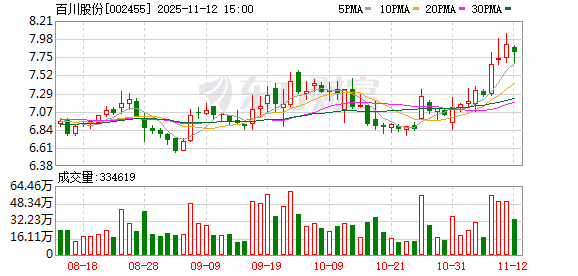
天奇股份:公司锂电池循环业务已应用于储能电池梯次利用、再生利用
Zheng Quan Ri Bao Wang· 2025-11-11 10:12
Core Viewpoint - Tianqi Co., Ltd. (002009) has indicated that its lithium battery recycling business is currently applied in energy storage battery cascade utilization and regeneration, with potential future applications in solid or semi-solid battery recycling [1] Group 1 - The company has confirmed the application of its lithium battery recycling technology in energy storage solutions [1] - Future applications of the company's technology may extend to solid or semi-solid battery recycling [1]
天奇股份(002009):汽车智能装备领先制造商 牵手人形机器人龙头打造新增长曲线
Xin Lang Cai Jing· 2025-10-30 00:37
Core Viewpoint - The company is undergoing a business transformation focusing on intelligent equipment, lithium battery recycling, and robotics, with a notable partnership in humanoid robotics to enhance its market position [1][2]. Group 1: Business Performance - In the first half of 2025, the company achieved revenue of 1.247 billion yuan, a year-on-year decrease of 4.92%, while net profit attributable to shareholders reached 56 million yuan, an increase of 171.11% [1]. - The company has a robust order backlog of 1.32 billion yuan, with 54% of this coming from overseas projects, indicating strong international business growth [1]. Group 2: Robotics and Intelligent Equipment - The company entered the industrial robotics sector in 2020 and partnered with Ubtech in 2023 to explore humanoid robotics, signing a cooperation agreement with Galaxy General in 2025 to focus on humanoid robot models and data collection [1][2]. - The company is collaborating with leading firms like Galaxy General and Ubtech to provide application solutions for various robotic products in industrial manufacturing scenarios [2]. Group 3: Lithium Battery Recycling - The company is building a domestic and international lithium battery recycling industry alliance, with the revenue contribution from this segment reaching 11% in the first half of 2025, and a gross margin turning positive at 0.79% [2]. - The lithium battery recycling business is gradually stabilizing as material prices recover, with expectations of moving towards profitability [2]. Group 4: Profit Forecast - The company forecasts net profits attributable to shareholders for 2025, 2026, and 2027 to be 110 million, 240 million, and 330 million yuan respectively, with corresponding price-to-earnings ratios of 58, 27, and 20 times [3].
迪生力:拟将持有的广东威玛公司47.00%股份转让给安徽朋泽公司
Ge Long Hui· 2025-10-27 15:39
Core Viewpoint - The company plans to transfer 47% of its shares in Guangdong Weima Company to Anhui Pengze Company for a transaction price of 47.47 million yuan, resulting in a reduction of its ownership from 66.85% to 19.85%, thus no longer consolidating Guangdong Weima in its financial statements [1][1][1] Group 1 - The company currently holds 20,865,000 shares in Guangdong Weima, representing 66.85% of the total share capital [1] - The transfer involves 14,669,640 shares, which is 47.00% of Guangdong Weima's total share capital [1] - The other shareholders of Guangdong Weima have waived their preemptive rights regarding this share transfer [1] Group 2 - The primary reason for this asset sale is to introduce upstream suppliers from the lithium battery recycling industry to build recycling channels [1] - The acquiring team has extensive experience in the lithium battery recycling industry, which is expected to enhance the future operational development of Guangdong Weima [1] - The decision to transfer the 47% stake was made after careful evaluation and research by the company [1]
