预制食品

Search documents
盒马创始人侯毅:一有事就说预制菜不好,这不对
Sou Hu Cai Jing· 2025-09-30 00:40
Core Viewpoint - The ongoing discussion about "pre-prepared dishes" in the market raises questions regarding their taste, nutrition, and safety, with a particular focus on the lack of a unified classification standard globally [1][3]. Group 1: Definition and Standards - The concept of "pre-prepared dishes" lacks rigor in classification, as highlighted by industry experts [4]. - Current market concerns primarily revolve around food safety; however, all types of pre-prepared products must comply with national food safety standards [4][6]. Group 2: Consumer Preferences and Market Dynamics - Fully cooked pre-prepared products face challenges in consumer acceptance due to issues like "meat off-flavor," while semi-finished products that require final cooking steps are gaining market recognition for balancing convenience and taste [6]. - The B2B market for pre-prepared foods is driven by demand and pricing, with different channels such as restaurants, canteens, and takeout reflecting this dynamic [7]. Group 3: Channel-Specific Insights - In the restaurant sector, price tiers dictate the choice of ingredients and production methods, with high-end establishments using fresh, high-quality ingredients, while lower-tier restaurants often rely on centralized kitchens for cost efficiency [9]. - School canteens face a dilemma between price and quality, necessitating a balance between diverse offerings and food safety [10]. - The takeout industry predominantly utilizes "pre-prepared meal kits" to meet the demands for speed, efficiency, and low cost, catering to young consumers' needs [11]. Group 4: Market Structure and Opportunities - The current market for "pre-prepared dishes" essentially consists of various forms of processed foods designed to meet diverse consumer needs for convenience, taste, and cost-effectiveness [13]. - There is no global standard for classifying pre-prepared dishes, allowing the Chinese retail market to thrive by offering a range of products that cater to different consumer segments [14].


预制菜:从企业缺位到规范加速
Huachuang Securities· 2025-09-17 05:27
Investment Rating - The industry investment rating is "Recommended" with expectations that the industry index will rise more than 5% over the next 3-6 months compared to the benchmark index [18]. Core Insights - The recent public discourse surrounding prepared dishes has highlighted a significant misunderstanding between consumers and businesses regarding the definition and pricing of these products. Consumers are not opposed to prepared dishes but are concerned about being charged high prices under the guise of freshly made meals [7]. - National standards for prepared dishes have been established, and further detailed regulations are expected to be implemented. The definition of prepared dishes includes pre-packaged meals that do not contain preservatives and require heating or cooking before consumption [7]. - Future policies are anticipated to accelerate the implementation of standards, leading to greater transparency in the restaurant industry regarding the use of prepared dishes. Some restaurants are already taking steps to disclose their cooking processes and ingredient sourcing [7]. - The trend towards a more efficient and standardized food supply chain is expected to continue, with a focus on industrialization in food production. Successful companies will likely adopt high standards for supplier entry, transparent ingredient sourcing, and clear production processes [7]. - Investment recommendations suggest that the acceleration of industry standardization will benefit leading companies. The report highlights potential beneficiaries such as frozen food leader Anjijia and custom meal companies like Baoli, while also noting that lower-end small workshops may gradually exit the market [7]. Summary by Sections Industry Overview - The food and beverage industry consists of 126 listed companies with a total market capitalization of approximately 48,214.68 billion [4]. - The circulating market value is around 46,997.67 billion [4]. Performance Metrics - Absolute performance over the last 12 months is reported at 26.9%, while relative performance shows a decline of 16.3% [5]. Related Research Reports - Previous reports include insights on the liquor industry and the functional food sector, indicating ongoing trends and opportunities within the food and beverage landscape [7].
跳出“意气之争”,推动预制菜健康发展
Ren Min Ri Bao· 2025-09-16 09:28
Core Viewpoint - The pre-prepared food industry is gaining attention and requires objective analysis to address health and safety concerns while promoting its development [1] Group 1: Industry Trends - The global trend towards pre-prepared food is evident, driven by changing consumer demands for efficiency, taste consistency, and hygiene standards [2] - The emergence of pre-prepared meals aligns with advancements in preservation and transportation technologies, making high-quality options feasible [2] - The Chinese government has recognized the importance of developing the pre-prepared food industry, as highlighted in the 2023 Central Document No. 1 [2] Group 2: Addressing Concerns - Public concerns about the safety and healthiness of pre-prepared meals need to be addressed through improved regulations and transparency [3] - The draft of the National Food Safety Standards for Pre-prepared Foods has passed expert review and will soon seek public input, indicating progress in regulatory frameworks [3] - Innovations in technology and management during the production, preservation, and transportation processes are essential for enhancing the quality of pre-prepared meals [3] Group 3: Market Opportunities - The pre-prepared food sector should not be viewed as a replacement for freshly cooked meals but rather as a complementary option that meets diverse consumer needs for convenience and quality [4] - The industry has the potential to evolve by addressing controversies through rational discussions and consensus-building, which can lead to further development opportunities [4]
热点追踪|到底什么是预制菜?
Xin Hua Wang· 2025-09-15 10:51
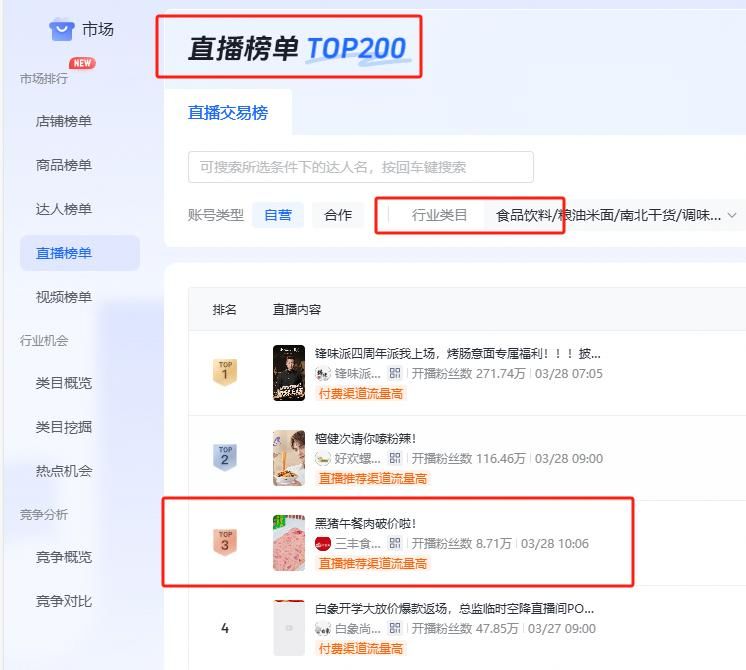
Core Viewpoint - The recent discussions around pre-prepared meals (pre-cooked dishes) have gained significant attention, particularly regarding their definition and standards in China [1][4]. Definition and Standards - The definition of pre-prepared meals includes dishes made from agricultural products that require heating or cooking before consumption, as outlined in a notification from six government departments set to be implemented in March 2024 [4]. - Certain items, such as ready-to-eat meals and various staple foods, are explicitly excluded from the pre-prepared meal category [4]. - Two key requirements for pre-prepared meals are the prohibition of preservatives to ensure natural and healthy food, and the necessity for cold chain logistics to maintain freshness and safety [4]. Consumer Concerns - There is ongoing consumer skepticism regarding the safety and quality standards of pre-prepared meals due to the lack of a detailed standard system in the industry [5]. - Consumers express concerns about the taste and quality of pre-prepared meals compared to freshly cooked dishes, with some associating them with poor hygiene practices [6][11]. - The issue of consumer rights is highlighted, with calls for transparency from businesses regarding whether meals are pre-prepared, allowing consumers to make informed choices [11]. Industry Perspective - The central kitchen model used by businesses allows for standardization and efficiency, which can reduce costs and increase productivity [6]. - Industry experts emphasize the need for improved national standards to address the controversies surrounding pre-prepared meals, advocating for a nuanced approach rather than a one-size-fits-all solution [12]. - Recommendations include implementing a licensing management system to ensure that only compliant businesses can produce pre-prepared meals, thereby enhancing industry regulation and consumer trust [12].
盖世食品拟发不超1.5亿可转债 2021上市2募资共1.6亿
Zhong Guo Jing Ji Wang· 2025-07-23 06:30
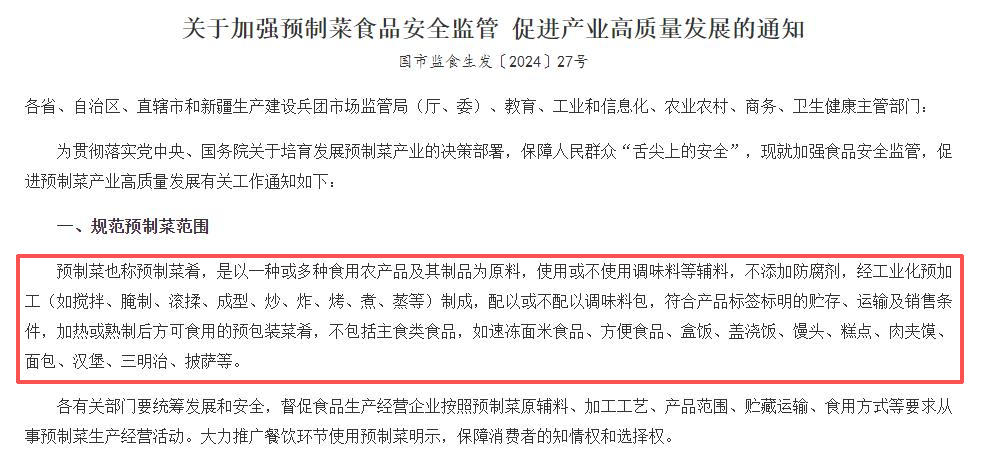
Core Points - Gais Food (836826.BJ) disclosed a draft prospectus for the issuance of convertible bonds to specific investors, aiming to raise up to 150 million yuan for a project to produce 7,000 tons of prefabricated aquatic products and meat annually [1][3] Group 1: Fundraising Details - The total investment for the project is 161.38 million yuan, with the company planning to use the entire net proceeds from the bond issuance for this project [3] - The convertible bonds will be issued in a maximum quantity of 1.5 million units, with each bond having a face value of 100 yuan [3][4] - The bonds will have a term of six years from the date of issuance, with interest paid annually [4] Group 2: Issuance Process - The issuance will be conducted through a specific investor approach, pending approval from the Beijing Stock Exchange and the China Securities Regulatory Commission [3][4] - The final issuance targets will be determined through a competitive bidding process, ensuring all investors subscribe in cash at the same price and interest rate [4] Group 3: Previous Fundraising Activities - In December 2020, the company raised approximately 85.40 million yuan through a public offering of shares, with a price of 3.48 yuan per share [5] - In September 2022, the company raised about 77.40 million yuan through a private placement of shares at a price of 8.34 yuan per share [6] - The total funds raised from these two previous activities amounted to approximately 162.80 million yuan [7]

三丰武汉展会创新破圈:线上直播排名全国第三,线下试吃签单火爆
Zhong Guo Chan Ye Jing Ji Xin Xi Wang· 2025-04-03 07:37
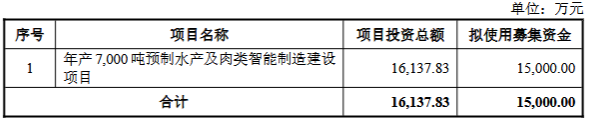
Group 1 - The 13th China Food Ingredients E-commerce Festival has successfully launched, showcasing Sanfeng Food's core products, including its popular large meat particle luncheon meat and the sub-brand Yilezai pig intestines [1][2] - Sanfeng's booth attracted nearly 1,000 merchants daily, demonstrating strong market appeal and leading position in the industry [1][2] - The festival featured over 5,500 exhibitors and 100,000 products, with a total exhibition area of 320,000 square meters, highlighting the growth of the prepared food market driven by the "lazy economy" and standardization trends in the catering industry [2] Group 2 - Sanfeng utilized an innovative "offline tasting + online live streaming" model, which effectively engaged various consumer groups and showcased product details in real-time [2][5] - The company's live streaming ranked third in the national food category on Douyin, indicating strong viewer engagement and positive feedback on product quality [3][5] - Sanfeng's new smart factory, set to begin operations in April, will enhance production efficiency and quality, featuring over 200 production devices and multiple intelligent production lines [5] Group 3 - Sanfeng's competitive advantage lies in its "quality foundation + digital empowerment + experiential marketing" strategy, which is crucial for navigating the increasingly competitive prepared food market [5] - The company has successfully exported its large meat particle luncheon meat to over 40 countries and regions, selling more than 30 million cans globally each year [5]