麻辣烫

Search documents
杨国福28元1斤豆芽贵过山姆?最新回应→
新华网财经· 2025-11-03 02:44
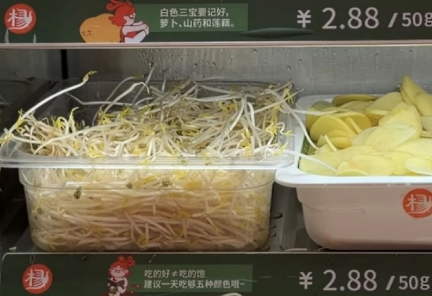
Core Insights - The price of green bean sprouts at Yang Guofu Spicy Hot Pot has sparked significant online discussion, with a price of 28.8 yuan per kilogram being compared unfavorably to Sam's Club's price of 8.25 yuan per kilogram [2] Pricing Analysis - Yang Guofu's green bean sprouts are priced at 2.88 yuan for 50 grams, equating to 28.8 yuan per kilogram, which many consumers find excessively high [2] - In contrast, Sam's Club offers organic green bean sprouts at 9.9 yuan for 600 grams, translating to 8.25 yuan per kilogram, highlighting a substantial price difference [2] Market Comparison - A survey of various hot pot restaurants, including Yang Guofu and Zhang Liang, revealed that vegetable prices generally exceed 25 yuan per kilogram, with some premium items reaching as high as 100 yuan per kilogram [2] - At Yang Guofu, the price for both meat and vegetables is set at 26.8 yuan per kilogram, while Zhang Liang charges 25.8 yuan per kilogram, indicating a trend of similar pricing strategies among competitors [2] Company Response - Yang Guofu's customer service indicated that there is no uniform pricing across its nationwide outlets, attributing this to varying operational costs such as rent and labor [2]

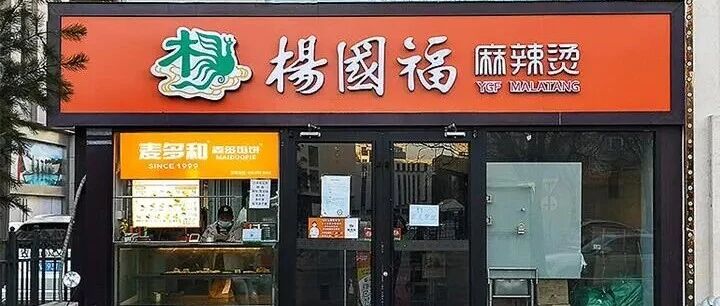
标价按50克计,换算成1斤28.8元!“杨国福豆芽”冲上热搜,网友直呼“吃不起”,客服:全国门店售价不统一
Mei Ri Jing Ji Xin Wen· 2025-11-02 11:27
Core Insights - The pricing controversy surrounding Yang Guofu's mung bean sprouts, priced at 28.8 yuan per kilogram, has sparked widespread discussion online, with comparisons to Sam's Club's organic mung bean sprouts priced at 8.25 yuan per kilogram [3][6] - The pricing strategy of various hot pot and noodle brands, including Yang Guofu, employs a weight-based pricing model that can mislead consumers, often leading to higher-than-expected bills [6][8] - Despite criticisms regarding pricing, the popularity of hot pot remains strong, particularly among younger consumers, with significant engagement on social media platforms [8] Pricing Controversy - Yang Guofu's mung bean sprouts are priced at 2.88 yuan for 50 grams, equating to 28.8 yuan per kilogram, which is significantly higher than competitors [3][6] - The pricing has led to public outcry, with many consumers expressing that the prices are exorbitant and labeling the brand as "luxury fast food" [6] - The company has stated that pricing varies by location due to differing operational costs, such as rent and labor [6] Industry Trends - The hot pot industry has seen rapid growth, with over 30,000 establishments projected by the end of 2024, particularly in second and third-tier cities [8] - The average consumer spending in hot pot restaurants ranges from 20 to 60 yuan, with a significant portion of establishments falling within the 20-40 yuan range [8] - Despite the increase in the number of outlets, the industry lacks a dominant player, with over half of the brands operating five or fewer locations [8] Market Dynamics - The growth rate of the hot pot industry has slowed, with a projected net growth rate of approximately 7% for 2024, down from over 20% in previous years [8] - The opening rate for new establishments is expected to rebound to 38% in 2025, while the closure rate remains high at around 16% [8]
张亮麻辣烫股权生变:创始人股权 “隐身” 香港,藏着上市关键布局?
Sou Hu Cai Jing· 2025-09-30 06:48
Core Viewpoint - The recent equity change involving Zhang Liang's company has sparked industry attention, indicating a strategic move towards capitalizing and globalizing the brand, while also highlighting the common challenges faced by the hot pot category in going public [2] Group 1: Equity Restructuring - The equity adjustment is not a withdrawal but a pre-IPO structural upgrade, with Zhang Liang maintaining control through a Hong Kong company, which facilitates foreign investment and aligns with Hong Kong's requirements for clear ownership [3] - This restructuring aims to isolate risks by legally separating personal and corporate assets, addressing public confusion over brand identity linked to the founder [3] Group 2: Expansion and Quality Control - Zhang Liang's brand has over 6,000 global stores as of April 2025, with operations in nearly 60 cities across 20 countries, although expansion growth has slowed due to funding gaps and competition from leading rivals [4] - The brand relies heavily on a franchise model, with less than 2% of stores being company-owned, which has led to quality control issues as franchisees face supply chain cost pressures [5] Group 3: Challenges in Going Public - The brand faces three main challenges in its IPO pursuit: low profitability due to reliance on franchise fees, trust issues related to food safety, and valuation concerns in a market that is becoming cautious towards the hot pot category [6][7] - Despite efforts to improve supply chain management and reduce costs for franchisees, the overall profitability structure remains weak, and the brand's ability to replicate overseas success is uncertain [7][8]
没有张亮的麻辣烫,还对味儿吗?
3 6 Ke· 2025-09-23 12:20
Core Viewpoint - Zhang Liang's exit from direct shareholder status in Zhang Liang Spicy Hot Pot indicates a shift towards optimizing the equity structure and potentially preparing for future capital market entry [1][5] Company Overview - Zhang Liang Spicy Hot Pot has evolved from a regional specialty to a national brand, with over 6,000 stores across China, contributing significantly to its status as a major player in the restaurant industry [2][5] - The brand's annual revenue exceeded 5 billion in 2019, with a compound annual growth rate of over 10% from 2016 to 2019, reflecting the rapid growth of the hot pot market [2][5] Market Dynamics - The hot pot market in China has reached a scale of over 1 trillion, with a projected growth to 1,565 billion by 2025, indicating ongoing expansion opportunities despite increasing competition [12][13] - Competitors like Yang Guofu and Liu Wenxiang are also significant players, with Yang Guofu operating over 7,000 stores and generating annual revenues exceeding 10 billion [12][13] Business Strategy - Zhang Liang Spicy Hot Pot has successfully differentiated itself through product innovation, such as modifying traditional spicy hot pot recipes to cater to broader tastes, and maintaining high standards for ingredients [4][5] - The company has established a robust supply chain, ensuring consistency in taste and quality across its outlets, which is crucial for maintaining brand reputation [4][5] Franchise Model - The franchise model has been a key growth driver, with a survival rate of over 90% for franchise stores, although the reliance on franchisees poses challenges in quality control and profitability [5][6] - The cost of opening a franchise store is approximately 180,000, with local support provided by regional offices [5] Challenges and Risks - The rising average price of meals, now around 40, has led to consumer backlash, with complaints about affordability and quality issues surfacing on social media [6][8] - The company faces scrutiny over food safety, with nearly 2,000 complaints reported, highlighting the difficulties in managing a large franchise network [8][11] International Expansion - Zhang Liang Spicy Hot Pot has begun international expansion, with over 100 stores opened in more than 20 countries, including recent openings in Paris and San Francisco, indicating a strategic move to tap into the global market [13][16] - The brand's success abroad is attributed to localizing products and maintaining a strong supply chain, which enhances its competitiveness in foreign markets [16][17]
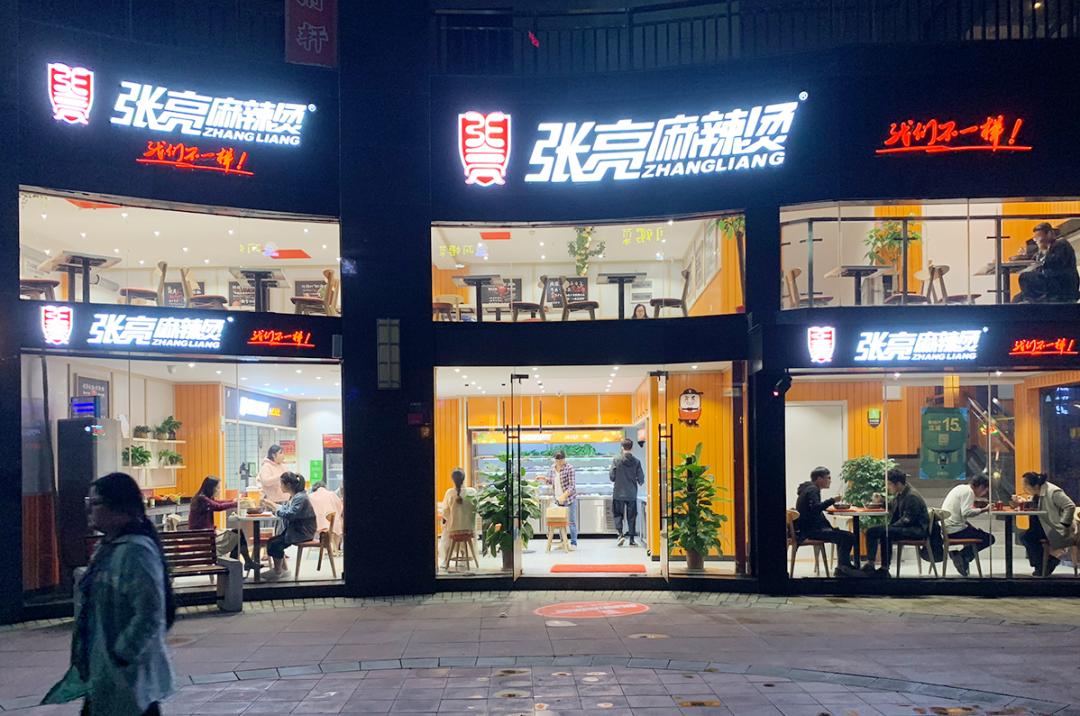
千亿麻辣烫江湖,面临成长的烦恼
3 6 Ke· 2025-09-11 00:33
Core Viewpoint - The news highlights the recent exit of Zhang Liang from Zhang Liang Spicy Hot Pot, sparking speculation about the company's potential plans for globalization or an upcoming IPO [1] Industry Overview - Zhang Liang Spicy Hot Pot, alongside Yang Guofu, has rapidly expanded through a franchise model, becoming a significant player in the spicy hot pot industry, which has a market size of nearly 1500 billion yuan [2][3] - The spicy hot pot industry faces challenges such as low brand concentration and product homogeneity, leading to cautious attitudes from capital markets [3] - The industry is characterized by intense competition from similar food categories like hot pot and skewers, as well as ongoing food safety concerns [4][5] Company Development - Zhang Liang Spicy Hot Pot and Yang Guofu have established themselves as the leading brands in the spicy hot pot market, with a combined store count expected to reach 6400 and 6900 respectively by January 2025 [14] - The company has seen significant growth in store openings, with nearly 3000 new stores opened between 2021 and 2022, and 762 new stores in 2023 [21] - Zhang Liang's recent shareholding adjustment is speculated to be a preparatory move for an IPO, potentially accelerating the company's globalization efforts [21] Market Dynamics - The spicy hot pot market is projected to grow to 1488 billion yuan in 2024, with a year-on-year increase of 5.3%, and is expected to surpass 1500 billion yuan this year [23] - As of January this year, there are approximately 150,000 spicy hot pot stores nationwide, with a year-on-year growth of 8.6% [23] - The market is fragmented, with a significant number of small chains and family-run businesses, while major brands like Zhang Liang and Yang Guofu dominate the landscape [23][24] Financial Performance - Yang Guofu's revenue from franchise sales has shown a steady increase, with figures of 9.77 billion yuan, 10.00 billion yuan, and 10.58 billion yuan from 2019 to the first three quarters of 2021, representing over 90% of total revenue [17][19] - Despite challenges, Yang Guofu has maintained a strong profit margin, with net profits of 1.81 billion yuan, 1.69 billion yuan, and 2.02 billion yuan during the same period [19] Consumer Trends - The average spending per customer at Zhang Liang Spicy Hot Pot has decreased from 34.3 yuan in 2019 to 29.3 yuan in 2021, indicating a downward trend in consumer spending [19] - Food safety issues have been a significant concern, with reports of foreign objects and food spoilage affecting consumer trust in major brands [27]

张亮退出,价格没退,麻辣烫“刺客”越卖越贵?
Hu Xiu· 2025-09-05 11:20
Core Viewpoint - The recent news about "Zhang Liang's Spicy Hot Pot without Zhang Liang" highlights the founder's exit from the management company, raising concerns about food safety and rising prices, leading to consumer dissatisfaction [1][4][14]. Company Changes - Zhang Liang has exited the Zhang Liang Enterprise Management Group, with Shanghai Yiyan Jiuding Enterprise Management Co., Ltd. becoming the new controlling shareholder, holding 100% of the company [4][6]. - Despite the exit, Zhang Liang still controls the group through complex shareholding structures [7]. Consumer Sentiment - Consumers have expressed dissatisfaction with the rising average spending at Zhang Liang's hot pot, which has increased from approximately 20 yuan to 40 yuan, leading to perceptions of the brand as "luxurious" [1][14]. - Complaints on platforms like Black Cat Complaints indicate significant hygiene issues across various franchise locations, with reports of foreign objects found in food [2][10]. Market Position - Zhang Liang's hot pot has over 6,000 stores globally, primarily franchise-operated, with a presence in 303 cities across 33 provinces [8]. - The franchise fees are set at 19,800 yuan per year for major cities and 10,000 yuan for smaller cities, with total startup costs ranging from 70,000 to 150,000 yuan depending on store size [9]. Industry Comparison - Compared to competitors like Yang Guofu, which has nearly 7,000 stores, Zhang Liang's hot pot is facing challenges in maintaining market share and brand reputation due to rising complaints and health concerns [15]. - Industry analysts suggest that food safety and consistent quality are critical for maintaining consumer trust and brand integrity in the competitive hot pot market [16].

张亮退出张亮麻辣烫直接股东,一年卖出超2亿碗,门店增速大幅放缓
Sou Hu Cai Jing· 2025-09-05 10:32
Core Viewpoint - The recent shareholder change in Zhang Liang Spicy Hot Pot has led to the founder Zhang Liang stepping down from direct shareholding, although he still maintains indirect control over the group through his wholly-owned company, Shanghai Yiyan Jiuding Enterprise Management Co., Ltd [2][4]. Company Structure - Zhang Liang Spicy Hot Pot's shareholder structure has changed, with Shanghai Yihang Business Development Co., Ltd. (holding 90%) and Zhang Liang (holding 10%) exiting, while Shanghai Yiyan Jiuding Enterprise Management Co., Ltd. has been added as a wholly-owned shareholder [4]. - Zhang Liang remains the ultimate controller of the group through his wholly-owned company, ensuring continued influence over operations [4]. Business Strategy - Analysts suggest that the shareholding change may be aimed at preparing for expansion into more business areas beyond spicy hot pot [3]. - The indirect shareholding structure allows for risk isolation, reducing personal exposure to company operational risks, and enhancing decision-making efficiency and flexibility [6]. Market Performance - Zhang Liang Spicy Hot Pot has sold over 200 million bowls in a year, with an average consumer spending of 26.42 yuan [7]. - The brand has over 6,000 global chain stores and 30 subsidiaries, covering 303 cities across 33 provinces and regions in China [8]. - The expansion rate of new stores has slowed down, with annual openings decreasing from 1,482 in 2021 to only 302 in 2025 [9]. Industry Outlook - The market size for the spicy hot pot sector is projected to grow from 1,488 billion yuan in 2024 to 1,565 billion yuan in 2025, reflecting a year-on-year growth of 5.3% [9].

张亮退出张亮麻辣烫直接股东 通过香港公司实现间接控制
智通财经网· 2025-09-05 07:35
Group 1 - The core point of the news is that Zhang Liang's company, Zhang Liang Enterprise Management (Group) Co., Ltd., has undergone a change in business structure, transitioning from a limited liability company (natural person investment or holding) to a limited liability company (foreign-invested enterprise wholly owned by a legal person) [1] - Zhang Liang and his wholly-owned Shanghai Yiheng Business Development Co., Ltd. have exited all shares of Zhang Liang Enterprise Management (Group) Co., Ltd., with the new shareholder being Shanghai Yiyanjiuming Enterprise Management Co., Ltd., which now holds 100% of the shares [1][2] - Zhang Liang remains the executive director and legal representative of the company, indicating that he still maintains indirect control over the group despite no longer holding direct shares [3] Group 2 - The restructuring is speculated to be a strategic move by Zhang Liang to facilitate overseas business expansion, financing, or preparation for an overseas listing [3] - Zhang Liang founded Zhang Liang Spicy Hot Pot in 2008, which has evolved into a leading brand in the domestic spicy hot pot industry by modifying traditional recipes [3] - Currently, Zhang Liang Spicy Hot Pot operates over 6,000 stores across more than 300 cities in 33 provinces and regions in China, with nearly 150 overseas locations primarily in Southeast Asia, North America, Australia, and Europe [3]
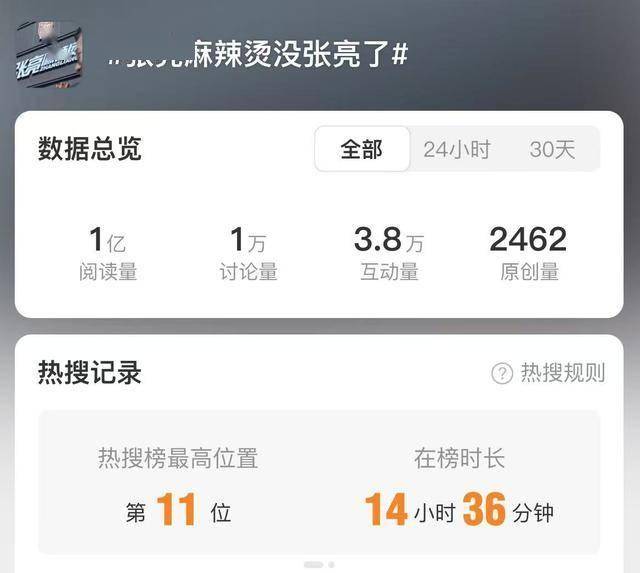
“张亮麻辣烫”没张亮了
Sou Hu Cai Jing· 2025-09-05 07:06
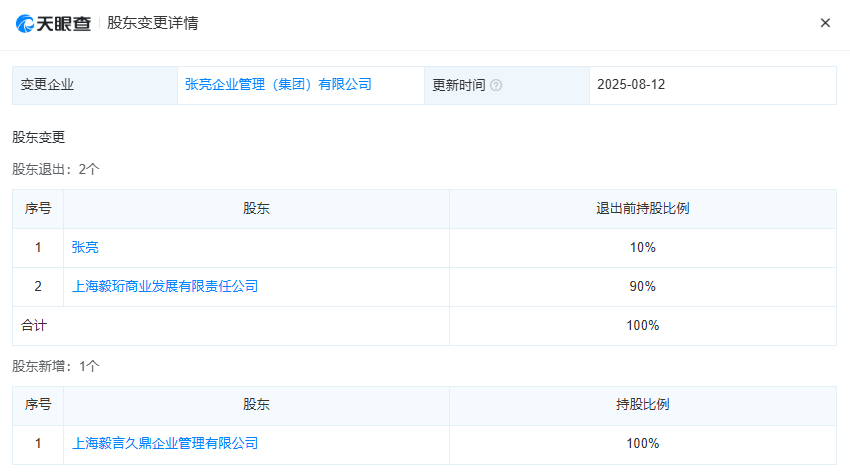
Core Viewpoint - The recent change in the ownership structure of Zhang Liang Spicy Hot Pot has led to the trending topic "Zhang Liang Spicy Hot Pot no longer has Zhang Liang" on social media, indicating a significant shift in the company's management and control [1]. Group 1: Ownership Changes - Zhang Liang Enterprise Management (Group) Co., Ltd. underwent a business change in early September, with Shanghai Yiyan Jiuding Enterprise Management Co., Ltd. becoming the new controlling shareholder, holding 100% equity with a registered capital of 50 million RMB [1]. - The previous shareholders, Shanghai Yihang Commercial Development Co., Ltd. (holding 90%) and founder Zhang Liang (holding 10%), have exited the shareholder list [2]. - Shanghai Yiyan Jiuding was established in 2025 with a registered capital of 1 million RMB, and its ultimate beneficiary is Zhang Liang, indicating that he still maintains indirect control over the group [3]. Group 2: Company Background - Zhang Liang Spicy Hot Pot was founded in 2008 and has evolved into a leading brand in the spicy hot pot industry, with over 6,000 global chain stores as of 2023, primarily franchise-operated [4]. - The company has expanded its market presence across more than 300 cities in over 30 provinces and autonomous regions in China, including deep penetration into county and town markets [4]. - The company has a diverse business scope, including enterprise management consulting, supply chain services, information consulting, and import-export trade, with a registered capital of 50 million RMB and 38 employees as of 2024 [4]. Group 3: Future Prospects - Analysts suggest that the recent equity changes may be aimed at preparing for further expansion into business areas beyond spicy hot pot [5].
张亮麻辣烫没有张亮?创始人张亮退出直接持股行列
Sou Hu Cai Jing· 2025-09-05 07:05
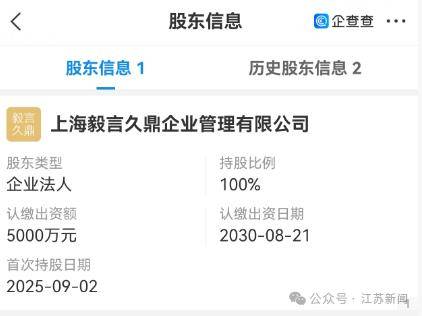
Core Points - Zhang Liang's Spicy Hot Pot has undergone a significant change in its shareholding structure, with Zhang Liang and the original major shareholder exiting the company [1][2] - The new controlling shareholder is Shanghai Yiyan Jiuding Enterprise Management Co., Ltd., which now holds 100% of the shares in Zhang Liang Enterprise Management (Group) Co., Ltd. [1][3] - Zhang Liang remains the legal representative and ultimate beneficiary of the new controlling company, indicating that he still retains indirect control over the group despite no longer holding direct shares [6][7] Company Overview - Zhang Liang's Spicy Hot Pot was founded in 2008 and has become a leading brand in the spicy hot pot industry in China, known for its unique broth made from bone soup and sesame paste [6][7] - As of 2023, the company has expanded to over 6,000 chain stores globally, primarily franchise-operated, covering more than 300 cities across over 30 provinces and regions in China, including deep penetration into county and town markets [6][7] - The recent shareholding change may indicate the company's intention to diversify its business beyond spicy hot pot [6]