杨国福麻辣烫

Search documents
2025年21世纪新消费大会优秀案例发布
2 1 Shi Ji Jing Ji Bao Dao· 2025-12-19 23:12
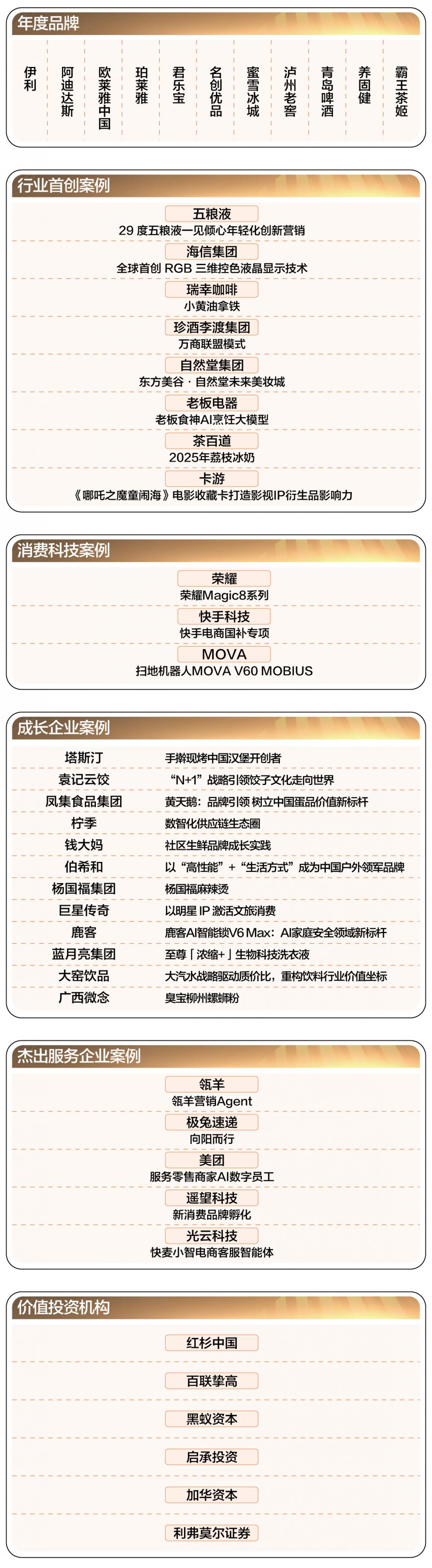
Core Insights - The "2025 New Consumption Conference" held on December 17, organized by 21st Century Business Herald, gathered over a hundred guests from various sectors including consumer brands, investment institutions, and brokers to discuss rapid growth, innovation, and strategies in the consumer industry [1] Group 1: Industry Trends - The conference theme was "Cross-Border Growth and Integrated Innovation," focusing on industry trends, business models, products and services, and growth logic [1] - The consumer industry is undergoing profound changes, with new forces emerging for growth, driven by factors such as the IP economy and the rise of the Z generation's purchasing power [1] - AI is beginning to permeate the fabric of consumption and e-commerce, indicating a technological shift in the industry [1] - The competition among major platforms in the takeaway market is creating a resonance between online and offline channels [1] - Chinese consumer brands are increasingly entering global markets, while niche sectors like pet and technology consumption are experiencing robust growth [1] Group 2: Awarded Excellent Cases - Categories for awarded excellent cases include Annual Brand Case, Industry Innovation Case, Growth Enterprise Case, Consumption Technology Case, Value Investment Institution Case, and Outstanding Service Enterprise Case [1] - Notable awarded companies in the Consumption Technology category include Honor with its Magic8 series, Kuaishou Technology with its e-commerce initiatives, and MOVA with its V60 MOBIUS robot vacuum [4] - Growth Enterprise cases feature companies like Tasting, Yuanji Yunjiao, and Fengji Food Group, showcasing innovative strategies and market leadership [5] - Outstanding Service Enterprise cases include companies like Lingzhu and Jitu Express, highlighting advancements in service delivery [6] - Value Investment Institutions recognized include Sequoia China, Bailian Zhigao, and others, reflecting strong investment interest in the consumer sector [8]

杨国福集团获2025中国餐饮创新头部品牌榜三大奖项
Zheng Quan Ri Bao Wang· 2025-12-11 13:43
Group 1 - The 11th China Catering Innovation Conference awarded Yang Guofu, founder of Yang Guofu Group, the "2025 China Catering Innovation Annual Pioneer" award [1] - Yang Guofu's brand won two significant awards: "Top 10 Fast Food Brands" and "Top 10 Chinese Cuisine Overseas Benchmark Brands" [1] - The awards are recognized as a valuable evaluation system in the catering industry, highlighting innovation and brand strength [1] Group 2 - Yang Guofu's brand has expanded globally, with nearly 200 overseas stores in 26 countries since opening its first store in Canada in 2017 [1] - Over 70% of customers at overseas stores are local diners, indicating strong acceptance of the brand in international markets [1] - Yang Guofu's brand has grown to nearly 7,000 stores worldwide over 22 years, establishing itself as a leading Chinese fast food brand [1] Group 3 - The company aims to uphold its core values of "sustainable health, win-win sharing, and gratitude" while creating value with partners [2] - The focus is on providing healthy and reassuring dining experiences for global consumers [2]
工作人员脚踩食材展柜,“天价麻辣烫”杨国福再曝食安问题
3 6 Ke· 2025-11-25 09:00
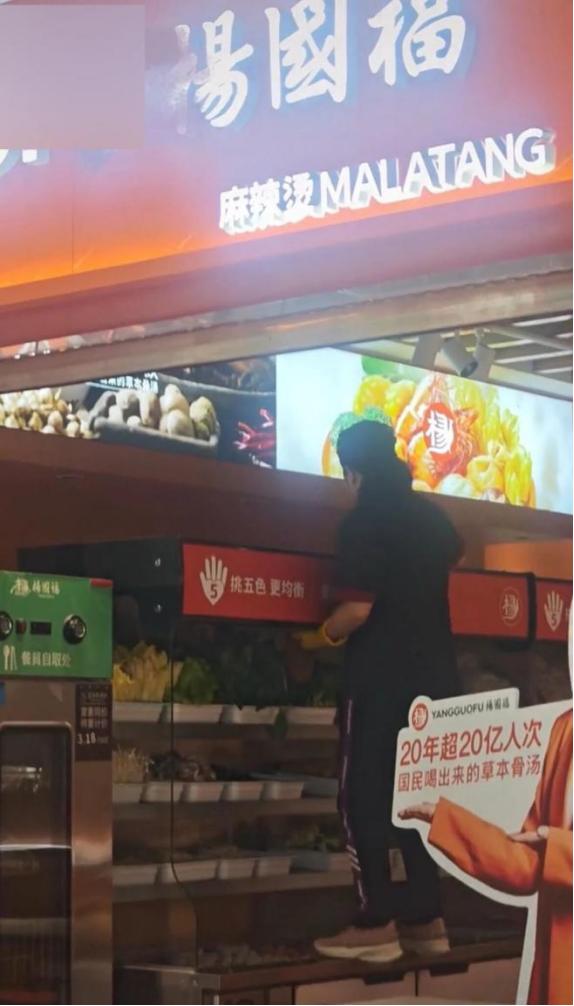
Core Viewpoint - The recent food safety incident involving Yang Guofu Spicy Hot Pot has raised significant concerns about the company's management practices and brand reputation, potentially leading to a consumer trust crisis and impacting its market position in the competitive restaurant industry [3][21]. Group 1: Incident Overview - A recent incident reported by a consumer showed staff at a Yang Guofu outlet stepping on food display cabinets for cleaning, prompting the company to destroy the affected ingredients and replace them with new ones [1]. - The company acknowledged the incident and stated that it would investigate the situation, but the response time for further details remains uncertain [3]. Group 2: Company Background - Yang Guofu Group, founded in 2000, has grown from a small street vendor to a leading brand in the spicy hot pot industry, with over 6,300 outlets across China and internationally [4][12]. - The company adopted a franchise model in 2007, which significantly contributed to its rapid expansion, with 99.9% of its restaurants being franchises as of 2021 [9][11]. Group 3: Financial Performance - The company's financial data shows revenue of 1.182 billion RMB in 2019 and 1.114 billion RMB in 2020, with gross profits of 329.8 million RMB and 319.7 million RMB respectively [6][7]. - The average customer spending has been around 30 RMB, although it has faced criticism for higher pricing compared to competitors [24][23]. Group 4: Food Safety Concerns - The company has faced multiple food safety complaints, including incidents of rodents and unsanitary conditions in its outlets, leading to public apologies and temporary closures for investigations [13][18]. - As of November 2025, there have been 2,565 complaints against the company, primarily focused on food quality and safety issues [21][22]. Group 5: Pricing Strategy - Yang Guofu's pricing strategy has come under scrutiny, with reports of high prices for menu items compared to competitors, leading to consumer backlash and perceptions of poor value [23][25]. - The average price per dish has been noted to be higher than the industry average, which may alienate cost-sensitive consumers [23][31]. Group 6: Future Outlook - The company faces the dual challenge of restoring its brand image while managing food safety and pricing issues in a highly competitive market [31]. - The ongoing scrutiny and consumer feedback will be critical for Yang Guofu as it navigates its future strategies in the restaurant industry [31].
200块一碗的天价麻辣烫,让老外重新认识中餐
3 6 Ke· 2025-11-10 09:44
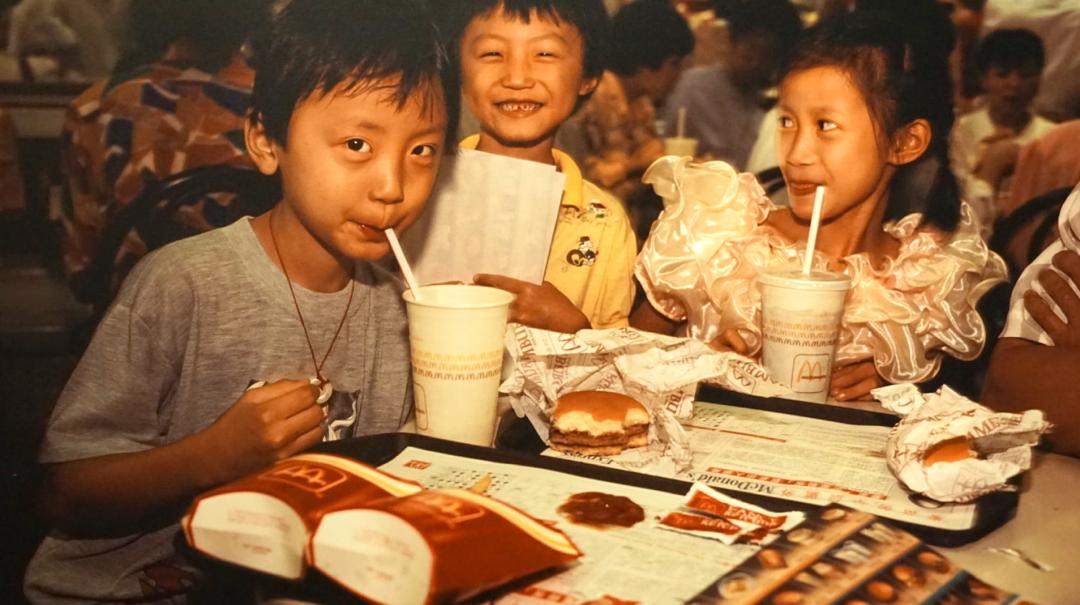
Core Insights - The article discusses the surprising success of Chinese hot pot chain Yang Guofu in international markets, particularly in Europe and Japan, where it is perceived as a premium dining option compared to Western fast food chains like McDonald's and KFC [5][9][11]. Group 1: Market Positioning - Yang Guofu's average customer spending in Germany is reported to be 2.5 times that of McDonald's, with a price of 2.89 euros per 100g, translating to approximately 23.70 RMB [7][9]. - In Japan, Yang Guofu's pricing strategy is also competitive, with a price of 400 yen per 100g, leading to an average meal cost of around 140 RMB, while local McDonald's meals range from 30 to 40 RMB [11][13]. - The brand has expanded to over 200 locations across 25 countries, maintaining a pricing strategy that positions it above Western fast food chains [11][27]. Group 2: Consumer Behavior - Yang Guofu has become a sensation in Japan, often requiring customers to wait 1 to 2 hours for a table, indicating strong demand and popularity [15][21]. - The unique flavor profile of Yang Guofu's offerings, which includes a variety of ingredients and spicy flavors, resonates well with local consumers, leading to a perception of high value [21][24]. - European consumers have adapted their dining experience, often enjoying hot pot in a more leisurely manner, contrasting with the fast-paced consumption typical in China [32][50]. Group 3: Competitive Landscape - Yang Guofu faces competition from another hot pot chain, Zhang Liang, which has also expanded internationally, with similar pricing strategies [34][35]. - The rivalry between Yang Guofu and Zhang Liang is evident on social media, where consumers express preferences for each brand's unique offerings [37][39]. - Both brands have successfully maintained their supply chains, offering familiar Chinese beverages alongside their food, enhancing the authenticity of the dining experience [39][41]. Group 4: Industry Trends - The article highlights a shift in the international perception of Chinese cuisine, with hot pot and similar concepts gaining traction as appealing dining options, contrasting with traditional Chinese restaurants that have struggled abroad [59][65]. - The success of these chains suggests that simplified, standardized food offerings can thrive in foreign markets, as they cater to local tastes without the complexities of traditional Chinese cooking [51][66]. - The trend indicates a growing acceptance of modified Chinese cuisine that prioritizes flavor and experience over authenticity, allowing for broader market appeal [65][67].
一斤豆芽28.8元,杨国福的天价麻辣烫到底卖给谁?
3 6 Ke· 2025-11-07 06:25
Core Viewpoint - The recent pricing controversy surrounding Yang Guofu's hotpot, specifically the price of 28.8 yuan per pound for bean sprouts, highlights the broader challenges in the Chinese fast food industry regarding pricing strategies and consumer perception [1][6][12] Company Summary - Yang Guofu's pricing for green bean sprouts is set at 2.88 yuan for 50 grams, equating to 28.8 yuan per pound, which is significantly higher than the market price of 8.25 yuan per pound for organic bean sprouts at Sam's Club [3][4] - The company has stated that pricing varies across its nationwide outlets due to local cost considerations, such as rent and labor [3] - The pricing strategy employed by Yang Guofu, which uses unconventional measurement units to present lower prices, is a common practice in the restaurant industry, potentially misleading consumers [3][6] Industry Summary - The pricing of common ingredients like bean sprouts in the hotpot industry has raised consumer concerns, as these items are typically inexpensive in local markets [6][11] - The rise of self-service dining models like hotpot has created a demand for personalized dining experiences, but the increasing prices have become a focal point of criticism [8][9] - The hotpot industry, traditionally known for its affordability, is experiencing a shift towards premiumization, with some brands attempting to attract higher-end consumers through improved quality and dining experiences [9][11] - Yang Guofu's current pricing strategy appears to deviate from value matching principles, risking the loss of cost-conscious consumers while failing to attract a genuine high-end clientele [11][12]
“月薪万元,不敢吃麻辣烫”?杨国福“28.8元豆芽”上热搜
Mei Ri Jing Ji Xin Wen· 2025-11-04 14:27
Core Insights - The recent price controversy surrounding Yang Guofu's spicy hotpot has drawn significant public attention, particularly due to the high price of green bean sprouts at 28.8 yuan per kilogram, which is notably higher than competitors like Sam's Club [1][2] - Yang Guofu's business model, which utilizes a weight-based pricing strategy, is facing scrutiny as consumer perceptions shift towards more affordable and value-driven options in the market [1][6] Pricing Strategy - Yang Guofu's pricing for green bean sprouts is set at 2.88 yuan for 50 grams, translating to approximately 28.8 yuan per kilogram, which is significantly higher than the 8.25 yuan per kilogram price at Sam's Club [2] - The company has not established a uniform pricing policy across its outlets, leading to inconsistencies in pricing and potential consumer confusion [2][5] Market Position and Competition - Yang Guofu is one of the leading brands in the spicy hotpot sector, with a reported expansion to nearly 7,000 outlets, including around 200 overseas [9][10] - The brand is facing increasing competition from similar dining options such as hotpot and skewered dishes, which are encroaching on its market share [10][11] Consumer Perception and Brand Image - The brand's strategy of "weight-based pricing" has been criticized for potentially misleading consumers, as it can result in higher perceived costs compared to traditional pricing models [6][7] - Recent food safety issues have further complicated Yang Guofu's brand image, with reports of unsanitary conditions in some locations, prompting the company to enhance its food safety protocols [10] Future Growth Strategies - In response to competitive pressures, Yang Guofu has diversified its offerings by entering the spicy hotpot and small hotpot markets, aiming to leverage its existing supply chain capabilities [11] - The company is focusing on maintaining low costs and ensuring food safety as key factors for success in these new market segments [11]
“月薪万元,不敢吃麻辣烫”?杨国福“28.8元豆芽”上热搜,但外卖绿豆芽35.8元1斤!专家:利润往往出在素菜上
Mei Ri Jing Ji Xin Wen· 2025-11-04 13:40
Core Insights - The article discusses the recent price controversy surrounding Yang Guofu's hot pot chain, particularly the high price of ingredients like mung bean sprouts, which has sparked public outrage and scrutiny [1][2] - Yang Guofu is facing dual pressures from public opinion and market competition, as consumer attraction to chain brands is declining compared to more affordable options [7] Company Overview - Yang Guofu, a leading chain in the hot pot industry, submitted a listing application to the Hong Kong Stock Exchange in February 2022, aiming to become the "first hot pot stock" [8] - As of September 30, 2021, Yang Guofu operated 5,783 restaurants, including 21 overseas locations, and has since expanded to nearly 7,000 restaurants, with around 200 overseas [8] Pricing Strategy - The pricing strategy of "weight-based pricing" has been criticized for potentially misleading consumers, as the cost of ingredients can be significantly higher than market prices [6][9] - The average consumer spending at chain hot pot brands is 31.4 yuan, which is 35% higher than the overall average of 23.2 yuan for hot pot [7] Market Competition - The hot pot market is becoming increasingly competitive, with similar pricing models and offerings across brands, leading to pressure from related categories like hot pot and skewered dishes [9] - Yang Guofu has recently ventured into the hot pot and herbal hot pot markets, launching new products to seek growth opportunities, but faces stiff competition from established brands [9] Quality Control and Safety Issues - Yang Guofu has faced multiple food safety issues, including a recent incident involving a rodent at one of its locations, prompting the company to enhance its food safety management and training [8] - The balance between rapid expansion and maintaining service quality remains a significant challenge for the company [8]
杨国福能否靠麻辣香锅、小火锅赛道突围?
Mei Ri Jing Ji Xin Wen· 2025-11-04 13:33
Core Viewpoint - The controversy surrounding the high prices of ingredients at Yang Guofu's hotpot chain, particularly the price of mung bean sprouts at 28.8 yuan per kilogram, has sparked public outrage and raised questions about the company's pricing strategy and consumer perception [1][2]. Pricing Strategy - Yang Guofu's pricing for mung bean sprouts is significantly higher than competitors, with a price of 28.8 yuan per kilogram compared to 8.25 yuan per kilogram at Sam's Club [2]. - The company has not implemented a unified pricing strategy across its locations, attributing price variations to local costs such as rent and labor [2]. - The "weight-based pricing" model, which allows consumers to choose their ingredients, has been successful but may mislead consumers regarding actual costs, leading to negative brand perception [3][5]. Market Position and Competition - According to the "2025 Hotpot Development Report," Yang Guofu remains a leading brand in the hotpot sector, but its appeal is declining compared to more affordable competitors [4]. - The average consumer spending at chain hotpot brands is 31.4 yuan, which is 35% higher than the overall average of 23.2 yuan for hotpot [4]. - The company faces intense competition from similar food categories such as hotpot and skewers, which are encroaching on its market share [7][8]. Expansion and New Ventures - Yang Guofu submitted a listing application to the Hong Kong Stock Exchange in February 2022, aiming to become the first publicly listed hotpot company [6]. - The company has expanded its restaurant network from 5,783 to nearly 7,000 locations, including around 200 overseas [6]. - In response to competitive pressures, Yang Guofu has ventured into new categories such as herbal hotpot and small hotpot, leveraging its existing supply chain capabilities [8]. Quality Control and Consumer Trust - The company has faced criticism for inconsistent service quality and food safety issues, including a recent incident involving a rodent at one of its locations [7]. - Yang Guofu has initiated measures to improve food safety management and training across its outlets [7]. - Analysts suggest that the company should focus on improving product quality and customer experience rather than solely on pricing strategies [5].
热搜!一斤豆芽28.8元,“天价”杨国福的万店梦还有戏吗?
凤凰网财经· 2025-11-03 07:23
Core Viewpoint - The article discusses the pricing strategy and food safety issues of Yang Guofu's spicy hot pot chain, highlighting the significant price discrepancies and past food safety scandals that have affected consumer perception and brand reputation [1][3][5]. Pricing Strategy - Yang Guofu's mung bean sprouts are priced at 2.88 yuan for 50g, equating to 28.8 yuan per kilogram, which is significantly higher than the 9.9 yuan for 600g at Sam's Club, translating to 8.25 yuan per kilogram [1]. - The company has inconsistent pricing across its nationwide stores, attributing this to varying local costs such as rent and labor [3]. - The article notes that unconventional measurement units are often used to obscure actual prices, leading consumers to unknowingly pay higher amounts [3]. Financial Performance - According to the 2022 prospectus, Yang Guofu's revenue for 2019, 2020, and the first nine months of 2021 were 1.182 billion yuan, 1.114 billion yuan, and 1.163 billion yuan, respectively, with profits of 181 million yuan, 169 million yuan, and 202 million yuan [4]. - The gross profit margins for the same periods were 27.9%, 28.7%, and 30.2% [4]. - The company operates 5,621 stores with an average consumer spending of 25.68 yuan, but has seen a reduction in the number of franchise stores from over 6,000 in 2021 [4]. Food Safety Issues - Yang Guofu has faced multiple food safety scandals, including reports of mice in food areas and unsanitary food handling practices, leading to public outcry and regulatory scrutiny [5][6][7]. - In 2021, an investigation revealed severe hygiene violations, including the presence of rodent droppings and improper food handling, prompting a nationwide inspection of over 3,000 stores [7]. - In 2023, a consumer reported finding a bat in a self-heating hot pot, further damaging the brand's reputation [6][9]. Consumer Sentiment - The brand has received numerous complaints related to food safety, with over 2,300 complaints logged, primarily concerning foreign objects found in food [9]. - Consumers have expressed dissatisfaction with the brand's response to complaints, citing issues such as being blocked by the business after reporting food safety concerns [9].

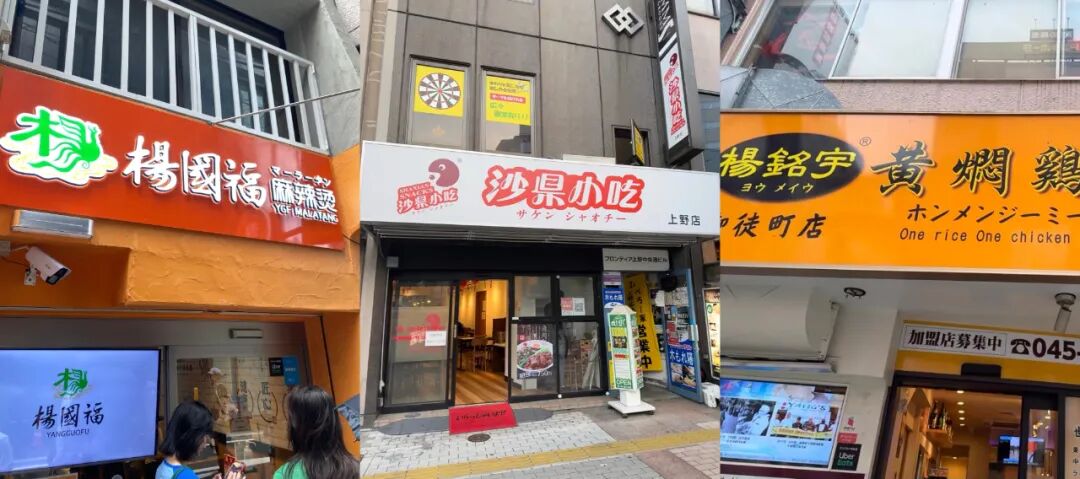
日本街头,正被中国“拼好饭”攻陷
3 6 Ke· 2025-10-17 01:45
Core Insights - The article discusses the rising popularity of Chinese street food, particularly spicy hot pot (麻辣烫), in Japan, highlighting how these foods have transformed from local staples to trendy, high-end dining experiences for young Japanese consumers [1][3][21] Group 1: Popularity of Chinese Street Food in Japan - Spicy hot pot has become a new social currency in Japan, with an average price of 2000 yen (approximately 95 RMB) for 500 grams, making it a premium choice compared to traditional Japanese meals [3][9] - The experience of queuing for hot pot has turned into a social media event, with young people eagerly sharing their experiences online [3][5] - The selection process for ingredients is likened to shopping for cosmetics, enhancing the overall dining experience [5][11] Group 2: Cultural Adaptation and Innovation - Chinese dishes have been localized in Japan, with unique adaptations such as ice cream-filled fried dough sticks and strawberry-flavored mapo tofu, appealing to local tastes [13][18] - The core recipes of these dishes remain unchanged, but their presentation and marketing have been revamped to create a sense of luxury and exclusivity [12][20] Group 3: Global Expansion of Chinese Cuisine - The article emphasizes that Chinese cuisine is gaining traction globally, with examples like Din Tai Fung in Dubai and Liu Yishou hot pot in New York, showcasing the versatility and appeal of Chinese flavors [23][25] - The supply chain advantages from Chinese pre-made food companies ensure consistent quality and lower costs, facilitating the global expansion of these once-local street foods [21][25]