Online Music

Search documents
中国游戏与娱乐_2026 展望:围绕竞争、海外扩张与 AI 应用的核心主题与争议-China Games & Entertainment_ 2026 Outlook_ Framing key themes_debates around competition, overseas expansion and AI applications
2026-01-19 02:32
Summary of China Games & Entertainment Sector Conference Call Industry Overview - The China Games & Entertainment sector experienced a significant rally in 2025, with large and mid-cap stocks increasing by 50-80%, compared to the HSCEI's 26% rise. The strong momentum continued into 2026, with some stocks rising by 30% against a 3-5% increase in corresponding indexes [2][21][24]. Key Themes and Debates for 2026 1. **Competition from Bytedance** - Bytedance's competition is a major concern for investors, particularly in selective growth verticals such as short drama and mini-game platforms. Music streaming remains a key debate, with TME maintaining a differentiated position in ARPU and non-subs revenue growth [3][26]. 2. **Overseas Market Expansion** - Chinese game publishers, led by Tencent and NetEase, are accelerating their overseas expansion. The current market share of Chinese game publishers in overseas markets is around 15%, with expectations to increase significantly due to capital intensity, technology capabilities, and ongoing content upgrades [4][43][78]. 3. **AI Applications** - AI is expected to disrupt and benefit existing ecosystems by reducing production costs and enhancing efficiency. The gaming and advertising sectors are particularly poised for revenue uplift and efficiency gains through AI applications. The total addressable market (TAM) for AI video generation tools is projected to expand 10X by 2028 [5][54][56]. 4. **Policy Tailwinds for Content Creation** - Favorable domestic policies are expected to support content creation, leading to faster production turnaround and increased consumer demand across the entertainment industry. The number of game approvals increased by 25% year-over-year in 2025, indicating a supportive regulatory environment [10][66][69]. Company-Specific Insights - **Kuaishou** - Revenue forecast for Kuaishou has been raised to US$280 million for 2026, with expectations of ARR reaching US$350-400 million. The company is positioned to benefit from AI narratives and has seen its share price double over the past 12 months [11][12]. - **NetEase** - NetEase is trading at a discount compared to peers due to its lower overseas revenue exposure. Upcoming titles like "Sea of Remnants" and "Ananta" are expected to drive significant growth in overseas markets [13][14]. - **Bilibili** - Bilibili is anticipated to deliver strong margin expansion, with advertising revenue growth projected at 20% year-over-year in 2026. The company is expected to benefit from a turnaround in its gaming business [12][14]. - **Tencent** - Tencent's core business is expected to see low to mid-teens growth year-over-year, driven by strong game pipelines and monetization benefits from AI in advertising [14][15]. - **Tencent Music (TME)** - TME's valuation has decreased by 30% due to competition concerns, but the company maintains a strong market position with diversified revenue streams and double-digit music revenue growth [16][12]. Additional Insights - The mini-games sector is identified as the fastest-growing segment, with a 34.39% year-over-year revenue increase in 2025, reaching US$7.7 billion [77]. - The overall Chinese video game market is projected to grow at a CAGR of 7-8% through 2028, with 2025 revenues reaching a record high of 350.8 billion yuan (US$50 billion) [76]. - The integration of AI across various processes in the entertainment industry is expected to enhance cost efficiency and revenue generation, with significant implications for advertising and content creation [54][55]. Conclusion The China Games & Entertainment sector is poised for growth driven by overseas expansion, AI integration, and supportive policies. Companies like Tencent, NetEase, Kuaishou, and Bilibili are well-positioned to capitalize on these trends, although competition from Bytedance remains a critical factor to monitor.


汽水音乐狙击网易云音乐:以“AI野路子”的名义
3 6 Ke· 2026-01-12 02:35
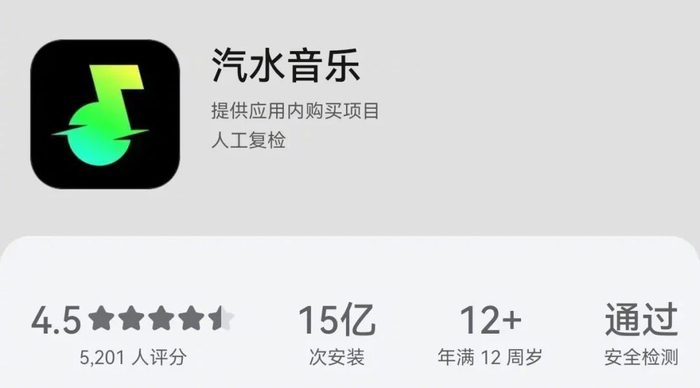
Core Insights - The rise of Qishui Music, a music app without exclusive big-name artists or popular variety show soundtracks, is challenging established players like NetEase Cloud Music, with monthly active users reaching 120 million and a year-on-year growth of over 90% [2][4] - The integration of AI-generated music has significantly contributed to this growth, with AI artists like "Dazhuzhen" gaining popularity on platforms like Douyin, indicating a potential for even higher user engagement [4][8] Group 1: Market Dynamics - The traditional online music industry has operated under a "copyright is king" principle, where companies like Tencent Music and NetEase Cloud Music invest heavily in exclusive content to retain users [13][14] - The emergence of AI-generated music disrupts this model, as it allows for the mass production of appealing songs, diminishing the value of exclusive copyrights [15][20] - Qishui Music's business model, which relies on free listening and ad monetization, contrasts with the subscription-based models of Tencent and NetEase, positioning it advantageously in the current market [20][22] Group 2: AI Integration - The recent advancements in AI music generation tools, such as Suno's V5 version, have enabled the creation of consistent AI artists, addressing previous limitations in sound quality and artist identity [8][9] - The ecosystem of Douyin and Qishui Music allows for music to serve as a functional component of short video content, emphasizing emotional engagement over traditional artist recognition [10][11] - AI's ability to produce high-frequency, emotionally resonant music segments aligns perfectly with the demands of short video platforms, leading to rapid user acquisition for Qishui Music [9][12] Group 3: Competitive Landscape - The competitive landscape is shifting, with traditional music companies struggling to adapt to the new AI-driven model, reminiscent of Nokia's decline in the face of disruptive technology [17][22] - Both Tencent and NetEase are cautiously exploring AI music but face challenges in balancing user expectations and copyright concerns, while Qishui Music embraces AI without such constraints [20][25] - The success of Qishui Music illustrates a broader trend where companies leverage AI to bypass traditional barriers, fundamentally altering the rules of competition in the music industry [23][26]

用抖音“喂”出1.2亿用户 字节跳动的音乐阳谋
Bei Jing Shang Bao· 2025-12-30 08:32
Core Insights - The article discusses the rapid growth of "Soda Music," a music app developed by ByteDance, which has reached 120 million monthly active users, closely approaching NetEase Cloud Music's 147 million users [1][6] - Soda Music serves as a music library for various content platforms like Douyin and aims to redefine how users discover songs, rather than competing directly with established music platforms [1][3] - The app's growth is heavily reliant on Douyin's traffic and algorithm support, but it faces challenges in monetization and sustaining user engagement in the long term [1][10] User Engagement and Growth - Soda Music's user acquisition is primarily driven by its integration with Douyin, where users can easily access the app while browsing [1][6] - The app has a high user retention rate, with 82.1% of its monthly active users coming from Douyin [6] - Users appreciate the app's free membership model, which allows them to access music by watching ads, making it a cost-effective alternative to other music services [7][9] Market Position and Strategy - The app was launched in June 2022, initially functioning as a music collection tool for Douyin users, but has since evolved to include a diverse music library [3][9] - Soda Music's catalog includes popular Douyin songs, various covers, classic tracks, and original works, including AI-generated music [9] - The app's strategy includes leveraging AI to enhance user experience and engagement, with plans to establish an "AI Music Creation Lab" to support creators [9][10] Monetization Challenges - Despite its rapid user growth, Soda Music's "free + low-cost" model raises concerns about its ability to cover rising copyright and operational costs [10][17] - The app aims to replicate Douyin's successful user acquisition strategy but faces difficulties in establishing a stable revenue model through advertising and subscription services [10][15] - Industry experts suggest that Soda Music may struggle to attract core music users due to its limited copyright content, positioning it more as a supplementary service within ByteDance's broader entertainment ecosystem [17][18] Competitive Landscape - The competitive dynamics of the online music platform market remain largely unchanged, with no significant evidence that ByteDance is prioritizing Soda Music over other ventures [17] - The introduction of "Tomato Music," another free music app by ByteDance, indicates that the company is exploring multiple avenues in the music space [18]
我的年度歌手是“陌生人”? 网易云年度报告遭质疑数据“注水”
Xin Lang Cai Jing· 2025-12-29 08:52
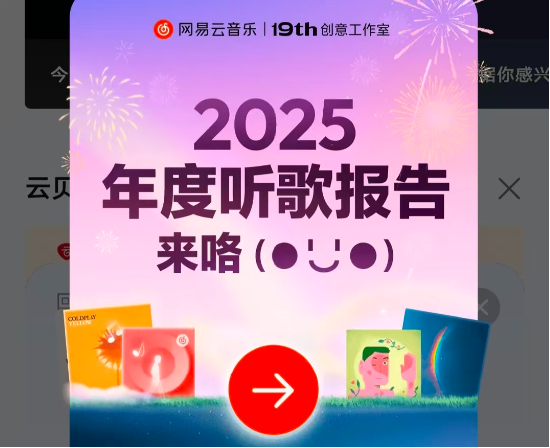
Core Viewpoint - NetEase Cloud Music's 2025 annual listening report has sparked controversy among users who question the accuracy of the data presented, with many claiming discrepancies in their listening habits and the reported statistics [2][11]. User Feedback and Concerns - Users have expressed dissatisfaction with the annual report, claiming it includes songs they have never listened to and misrepresents their listening history, leading to frustration and confusion [4][13]. - Some users reported that the customer service responses felt automated and unhelpful, with complaints about the inability to modify the generated annual summary [4][13]. Official Response - NetEase Cloud Music's customer service stated that the data for the 2025 annual report is collected from January 1 to December 20 and includes all valid listening data across platforms, emphasizing that the report cannot be modified once generated [5][14]. - The company has introduced an upgrade allowing users to manually adjust their "Artist of the Year," "Song of the Year," and "Album of the Year" from the top five in each category, although the original data remains unchanged [5][14]. Financial Performance - NetEase reported a net income of 28.4 billion yuan for Q3 2025, a year-on-year increase of 8.2%, while the net income for NetEase Cloud Music reached 2 billion yuan, reflecting a decline of 1.8% year-on-year, marking the fourth consecutive quarter of revenue decline for the music service [6][15]. Market Competition - The competitive landscape for online music platforms is intensifying, with Tencent Music reporting a total revenue of 8.46 billion yuan in Q3 2025, a year-on-year increase of 20.6%, and a net profit of 2.48 billion yuan, up 27.7% [7][16]. - New entrants like Soda Music are rapidly gaining market share, with active users reaching 12 million, surpassing competitors and closing in on NetEase Cloud Music's 14.7 million active users [7][16]. Industry Challenges - Traditional online music platforms like Tencent Music and NetEase Cloud Music face significant threats from free music platforms, which, despite lacking premium content, attract a large user base [8][17]. - Analysts emphasize the importance of music copyright in the competitive landscape, noting that NetEase has struggled to keep pace with Tencent in this area, highlighting the need for innovative content strategies to remain relevant [8][17].
“汽水”汹涌,“云村”告急
3 6 Ke· 2025-12-15 12:32
Core Insights - The online music industry is experiencing a shift, with Qishui Music rapidly gaining users and challenging NetEase Cloud Music's position as the second-largest player in the market [1][2]. User Metrics - Qishui Music has reached 120 million monthly active users, closing in on NetEase Cloud Music's 147 million [1]. - NetEase Cloud Music's monthly active users have declined from 183 million in 2021 to 147 million, indicating a significant drop in user engagement [2][4]. Revenue Trends - NetEase Cloud Music's net revenue has decreased for four consecutive quarters, with Q3 2025 revenue at 2 billion yuan, down 1.8% year-over-year [4]. - Revenue declines for the previous quarters were 5.3%, 8.4%, and 3.5% respectively [4]. Competitive Landscape - NetEase Cloud Music faces pressure from both Tencent Music, which has a stronghold due to its multi-platform integration and copyright resources, and Qishui Music, which leverages Douyin's user base [4][6]. - Qishui Music's strategy mirrors that of NetEase Cloud Music in targeting users and content, leading to direct competition [5]. User Demographics - Qishui Music targets price-sensitive users and has successfully attracted a large number of users from lower-tier markets through its free listening and low-cost membership strategies [6]. - The overlap of users between Douyin and Qishui Music is significant, with 38% of users utilizing both platforms [6]. Content Strategy - Both platforms are struggling with a lack of access to popular music copyrights, leading to similar content strategies that focus on supporting independent artists and creating viral hits [7]. - Qishui Music's top 1000 songs show that 86% originated from Douyin, indicating a strong influence of viral content on its platform [7]. Future Outlook - Despite Qishui Music's rapid growth, its long-term success is uncertain due to unclear strategic positioning within ByteDance and the challenges of monetizing its user base [9][10]. - The commercial viability of Qishui Music remains questionable, as its revenue from advertising is low and its subscription conversion rate is significantly lower than that of Tencent Music and NetEase Cloud Music [11][12].
月活1.2亿的汽水音乐,仍在“浅水区”
3 6 Ke· 2025-12-09 10:23
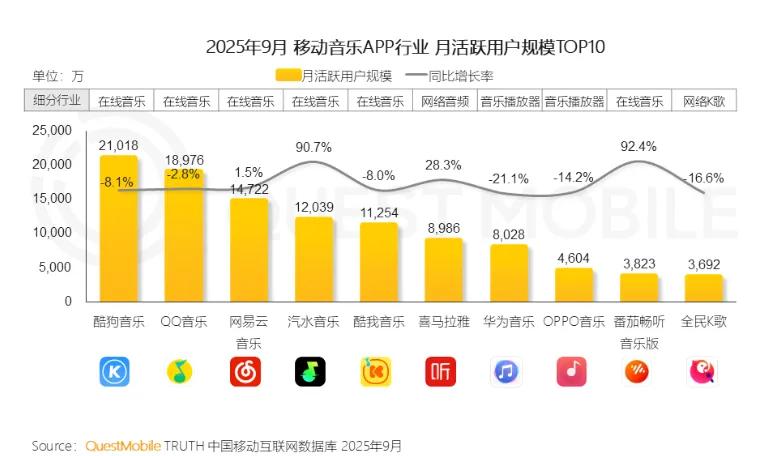
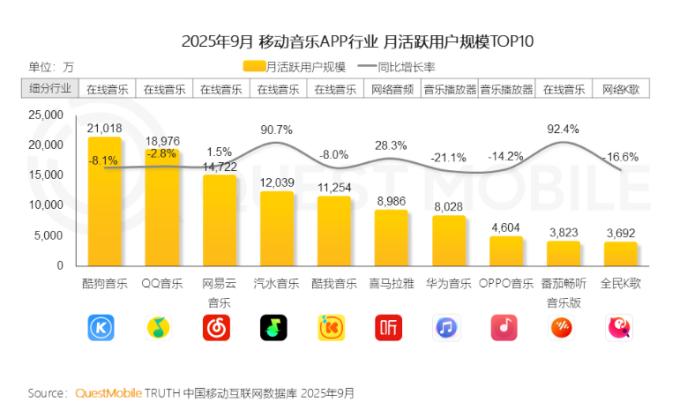
Core Insights - The rise of Soda Music is significantly driven by its relationship with Douyin, which has allowed it to rapidly gain market share and user engagement [2][4][12] - Soda Music's monthly active users reached 120 million by September 2025, marking a growth of over 90% year-on-year, positioning it as a formidable competitor in the online music space [1][4] - However, 82.1% of Soda Music's traffic is sourced from Douyin, raising concerns about its long-term sustainability and independence [4][5] Group 1: Market Position and Growth - Soda Music has emerged as a challenger in the online music market, ranking fourth among mobile music apps, following KuGou, QQ Music, and NetEase Cloud Music [1] - The app's user base primarily consists of younger demographics, particularly those born in the 1980s and 1990s, with a notable presence in lower-tier cities [6] - The platform's growth strategy has relied heavily on a free model, attracting users through daily logins and ad-based rewards [2][4] Group 2: Challenges and Risks - The dependency on Douyin for traffic poses a risk; any changes in Douyin's strategy could adversely affect Soda Music's growth trajectory [4][5] - The platform faces a dilemma in monetization, balancing between ad revenue and subscription models, with the latter being crucial for long-term sustainability [8][12] - Soda Music's user engagement is characterized by low frequency and short listening times, which complicates its ability to convert users into paying subscribers [6][8] Group 3: Content and Ecosystem Development - To transition from a market disruptor to a core player, Soda Music must build a robust content library and ecosystem, which currently lags behind established competitors like Tencent Music and NetEase Cloud Music [9][11] - The platform's focus on trending songs limits its ability to meet diverse user needs for classic and nostalgic music, which is essential for user retention [11][12] - Building a community and emotional connection with users is critical for Soda Music to evolve from a passive service to an active music platform [11][12]
腾讯音乐_投资者电话会要点
2025-12-08 15:36
Summary of Tencent Music Entertainment Group (TME) Investor Call Company Overview - **Company**: Tencent Music Entertainment Group (TME) - **Ticker**: TME US - **Date of Call**: December 3, 2025 - **Sector**: Internet & New Media Key Points Industry Position and Competition - TME is confident in maintaining its leadership in China's online music market due to its focus on user cohorts, extensive content library, and ecosystem advantages [2][2][2] - Despite Soda Music (owned by ByteDance) surpassing 100 million monthly active users (MAUs) in July 2025, TME differentiates itself by attracting more engaged users who prefer personalized experiences and artist connections [2][2][2] - TME's music library includes over 100 million tracks, significantly broader than Soda Music's focus on popular hits [2][2][2] - TME's monetization strategy includes subscriptions and value-added services, contrasting with Soda Music's reliance on advertising [2][2][2] Subscription Services - TME anticipates low-teens growth in music subscription revenue for 2026, driven by an increase in paying users and improvement in average revenue per paying user (ARPPU) [3][3][3] - The Super VIP (SVIP) program is expected to enhance user engagement, with SVIP members listening over 100 minutes daily, 20 minutes more than regular users [4][4][4] - SVIP retention rates have improved from mid-50% to mid-70%, with benefits including high-quality sound, concert access, and exclusive content [4][4][4] - TME aims to increase SVIP users from approximately 20 million to 50 million based on historical consumption patterns [4][4][4] Non-Subscription Revenue Growth - TME projects over 20% growth in non-subscription music service revenue for 2026, driven by advertising, concerts, and fan economy initiatives [6][6][6] - Advertising revenue growth is attributed to diversified channels, AI enhancements, and innovative ad formats [7][7][7] - TME is optimistic about expanding its share in the fragmented concert market, currently valued at CNY 40-50 billion, leveraging its large user base and artist relationships [10][10][10] Financial Considerations - The concert business has a low gross profit margin (GPM) in the mid-single digits to teens, while merchandise has a higher GPM in the mid-to-high teens [11][11][11] - TME expects some dilution in GPM due to increased revenue from concerts and merchandise but anticipates moderation over time due to economies of scale [11][11][11] New Initiatives - TME launched a profitable "Bubble" service on QQ music, focusing on onboarding more artists and localizing features for Chinese users [12][12][12] - The acquisition of Ximalaya is pending government approval and is expected to enhance TME's financials and content offerings [13][13][13] International Strategy - TME plans to explore concert and fan economy opportunities in Southeast Asia and Greater China, while deprioritizing global subscription expansion due to high costs and competition [14][14][14] Stock Rating - TME maintains a "Buy" rating with a target price of USD 26.00, while the closing price on December 3, 2025, was USD 18.31 [8][8][8] Risks - Potential risks include higher-than-expected user churn, lower growth in paying users, and regulatory tightening affecting monetization initiatives [21][21][21]
汽水音乐崛起的冷思考:抖音「附属业务」能否自立?
3 6 Ke· 2025-12-05 11:38
Core Insights - The rise of Soda Music is notable, with monthly active users reaching 120 million by 2025, growing over 90% [1][4] - Soda Music's growth is heavily reliant on Douyin, with over 80% of its traffic coming from the platform, raising questions about its ability to sustain growth independently [3][10] Group 1: Growth Dynamics - Soda Music's rapid ascent in the online music market is attributed to Douyin's massive user base, allowing it to bypass traditional user acquisition challenges [4][6] - Douyin plans to increase daily recommended traffic to Soda Music to 500 million by 2025, further enhancing its visibility [4][6] - The app's user overlap with traditional music platforms like QQ Music and NetEase Cloud Music is minimal, indicating that it is attracting a different user demographic [10][24] Group 2: Dependency on Douyin - Soda Music's functionality and user experience closely mirror Douyin's, facilitating seamless transitions for users between the two platforms [7][11] - The app's reliance on Douyin for user acquisition raises concerns about its long-term viability if Douyin's traffic diminishes [10][15] - The lack of significant investment in content rights from ByteDance suggests that Soda Music is not positioned as a strategic priority within the company [12][15] Group 3: Content and Copyright Challenges - Soda Music's content strategy focuses on trending songs and independent artists rather than building a comprehensive music library, limiting its competitive edge [11][15] - The platform's role as a "service provider" to Douyin constrains its ability to develop a robust copyright portfolio, which is crucial for competing with established players [11][15] - The absence of a strong copyright foundation makes it difficult for Soda Music to establish itself as a standalone entity in the competitive music market [15][24] Group 4: Commercialization and User Base - Soda Music's user acquisition strategy heavily emphasizes free access, attracting a price-sensitive user base primarily from lower-tier cities [19][20] - The platform's low conversion rate to paid subscriptions poses a significant challenge, as revenue from memberships is critical for sustainability [19][20] - As competitors focus on enhancing user value and increasing subscription revenue, Soda Music's free model may hinder its long-term financial health [20][24] Group 5: Future Outlook - The pressure from within ByteDance and the competitive landscape of the online music industry raises doubts about Soda Music's ability to maintain its growth trajectory [21][24] - Without establishing a self-sustaining revenue model and breaking free from its "service provider" role, Soda Music risks becoming a large but ineffective player in the market [24][25] - The future of Soda Music hinges on its ability to transition from dependence on Douyin to becoming a strong independent participant in the music industry [24][25]
专家:评估中国在线音乐行业的营收潜力与竞争格局 _Expert series_ Assessing revenue...__ Expert series_ Assessing revenue potential and competition in China‘s online music industry
2025-12-01 00:49
Summary of the Conference Call on China's Online Music Industry Industry Overview - The conference focused on the **China Internet Sector**, specifically the **online music industry** [2][4]. Key Players and Competition - **Soda Music** is experiencing rapid user growth, primarily attracting younger and price-sensitive users. The expert estimates that Soda Music's Monthly Active Users (MAU) could reach approximately **200 million** but will need to enhance its music library to penetrate deeper into established user preferences [2][3]. - **TME (Tencent Music Entertainment)** leverages its extensive content library and partnerships to provide a comprehensive music experience, while **NetEase Cloud Music** focuses on building a unique brand identity and community [4]. User Engagement and Content Strategy - A comprehensive content library and strong user engagement are essential for incumbents to maintain market share. New entrants like Soda Music may struggle to attract users due to entrenched listening habits and the challenges of offering lower-priced paid content [3]. - Soda Music aims to differentiate itself through improved content distribution and leveraging the Douyin ecosystem for music discovery [3][4]. Monetization Potential - The expert is optimistic about the long-term monetization potential of China's online music industry. The current paying ratio is estimated at **20%**, significantly lower than the **40-50%** seen in developed markets like the US and Europe. This gap is expected to narrow as younger users with better paying habits become more prevalent [5]. - The Average Revenue Per Paying User (ARPPU) in China is around **US$1.5/month**, which is lower than peers in similar income regions. The expert predicts ARPPU could rise to **US$4-5/month** over the next five years as disposable income allocated to music streaming increases [5]. Risks and Challenges - Key risks identified for the online music sector include: 1. Evolving competitive landscape and intensifying competition 2. Rapid changes in technology and user preferences 3. Uncertain monetization strategies 4. Rising costs associated with traffic acquisition and content [7]. Conclusion - The online music industry in China is poised for growth, driven by user engagement and monetization opportunities. However, competition from emerging platforms like Soda Music and the need for established players to innovate and adapt to changing user preferences present significant challenges [2][5][7].
当音乐遇到算法,抖音和腾讯谁占上风?
创业邦· 2025-11-26 03:34
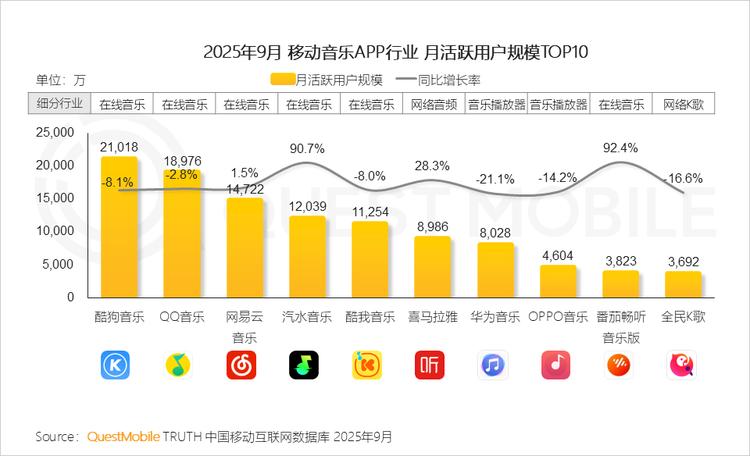
Core Viewpoint - The online music industry is transitioning from a copyright-driven model to an algorithm-driven era, reshaping platform dynamics and user engagement [6][18]. Group 1: Historical Development - The initial phase of China's digital music industry was characterized by disorder, dominated by piracy and unauthorized content, with platforms like QQ Music and KuGou Music relying on user-uploaded content [8][9]. - The introduction of regulatory measures in 2015 led to significant content removal, marking the beginning of a copyright governance era, with over 2.2 million songs taken down by major platforms [11][9]. - The competitive landscape shifted as Tencent Music consolidated its platforms and established a dual-monopoly with NetEase Cloud Music, focusing on stable copyright partnerships and user retention [17][15]. Group 2: Platform Competition - Tencent Music and NetEase Cloud Music adopted different strategies: Tencent focused on traffic synergy and product differentiation, while NetEase emphasized community engagement and user-generated content [14][15]. - By 2020, Tencent Music reported a 56% increase in music subscription revenue, reaching 5.56 billion yuan, while NetEase Cloud Music faced a net loss of nearly 3 billion yuan despite generating 4.9 billion yuan in revenue [15][17]. Group 3: Emergence of New Competitors - The entry of Douyin with its "Soda Music" app disrupted the market by leveraging algorithm-driven content distribution, contrasting with traditional music apps that relied on user-initiated searches [19][20]. - By September 2025, Douyin's music products showed significant user growth, with "Tomato Listening" and "Soda Music" achieving 92.4% and 90.7% year-on-year growth, respectively, while Tencent's platforms experienced declines [20][22]. Group 4: Future Outlook - The digital music market is at a crossroads, facing the choice between strengthening content barriers through libraries and subscriptions or adopting algorithm-driven models for user engagement [24]. - The competition dynamics have shifted, with algorithmic recommendations becoming a key factor in user acquisition and retention, challenging the traditional value chain of music distribution [24][22].