
Semis

Search documents
中国每周动态-MXCN 下跌 1%;中美韩国会晤后美国下调对华关税;上调 2025-27 年 GDP 增长预期
2025-11-01 13:47
Summary of Key Points from the Conference Call Industry Overview - The conference call primarily discusses the **Chinese economy** and its macroeconomic indicators, particularly focusing on the **manufacturing sector** and **capital markets** in China. Core Insights and Arguments - **Trade Relations**: Following the meeting between President Xi and President Trump on October 30, the US announced a **10% reduction in fentanyl-related tariffs** on China and a partial loosening of export controls. In return, China agreed to postpone its rare earth controls for one year and resume soybean purchases [1][1][1]. - **GDP Growth Forecasts**: Economists have revised the **2025 real GDP growth forecast** for China to **5.0%** (up from **4.9%**), with **2026/27 forecasts** also increased to **4.8%** and **4.7%** respectively, driven by stronger export growth and government spending [1][1][1]. - **Market Performance**: The MXCN and CSI300 indices experienced losses of **1.5%** and **0.4%** respectively. However, there were **US$3.5 billion inflows** into the Southbound Connect this week, indicating continued interest in Chinese equities [1][1][1]. - **Industrial Profit and Revenue**: In September, industrial profit increased by **23.0%** year-over-year, while revenue rose by **3.3%** year-over-year [1][1][1]. - **PMI Indicators**: The NBS manufacturing PMI decreased to **49.0**, indicating contraction, while the non-manufacturing PMI slightly improved to **50.1** in October [1][1][1]. Additional Important Insights - **Capital Market Focus**: The CSRC Chair highlighted six key areas for capital markets under the **15th Five-Year Plan**, emphasizing the government's commitment to enhancing market conditions [1][1][1]. - **Loan Demand and Business Conditions**: The People's Bank of China (PBoC) Q3 surveys suggest marginally better loan demand and improved business conditions, indicating a potential recovery in the financial sector [4][4][4]. - **Sector Performance**: The **Materials** sector outperformed with a **3.1%** increase, while the **Real Estate** sector lagged with a **-1.5%** decline [3][3][3]. - **Earnings Growth Projections**: The consensus for **2025/26 EPS growth** is projected at **1%/16%** for MXCN and **15%/13%** for CSI300, with the **Materials** sector seeing the most significant upward revision [10][10][10]. Conclusion The conference call provided a comprehensive overview of the current state of the Chinese economy, highlighting the impact of trade relations, GDP growth forecasts, and sector performance. The insights suggest a cautiously optimistic outlook for the Chinese market, driven by government policies and improving economic indicators.
Rick Rieder: Blown away by earnings and productivity
Youtube· 2025-10-20 21:10
Economic Environment - The current economic environment is described as favorable, with second quarter GDP growth at 3.8% and third quarter expected to be around 3.3% [3] - Corporate earnings are performing well, with significant productivity improvements noted in areas such as inventory management, logistics, and automation [3][4] Cash Flow and Buybacks - Companies are generating substantial free cash flow, which allows for capital expenditures (capex) and stock buybacks, contributing to higher stock prices [6][8] - There is a historical level of cash on hand among companies, which is expected to continue driving market growth [4][5] Capital Expenditures - Intense levels of capex are being observed, which may impact the ability of companies to continue stock buybacks [7][8] - Despite high capex, companies still maintain sufficient free cash flow to support stock buybacks [8] Market Dynamics - The technology sector, particularly big tech, is highlighted as an exciting area for investment, with data utilization being a key driver [10] - There are concerns about market complacency, as evidenced by the performance of shorted stocks and the increasing concentration of portfolios in large tech companies [12][13] Investment Strategy - The low volatility in the markets allows for strategies to buy downside protection while maintaining long positions [13]
美国量化:十大主题-US Quant_ Top Ten Themes
2025-10-19 15:58
Summary of Key Points from the Conference Call Industry Overview - The S&P 500 is projected to achieve a third consecutive year of returns exceeding 20%, driven by advancements in AI and anticipated rate cuts [1][1] - The current market momentum remains robust despite renewed US-China trade tensions, with high price-to-earnings (PE) valuations [1][1] Core Themes Identified 1. **AI Propagation** - Rapid adoption of AI technologies is evident, with capital expenditure (capex) from major hyperscalers expected to remain high, indicating a long growth runway [2][21] - AI-related companies are projected to achieve a compound annual growth rate (CAGR) of 17.3% in earnings from 2026 to 2027 [2][21] - Key sub-themes include energy infrastructure, NeoCloud, hardware infrastructure, and compute (chips) [2][28] 2. **Onshoring/Reshoring Enablers** - The primary goal of tariffs is to incentivize manufacturing to return to the USA, which is expected to be a significant theme moving forward [3][3] - Companies already reporting increased revenues are being screened for potential investment opportunities [3][3] 3. **Rate Cuts** - Rate cuts typically align with economic downturns; however, the current economy is strong, suggesting that small-cap companies with high floating-rate debt will benefit the most [4][4] - Companies with significant floating-rate debt and upcoming maturities are being targeted for investment [4][4] 4. **Weak Dollar** - A weak dollar is anticipated to favor US stocks, particularly those with revenues in foreign currencies [5][5] - Companies in the semiconductor, tech hardware, and high-performance computing sectors are highlighted for their foreign sales exposure [5][5] 5. **Two-Paced Economy** - The economy is characterized by strong performance in tech, defense, and industrial sectors, while real GDP growth is expected to slow [6][6] - Companies with domestic revenues that correlate with the US economy are being screened for potential risks [6][6] 6. **De-dollarization** - There is a notable increase in the use of cryptocurrencies and gold as alternatives to the dollar, particularly among retail and central banks [7][7] 7. **Defensive Yield** - A focus on low-volatility, high-dividend yield stocks is recommended as a hedge against ongoing uncertainties, particularly related to US-China relations [7][7] 8. **Momentum** - Identifying stocks with no exposure to momentum and those with poor momentum is crucial for investment strategy [7][7] 9. **Horses for Courses** - An empirical study is used to identify the best valuation and fundamental factors for each industry, guiding long and short selections [7][7] 10. **ROIC Stars** - Companies with high and rising return on invested capital (ROIC) are favored, while those with peaking ROIC are to be avoided [7][7] Additional Insights - The performance of various themes indicates that crypto and gold have been the best-performing baskets, while poor momentum and peaking ROIC have lagged [16][16] - The thematic investing approach is increasingly significant, with AI being a standout driver of equity performance this year [21][21] - The top four hyperscalers (Microsoft, Amazon, Google, Meta) are expected to maintain high capital intensity, reflecting aggressive investment strategies [21][21] Conclusion - The conference call highlighted a range of investment themes and strategies that are expected to shape the market landscape, particularly focusing on AI, reshoring, and macroeconomic factors such as rate cuts and currency fluctuations. The emphasis on screening for companies aligned with these themes presents potential investment opportunities while also identifying risks associated with economic shifts.



北美连接器及其他组件_受人工智能资本支出持续和工业、汽车需求改善推动,对第三季度持积极态度-North America Connectors & Other Components_ Constructive Heading into 3Q on Continued AI Capex and Improved Industrial_Auto Demand
2025-10-16 13:07
Summary of Key Points from the Conference Call Industry Overview - The conference call focuses on the North American connectors and components industry, particularly in relation to AI capital expenditures and improved demand in industrial and automotive sectors [1][2]. Core Companies Discussed 1. **Amphenol Corp (APH)** - Expected to benefit from AI server demand and interconnect growth, with a projected revenue of $5.55 billion for F3Q25, slightly above street estimates [17]. - Anticipated EPS for F3Q25 is $0.81, up from previous estimates [17]. - The company is expected to see continued momentum due to its leadership in AI/Data Center interconnects and recent acquisitions [16]. 2. **Corning Inc (GLW)** - Projected revenues of $4.32 billion for F3Q25, exceeding street expectations [9]. - EPS estimate for F3Q25 is $0.68, slightly above previous estimates [9]. - The optical communications segment is expected to drive growth, supported by AI initiatives and domestic manufacturing commitments from major clients like Apple [8][53]. 3. **TE Connectivity Ltd (TEL)** - Expected revenue of $4.56 billion for F4Q25, slightly below street estimates [21]. - EPS estimate for F4Q25 is $2.30, in line with street expectations [21]. - The automotive sector, which constitutes approximately 40% of total revenues, is expected to provide a near-term tailwind [20][59]. Key Insights and Trends - **AI Capital Expenditures**: Citi has raised its 2026 AI Capex forecast for hyperscalers from $420 billion to $490 billion, indicating strong growth in data centers and related infrastructure [2]. - **Automotive Production**: The global automotive industry outlook has improved, with automakers adapting to new trade policies, leading to a favorable demand environment [2]. - **Industrial Demand**: While 3Q orders may show mixed trends, AI, data center, and electrification markets are expected to reflect strong underlying momentum [2]. Financial Projections - **Amphenol**: Target price set at $145, reflecting a premium P/E multiple due to growth characteristics and AI potential [48]. - **Corning**: Target price of $93 based on a sum-of-the-parts analysis, with expected margin expansion from display price increases and improved optical segment results [54]. - **TE Connectivity**: Target price of $250 based on a 23x P/E multiple, with a focus on the stabilization of the automotive market and growth in AI infrastructure [62]. Risks Identified - **Amphenol**: Risks include economic slowdowns, tech spending reductions, and raw material price increases [50]. - **Corning**: Risks involve LCD glass market fundamentals, recession impacts, and currency volatility [56]. - **TE Connectivity**: Risks include economic fluctuations affecting auto production and raw material price increases [63]. Additional Notes - The conference highlighted the importance of domestic manufacturing and strategic partnerships in driving growth for these companies, particularly in the context of increasing demand for connectivity solutions in AI applications [1][8][20].


Citi's Scott Chronert: Look for volatility into Q3, but be prepared to trade year end rally
Youtube· 2025-10-08 15:03
Market Outlook - The year-end target for the US equity market is set at 6,600, with a recent adjustment to 6,700, indicating a positive outlook for a 5% upside run into the end of the year [1][2] - Anticipation of solid Q3 results, but uncertainty exists regarding sufficient upside in estimates to support short-term market action [2][4] Earnings Expectations - EPS growth expectations for the index are around 8%, which may be challenging to achieve compared to Q2 results [3][4] - The market has been supported by a "beat and raise" narrative, but this may be difficult to sustain in the short term [4][5] Sector Analysis - Communication services have been downgraded to market weight after being overweight for two and a half years, indicating a cautious approach due to high pricing in the sector [5] - Technology and semiconductors remain overweight, with banks also in good shape, suggesting resilience in these sectors [6] Market Risks - Concerns exist regarding the AI-affected portion of the market, which constitutes roughly half of the S&P 500 market cap, due to heightened expectations [7][8] - Short-term volatility risks are acknowledged, particularly in the context of quarterly reporting [9] Consumer Sentiment - Labor conditions and valuation are key discussion points, with a focus on cyclical sectors like banks and certain retailers as the market leans into Q4 [10][11] - Despite potential issues in consumer sentiment and spending patterns, the upper half of the income distribution is expected to drive retail performance during the holiday season [12] Alternative Investments - Continued positive outlook for Bitcoin and Ether, with expectations for follow-through in these asset classes [13] - Gold and crypto are viewed as hedges in a momentum-driven equity market, indicating a strategic approach to navigating market conditions [14] Government Shutdown Impact - The government shutdown is considered a temporary issue, but prolonged uncertainty could have a more significant impact on the market [15]


Small cap earnings recession is over, says Citi's Chronert
Youtube· 2025-10-02 17:58
Core Viewpoint - The S&P 500 and NASDAQ are reaching new highs despite the ongoing government shutdown, indicating a resilient market environment. The overall strategy remains unchanged, but adjustments have been made for Q4, particularly in the communication services sector [1][2]. Market Strategy Adjustments - The company has lowered its position in communication services from overweight to market weight for the first time since 2023, reflecting a cautious approach as earnings season approaches [3]. - There is a significant expectation built into media stocks, suggesting that merely meeting or beating earnings expectations may not be sufficient to support stock prices in the near term [4]. Sector Insights - The technology sector, especially semiconductors and software, remains a positive focus, driven by the ongoing AI trend [5]. - The consumer discretionary sector has also been adjusted to market weight, indicating a strategic shift towards areas that may benefit from lower interest rates in the future [6][7]. Small and Mid-Cap Stocks - The company is increasingly optimistic about small and mid-cap stocks, which are traditionally more sensitive to economic cycles. The ideal time to invest in small caps is typically post-recession, and the current environment suggests a potential soft landing combined with lower Fed rates [9]. - Small and mid-cap stocks have experienced an earnings recession over the past two years, but recent Q2 results show the first positive inflection in earnings growth, indicating a potential turnaround [10].

资本支出追踪-科技和公用事业之外,资本支出削减占主导-Multi-Industry Capex Tracker_ Capex Tracker quick take_ Capex cuts prevail outside of Tech_Utilities
2025-09-30 02:22
Summary of Key Points from the Capex Tracker Industry Overview - The Capex Tracker indicates a trend of capital expenditure (Capex) cuts across various industries, with notable exceptions in Technology and Utilities [3][4]. Core Observations - General Industrial Capex is projected to have a compound annual growth rate (CAGR) of 5.5% for the period 2024-2028, which is a slight decrease of 0.4 percentage points compared to the previous update in July [3][4]. - Positive growth in Capex is observed in the following sectors: - **Datacenters**: 26.5% CAGR, an increase of 3.5 percentage points from July [4]. - **Pulp & Paper**: Improvement noted, but specific growth figures not provided [3]. - **Conventional Power Generation**: Positive outlook with companies like Wartsila and Accelleron showing growth [3]. - **Mining**: Companies such as Epiroc and FLSmidth are expected to benefit [3]. - Conversely, significant declines are noted in: - **Vehicles/Autos**: Negative growth, with a decrease of 1.8 percentage points to 2.0% CAGR [4]. - **Pharma and Biotech**: Both sectors are experiencing negative trends, with Biotech showing a decline of 8.6% [4]. Detailed Capex Growth by Sector - **Datacenters**: - 2025 Capex growth projected at 51.7%, a significant increase of 15.2 percentage points [4]. - **Renewables and T&D**: - 2025 Capex growth at 17.5%, down by 8.0 percentage points [4]. - **Semiconductors**: - 2025 Capex growth at 15.7%, a decrease of 1.2 percentage points [4]. - **Healthcare**: - 2025 Capex growth projected at 0.0%, indicating stagnation [4]. - **Consumer Sector**: - 2025 Capex growth at 0.7%, reflecting a decline of 1.1 percentage points [4]. Additional Insights - The Capex Tracker highlights a robust growth trajectory in Datacenters, Renewables, and Mining, while traditional sectors like Vehicles and Pharma are facing headwinds [4]. - The report emphasizes the importance of monitoring these trends for potential investment opportunities and risks in the respective sectors [3][4]. Conclusion - The Capex Tracker serves as a critical tool for understanding industry trends and making informed investment decisions, particularly in identifying sectors poised for growth versus those facing challenges [3][4].
中国每周快讯_MXCN上涨 1%,A 股持平;中美就 TikTok 所有权达成框架协议;8 月经济活动数据不及预期 MXCN gained 1% and A-shares flat; China and US reached framework deal for TikTok ownership; August activity data missed expectations
2025-09-22 01:00
Summary of Key Points from the Conference Call Industry Overview - The report discusses the performance of the Chinese equity market, specifically focusing on the MXCN and CSI300 indices, which saw a 1% gain and a 0.4% decline respectively [1][2]. - The macroeconomic environment in China is highlighted, with a framework agreement reached between China and the US regarding TikTok ownership, and a recent reduction in the Federal Open Market Committee (FOMC) fund rate by 25 basis points to 4.00-4.25% [1]. Core Insights and Arguments - **Economic Data**: August activity data in China missed expectations, particularly in investment, leading to a slowdown in government revenue and spending growth [1]. - **GDP Forecasts**: Economists have slightly raised the real GDP growth forecasts for 2025 and 2026 to 4.8% and 4.2% respectively, based on new export and policy assumptions [1]. - **Market Performance**: The MXCN and CSI300 indices are trading at forward price-to-earnings (P/E) ratios of 13.5x and 14.5x, with expected earnings per share (EPS) growth of 2% for 2025 and 16% for 2026 for MXCN [9]. - **Sector Performance**: Consumer discretionary and growth sectors outperformed, while financials lagged behind [8]. Additional Important Insights - **Liquidity Trends**: There has been a significant fund rotation from bonds to equities, indicating a liquidity rally in the A-share market [10]. - **AI Sector Influence**: AI proxies, particularly in upstream semiconductor cohorts, have been leading the recent rally in A-shares [12]. - **Retail Sentiment**: The A-shares Retail Sentiment proxy suggests potential market consolidation risks in the next three months, with varying expected returns based on sentiment levels [21]. - **Household Asset Allocation**: Chinese household balance sheets are heavily skewed towards real assets and cash, with a significant portion allocated to property [23]. - **Institutional Ownership**: Institutional equity ownership in Hong Kong and China remains comparatively low, indicating potential for growth in this area [25]. Conclusion - The report provides a comprehensive overview of the current state of the Chinese equity market, highlighting key economic indicators, sector performances, and potential risks and opportunities for investors. The insights suggest a cautious but optimistic outlook for the market, with specific attention to liquidity trends and sectoral shifts.
Two years into a decade-long AI investment trend, says Trivariate's Adam Parker
CNBC Television· 2025-09-10 20:16
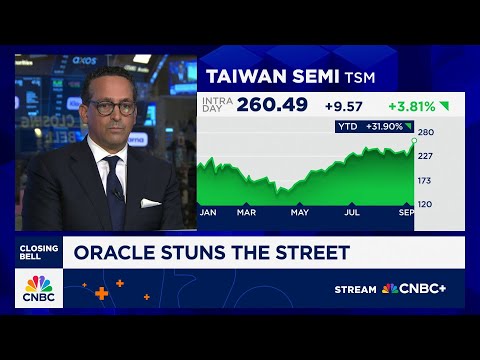
AI 行业趋势与机遇 - AI 趋势预计将持续十年,目前仍处于早期阶段 [2][3] - 运行股票投资组合时,必须持有 AI 敞口 [3] - Oracle 的云基础设施 AI 业务被低估,且医疗保健领域也存在潜力 [4] - 半导体计算领域在过去 30 多年里以高于 GDP 2% 的速度增长,预计未来五到七年将以高于 GDP 5-7% 的速度增长 [5] - Oracle 的积压订单巨大,Nvidia 首席执行官 Jensen 预计全球数据中心资本支出将从 6000 亿美元增长到 2028 年的 1 万亿美元,甚至可能在 2030 年达到 3-4 万亿美元 [7][8] 投资策略与风险 - 投资者最终将关注资本支出的回报,以及如何从受益者过渡到生产力受益者 [5] - 加速收入增长、利润率扩张和超出预期是关键,估值对选择标的影响不大 [6] - 建议超配半导体而非软件 [5] - 建议关注 Broadcom、Nvidia、Amazon 等超大规模企业,以及半导体产业链上的其他公司 [8][9] 关键公司与技术 - Nvidia 是 AI 领域的领头羊 [1] - Oracle 在云基础设施和医疗保健领域具有潜力 [4] - KLA、ASML、Applied Materials、Cadence 和 Synopsys 等公司至关重要 [9][10] - 台积电是最重要的资产 [9]
主题阿尔法-企业如何缓解关税影响:从二季度财报中我们了解到的情况-Thematic Alpha x US Public Policy-How Are Companies Mitigating Tariff Impacts What We Learned From 2Q Earnings
2025-09-06 07:23
Summary of Key Takeaways from the Earnings Call on Tariff Mitigation Strategies Industry Overview - The report focuses on the impact of tariffs on various sectors, particularly **Industrials**, **Healthcare**, and **Consumer Discretionary**. These sectors are identified as being most exposed to tariff risks [2][3][25]. Core Points and Arguments 1. **Mitigation Strategies**: Companies are employing five primary strategies to mitigate tariff impacts: - **Pricing Power**: Companies are increasingly passing costs onto consumers, with pricing power becoming the most frequently mentioned strategy, surpassing supply chain diversification [3][7][27]. - **Supplier Negotiation**: Companies are negotiating with suppliers to share the burden of tariff costs, particularly in the healthcare sector [4][46]. - **Redirecting Products**: Multinational companies are redirecting goods to markets without tariffs, which is a strategy being utilized by companies like Nike and Alcoa [13][61]. - **Stockpiling Inventory**: Companies are stockpiling inventory ahead of potential tariffs, although this is done cautiously due to high storage costs [4][43]. - **Diversifying Supply Chains**: While this strategy has seen a decline in mentions, it remains a long-term solution for many companies [3][33]. 2. **Tariff Rate Expectations**: An effective tariff rate of approximately **16%** is expected by year-end, with global baseline tariffs around **10%**. Tariffs on China and other regions are anticipated to be slightly higher [7][9]. 3. **Sector-Specific Insights**: - **Industrials**: Companies in this sector frequently mention pricing power as a key strategy. They are well-positioned to mitigate tariff risks [4][40]. - **Consumer Discretionary**: There is an increase in mentions of inventory stockpiling, reflecting a lag in tariff collection as companies work through existing inventory [4][43]. - **Healthcare**: Companies are focusing on negotiating with suppliers, indicating a shift towards flexible pricing strategies [4][46]. 4. **AI as a Wildcard Strategy**: The adoption of AI is emerging as a potential strategy for cost efficiency, although it has not yet been explicitly cited as a tariff mitigant. Companies using AI are shedding costs, which could help offset tariff impacts [8][16]. 5. **Trade Policy Uncertainty**: Ongoing trade policy uncertainty is expected to persist, with potential for higher tariff levels due to evolving negotiations and agreements with major trading partners [9][10][28]. Other Important Insights - **Sentiment Analysis**: Industrial management teams exhibit high confidence in their ability to mitigate tariff risks, while sectors like communication services and consumer staples show lower sentiment scores [18]. - **Dynamic Process**: Managing tariff risks is described as an ongoing, dynamic process, with companies continuously adapting their strategies in response to changing tariff landscapes [2][12]. - **Sector Performance**: The consumer discretionary sector is currently underweight in investment views due to the concentrated negative impact of tariffs [28]. This summary encapsulates the key takeaways from the earnings call regarding how companies are navigating the challenges posed by tariffs and the strategies they are implementing to mitigate these impacts.