
信托

Search documents
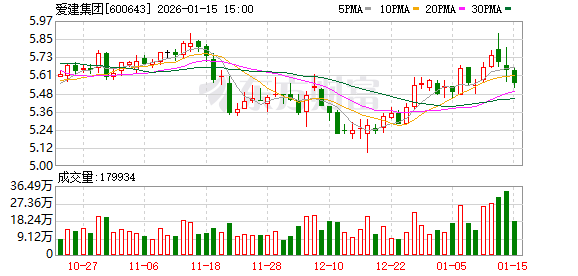
爱建集团:预计2025年净利润为负
Di Yi Cai Jing· 2026-01-15 14:09
(本文来自第一财经) 爱建集团公告,经财务部门初步测算,预计2025年度归属于上市公司股东的净利润为负值,公司2025年 年度经营业绩将出现亏损。 爱建集团公告,经财务部门初步测算,预计2025年度归属于上市公司股东的净利润为负值,公司2025年 年度经营业绩将出现亏损。 (本文来自第一财经) ...

爱建集团:2026年2月2日召开2026年第一次临时股东会
Zheng Quan Ri Bao· 2026-01-15 13:40
证券日报网讯 1月15日,爱建集团发布公告称,公司将于2026年2月2日召开2026年第一次临时股东会。 (文章来源:证券日报) ...

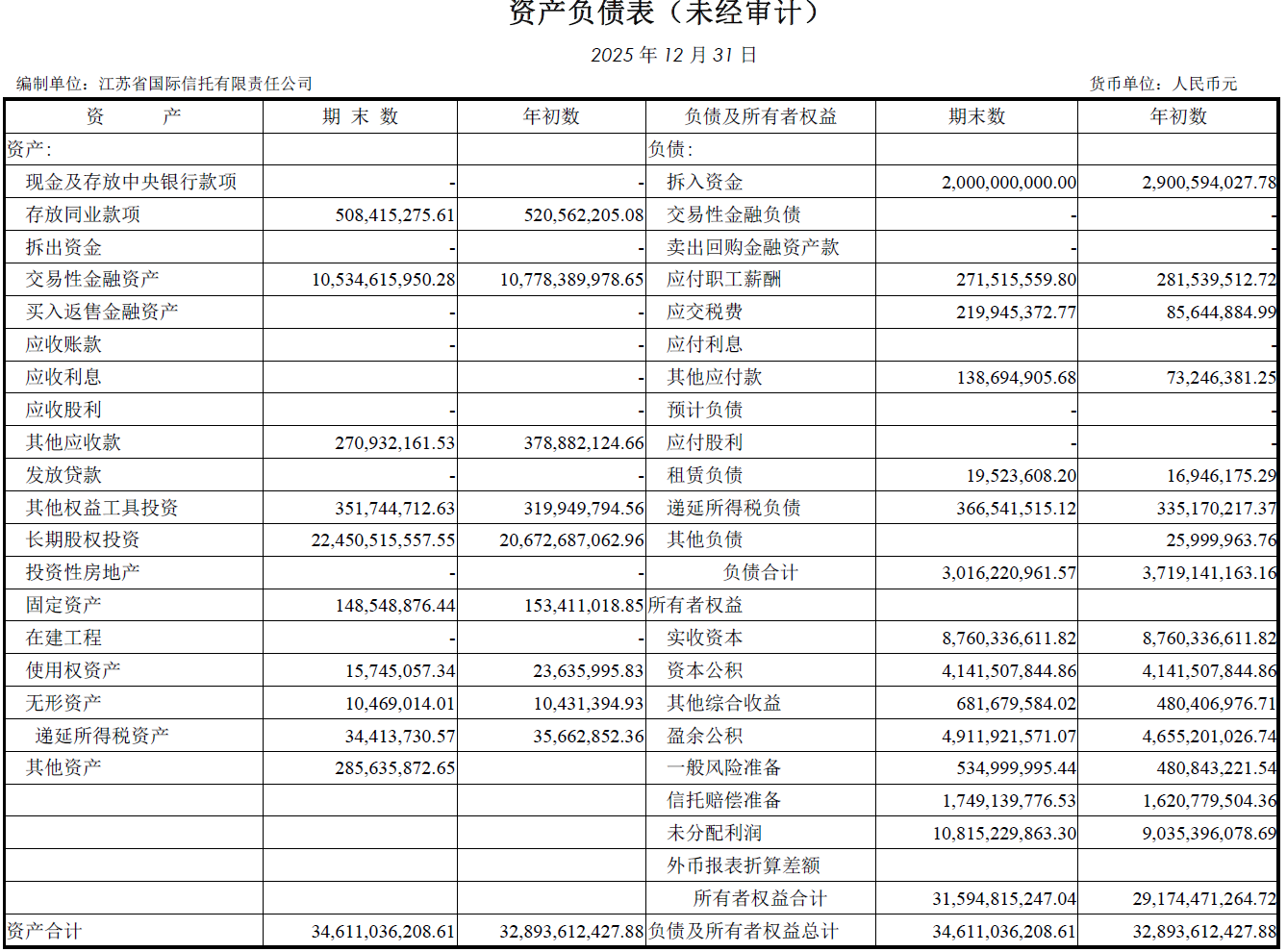
江苏信托2025年业绩出炉:投资收益成营收核心 净利润25.67亿元
Jin Rong Jie· 2026-01-15 09:29
近日,江苏国信发布自愿性信息披露公告,旗下控股子公司江苏信托2025年度未经审计的财务数据正式对外披露。 | 资 文 | 期末 数 | 年初数 | 负债及所有者权益 | 期末数 | | --- | --- | --- | --- | --- | | 资产: | | | 负债: | | | 现金及存放中央银行款项 | | | 拆入资金 | 2,000,000,000. | | 存放同业款项 | 508,415,275.61 | 520,562,205.08 | 交易性金融负债 | | | 拆出资金 | | | 卖出回购金融资产款 | | | 交易性金融资产 | 10,534,615,950.28 | 10,778,389,978.65 | 应付职工新酬 | 271,515,559. | | 买入返售金融资产 | | | 应交税费 | 219,945,372 | | 应收账款 | | | 应付利息 | | | 应收利息 | | | 其他应付款 | 138,694,905 | | 应收股利 | | | 预计负债 | | | 其他应收款 | 270,932,161.53 | 378,882,124.66 | 应付股利 ...
中诚信托以金融活水助力交通强国建设
Jin Rong Jie Zi Xun· 2026-01-15 06:21
Core Viewpoint - The company is actively supporting the construction of modern transportation infrastructure in line with the central government's directive to accelerate the development of a strong transportation nation through financial initiatives [1][3]. Group 1: Project Overview - The "启程20号" trust plan has a newly added trust scale of 1.76 million, bringing the total established scale to approximately 5.82 million [1]. - The total scale of the "启程20号" project is capped at 20.05 million, focusing on equity asset management for qualified investors [1]. - The project collaborates with China Railway Capital Co., Ltd. to fund the PPP project of the Wuzhou-Yulin-Qinzhou Highway (Yulin to Pubei section), which has an estimated total investment of 178.57 million and spans 116.9 kilometers [1][3]. Group 2: Economic Impact - The development of the Yulin-Pubei section of the highway is a significant initiative for the company to serve the real economy and promote high-quality regional economic development [3]. - The highway is a crucial part of the regional highway planning network, enhancing connectivity between Wuzhou, Yulin, and Qinzhou, and is expected to improve the road network structure in the Beibu Gulf Economic Zone [3]. - Upon completion, the highway will strengthen the internal connectivity of the Beibu Gulf urban agglomeration and facilitate the flow of resources with the Guangdong-Hong Kong-Macao Greater Bay Area, supporting Guangxi's development strategy [3]. Group 3: Strategic Collaboration - The "启程20号" project marks a significant milestone in the deep collaboration between the company and China Railway Capital in infrastructure investment [3]. - The company aims to leverage this opportunity to drive business innovation and enhance its capacity to serve the real economy, contributing to the construction of a modern comprehensive transportation system [3].

资金“断供” 单月放贷从超170亿到不足30亿 助贷平台“刮骨疗毒”
Bei Jing Shang Bao· 2026-01-15 05:05
Core Viewpoint - The online lending industry is undergoing significant tightening due to regulatory pressures, leading to a drastic reduction in funding and operational challenges for many platforms [1][2][3]. Group 1: Regulatory Changes - Financial institutions, including banks and trust companies, are collectively tightening the thresholds for cooperation in online lending, with some local banks halting lending activities entirely [2][3]. - A "white list" system has been implemented, resulting in a clear division in funding availability, favoring compliant and well-capitalized platforms while restricting others [2][9]. - New regulations require consumer finance companies to lower their average financing costs to below 20% by the first quarter of 2026, leading to stricter cooperation criteria with lending platforms [3][4]. Group 2: Market Dynamics - The funding landscape is experiencing a structural tightening, where quality assets attract more funding while lower-quality platforms struggle to secure capital [5][6]. - Monthly loan disbursements for some platforms have plummeted from over 17 billion yuan to less than 3 billion yuan, indicating a significant contraction in the market [5][6]. - The overall profitability of consumer finance institutions is weaker compared to other financial entities, with smaller firms facing heightened competition and operational challenges [4][5]. Group 3: Industry Adaptation - The industry is shifting towards compliance and quality over quantity, with a focus on reducing high-interest loans and enhancing risk management capabilities [9][10]. - Platforms are encouraged to refine their customer acquisition strategies, moving towards high-quality channels and reducing reliance on less reliable sources [7][8]. - There is a growing consensus that the industry can survive by focusing on lower-risk assets and differentiating from traditional banks and consumer finance companies [10][11].
资金“断供”,单月放贷从超170亿到不足30亿,助贷平台“刮骨疗毒”
Bei Jing Shang Bao· 2026-01-15 04:21
Core Viewpoint - The online lending industry is undergoing significant tightening due to regulatory pressures, leading to a drastic reduction in funding and operational challenges for many platforms [1][3][11]. Group 1: Regulatory Changes - Financial institutions, including banks and trust companies, are collectively tightening the thresholds for cooperation in online lending, with some local banks required to halt lending activities entirely [3][4]. - A "white list" system has been implemented, resulting in a clear bifurcation in funding availability, favoring compliant and well-capitalized platforms while restricting access for others [3][11]. - New regulations mandate that consumer finance companies reduce their average financing costs to below 20% by Q1 2026, further tightening the lending landscape [5][6]. Group 2: Market Dynamics - The funding market is experiencing structural tightening, with a significant drop in loan issuance from peak levels, particularly among mid-tier platforms [7][8]. - The average monthly loan issuance for some platforms has plummeted from over 17 billion to less than 3 billion [7]. - There is a noticeable shift in funding towards high-quality assets, with lower-tier platforms struggling to secure financing [8][10]. Group 3: Industry Adaptation - The industry is transitioning from a focus on rapid growth to a more sustainable model that emphasizes compliance and quality over quantity [11][12]. - Platforms are exploring new operational strategies, including focusing on lower-risk assets with annual interest rates around 20% to differentiate from traditional banks and consumer finance companies [12]. - Enhanced scrutiny of partner platforms is leading to a more cautious approach in selecting collaborators, with a focus on risk management and compliance [6][10]. Group 4: Future Outlook - Despite current challenges, there is a belief that some platforms can survive by adapting to new regulations and focusing on operational efficiency and customer retention [12][13]. - The industry is expected to complete a transition from "regulatory arbitrage" to "compliance-driven" development, necessitating a reevaluation of business models for smaller institutions [12][13].

CPF vs REITs: Which Builds a Stronger Retirement Income Stream in 2026?
The Smart Investor· 2026-01-15 03:30
Core Insights - The article discusses the role of Singapore's Central Provident Fund (CPF) and Real Estate Investment Trusts (REITs) as retirement income tools, highlighting the need for a combination of both to address rising living costs and inflation [1][14]. CPF as a Retirement Income Tool - CPF is a low-risk, government-backed scheme designed to provide predictable retirement income, with current interest rates of 2.5% for the Ordinary Account and 4% for the Special and Retirement Accounts [2][3]. - CPF savings are not subject to market volatility, making them suitable for risk-averse individuals, and upon retirement, savings can be converted into monthly payouts through the CPF Life scheme if a minimum balance is met [3][4]. - However, CPF funds are largely inaccessible until retirement age, and may not fully cover higher lifestyle expectations or inflation-driven expenses [4]. REITs as a Retirement Income Tool - REITs generate income by distributing rental income from properties to unitholders, with a regulatory requirement to distribute at least 90% of taxable income to qualify for tax benefits [5][6]. - Unlike CPF, REIT payouts are market-linked and can fluctuate based on various factors, offering higher income potential but with associated risks [6][8]. - For example, CapitaLand Integrated Commercial Trust has a trailing annual dividend yield of approximately 4.6%, which may help keep pace with inflation [8]. Income Stability vs Income Growth - CPF provides stable, risk-free growth but may not fully protect against inflation, while REITs offer potential for income growth through acquisitions and rental increases [7][8]. - The balance between stability and growth is crucial, as the best income stream is not necessarily the one with the highest yield but one that aligns with an investor's risk tolerance [9][11]. Integration of CPF and REITs - Combining CPF and REITs allows investors to leverage the stability of CPF with the growth potential of REITs, creating a diversified income stream [12][15]. - For long-term stability, focusing on blue-chip REITs with resilient balance sheets is recommended, while younger investors may allocate a higher percentage of their capital towards REITs for compounding benefits [12][14]. Conclusion - Sustainable income is increasingly important due to rising longevity, and while CPF remains a foundational element of retirement planning, supplementary income sources like REITs are becoming more relevant to combat inflation [14][15].

五矿信托2025年亏损超8亿元
Xin Lang Cai Jing· 2026-01-15 03:28
Core Viewpoint - Wenkang Trust, a subsidiary of Wenkang Capital, reported a decrease in operating revenue and net profit for the year 2025 compared to 2024, indicating ongoing financial challenges [1][2] Financial Performance - In 2025, Wenkang Trust achieved an operating revenue of -203 million yuan, an improvement from -324 million yuan in 2024 [1][2] - The net profit for 2025 was -806 million yuan, which is less negative than the -954 million yuan reported in 2024 [1][2] Asset and Revenue Structure - As of the end of 2025, Wenkang Trust's total asset size was 25.523 billion yuan [1][2] - The net income from fees and commissions in 2025 was 959 million yuan, a significant decline from 1.826 billion yuan in 2024 [1][2] - Both interest income and investment income were negative in 2025, reported at -44 million yuan and -4.614 billion yuan respectively [1][2]

信托业如何迈向高质量发展新阶段
Jin Rong Shi Bao· 2026-01-15 01:57
Core Insights - The trust industry in China is experiencing significant growth, with asset management trusts and asset service trusts becoming the dominant business models, marking a shift from traditional financing methods [1][2] - The industry is undergoing a fundamental transformation towards a modern financial service system, focusing on high-quality development and risk prevention [2][8] Business Structure and Trends - Asset service trusts have seen a notable increase, accounting for at least 24.67% of the industry, with family trusts and insurance trusts experiencing explosive growth [2][3] - Asset management trusts remain the mainstay, comprising 75.33% of the industry, but are shifting towards standardized asset-based investment models [3][9] - The regulatory environment is evolving, with a new "1+N" regulatory framework established to support long-term healthy development [3][4] Regulatory Developments - The revised "Trust Company Management Measures" marks the first comprehensive update in 18 years, enhancing standards for institutional entry, governance, and risk isolation [3][4] - A differentiated regulatory approach is being implemented, optimizing resources based on institutional ratings to encourage excellence and limit underperformance [4][8] Technological Advancements - Digital transformation is becoming a core strategy for trust companies, with generative AI being a focal point for enhancing operational efficiency and decision-making [5][6] - Leading institutions are investing in integrated digital platforms to support the complex management of asset service trusts and standardized investments [6][9] Performance and Challenges - Despite the growth in asset scale, the industry faces challenges, including a 2.83% year-on-year decline in net profit and an 11.38% drop in trust business revenue in the first half of 2025 [7] - The "Matthew effect" is intensifying, with top institutions maintaining their lead while some companies struggle with profitability [7][8] Future Outlook - The trust industry is expected to enter a new phase of high-quality development, with a focus on compliance and governance effectiveness [8][9] - The value of service trusts is anticipated to increase as supporting systems improve, leading to more personalized and intelligent offerings [8][9] - Asset management capabilities will become the core competitive advantage, with a shift from regulatory advantages to capability-driven performance [9]
在制度重构中守正 于差异发展中突围
Jin Rong Shi Bao· 2026-01-15 01:45
Core Insights - 2025 marks a significant year for the Chinese trust industry, with the implementation of the "1+N" policy framework and a systematic push for institutional restructuring, moving away from extensive growth towards a focus on fiduciary responsibilities [1][2] - The trust industry has achieved dual optimization in scale and structure, with total asset management reaching 32.43 trillion yuan by mid-2025, reflecting a 9.7% increase from the previous year and over 20% year-on-year growth [1][2] Regulatory Developments - The State Council's issuance of guidelines to strengthen regulation and promote high-quality development in the trust industry has been pivotal, alongside the introduction of new management regulations [1] - Breakthroughs in institutional bottlenecks have been noted, with approximately eight cities initiating real estate trust property registration, facilitating the inclusion of real estate into trust structures [1] Business Transformation - The trust industry is focusing on a "three-category" policy for business layout, with asset management trusts dominating at 24.43 trillion yuan and asset service trusts exceeding 8 trillion yuan, becoming the dual engines of industry growth [2] - Trust companies are increasingly integrating with the real economy, exploring new models in sectors like oil and electricity, and expanding services in areas such as pension finance and charitable trusts [2] Future Opportunities and Challenges - The trust industry faces both opportunities and challenges as it enters 2026, with ongoing policy benefits and growing demands in wealth management, pension planning, and charitable activities [3] - The industry must navigate stricter regulations and a scarcity of quality projects, alongside a notable talent gap in professionals who understand finance, law, and technology [3] Strategic Directions - The trust industry should focus on deepening professional capabilities and adhering to fiduciary duties, while enhancing research and investment capabilities to achieve stable returns [4] - Embracing innovation through technologies like blockchain and big data is essential for improving risk control and customer service [4] - Building trust through transparent information disclosure and promoting a culture of integrity will be crucial for the industry's sustainable development [5]