
加密货币交易

Search documents
Can Coinbase Stock Rally From 250?
Forbes· 2025-12-17 19:45
Core Insights - Coinbase stock is currently trading within a support zone of $237.90 to $262.94, where it has historically rebounded, achieving an average peak return of 38.7% after four instances of buying interest at this level [2] Financial Performance - Coinbase's Q3 2025 results showed strong revenue and profits, enhancing its financial position [4] - The company reported a revenue growth of 48.6% over the last twelve months (LTM) and an average growth of 23.3% over the past three years [10] - The free cash flow margin is approximately 25.8%, and the operating margin is 27.0% LTM [10] Market Conditions and Strategic Moves - The strategic entry into tokenized stocks and prediction markets starting December 17 aims to diversify revenue beyond volatile spot trading [4] - Analyst consensus leans towards a "Buy" rating, indicating considerable upside potential despite recent downgrades and revenue concerns for Q4 [4] Valuation and Risks - Coinbase stock trades at a price-to-earnings (PE) multiple of 30.1, reflecting varied valuation indicators [10] - The stock is susceptible to sharp sell-offs, having previously declined 91% during the Inflation Shock, highlighting its vulnerability during market upheavals [6]


Compass Point下调Coinbase目标价至230美元
Ge Long Hui· 2025-12-17 02:57
Group 1 - Compass Point has lowered the target price for Coinbase from $266 to $230, maintaining a "sell" rating [1]
Gemini在美国推出预测市场功能Gemini Predictions
Ge Long Hui· 2025-12-16 14:36
Core Insights - Gemini has launched its prediction market product, Gemini Predictions, across all 50 states in the U.S., allowing users to trade based on real-world event outcomes [1] - The platform offers near-instant execution and complete transparency, enhancing user experience [1] - Currently, there is a limited-time offer of zero trading fees, and the product is accessible via iOS mobile and web versions [1]
迷策略:累计以约1490万港元收购合共12,290个单位的Solana
Jin Rong Jie· 2025-12-16 14:32
Group 1 - The company announced a strategy to further purchase 2,440 units of Solana on a cryptocurrency trading platform in the public market on December 16, with a total cash cost of approximately 2.4 million HKD [1] - As of the date of the announcement, the group has acquired a total of 12,290 units of Solana for a total cost of approximately 14.9 million HKD [1]
Coinbase将注册地迁至得克萨斯州
Ge Long Hui A P P· 2025-12-16 11:24
格隆汇12月16日|据美国证券交易委员会文件披露,Coinbase将注册地从特拉华州迁至得克萨斯州,此 次变更注册地不会改变公司的业务运营及管理架构。 ...
上市前夕 加密货币交易所HashKey股价在香港暗盘市场波动
Xin Lang Cai Jing· 2025-12-16 09:05
Group 1 - The stock of HashKey Holdings Ltd., the largest licensed cryptocurrency exchange operator in the region, experienced fluctuations in the dark market before its debut on the Hong Kong Stock Exchange [1][2] - The stock traded between HKD 6.1 and HKD 7.3 on the platform operated by KGI Securities [2] - The offering price was set at HKD 6.68 per share, with a total fundraising scale of HKD 1.6 billion (approximately USD 206 million) [3]
曾濒临破产的 Robinhood, Coinbase,Carvana--22年美股熊市跌得最惨的三只股票,今年都进了标普500!
美股IPO· 2025-12-16 00:26
Core Viewpoint - In 2024, Carvana, Robinhood, and Coinbase, which were on the brink of bankruptcy in 2022, achieved full profitability and were included in the S&P 500 index, marking a significant turnaround from being market outcasts to core assets [1][3]. Group 1: Company Transformations - Carvana's stock price surged by up to 11,000% from its low, and it is set to join the S&P 500 index, highlighting a major market shift [3]. - Coinbase and Robinhood were also included in the S&P 500 index earlier in 2024, indicating their recovery from the 2022 bear market [3][4]. - The dramatic recovery of these companies is attributed to their strategic shift from aggressive expansion to a profitability-focused approach [3][4]. Group 2: Financial Performance - Carvana's annual losses peaked at nearly $2.9 billion in 2022, but it achieved its first annual profit in 2024, with record revenue and gross profit per vehicle [5]. - Robinhood's revenue fell by 25% in 2022, but operational expenses decreased by 31%, allowing it to achieve its first annual profit in 2024 [6][8]. - Coinbase's Q3 revenue surged by 54% to $1.87 billion, with net profit rising from $0.28 per share to $1.50 per share year-over-year [9][10]. Group 3: Market Position and Future Outlook - Carvana's CEO expressed confidence in the company's resilience and potential growth in market share from 1.5% to 12% by 2040 [5]. - Robinhood is evolving into a "super app" with new features, indicating a mature understanding of institutional investor demands [8]. - Coinbase is compared to "AWS of the blockchain space," benefiting from regulatory developments and strong institutional client services [9][10].



‘Much more than a backend refresh’: Coinbase’s fintech pivot hits milestone
Yahoo Finance· 2025-12-15 21:04
Core Insights - Coinbase is set to undergo a significant transformation from a crypto exchange to a broader fintech platform, with a "system update" event that is expected to introduce new products and features [1] Product Developments - The upcoming event will showcase new offerings in trading, payments, and onchain infrastructure, including the potential launch of prediction markets and trading of tokenized real-world assets [2] - Integration of AI agents for automating payments and subscriptions is also anticipated, allowing users to perform tasks through chatbots without manual transaction signing [3] International Expansion - The event may provide insights into Coinbase's international strategy, particularly its expansion efforts in Singapore, the European Union, and Australia, highlighting how a unified backend can facilitate regional compliance [4] Revenue Opportunities - Analysts estimate a $550 million revenue potential from new verticals such as prediction markets and tokenized stocks, although they caution that these may not significantly impact near-term earnings due to the company's sensitivity to crypto price fluctuations [5] - Optimism exists regarding the potential launch of a Base network token, which could enhance monetization opportunities for Coinbase [6] Market Performance - Coinbase's stock has declined nearly 30% since October, with a 7% drop on Monday amid a broader crypto market downturn, yet trading volumes and stablecoin market caps remain stable, indicating resilience in the ecosystem [7]
币圈老吕:以太坊继续测试中线做空机会,比特币区间震荡等84000支撑
Sou Hu Cai Jing· 2025-12-15 16:48
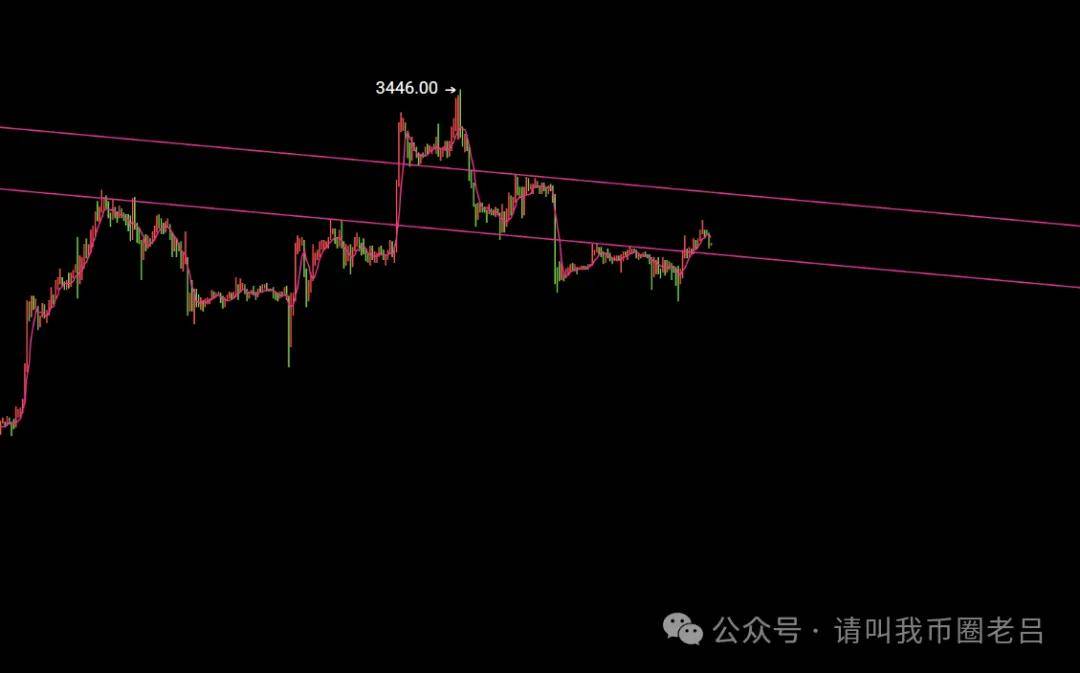
Group 1 - The core concept of "time for space" is emphasized, indicating a strategic approach to trading within the 3020-3030 price range for Ethereum, which has shown significant upward movement after reaching these levels [1][2] - Technical analysis indicates that the price range of 3010-3030 is a strong support level, with historical patterns suggesting that rebounds occur after significant pullbacks to these levels [2][3] - A potential head and shoulders pattern is identified, with critical support at the 3020 level; a break below this level could lead to a significant downward movement [3][4] Group 2 - The analysis highlights a bullish trend for Ethereum, with a 90% probability of breaking the previous high of 3446, contingent on maintaining support above 3020 [3] - A focus on shorting Ethereum is suggested if the price breaks below 3020, indicating a shift in strategy to capitalize on potential downward movements [6] - Bitcoin is mentioned as a secondary focus, with specific support levels identified for potential long positions, but the primary emphasis remains on Ethereum's price action [6]
12.15犀牛财经晚报:沪版证券期货仲裁新规即将出台
Xi Niu Cai Jing· 2025-12-15 10:25
Group 1: Regulatory Developments - Shanghai Arbitration Commission is set to release the "Shanghai Arbitration Committee Securities and Futures Arbitration Rules" on December 26, 2024, marking a significant step in the establishment of a local arbitration framework for securities and futures [1] - The Ministry of Industry and Information Technology has granted conditional access for the first L3-level autonomous driving vehicles in China, allowing two models to conduct road trials in designated areas of Beijing and Chongqing [1] Group 2: Market Trends - Counterpoint Research reports a 10% year-on-year increase in global cellular IoT module shipments in Q3 2025, driven by strong demand in smart meters, asset tracking, routers/CPE, and automotive applications, with India showing a remarkable 40% growth [2] - McDonald's has raised prices on various menu items by 0.5 to 1 yuan, including popular items like the Big Mac and McNuggets, indicating a trend of price adjustments in the fast-food sector [3] Group 3: Corporate Actions - HashKey Holdings Ltd. has set its IPO price close to the upper limit of the range, aiming to raise 1.6 billion HKD (approximately 206 million USD) [7] - Gold Ham announced the resignation of its president, Guo Bo, who will continue to serve as vice chairman and a member of the board's strategic committee [8] - KWH Holdings plans to repurchase shares worth 20 to 40 million yuan, with a maximum price of 95 yuan per share, aimed at employee stock ownership plans or equity incentives [14] Group 4: Financial Performance - Air China reported a 10.1% year-on-year increase in passenger turnover for November 2025, with a 4.9% rise in passenger capacity and an average seat occupancy rate of 83.3%, up by 4 percentage points [15]