Mobile Phones

Search documents
OPPO推出年度旗舰Find X9系列 发布1小时全渠道预订量刷新OPPO Find系列历史最高纪录
Zheng Quan Ri Bao Wang· 2025-10-17 04:44
Core Insights - OPPO officially launched the new Find X9 series, featuring advanced imaging technology and design, including the Hasselblad ultra-clear four-camera system and the Dimensity 9500 flagship chip [1][2] - The Find X9 series achieved record pre-order volumes within one hour of the launch, indicating strong market interest [1] - The series aims to revolutionize image quality, addressing a decade-long stagnation in live photo clarity by upgrading from 2K to 4K resolution [1] Product Features - The Find X9 series incorporates the new ColorOS 16 system, optimizing performance and user experience for long-term use [2] - It supports seamless connectivity with Apple devices, addressing cross-device connection challenges [2] - The starting price for the Find X9 series is set at 4399 yuan, with official sales beginning on October 22 [2] Market Impact - The launch of the Find X9 series is expected to intensify competition in the smartphone market, particularly in the imaging segment [2] - The introduction of the Find X9 Pro satellite communication version with eSIM support highlights OPPO's commitment to innovation [2]
传音控股股价跌5.08%,摩根基金旗下1只基金重仓,持有10.17万股浮亏损失42.9万元
Xin Lang Cai Jing· 2025-10-16 06:13
Core Points - Transsion Holdings experienced a decline of 5.08% on October 16, with a stock price of 78.91 yuan per share and a total market capitalization of 899.85 billion yuan [1] - The company, founded on August 21, 2013, and listed on September 30, 2019, specializes in the design, research and development, production, sales, and brand operation of smart terminals, primarily mobile phones [1] - The revenue composition of Transsion Holdings includes 83.91% from smartphones, 10.22% from other products, and 5.86% from feature phones [1] Fund Holdings - Morgan Fund holds a significant position in Transsion Holdings through its fund, the Morgan SSE STAR Market New Generation Information Technology ETF (588770), which has 101,700 shares, accounting for 2.56% of the fund's net value [2] - The fund has reported a floating loss of approximately 429,000 yuan as of the latest update [2] - The Morgan SSE STAR Market New Generation Information Technology ETF was established on March 14, 2025, with a current size of 316 million yuan and a cumulative return of 43.32% since inception [2]

AI场景新入口之争:手机AI智能体正在撬动智能经济“新蓝海”
Zheng Quan Ri Bao· 2025-10-15 16:15
Core Insights - The article discusses the transformation of mobile phones from traditional smart devices to "self-evolving AI native phones," driven by the emergence of AI agents that enhance user interaction and decision-making [1][2][3]. Group 1: AI Agent Development - The YOYO AI agent, showcased by Honor, can automatically identify screen content and understand user intent, marking a significant advancement in mobile AI capabilities [1][2]. - AI agents are set to replace traditional shopping processes during events like "Double 11," becoming new entry points for e-commerce platforms [2][3]. - The shift from passive tools to proactive partners in user decision-making is highlighted, with AI agents now playing a central role in reshaping user interactions with platforms [2][3]. Group 2: Market Dynamics and Opportunities - The integration of AI agents into mobile devices is expected to create new business models in various sectors, including shopping, travel, and home automation [1][4]. - The overall market size driven by AI agents is projected to reach hundreds of billions, indicating a significant economic opportunity [5]. - The competition among major smartphone manufacturers, such as Honor, Vivo, and Huawei, is intensifying as they evolve from traditional voice assistants to advanced AI agents [2][3]. Group 3: Industry Collaboration and Challenges - The establishment of the IIFAA intelligent agent trust interconnection working group aims to address challenges related to data privacy, application execution, and ecosystem standards [6]. - Companies are increasingly focusing on collaborative innovation to overcome technical and commercial challenges in the AI landscape [6][7]. - Honor's upcoming global developer conference will further explore the AI self-evolution technology, emphasizing the importance of open standards and collaborative platforms in the industry [7].
当手机卷成相机 vivo、OPPO对标增距镜
Bei Jing Shang Bao· 2025-10-14 15:47
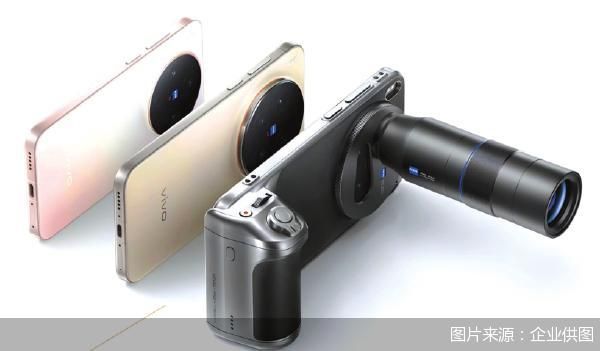
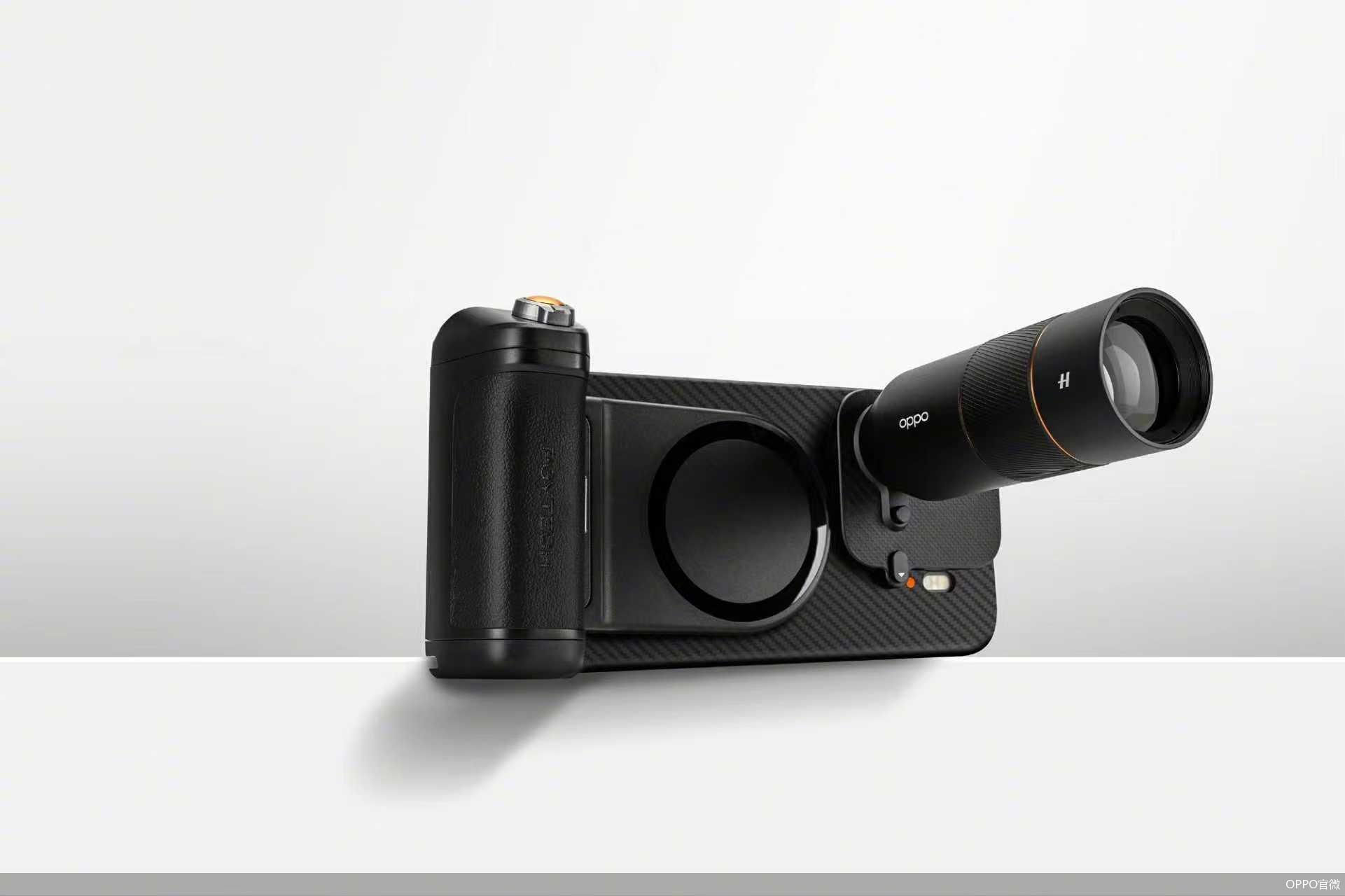
Core Viewpoint - The smartphone industry is witnessing a shift towards external camera accessories, with major players like vivo and OPPO launching innovative products that blur the lines between smartphones and traditional cameras [1][9][10]. Group 1: Product Launches and Innovations - vivo has introduced the X300 series, featuring an external telephoto lens that enhances photography capabilities, marking its second attempt at offering such a photography kit [1][6]. - OPPO plans to unveil the "Hasselblad Professional Imaging Kit" alongside its Find X9 series on October 16, which also includes a similar external telephoto lens [1][10]. - The trend of integrating external lenses into smartphones is gaining traction, moving from niche to mainstream as companies like vivo and OPPO continue to innovate [3][6]. Group 2: Historical Context and Market Attempts - The concept of external smartphone lenses is not new, with Sony being an early pioneer in 2013 with its QX series, but initial attempts faced technical limitations that hindered widespread adoption [3][4]. - Other companies, including OPPO and Motorola, have also experimented with external lenses, but high prices and subpar user experiences led to limited market acceptance [4][6]. - Recent advancements in technology and design have allowed major players to revisit this concept, leading to products that are now considered market-ready [6][10]. Group 3: Market Dynamics and Consumer Preferences - The competition in the smartphone market is intensifying, with companies seeking differentiation through enhanced camera capabilities, as evidenced by the collaboration with professional camera brands [9][10]. - Data from IDC indicates that while the overall smartphone market is expected to grow, there is a notable divergence in performance among leading brands, with some experiencing declines in market share [10][11]. - The demand for higher-quality imaging among consumers is driving smartphone manufacturers to focus on camera technology as a key selling point in a saturated market [9][10].

vivo、OPPO“大炮对轰”:手机为何卷成相机?
Bei Jing Shang Bao· 2025-10-14 14:48
Core Viewpoint - The smartphone industry is witnessing a shift towards external camera accessories, with major players like vivo and OPPO launching new products that blur the lines between smartphones and traditional cameras [3][5][15]. Group 1: Product Launches - vivo officially launched the X300 series on October 13, with the base model starting at 4399 yuan and the Pro version at 5299 yuan, including a 1499 yuan professional imaging handle with a 2.35x telephoto lens [3][4]. - OPPO announced the release of the Find X9 series on October 16, which will also feature a similar external telephoto lens accessory [4][5]. Group 2: Market Trends - The introduction of external camera accessories is becoming mainstream, moving beyond niche products that previously failed due to technical limitations and high costs [7][11]. - The smartphone market is experiencing intense competition, with IDC forecasting a total shipment of approximately 286 million units in 2024, reflecting a 5.6% year-on-year growth [15]. Group 3: Consumer Perception - Consumers are increasingly viewing smartphones and cameras as interchangeable, with the demand for higher quality images driving the adoption of external accessories [5][12]. - The collaboration between smartphone manufacturers and established camera brands like Leica and Hasselblad is becoming a key differentiator in the high-end market [15][17]. Group 4: Competitive Landscape - The competitive landscape is intensifying, with vivo leading the market with a 17.2% share and a 10.3% year-on-year growth, while Huawei follows closely with a 16.6% share and a significant 50.1% growth [15][16]. - The market is entering a phase of stock competition, where companies must find compelling selling points to attract consumers amidst high levels of product similarity [17][18].
不依赖云端!vivo把“AI大脑”直接装进你的手机
2 1 Shi Ji Jing Ji Bao Dao· 2025-10-11 10:44
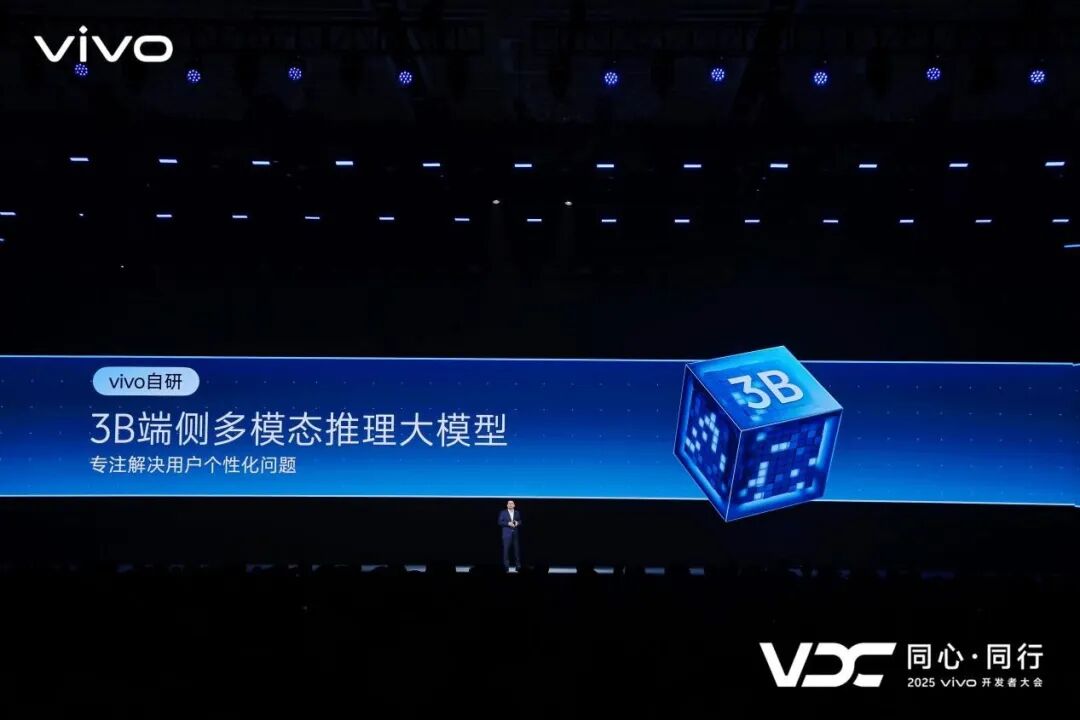
Core Insights - The article highlights the significant advancements in AI large models, particularly in the context of mobile devices, indicating a shift from technical competition to a focus on deep user understanding [1][2][4] - Vivo has developed the world's first 3B (3 billion parameters) model specifically for mobile agents, which showcases capabilities in multimodal processing, reasoning, and long-context understanding [1][2][4] Model Breakthrough - The new 3B model allows for independent operation on mobile devices without relying on cloud resources, enhancing user experience and enabling personalized AI interactions [2][4] - This model excels in language processing, multimodal understanding, and logical reasoning, marking a transition from a "public service" AI model to a "personalized" AI model [4][5] User Experience Enhancements - The model enables instant responses and offline functionality, allowing users to perform tasks without internet connectivity, thus providing reliable assistance anytime and anywhere [5][6] - It can understand and execute commands related to both text and images, evolving from a conversational AI to an actionable assistant capable of performing tasks across applications [6][8] Ecosystem Development - Vivo emphasizes the importance of an open ecosystem to enhance AI capabilities, aiming to connect various intelligent agents with users to create a more personalized experience [8][10] - The company has established the "Blue Heart Personal Intelligence Framework," focusing on perception, memory, planning, and execution to improve user interaction with AI [8][10] Collaborative Opportunities - Vivo's strategy includes opening its AI capabilities to developers, allowing for a broader range of personalized services and applications, thus fostering a collaborative ecosystem [10][12] - Over 50 ecosystem partners have already integrated with Vivo's open platform, indicating a growing network of services that enhance user experience through personalized AI interactions [10][12]
OPPO高层调整
21世纪经济报道· 2025-10-09 13:21
Core Insights - The Chinese smartphone market is entering a bottleneck phase, prompting manufacturers to focus on overseas markets [1][2] - OPPO is increasing its investment in overseas markets, with key personnel adjustments to strengthen this focus [1] Group 1: Company Strategy - OPPO's Chief Product Officer, Liu Zuohua, will oversee overseas markets, while Senior Vice President Duan Yaohui will manage the headquarters marketing team [1] - Liu Zuohua has a history of success in the overseas high-end market with OnePlus, indicating a strategic shift for OPPO towards high-end segments [5] - OPPO's overseas revenue now accounts for over 60%, highlighting the importance of international markets in the current competitive landscape [1] Group 2: Market Conditions - The Chinese smartphone market has seen a decline in sales, with a 2% drop in the first eight weeks of the third quarter, while the mid-range market remains strong [4] - Counterpoint's statistics show that OPPO faced demand slowdowns in China but stable demand in Southeast Asia and the Middle East [4] - The global high-end smartphone market is projected to reach historical highs by mid-2025, making it a critical area for competition [4]

手机行业告别“挤牙膏”式创新,技术发展引爆竞争新周期
Cai Jing Wang· 2025-09-29 07:03
Core Viewpoint - The smartphone industry is undergoing a significant transformation driven by advancements in AI, foldable screens, and imaging technology, moving away from incremental innovations to substantial technological breakthroughs [1][4][8] Group 1: Recent Developments by Major Manufacturers - Apple launched the iPhone 17 series, featuring a significant storage increase and the introduction of a high refresh rate screen across all models, marking a major leap in the iPhone lineup [2][3] - Huawei showcased the long-awaited Kirin 9020 chip and HarmonyOS 5.1 during its Mate XTs launch, emphasizing a 36% performance improvement [3][4] - Xiaomi announced the Xiaomi 17 series, which includes the fifth-generation Snapdragon 8 processor, promising significant enhancements in performance and efficiency [2][3] Group 2: Market Trends and Competitive Dynamics - The smartphone market is shifting from a focus on parameter competition to core technological innovations, as manufacturers respond to the saturation of the market and the need for substantial consumer engagement [4][5] - The global smartphone market saw a slight decline in shipments, with a total of 140 million units shipped in the first half of the year, a decrease of 3 million units compared to the previous year [4][6] - The high-end smartphone segment (priced above $600) experienced an 8% year-on-year growth in the first half of 2025, with Apple maintaining a 62% market share despite a slower growth rate [6][8] Group 3: Consumer Behavior and Demand Shifts - The average smartphone replacement cycle has extended to approximately three years, indicating that consumers are increasingly valuing durability and long-term usability [5][6] - Consumers are shifting their focus from mere performance specifications to overall user experience, including battery life, imaging capabilities, and AI functionalities [5][6] Group 4: Future Outlook and Strategic Directions - The smartphone industry is expected to continue evolving towards experience-driven competition, with a focus on AI, ecosystem integration, and foundational technological innovations [7][8] - Companies are exploring new growth avenues through ecosystem collaboration and global expansion, with Huawei and Xiaomi leading in market share recovery and growth [7][8]


雷军:SU7 Ultra准备刷纽北!纽北:你不是手机公司吗?
2 1 Shi Ji Jing Ji Bao Dao· 2025-09-25 15:24
Group 1 - The company, Xiaomi, aims to challenge the Nürburgring racetrack but initially faced skepticism from the organizers [2] - After several months of communication, the Nürburgring team agreed to meet with Xiaomi, indicating a breakthrough in negotiations [2] - During the meeting, the Nürburgring representatives questioned Xiaomi's intentions, highlighting the cultural differences and initial disbelief regarding a Chinese smartphone company's interest in the racetrack [2]
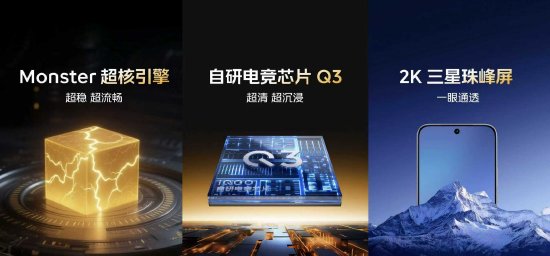
iQOO自研电竞芯片Q3亮相,iQOO 15将首发搭载
Xin Lang Ke Ji· 2025-09-23 09:22
Core Insights - iQOO 15 introduces advanced gaming technology, including the 2K Samsung Everest screen, self-developed gaming chip Q3, and Monster Super Core Engine, aiming to bridge the gap between mobile and PC gaming experiences [2][3] Group 1: Display Technology - The 2K Samsung Everest screen features 2K LEAD OLED, M14 luminescent materials, and various eye-care technologies, enhancing clarity, brightness, color, and touch responsiveness for an improved gaming experience [2] - The screen achieves a manual peak brightness of 1000 nits, local peak brightness of 6000 nits, and full-screen peak brightness of 2600 nits, along with a 144Hz refresh rate and a maximum touch sampling rate of 3200Hz [2] Group 2: Gaming Chip Technology - The self-developed gaming chip Q3 is a culmination of iQOO's five years of research, featuring capabilities such as full-scene ray tracing, game super-resolution, and game super-frame technology [3] - Q3 is compatible with over 180 PC-level games for super-resolution and super-frame, and has successfully implemented self-developed ray tracing technology [3] Group 3: Gaming Engine - The Monster Super Core Engine includes the "Prophet Scheduler" and "Lightning Accelerator," designed to enhance gaming performance and meet professional esports requirements [3] - The first devices to feature this engine are the iQOO 15 and iQOO Neo11, promoting smoother gameplay on the same platform [3]