Workflow
核电
icon
Search documents
13条举措激活民间投资活力 多部门协同疏堵点、强保障
Core Points - The State Council issued measures to promote private investment, focusing on expanding access, removing barriers, and strengthening support [1][2] - The National Development and Reform Commission (NDRC) emphasized the importance of private investment for economic stability and growth [2] Group 1: Expanding Access - The measures prioritize expanding private investment access, particularly in sectors like railways, nuclear power, low-altitude economy, and commercial space, allowing private capital to hold over 10% in eligible projects [2] - In the energy sector, private capital participation has been increasing, with 20 private companies involved in new nuclear projects and private investment in oil and gas infrastructure exceeding 10% [2] Group 2: Removing Barriers - The measures aim to protect the legal rights of private enterprises in areas such as electricity grid access and oil and gas pipeline usage, while encouraging the establishment of significant pilot platforms by private companies [4] - The integration of innovation and industry is highlighted as crucial, with a focus on creating a collaborative ecosystem for pilot testing [4][5] Group 3: Strengthening Support - The measures address both investment and financing concerns, proposing increased central budget support for qualifying private investment projects and the use of new policy financial tools [6] - A multi-dimensional support system is being established to ensure effective policy implementation, including a cross-departmental mechanism for coordination and guidance [7]
促进民间投资组合拳落地:加大投融资支持 重点领域项目持股可超10%
Di Yi Cai Jing· 2025-11-11 13:46
Core Viewpoint - The Chinese government aims to stimulate private investment to enhance economic growth, employment stability, and market expectations through targeted measures outlined in the "Several Measures to Further Promote the Development of Private Investment" [1][2]. Group 1: Policy Measures - The government has introduced 13 specific policy measures to encourage private capital participation in key sectors such as railways and nuclear power, including clarifying shareholding ratios [1][2]. - The National Development and Reform Commission (NDRC) has recommended 105 projects to the China Securities Regulatory Commission, with 83 projects already listed, covering various sectors and expected to drive over 1 trillion yuan in new investments [1][2]. Group 2: Investment Trends - In the first three quarters of the year, national fixed asset investment (excluding rural households) reached 371.535 billion yuan, a 0.5% year-on-year decline, with private fixed asset investment down 3.1% [2]. - However, private investment in infrastructure grew by 7% and in manufacturing by 3.2%, indicating stable growth in these areas [2]. Group 3: Challenges and Solutions - The NDRC acknowledges existing challenges in private investment and emphasizes a problem-oriented approach to enhance investment effectiveness [2][4]. - The "Several Measures" aim to lower barriers for private capital in traditional sectors like energy and railways, addressing regulatory bottlenecks [4][5]. Group 4: Financial Support - The government plans to enhance financial support for private investment through coordinated investment, fiscal, and financial policies, including the use of new policy financial tools [8][9]. - Specific measures include promoting direct financing for technology-driven enterprises and expanding the issuance of infrastructure REITs to broaden financing channels for private companies [8][9]. Group 5: Service Industry Focus - The measures also aim to eliminate unreasonable entry barriers in the service industry, encouraging private capital to invest in high-value service sectors such as industrial design and digital transformation [6][7]. - The NDRC highlights the importance of the service industry in economic development and aims to support private enterprises in enhancing their service capabilities [7].
这场发布会,回应了民间投资痛点堵点
Sou Hu Cai Jing· 2025-11-11 13:18
Core Insights - The article discusses the slowdown in private investment in China due to changes in the international environment and adjustments in the real estate market, while highlighting a 2.1% year-on-year growth in private project investment excluding real estate in the first three quarters of the year [1] - The State Council has issued measures to further promote private investment, focusing on enhancing the vitality of private investment and addressing issues related to rights protection and innovation support for private enterprises [1][3] Investment Trends - Private investment is a key indicator of economic stability, with significant contributions from private enterprises in the renewable energy sector [3] - In the energy sector, measures have been introduced to support the development of private capital, including a series of policies aimed at improving market order and reducing investment costs [3][6] Nuclear Power Sector - The introduction of private capital into nuclear power projects has been emphasized, with private capital participation expected to reach 10% in 2024 and increase to 10%-20% by 2025 [4][5] - Some nuclear power projects have already seen private capital participation as high as 20% [5] Policy Measures - The new measures allow for private capital to hold more than 10% in projects, with no upper limit specified, aiming to expand the scope of private investment [5] - The measures also include enhanced regulatory oversight to protect the rights of private enterprises in energy infrastructure [5][6] Government Support - The government is increasing procurement support for small and medium-sized enterprises (SMEs), mandating that at least 40% of project budgets for engineering procurement over 4 million yuan be reserved for SMEs [7][8] - Financial policies are being coordinated to improve access to credit for private enterprises, including the promotion of innovative financing mechanisms [8][9] Communication and Service Improvement - The establishment of a comprehensive service platform for private economic development aims to facilitate communication between the government and private enterprises [10] - A closed-loop process for addressing issues faced by private enterprises has been implemented, ensuring timely feedback and resolution of problems [11] Innovation and Testing Support - The measures encourage the construction of major pilot testing platforms by private enterprises, linking innovation with industry needs [12] - Collaboration between state-owned enterprises, universities, and research institutions with private enterprises is being promoted to enhance market-oriented pilot testing services [12]
促进民间投资组合拳落地:加大投融资支持,重点领域项目持股可超10%
Di Yi Cai Jing· 2025-11-11 12:59
Core Viewpoint - The State Council's recent measures aim to stimulate private investment, particularly in infrastructure REITs, to enhance economic growth, employment stability, and investment expectations [1][6]. Group 1: Policy Measures - The document outlines 13 targeted policy measures to promote private investment, including encouraging private capital participation in key sectors like railways and nuclear power, and clarifying shareholding ratios [1][6]. - The National Development and Reform Commission (NDRC) has recommended 105 projects to the China Securities Regulatory Commission, with 83 projects already listed, raising a total of 207 billion yuan, expected to drive over 1 trillion yuan in new investments [5][6]. Group 2: Investment Trends - In the first three quarters of the year, national fixed asset investment (excluding rural households) reached 37,153.5 billion yuan, a year-on-year decrease of 0.5%, with private fixed asset investment down 3.1% [6]. - However, excluding real estate, private project investment grew by 2.1%, with infrastructure investment up by 7% and manufacturing investment up by 3.2%, indicating stable growth [6]. Group 3: Encouragement of Private Capital - The measures specify that for certain projects requiring national approval, feasibility studies must include assessments of private capital participation, with potential shareholding ratios exceeding 10% [7][8]. - The NDRC emphasizes the importance of private capital in long-term, public-interest projects, with recent initiatives successfully attracting private investment in nuclear and hydropower projects [7][8]. Group 4: Financial Support and Mechanisms - The NDRC plans to enhance financial support for eligible private investment projects, utilizing various funding channels and financial services to improve policy effectiveness [13][14]. - A total of 500 billion yuan in new policy financial tools has been allocated, with a portion supporting qualified private investment projects [13][14]. Group 5: Service Industry Development - The measures aim to eliminate unreasonable entry barriers in the service industry, encouraging private capital to flow into high-value sectors such as industrial design and digital transformation [10][11]. - The NDRC highlights the significant growth potential in the service industry during the 14th Five-Year Plan period, advocating for private enterprises to engage in high-value service sectors [10][12].
重大信号密集释放,民企发展、民间投资迎来新拐点和大升级
Core Viewpoint - The Chinese government is actively promoting policies to enhance the development of private enterprises and private investment, with a focus on expanding the service industry and facilitating private capital participation in key sectors such as railways and nuclear power [1][3][5]. Group 1: Policy Initiatives - The National Development and Reform Commission (NDRC) has introduced 13 measures aimed at stimulating private investment, including expanding market access and ensuring fair competition [2][3]. - The measures emphasize the need for special feasibility studies to assess private capital participation in projects requiring state approval, particularly in sectors with potential returns [4][5]. - The government aims to create a better environment for private enterprises by integrating modern services with advanced manufacturing and modern agriculture [1][9]. Group 2: Investment Trends - Private investment has shown a stable growth of 2.1% year-on-year in the first three quarters of the year, excluding real estate development [2]. - The government acknowledges existing challenges in private investment, such as market access barriers and financing difficulties, and is addressing these through targeted policies [6][8]. Group 3: Focus Areas for Private Capital - The measures encourage private capital to participate in high-value service sectors, including industrial design, quality certification, and digital transformation [9][10]. - The NDRC is committed to enhancing the quality and efficiency of the service industry, which is seen as a crucial component of national economic development [1][10]. Group 4: Implementation Strategies - The government plans to support private enterprises in participating in significant projects and to streamline the approval process for private investment in infrastructure and public services [6][7]. - There is a focus on building digital platforms and providing market-oriented services to support private enterprises in their innovation and growth efforts [7][10].
国家发改委新闻发布会,介绍进一步促进民间投资发展有关情况
Core Viewpoint - The National Development and Reform Commission (NDRC) has introduced measures to promote private investment, addressing challenges and enhancing the investment environment for private enterprises in key sectors [5][6][8]. Group 1: Background and Current Situation - Private investment is a crucial indicator of economic activity, significantly impacting growth, employment, and expectations [5]. - In 2023, private investment has slowed due to international environmental changes and real estate market adjustments, but private project investment excluding real estate has grown by 2.1% year-on-year in the first three quarters [5]. - Infrastructure private investment increased by 7%, and manufacturing private investment rose by 3.2%, indicating stable growth [5]. Group 2: Key Measures Introduced - The measures consist of 13 policies categorized into three areas: expanding access, removing obstacles, and strengthening support [6][7]. - In expanding access, the measures encourage private capital participation in key sectors like railways and nuclear power, with specific shareholding ratios [6][11]. - To remove obstacles, the measures focus on protecting the rights of private enterprises and supporting the establishment of major pilot platforms [7]. - Strengthening support includes increasing central budget investments for eligible private projects and enhancing financing policies [7][26]. Group 3: Focus on Specific Sectors - In the energy sector, private capital is encouraged to participate in nuclear power projects, with a target of 10% shareholding in 2024 and 10%-20% by 2025 [15][16]. - The digital economy is emphasized, with initiatives to support the digital transformation of industries, enhancing efficiency and reducing costs [19][20]. - The production service industry is identified as a key area for private investment, with plans to support capital flow into high-value service sectors [23][24]. Group 4: Investment and Financing Policies - The NDRC aims to enhance the coordination of investment, fiscal, and financial policies to better support private investment [26]. - Specific measures include increasing government procurement for small and medium enterprises and promoting the issuance of infrastructure REITs for private projects [26][38]. - The NDRC has recommended 105 projects for REITs, with 83 already issued, raising a total of 207 billion yuan, expected to drive over 1 trillion yuan in new investments [38][39]. Group 5: Implementation and Future Steps - The NDRC plans to establish a cross-departmental mechanism to ensure the effective implementation of these measures [8]. - Continuous communication with private enterprises will be maintained to address challenges and enhance investment services [30][31]. - The focus will be on creating a favorable environment for private investment in energy and digital sectors, ensuring compliance with regulations in bidding processes [34][47].
公用环保 202511 第 2 期:《生态环境监测条例》公布,25Q3 公用环保基金持股情况梳理-20251111
Guoxin Securities· 2025-11-11 12:34
Investment Rating - The report maintains an "Outperform" rating for the public utility and environmental sectors [1][6][9]. Core Views - The report highlights the introduction of the "Ecological Environment Monitoring Regulations," which will enhance the automation, digitalization, and intelligence of ecological monitoring systems starting January 1, 2026 [1][15]. - The public utility and environmental sectors have seen a decrease in fund holdings, with a total market value of 49.695 billion yuan, down 29.64% from the previous quarter [2][17]. - The report emphasizes investment opportunities in the renewable energy sector and comprehensive energy management, particularly in the context of carbon neutrality [11][27]. Summary by Sections Market Review - The Shanghai Composite Index rose by 0.82%, while the public utility index increased by 2.42% and the environmental index by 2.71%, with respective relative returns of 1.60% and 1.89% [1][14][29]. - Within the electricity sector, coal-fired power increased by 2.09%, hydropower by 2.00%, and renewable energy generation by 3.08% [1][30]. Important Events - The State Council announced the "Ecological Environment Monitoring Regulations," aimed at establishing a modern ecological monitoring system [1][15]. - A significant achievement in nuclear fuel conversion was reported, marking a milestone in the use of thorium-based molten salt reactors [16]. Investment Strategy - Recommendations include major coal-fired power companies like Huadian International and regional power companies with stable pricing like Shanghai Electric [3][27]. - The report suggests investing in leading renewable energy firms such as Longyuan Power and Three Gorges Energy, as well as companies involved in offshore wind energy [3][27]. - Nuclear power companies like China Nuclear Power and China General Nuclear Power are expected to maintain stable profitability [3][27]. - High-dividend hydropower stocks like Yangtze Power are highlighted for their defensive attributes in a declining interest rate environment [3][27]. - In the environmental sector, companies like China Science Instruments and Shandong High Energy are recommended due to their growth potential [27]. Key Company Earnings Forecasts and Investment Ratings - Huadian International (600027.SH) is rated "Outperform" with an expected EPS of 0.49 yuan for 2024 and a PE ratio of 10.3 [5][9]. - Longyuan Power (001289.SZ) is also rated "Outperform" with an expected EPS of 0.76 yuan for 2024 and a PE ratio of 22.9 [9]. - Other recommended companies include Guangxi Energy, Funiu Co., and Zhongmin Energy, all rated "Outperform" [9][27].
我国多措并举促进民间投资发展
Yang Shi Wang· 2025-11-11 12:24
Group 1 - The Chinese government will implement multiple measures to promote private investment development [1] - Central budget investment will be utilized to actively support eligible private investment projects [1] - A national investment and financing comprehensive service platform will be established to enhance connectivity with national financing credit service platforms, ensuring more precise credit resource allocation to private enterprises [1] Group 2 - Policies will be enhanced to attract private capital into the energy sector, including nuclear power, hydropower, and cross-regional direct current transmission projects [3] - Continuous deepening of energy market reform will be pursued to accelerate the establishment of a unified national energy market system, improving mechanisms and regulatory frameworks for private enterprise participation in energy investments [3] Group 3 - Digital transformation will be leveraged to further promote private investment, with the construction of a comprehensive digital empowerment platform [5] - The collaborative transformation of the industrial chain will drive small and medium-sized enterprises into the transformation ecosystem, expanding new effective investment spaces [5]
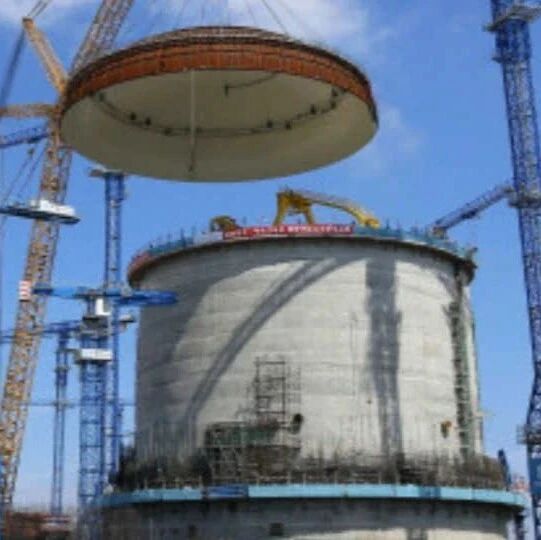
“十四五”时期,核电总体规模跃居世界第一,安全运行业绩稳居世界前列—— 自主核电点亮千家万户
Core Viewpoint - The article highlights the advancements and achievements of China's nuclear power technology, particularly the "Hualong One" reactor, emphasizing its role in energy security and low-carbon transition during the 14th Five-Year Plan period [7][8][11]. Group 1: Project Developments - The first "Hualong One" project in the Yangtze River Delta is the China General Nuclear Power Group's Zhejiang San'ao Nuclear Power Station [3]. - The "Linglong One" project in Hainan Changjiang is the world's first demonstration project for a modular small reactor [5][13]. - The "Hualong One" reactor has achieved over 1,000 days of continuous safe operation, delivering more than 37 billion kilowatt-hours of clean electricity [8]. Group 2: Technological Innovations - "Hualong One" is based on over 30 years of Chinese nuclear research and development, featuring advanced safety standards and complete independent intellectual property rights [9]. - The reactor's design includes a higher seismic resistance standard of 0.3g, allowing it to withstand earthquakes of magnitude 9 or higher [9]. - The equipment localization rate for "Hualong One" has reached over 95%, showcasing China's industrial capabilities in nuclear power [10]. Group 3: Industry Growth - During the 14th Five-Year Plan, China approved the construction of 46 new nuclear power units, adding 54.5 million kilowatts of capacity, with a 30% increase in operational capacity and annual electricity generation [11]. - China currently operates 59 nuclear power units with a total capacity of 62.48 million kilowatts, maintaining the world's largest nuclear power scale [11]. Group 4: Safety and Environmental Impact - Chinese nuclear power units have operated safely for over 600 reactor years, achieving the highest global score in the World Association of Nuclear Operators (WANO) for nine consecutive years [14]. - In 2024, nuclear power generation in China reached 446.9 billion kilowatt-hours, equivalent to reducing standard coal consumption by approximately 140 million tons and cutting carbon dioxide emissions by about 370 million tons [16].
美国电荒发酵:除了储能,无牌可打
3 6 Ke· 2025-11-11 11:53
Core Insights - The U.S. is facing a significant electricity shortage, exacerbated by aging infrastructure and increasing demand from data centers and AI technologies [7][9][31] - Microsoft CEO Satya Nadella highlighted that GPU purchases are being wasted due to insufficient power supply for data centers [3][5] - The combination of solar power and energy storage is emerging as the most viable solution to address the electricity crisis in the U.S. [6][27] Group 1: Current Electricity Shortage - The U.S. is confirmed to be experiencing a real electricity shortage, which is not merely a supply-demand imbalance but a competition for electricity between AI and human needs [7][8] - Electricity costs in North Virginia have risen by 13% over the past year, putting pressure on consumers [8] - The aging U.S. power grid, with 70% of transmission lines over 25 years old, is a critical issue contributing to the shortage [8][9] Group 2: Infrastructure and Supply Challenges - The average outage duration for U.S. electricity users reached 662.6 minutes last year, nearly doubling over the past decade [9] - Electricity prices have increased by 25% over the last three years, while the power generation side is not solely to blame; the grid's inefficiencies play a significant role [11] - The integration of new power sources into the grid is a lengthy process, with projects waiting for three years or more to connect [11][14] Group 3: Demand from Data Centers - The demand for electricity from data centers is expected to require an additional 50-80 GW over the next five years, equivalent to the capacity of four Three Gorges Dams [14] - The current electricity supply strategies are inadequate, with traditional energy sources either too slow or politically constrained [27][31] Group 4: Renewable Energy Solutions - Solar power combined with energy storage systems is identified as a cost-effective and rapidly deployable solution, with production costs around $0.30 per watt [27][31] - The market demand for energy storage driven by AI data centers and grid improvements could exceed 200 GWh [28] - However, tariffs and policies like the Inflation Reduction Act are creating barriers for Chinese solar and storage equipment entering the U.S. market, complicating the situation for domestic companies [29][30]