
公募基金

Search documents
【金融教育宣传周】工银瑞信互动式体验空间《财富集装箱》亮相金融街购物中心广场
Xin Lang Ji Jin· 2025-09-29 09:13
Group 1 - The "2025 Financial Education Promotion Week" was launched from September 15 to 21, organized by multiple financial regulatory bodies in China, aiming to enhance public financial knowledge through interactive activities [1] - The event featured a "Wealth Container" themed exhibition by ICBC Credit Suisse, focusing on investor education with engaging activities that teach risk management and fraud prevention [2] - The exhibition included various interactive stations that allowed participants to learn about financial principles and fraud detection in a fun and engaging manner, receiving positive feedback for its practicality [2] Group 2 - Financial education is recognized as a foundational and long-term initiative, with ICBC Credit Suisse committed to aligning with national financial regulatory requirements and industry developments [3] - The company aims to continuously innovate in investor education and protection, emphasizing the importance of safeguarding financial rights and enhancing public understanding of financial services [3]

ESG系列研究之十四:金融助力绿色转型征程(一):公募基金绿色投资五年演进与展望
CMS· 2025-09-29 08:44
- The report introduces the concept of "green income ratio" as a core metric to quantify the "greenness" of investments, which measures the proportion of a company's total revenue derived from activities recognized as green by policy documents [51] - The green income ratio is calculated by tagging industry revenues of listed companies based on the "Green Low-Carbon Transition Industry Guidance Catalog (2024 Edition)" issued by the National Development and Reform Commission in February 2024 [51] - The weighted average green income ratio is used to evaluate the average green income proportion corresponding to each unit of investment in the fund pool, calculated by multiplying the green income ratio of constituent stocks by the fund's holding weight and summing them up [58][61] - The fund-attributed green income total is derived by attributing a company's green income to the fund pool based on the proportion of the fund's market value holding to the company's total market value [58][61] - The green fund pool's weighted average green income ratio in 2025H1 was 21.22%, slightly lower than 23.47% at the end of 2024, but significantly higher than the ratios of major indices like CSI 300 (10.43%) and CSI 800 (9.73%) [58][61] - The green fund pool's attributed green income total in 2025H1 was approximately 146 billion yuan, with each unit of net value corresponding to 0.06 yuan of green income, showing a slight decline compared to 2024 but still three times higher than in 2020 [58][61]
以数智为翼,助力高质量发展——鹏扬基金数字化转型实践
Xin Lang Ji Jin· 2025-09-29 02:50
Core Viewpoint - The public fund industry is undergoing a transformation from scale expansion to a focus on high-quality development centered around investor returns, as emphasized by the China Securities Regulatory Commission's action plan [1] Group 1: Industry Transformation - The public fund industry is shifting towards high-quality development, aligning with national strategies and investor wealth management needs [1] - Digitalization is identified as a key driver for this transformation, enhancing service capabilities and operational efficiency [1] Group 2: Company Strategy - Pengyang Fund views digitalization as the core engine for its transformation, focusing on foundational capabilities, comprehensive business empowerment, and exploration of cutting-edge technologies [2] - The company aims to create a new digital transformation landscape that integrates technology with business [2] Group 3: Infrastructure Development - Pengyang Fund has built a robust data infrastructure over the years, utilizing distributed technology architecture to create a high-performance, scalable data management platform [3] - The data management system supports the entire lifecycle of data metrics, transforming raw data into core business assets [3] Group 4: Business Application - The company is enhancing digital capabilities across various business areas, including investment research, marketing, trading, risk control, compliance, and operations [4] - Advanced technologies like big data and AI are being applied to improve efficiency and decision-making in investment research [4] - Marketing efforts are enhanced through efficient data acquisition and analysis, improving service effectiveness [4] - Operational efficiency is increased through automation, reducing operational risks and improving customer service experiences [4] Group 5: Technological Innovation - Pengyang Fund is leveraging breakthroughs in AI to build differentiated competitive advantages, implementing practical strategies for AI application [5] - The company has successfully deployed local natural language models in various core scenarios, significantly improving work efficiency and quality [5] - Future plans include deepening the integration of financial technology with business to provide better financial services to investors [5]
高质量发展在行动|国新国证基金:落实适当性管理 筑牢投资者保护防线
Xin Lang Ji Jin· 2025-09-29 02:37
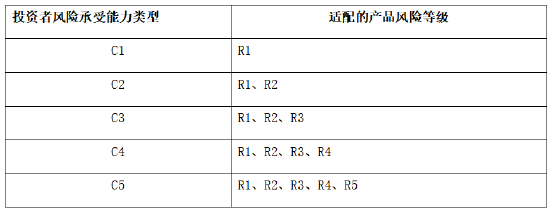
Group 1 - The core viewpoint of the article emphasizes the importance of high-quality development in China's public fund industry, focusing on enhancing investment capabilities, optimizing customer experience, and building investor trust [1] - The Beijing Securities Regulatory Bureau, along with over forty public fund management firms and other stakeholders, has initiated a series of activities aimed at promoting high-quality development in the public fund sector [1] - Establishing a robust investor suitability management system is highlighted as a crucial element in safeguarding investors' legitimate rights and interests, which is essential for the high-quality development of the public fund industry [1] Group 2 - Investor suitability management refers to the requirement for financial institutions to match financial products or services with investors' risk tolerance, investment goals, and financial situations, ensuring that suitable products are sold to appropriate individuals [2] - This system aims to prevent investment losses that may arise from mismatches between product risks and investors' risk tolerance, serving as the first line of defense in protecting investors' rights [3] Group 3 - The main components of suitability management include categorizing investors based on their asset status, investment experience, and risk preferences into five types (C1 to C5), and classifying products into five risk levels (R1 to R5) [7][8] - Investors are encouraged to provide accurate information during risk assessments, understand their own risk tolerance, read relevant documents carefully, and regularly update their evaluations to ensure alignment with their financial situations [8]

【高质量发展进行时】国寿安保基金:助力资本市场 服务实体经济
Xin Lang Ji Jin· 2025-09-29 02:34
Core Viewpoint - The article emphasizes the importance of public funds in supporting the real economy, aligning with national strategies, and enhancing financial services to meet the needs of various sectors [1][2][4]. Group 1: Support for National Strategies - Public funds play a crucial role in directing investments towards technological innovation and strategic emerging industries, with over 90% of newly listed companies being technology-related [2]. - The market capitalization of the technology sector in A-shares exceeds 25%, with the number of top 50 companies in this sector increasing from 18 to 24 since the end of the 13th Five-Year Plan [2]. Group 2: Innovation in Financial Tools - Public funds are innovating products and strategies to meet the evolving financing needs of the real economy, with a diverse range of products emerging in the bond market [3]. - As of June 2025, the total management scale of public funds is projected to reach 34.39 trillion yuan, holding approximately 6.04 trillion yuan in A-share market value, accounting for 7.37% of the circulating market value [3]. Group 3: Inclusive Finance - Public funds are significantly contributing to wealth management and pension security for residents, with personal holdings in public funds increasing from 3.04 trillion yuan at the end of 2014 to 16.73 trillion yuan by the end of 2024 [4]. - The number of pension target funds has grown to 271, with a total scale of 60.076 billion yuan as of June 2025 [4]. Group 4: Company Case Study - Guoshou Anbao Fund - Guoshou Anbao Fund, a public fund management company under China Life, focuses on serving the real economy and has integrated its operations with national development strategies [5]. - As of June 2025, the asset management scale of Guoshou Anbao Fund exceeds 410 billion yuan, with over 60% dedicated to serving the real economy, and has served 72.66 million individual clients [5]. - The fund's thematic funds targeting major national strategic industries have a total scale of 8.039 billion yuan, with significant performance in specific funds achieving annual growth rates of 81.93% and 97.17% [5].
早知道:有色金属行业稳增长方案发布;公募规模突破36万亿再创新高
Zheng Quan Shi Bao Wang· 2025-09-29 00:08
Group 1 - The central bank's monetary policy committee suggests enhancing monetary policy regulation to improve foresight, targeting, and effectiveness [1] - The National Bureau of Statistics reports a 0.9% increase in profits for large-scale industrial enterprises nationwide from January to August 2025 [1] - A work plan for stable growth in the non-ferrous metals industry has been released, with a new round of mineral exploration breakthrough strategic actions to be implemented [1] Group 2 - Four departments will implement export license management for pure electric passenger vehicles, starting in 2026 [1] - The National Medical Products Administration has announced industry standards for medical devices using brain-computer interface technology [1] - The public fund scale has surpassed 36 trillion, setting a new record [1] - GPU leader Moer Thread's IPO has been approved [1]
视频|华商基金“金融生活嘉年华”走进商圈活动 北京公募基金高质量发展在行动!
Xin Lang Ji Jin· 2025-09-27 00:48
专题:北京公募基金高质量发展系列活动 新时代、新基金、新价值 责任编辑:石秀珍 SF183 MACD金叉信号形成,这些股涨势不错! ...
以合规为笔,绘公募基金高质量发展蓝图 ——鹏扬基金合规管理高质量发展实践
Xin Lang Ji Jin· 2025-09-26 14:55
Core Viewpoint - The public fund industry in China is entering a critical phase of deepening reform and improving quality and efficiency, with a focus on enhancing investment capabilities, optimizing customer experience, and increasing investor trust [1] Group 1: Compliance Culture and Development - The company recognizes the importance of cultivating a Chinese financial culture, emphasizing the principles of honesty, integrity, prudence, innovation, and legal compliance [2] - A systematic internal compliance training and integrity culture education system has been established, utilizing AI technology to enhance training effectiveness and promote active employee participation [3] Group 2: Compliance System and Regulations - Compliance management is viewed as the cornerstone of long-term development, with the company committed to building a comprehensive and scientific compliance system that covers all branches and operational aspects [4] - The company has developed practical compliance guidelines and an employee compliance manual to support business operations and ensure adherence to regulations [4] Group 3: Technological Empowerment in Compliance - The company is embracing financial technology to enhance compliance management quality and efficiency, including the development of automated review tools for promotional materials [5] - A digital infrastructure for information disclosure has been established to improve data accuracy and reduce operational risks, with plans to further explore AI applications in compliance [6]
深耕校园沃土:工银瑞信以投教赋能,为金融人才蓄力
Xin Lang Ji Jin· 2025-09-26 14:52
专题:北京公募基金高质量发展系列活动 新时代、新基金、新价值 为充分发挥金融机构在投资者保护与国民金融素养提升中的主体责任,深入落实"公募基金高质量发展 在行动"及"一司一省一高校"专项工作部署,工银瑞信投教基地携手公司人力资源部先后走进清华大 学、北京大学、中国人民大学,开展"明辨风险守护财富,践行价值筑基人生"主题活动,为高校学子精 准输送前沿行业信息与专业职业规划指导,传递金融安全意识与理性投资理念,为学生未来发展注入有 益动能。 活动中,人力资源部首先系统介绍了公司的发展历程、业务布局及行业定位,帮助同学们全面厘清金融 机构基本架构与行业发展脉络。详细阐述基金投资从宏观研判、标的筛选到组合构建的全过程,让学子 们直观了解基金投研体系的运作机制。针对当下金融科技化、数字化深度融合的趋势,勉励学子主动拥 抱金融科技浪潮,为其职业规划提供前瞻性指引。 与此同时,投教基地工作人员向学生们发放了基金基础知识、ETF、防非等主题宣传手册和单页,助力 提升学子金融素养,工作人员提醒大家远离校园贷、套路贷等非法金融活动,养成理性消费习惯,树立 正确的人生观与价值观。 现场互动环节气氛热烈,同学们围绕就业前景、岗位能力 ...
党建引领投教 公益温暖人心——中邮基金携手蒲公英中学开展投资者教育公益活动
Xin Lang Ji Jin· 2025-09-26 14:41
Group 1 - The core theme of the event is "New Era, New Fund, New Value," focusing on the high-quality development of public funds and investor education in Beijing [1][3] - The company organized a series of investor education activities, including a significant event at Pugongying Middle School, which serves migrant children, to enhance financial literacy [1][2] - The educational activities included a systematic explanation of fund basics, operational principles, and investment risks, aimed at establishing a foundational financial knowledge framework for students [2] Group 2 - The event featured interactive group discussions where students actively engaged in sharing ideas on "how to conduct classified investments," demonstrating their interest in financial knowledge [2] - A simulation operation session allowed participants to understand the processes of fund subscription and redemption, enhancing their grasp of investment procedures and risk management [2] - The company plans to deepen its collaboration with Pugongying Middle School, focusing on integrating party-building initiatives with public welfare and financial education [3] Group 3 - The company emphasizes its commitment to high-quality development in public funds, guided by the principles of "finance for the people" and exploring new paths for integrating party-building, investor education, and public welfare [3]