
电力

Search documents
策略周报:波动反复难测,仍要保持耐心-20260322
HWABAO SECURITIES· 2026-03-22 12:49
Group 1 - The report indicates that the bond market has become somewhat numb to external risks, with a prevailing high level of cautious sentiment. It is expected that the yield on 10-year government bonds will continue to fluctuate above 1.80% in the short term, with overall smaller fluctuations in coupon strategies [2][3][13] - The stock market is experiencing unpredictable volatility, and investors are advised to remain patient. Global markets are gradually pricing in a "prolonged conflict," leading to a decline in risk appetite. Despite China's relative resilience, the A-share market may face pressure in the short term due to seasonal factors and external disturbances. The report suggests focusing on broad indices like the CSI 300 and defensive sectors such as low-volatility dividends and high-growth technology hardware to hedge against volatility risks [3][11][14] Group 2 - The report highlights that the A-share market has shown a decline, with the Shanghai Composite Index dropping by 3.38% and the Wind All A Index falling by 4.13%. Concerns over a prolonged conflict in the Middle East have led to increased worries about energy crises, rising inflation, and changes in monetary policy, further suppressing global risk appetite [11][14] - The domestic macro multi-asset model has achieved a one-year return of 12.66%, exceeding the benchmark by 3.93%. The Sharpe ratio for the same period stands at 1.83, significantly higher than the benchmark's 1.19, indicating strong performance [22][24] - The global macro multi-asset model has recorded a one-year return of 11.60%, surpassing the benchmark by 2.87%. The Sharpe ratio for this model is 1.58, also exceeding the benchmark's 1.19, reflecting effective asset allocation strategies [22][28]
配置银行等板块,静待更多“稳市场”政策出台
HUAXI Securities· 2026-03-22 12:01
Market Review - The global stock markets mostly declined this week, with A-shares and European markets experiencing the largest drops. The geopolitical situation between the US and Iran remains uncertain, leading to increased risks of economic stagflation and volatility in oil prices and inflation. The Federal Reserve's decision to maintain interest rates in March, coupled with a hawkish statement, has raised concerns about a tightening dollar, suppressing market risk appetite. Consequently, A-shares have seen a general pullback, with trading volumes continuing to shrink, indicating a cooling of investor sentiment in a rapidly rotating sector environment. Defensive sectors such as food and beverage, banking, and high-growth areas like storage and AI computing have performed relatively better [1][2][3]. Market Outlook - The report suggests focusing on banking and other defensive sectors while awaiting more "stabilizing market" policies. The ongoing US-Iran conflict and delayed expectations for overseas interest rate cuts are likely to continue suppressing global risk appetite. In contrast, the domestic policy environment appears more certain, with regulators signaling a commitment to stabilize the capital market. Anticipated policies include the establishment of a "stabilization fund," optimization of structural tools for the capital market, and measures to encourage medium- to long-term capital inflows [2][4]. Geopolitical Risks - The trajectory of geopolitical events remains highly uncertain, and the market must remain vigilant regarding extreme tail risks associated with oil supply disruptions. The recent three-week period of the US-Iran conflict has seen global stock indices decline, but the drops have been less than 10%, indicating a more optimistic pricing of the conflict compared to the significant declines seen during the 2022 Russia-Ukraine conflict. If oil shipping disruptions persist or the conflict spreads, there could be further spikes in oil prices and supply chain interruptions, reminiscent of the oil crises in the 1970s [3][4]. Domestic Policy Environment - The domestic regulatory framework continues to emphasize stabilizing the capital market and promoting medium- to long-term capital inflows. The People's Bank of China has indicated a commitment to maintaining the stability of financial markets, with potential policies including a "stabilization fund" mechanism supported by liquidity from the central bank, optimization of structural monetary policy tools, and enhancements to the A-share investment environment [4][5]. Monetary Policy and Economic Outlook - Input-driven inflation is expected to have limited constraints on China's monetary policy, with a continued focus on maintaining a loose liquidity environment. The central bank aims to promote stable economic growth and reasonable price recovery, with a commitment to using various monetary policy tools to ensure ample liquidity. Fiscal policies are also expected to become more proactive, focusing on improving public services and increasing government investment in livelihood projects, which could help enhance consumer expectations and create a positive inflation-wage cycle [5][6]. Sector Allocation - The report recommends a defensive strategy, focusing on sectors such as banking, public utilities, and essential consumer goods. Additionally, there is an emphasis on energy independence through investments in new energy and electricity sectors, as well as high-growth areas like AI computing and energy storage [5][6].
周观点:美国AI泡沫延续或将深化地缘冲突-20260322
Huafu Securities· 2026-03-22 11:45
Group 1 - The report highlights that the intensity of AI investment in the US is high, but the sustainability of marginal returns is questionable. There is a possibility of external pressure being transferred to maintain the expansion path until a systemic correction occurs in the related bubble [2][3] - The process of maintaining AI valuations in the US may create a siphoning effect on global sovereign wealth, exacerbating the fragility of the global financial system. If energy prices continue to rise, the probability of the Federal Reserve restarting the interest rate hike cycle may increase [3] - In the context of rising global fragility, RMB assets may have relatively outstanding allocation value. It is suggested to focus on the two main lines of the RMB's phase appreciation and rising energy prices, and to conduct structural adjustments in the Chinese market on an annual basis [3] Group 2 - The report expresses a mid-term positive outlook on coal, new energy, agriculture, electricity, oil, and US capital goods related to inflation [3] - For the long term, the report favors insurance, central state-owned enterprises, anti-involution, and Chinese internet companies [3] Group 3 - The report indicates that the Federal Reserve maintains a positive outlook on the resilience of the US economy, raising the GDP growth forecast for 2026 from 2.3% to 2.4%. However, inflation concerns have significantly increased, with the overall PCE inflation forecast for 2026 raised from 2.4% to 2.7% [8][10] - The report notes that the US AI infrastructure expansion is driving capital expenditure growth, but the commercialization process is relatively lagging, raising doubts about the sustainability of marginal capital returns [9]
公用事业行业月度跟踪:重申绿电重估行情,关注年报一季报业绩-20260322
GF SECURITIES· 2026-03-22 11:45
Investment Rating - Industry rating: Buy [3] Core Insights - The report emphasizes the revaluation of green electricity and highlights the importance of annual and quarterly performance reports [2] - The electricity consumption in January-February 2026 increased by 6.1% year-on-year, with significant contributions from the tertiary sector and urban-rural residents [4][16] - The report indicates a shift in electricity consumption growth from secondary industries to the tertiary sector and urban-rural residents, with the latter contributing 34.6% to total growth from 2023 to 2025 [4][16] - The report notes the recovery of thermal power generation, with a year-on-year increase of 4.1% in the same period [4][16] - The integration of "light, storage, computing, and network" in projects like Guangdong Energy's photovoltaic project marks the arrival of the computing electricity era, similar to the green electricity boom in 2021 [4] - The report suggests that the first quarter's performance will be a crucial factor for the electricity sector, as the market has already priced in potential impairments from annual reports [4] - The report identifies several companies with strong performance potential, including Huaneng International Power, Huadian International Power, and others across various segments such as thermal, hydropower, gas, and nuclear power [4] Summary by Sections Electricity Consumption - In January-February 2026, total electricity consumption reached 1.65 trillion kWh, with a year-on-year growth of 6.1% [16] - The contribution from the tertiary sector and urban-rural residents increased, with their combined share reaching 36.5% [16] Installed Capacity - The report forecasts an addition of 438 GW in wind and solar capacity by 2025, with thermal power's share decreasing to 40% [4] Water Conditions - The report notes significant variations in water conditions as of March, with some river basins experiencing abundant water supply [4] Electricity Prices - The report highlights the importance of stable electricity and coal prices, indicating an improvement in price expectations [4] Coal Prices - Recent coal prices remain high, with LNG import prices increasing by 20% year-on-year [4] Investment Opportunities - The report emphasizes the potential investment opportunities arising from the transition in the energy sector [4]

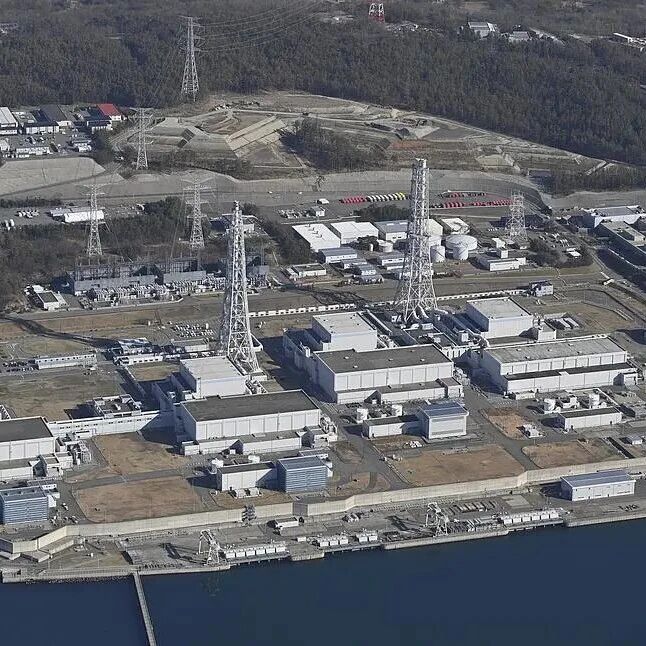
日本一核电机组恢复发电
中国能源报· 2026-03-22 10:57
来源:央视新闻客户端 End 欢迎分享给你的朋友! 出品 | 中国能源报(c n e n e rg y) 责编丨李慧颖 发生漏电后,日本柏崎刈羽核电站6号机组恢复发电。 ▲ 资料图 3月22日获悉,针对日本新潟县柏崎刈羽核电站6号机组因发生漏电而停止发电和送电一 事,东京电力公司表示,相关受损部件已完成更换,并于当天恢复发电和送电。 此前,3月12日,据东京电力公司消息,正在进行试运行的柏崎刈羽核电站6号机组当天 下午触发警报,显示发电机出现少量漏电状况。东京电力13日决定停止该机组的发电和送 电,以对相关情况进行检查。 ...

中信证券:中东冲突的分歧与推演
Xin Lang Cai Jing· 2026-03-22 10:07
Core Viewpoint - The market is experiencing significant divergence in expectations regarding the impact of the Iran conflict, with three core questions remaining unanswered until April: the extent of resumption of navigation after conflict intensity decreases, whether the Federal Reserve prioritizes inflation indicators or actual employment conditions, and whether China faces cost shocks or opportunities for supply chain shifts [1][14]. Group 1: Iran Conflict and Market Impact - There are two contrasting views on the Iran conflict: one suggests that the conflict's intensity has decreased and that navigation will resume, while the other argues that navigation has not yet recovered and supply chain disruptions are not fully reflected [2][16]. - As of March 19, 2026, only five vessels were passing through the Strait of Hormuz, indicating no signs of large-scale resumption of navigation, with daily passage numbers significantly lower than pre-conflict levels [5][19]. - The current oil tanker rental rates have surged from $10-20 per ton to $60-80 per ton, with some periods exceeding $90 per ton, marking a historical peak [5][19]. Group 2: Federal Reserve's Focus - There are two opposing views regarding the Federal Reserve's focus: one suggests that inflation risks are increasing and liquidity is tightening, while the other argues that employment prospects are more significantly impacted by AI, making tightening unlikely [3][17]. - Following the March 18 Federal Reserve meeting, market data indicated that the implied number of rate cuts for the year remained low, between 0-1 [3][17]. - The employment market is showing signs of weakness, with negative job growth reported in February and downward revisions to previous employment data [6][20]. Group 3: China's Energy Dependency and Supply Chain Resilience - There are two perspectives on China's situation: one indicates that prolonged conflict will significantly impact China due to high oil import dependency, while the other suggests that China's supply chain resilience has improved, with a notable decrease in oil dependency [4][18]. - China's oil import dependency has decreased from 2.2% of GDP fifteen years ago to 1.7% currently, and existing reserves can meet over 90 days of consumption [4][18]. - China's energy diversification strategy has been long-term, with potential additional supply sources capable of covering risks associated with the Strait of Hormuz [4][18]. Group 4: Market Behavior and Future Outlook - The market has seen some short-term reduction in positions, particularly in sectors that had previously seen significant gains, with a notable divergence in performance among different sectors [8][22]. - The market's volatility is attributed more to absolute return funds reducing positions rather than institutional reallocation, with low-valuation stocks performing better than high-valuation stocks [8][22]. - The market is expected to remain in a narrative-driven phase until April, when key questions regarding the Iran conflict and its implications will begin to be answered [9][23].

风险释放之后的反弹主线
ZHONGTAI SECURITIES· 2026-03-22 09:28
1. Report Industry Investment Rating - The industry rating is "Overweight", indicating an expected increase of over 10% in the industry index relative to the benchmark index in the next 6 - 12 months [24] 2. Core Viewpoints of the Report - The current market is at a moment of heavy divergence. The ChiNext Index has rebounded and hit a new high this week, while overseas liquidity shocks are accelerating. The A - share market is also discussing issues such as "who is the marginal seller" and the potential "redemption - selling - redemption" negative feedback [1][4] - Seasonal effects are not the reason for the decline but help clear risks. The pressure on the liability side from the liquidity shock has been gradually digested in the past two weeks and may be nearing the end [1][5] - Sentiment indicators show that the market is close to the "extreme panic" level, and the smooth passing of the "end - of - the - world options" day implies a high probability of a market reversal [1][6] - Chinese assets have shown strong resilience. A - shares and Hong Kong stocks have smaller declines compared to global markets, and foreign capital is actively increasing its positions in A - shares [1][8] - After the liquidity shock eases, the leading sectors in the A - share market are divided into two categories: hot sectors supported by industrial trends or policy benefits, and liquidity - sensitive elastic sectors [1][14] - The current is a window period for bottom confirmation, and the main lines of the rebound after the shock are becoming clear, including "wrongly - killed" elastic sectors, energy - substitution sectors, and sectors benefiting from rising oil prices [1][22] 3. Summary According to the Table of Contents Introduction: Believe in the Long - Term or Worry about the Short - Term - This week, the market was volatile. The ChiNext Index rose 1.3% and the Shanghai Composite Index fell 3.4%. Globally, except for oil, risk and safe - haven assets declined. The A - share market discussed issues like "who is the marginal seller" and the "redemption - selling - redemption" negative feedback [4] - The seasonal effect promotes risk clearance. The pressure on the liability side from the liquidity shock has been digested, and the yields of various funds this year are better than those in 2025 [5] - Sentiment indicators show that the market is in an "extreme panic" state [6] I. Value the Resilience of Chinese Assets under Liquidity Shocks - Since the Iran - US conflict, global assets have declined, but Chinese assets have advantages. A - shares and Hong Kong stocks have smaller declines, and Hong Kong stocks rebounded first on March 6, followed by the ChiNext Index [8] - Northbound funds are flowing into A - shares. Their trading volume ratio has increased, and they have become an important marginal pricing force. Northbound heavy - position stocks and the 20 most actively traded stocks have shown significant excess returns [9][11] III. "End - of - the - World Options" Usually Accompany Excessive Emotional Release, with a High Probability of Subsequent Reversal - The options expiration day is an important time for emotional release. After the stock index futures and options expiration day, the probability of a market reversal is high, with a trend reversal probability of over 71% [13] IV. Learn from History: Which Sectors Have the Strongest Recovery Ability after the Shock Eases - After the shocks in March 2020 and April 2025, the leading sectors in the A - share market can be divided into two categories: hot sectors with industrial trends or policy support, and liquidity - sensitive elastic sectors [14] - In March 2020, the main line of the A - share rebound was the consumer sector and cyclical + technology elastic sectors [14] - In April 2025, after the "reciprocal tariff" shock, the leading sectors included electronics, computer, communication, and other sectors, and the rebound amplitude of other sectors was positively correlated with valuation elasticity and previous declines [16] V. Main Lines after Risk Release: Who is "Wrongly - Killed" and Who is "Benefiting" - During this round of liquidity shock, the decline of A - share sectors is negatively correlated with valuation elasticity [18] - The AI hardware industry chain has been "wrongly - killed" and has strong support. If oil prices remain high, energy - substitution sectors such as coal, coal chemical industry, and power will benefit. However, new - energy vehicles and electrolytic aluminum have weak performance, possibly due to deflation concerns [20] - The industry layout ideas are: "wrongly - killed" elastic sectors such as the AI hardware industry chain; energy - substitution sectors such as power, wind power, energy storage, and electrolytic aluminum if oil prices fluctuate at a high level; and coal and coal chemical industries if oil prices rise further [22]
公用事业行业研究:发用电量高增仍将持续,辽宁核电机制电价落地
SINOLINK SECURITIES· 2026-03-22 08:20
Investment Rating - The report indicates a positive outlook for the coal and electricity sectors, with expectations of significant performance improvements in the upcoming earnings reports [3][4]. Core Insights - The implementation of the nuclear power pricing mechanism in Liaoning Province is expected to stabilize the performance expectations of existing nuclear power plants and clarify profit growth from future installations [42][43]. - The overall electricity consumption in the first two months of 2026 showed a high growth rate of 6.1% year-on-year, driven by low base effects from the previous year [2][6]. - The national power generation in the same period increased by 4.1% year-on-year, with coal-fired power generation showing a notable recovery, contributing significantly to the overall growth [24][35]. Summary by Sections Nuclear Power Pricing Mechanism - Liaoning Province has introduced a pricing mechanism for nuclear power plants, which includes a mechanism electricity price of 0.3798 yuan/kWh for the Hongyanhe nuclear units [42][43]. - The mechanism will stabilize the performance expectations of existing nuclear power plants and is anticipated to encourage similar policies in other provinces [42][43]. Electricity Consumption Growth - Total electricity consumption reached 1.65 trillion kWh in January-February 2026, reflecting a year-on-year increase of 6.1% [6][24]. - The secondary industry accounted for 65% of the electricity consumption growth, indicating a shift towards new manufacturing sectors [6][24]. Power Generation Performance - National power generation reached 1.57 trillion kWh in the first two months, with coal-fired generation increasing by 3.3% year-on-year, marking a significant recovery from a decline in the previous year [24][35]. - The growth in hydropower generation was 6.8%, while wind and solar power generation growth rates were 5.3% and 9.9%, respectively, indicating a mixed performance across different energy sources [24][35].
算电协同新高度,电企选股新思路
GUOTAI HAITONG SECURITIES· 2026-03-22 07:28
算电协同新高度,电企选股新思路 [Table_Industry] 公用事业 | [姓名table_Authors] | 电话 | 邮箱 | 登记编号 | | --- | --- | --- | --- | | 吴杰(分析师) | 021-23183818 | wujie3@gtht.com | S0880525040109 | | 于鸿光(分析师) | 021-38031730 | yuhongguang@gtht.com | S0880522020001 | | 傅逸帆(分析师) | 021-23185698 | fuyifan@gtht.com | S0880525040042 | | 阎石(分析师) | 021-23185741 | yanshi@gtht.com | S0880525070005 | | 胡鸿程(分析师) | 021-23185962 | huhongcheng@gtht.com | S0880525070011 | 本报告导读: 我们认为算电协同受益方向已经开始向我们上周说的调节电源渗透,全国性电厂、 地方性火电公司龙头或都有阶段性投资机会。 股票研究 /[Table_Date] 2 ...
中原证券:能源电力行业领涨 A股宽幅震荡
Xin Lang Cai Jing· 2026-03-22 06:49
Market Overview - The A-share market opened lower and experienced wide fluctuations on March 19, with the Shanghai Composite Index finding support around 4015 points during the day [1][4] - The afternoon session saw the index maintain its oscillation, with sectors such as oil, coal, gas, and electricity performing well, while precious metals, non-ferrous metals, energy metals, and agricultural chemicals lagged [1][4] Future Market Outlook and Investment Recommendations - The average price-to-earnings ratios for the Shanghai Composite Index and the ChiNext Index are currently 16.78 times and 48.70 times, respectively, which are above the median levels of the past three years, indicating a suitable environment for medium to long-term investments [2][5] - The total trading volume on March 19 was 21,275 billion yuan, which is above the median of the daily trading volume over the past three years [2][5] - Key pressures on the market stem from overseas factors, particularly escalating tensions in the Middle East, which have led to global market volatility and concerns over "stagflation" due to rising oil prices [2][5] - The expectation of delayed interest rate cuts by the Federal Reserve and increased volatility in U.S. Treasury yields are putting valuation pressure on global equity assets, especially high-valuation technology growth stocks [2][5] - Domestic macroeconomic policy is becoming clearer, providing a solid bottom line for the market, with the central bank indicating a flexible approach to reserve requirement ratio and interest rate cuts to maintain ample liquidity [2][5] - The market is expected to maintain a slight oscillation, and investors are advised to closely monitor macroeconomic data, changes in overseas liquidity, and policy developments [2][5] - Short-term investment opportunities are suggested in the electricity, coal, oil, and gas sectors [2][5]
