服装制造

Search documents
固体运载火箭“海澜之家号”成功发射
Ren Min Wang· 2025-10-12 06:52
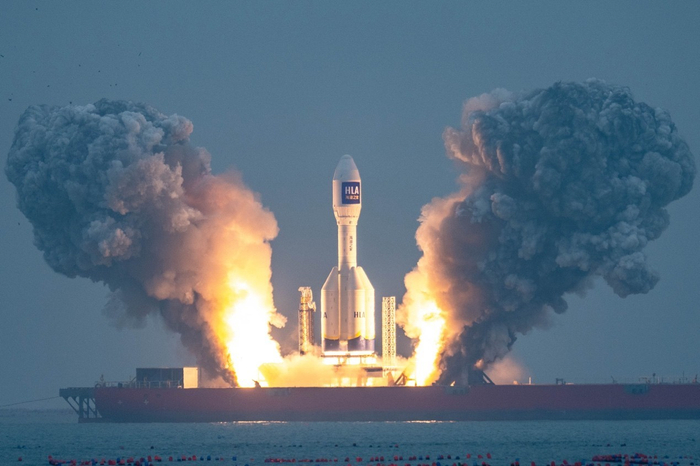
Core Viewpoint - The successful launch of the "Gravity-1 Yao-2·Hailan Home" rocket marks a significant advancement in China's commercial space sector, showcasing the collaboration between the national brand Hailan Home and the private rocket company Dongfang Space [1][2][5]. Group 1: Rocket Specifications and Capabilities - The "Gravity-1 Yao-2·Hailan Home" rocket has a total height of 30 meters, with a core stage and booster diameter of 2.65 meters, and a launch weight of 405 tons [4]. - It features a launch thrust of 600 tons and is equipped with a 4.2-meter diameter fairing [4]. - The rocket can carry up to 6.5 tons to low Earth orbit and 4.2 tons to a 500-kilometer sun-synchronous orbit, with capabilities for launching multiple satellites in a single mission [4]. Group 2: Strategic Importance and Collaboration - Hailan Home emphasizes the importance of commercial space as a new engine for China's aerospace development, contributing to the vision of becoming a space power [5]. - The partnership between Hailan Home and Dongfang Space, initiated in April 2023, aims to support national aerospace development and reflects a shared ambition in space exploration [5]. - The successful launch symbolizes a remarkable intersection of national branding and cutting-edge technology, reinforcing Hailan Home's commitment to innovation and responsibility [5].


杉杉股份易主,后妈与长子内斗两年,双双出局
凤凰网财经· 2025-10-11 12:37
Core Viewpoint - The article discusses the restructuring of Shanshan Co., Ltd. and the potential change in control to a consortium of investors, which may revitalize the company amid its financial challenges and shift towards the new energy sector [2][3]. Group 1: Restructuring and Control Change - Shanshan Co., Ltd. announced a restructuring agreement with a consortium of investors, aiming to acquire 23.36% of the company's shares for approximately 3.284 billion yuan [2]. - The new controlling shareholder will be Ren Yuanlin, founder of Yangtze River Shipbuilding, known as the "King of Private Shipbuilding" in China [3][9]. - The restructuring is seen as a potential turning point for Shanshan Co., Ltd., which has faced significant financial difficulties and internal conflicts [6][9]. Group 2: Historical Context and Business Evolution - Founded by Zheng Yonggang, Shanshan initially focused on the clothing industry before diversifying into lithium battery materials and photovoltaic sectors [3][4]. - By 2013, revenue from lithium battery materials surpassed that from traditional clothing, indicating a strategic shift in business focus [4]. - In 2021, Shanshan's revenue reached 20.699 billion yuan, with significant contributions from lithium battery materials and LCD polarizer businesses [5]. Group 3: Financial Performance and Challenges - Despite a revenue increase in 2021, Shanshan faced negative cash flow and rising short-term debts, indicating underlying financial stress [5]. - In 2024, the company reported its first loss since going public, with a revenue decline of 2.05% and a net loss of 367 million yuan [7]. - As of mid-2025, Shanshan's revenue showed signs of recovery, but the company still faced substantial debt pressures, with short-term borrowings exceeding cash reserves [8]. Group 4: Future Prospects and Strategic Partnerships - The restructuring investors, including TCL Technology, are interested in Shanshan's position in the new energy sector, particularly its role as a supplier for semiconductor display materials [8][9]. - Ren Yuanlin's investment plans include significant funding for clean energy projects, aligning with Shanshan's business direction [9]. - The collaboration with restructuring investors is expected to enhance Shanshan's operational capabilities and market competitiveness in the rapidly evolving new energy landscape [9].

129批次产品抽查不合格
Liao Ning Ri Bao· 2025-10-11 01:11
Core Insights - The provincial market supervision bureau conducted quality supervision and spot checks on 58 types of products, totaling 1,539 batches, including swimwear, leisure clothing, and drones [1] - The overall unqualified rate for distribution units was 12.2%, while for manufacturing enterprises, it was 3.7% [1] Swimwear Sector - The unqualified rates for swimwear in the distribution and production sectors were 36.4% and 20%, respectively [1] - Companies involved in unqualified swimwear products include Xingcheng Sanqi Garment Co., Ltd., Xingcheng Nailang Clothing Co., Ltd., and Shanghai Shangxi Children's Products Co., Ltd. [1] - Quality issues identified include fiber content, pH value, chlorine resistance color fastness, elastic elongation rate, and product usage instructions [1] Drone Sector - Unqualified drone products were linked to manufacturers such as Shenzhen Baoan Yiben Toy Factory, Shantou Chenghai Chenggong Model Toy Factory, and Shantou Zhongli Intelligent Technology Co., Ltd. [1] - Several unqualified drone products were found for sale at Shenyang JD Century Trading Co., Ltd. [1] - Quality issues for drones included electronic fencing, perception and avoidance, electromagnetic compatibility (radiation emission), noise, and lighting [1] Compliance Issues - During the inspection process, Yinkou Economic and Technological Development Zone Xinyuan Plastic Bag Factory and Dandong Anbang Coating Co., Ltd. refused inspection [1]
哈经开区跻身中国城市营商环境20强
Sou Hu Cai Jing· 2025-10-10 14:02
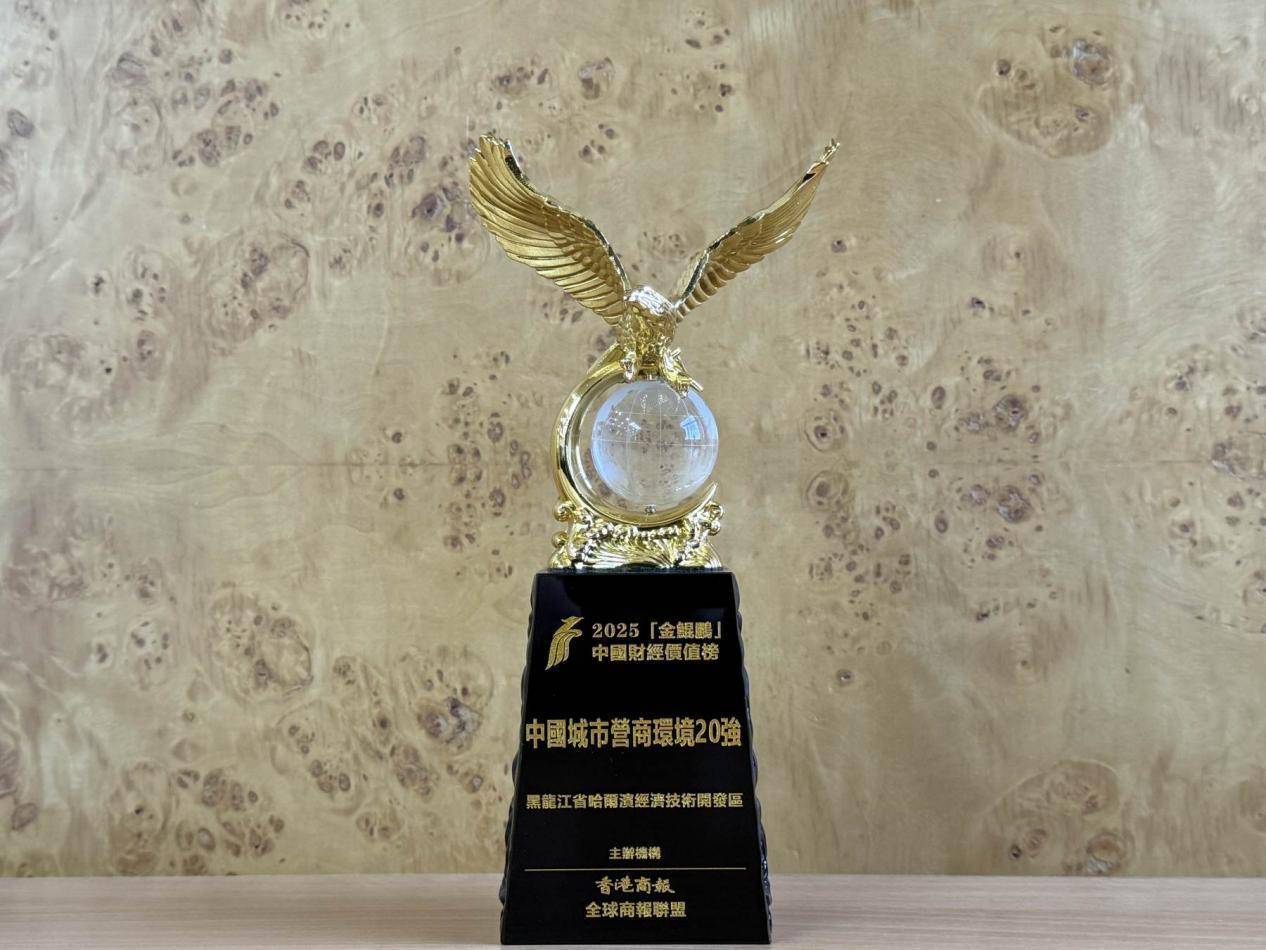
Core Viewpoint - Harbin Economic and Technological Development Zone (Harbin EDA) has been recognized as one of the "Top 20 Cities for Business Environment in China 2025," reflecting its outstanding business environment and contributing to regional brand competitiveness and market vitality [1][3]. Group 1: Recognition and Impact - Harbin EDA received the "Top 20 Cities for Business Environment in China 2025" award, marking a significant achievement in optimizing its business environment [1][3]. - The award is expected to attract quality enterprises and enhance capital confidence, providing strong momentum for the revitalization of Northeast China [1][3]. Group 2: Measures for Business Environment Improvement - Harbin EDA has integrated its industrial foundation with digital economic innovation, creating a "strong magnetic field" for the business environment through various initiatives [4]. - The zone has implemented a list of eight key services, including "one-time run" and "no-run" policies, to streamline administrative processes for businesses and citizens [4][6]. Group 3: Digital Technology and Service Upgrades - The zone has upgraded its "credit substitution" reform from version 1.0 to 2.0, allowing for quicker issuance of public credit information reports [5]. - Harbin EDA has introduced an AI virtual assistant for government services, enhancing efficiency and user experience in administrative processes [5]. Group 4: Reform Initiatives and Policy Implementation - Harbin EDA has launched 300 reform initiatives, with 30 being replicated across the city and province, focusing on deep reform and efficient administrative approval [6]. - The zone has established a mechanism for communication with enterprises and has introduced a "no application required" policy for certain benefits, ensuring effective policy implementation [6]. Group 5: Future Outlook - Harbin EDA aims to continue deepening reforms and enhancing its digital service system, transforming its business environment into a key driver for high-quality regional development [7].
河南商丘:服装企业节后生产忙
Zhong Guo Xin Wen Wang· 2025-10-09 11:16
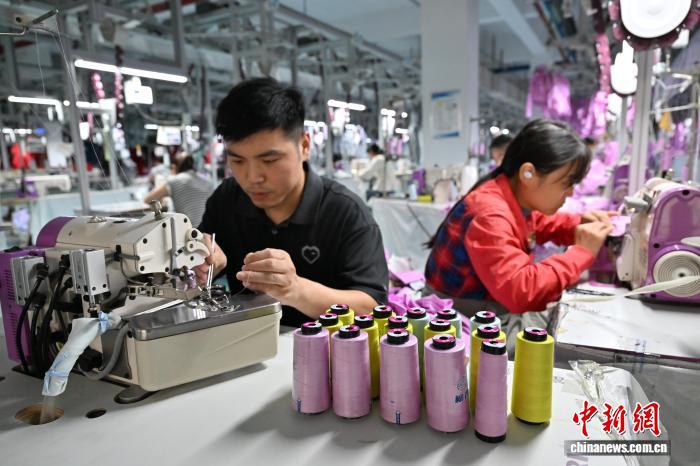
河南商丘:服装企业节后生产忙 编辑:熊思怡 10月9日,工人在河南商丘睢阳区户外服装产业园赶制服装订单。李恒 摄 10月9日,工人在河南商丘睢阳区户外服装产业园赶制服装订单。李恒 摄 广告等商务合作,请点击这里 10月9日,工人在河南商丘睢阳区户外服装产业园赶制服装订单。李恒 摄 10月9日,工人在河南商丘睢阳区户外服装产业园赶制服装订单。李恒 摄 10月9日,工人在河南商丘睢阳区户外服装产业园赶制服装订单。李恒 摄 10月9日,工人在河南商丘睢阳区户外服装产业园赶制服装订单。李恒 摄 来源:中国新闻网 本文为转载内容,授权事宜请联系原著作权人 中新经纬版权所有,未经书面授权,任何单位及个人不得转载、摘编或以其它方式使用。 关注中新经纬微信公众号(微信搜索"中新经纬"或"jwview"),看更多精彩财经资讯。 ...
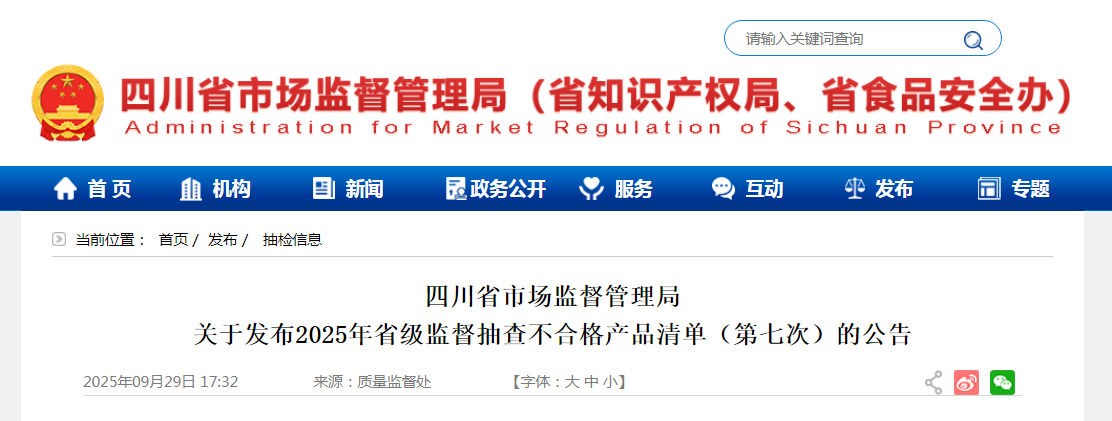
四川省市场监督管理局发布2025年省级监督抽查不合格产品清单(第七次)
Zhong Guo Zhi Liang Xin Wen Wang· 2025-10-09 08:21
Core Points - The Sichuan Provincial Market Supervision Administration has announced the results of the seventh batch of quality inspections for key industrial products in 2025, revealing a list of non-compliant products [2][3]. Group 1: Non-compliant Products - A total of 57 non-compliant products were identified in the latest inspection, including various student stationery and clothing items [3][4]. - Specific issues included the presence of phthalate plasticizers in accessible plastic parts and inadequate labeling of fiber content in clothing [3][5]. - Notable companies involved in the non-compliance include Yiwu Xiaoyuer Cultural Supplies Co., Ltd. and Shanghai Kaba Bear Cultural Technology Co., Ltd. [3][4]. Group 2: Product Categories - The non-compliant products primarily fall into categories such as student stationery, student bags, and sportswear [3][4]. - The inspection covered a wide range of products, including student stationery with specifications like 15cm and 22*7*9cm, and various sizes of student bags [3][4]. - Specific non-compliance issues included safety standards for pen cases and the mechanical safety performance of children's shoes [5][6].
港股异动 | 申洲国际(02313)涨超6% 核心客户耐克第一财季业绩超市场预期
智通财经网· 2025-10-02 03:46
Core Viewpoint - Shenzhou International (02313) saw a stock increase of over 6%, closing at HKD 65.4 with a trading volume of HKD 329 million, following Nike's positive Q1 2026 fiscal year earnings report [1] Financial Performance - Nike reported Q1 2026 revenue of USD 11.7 billion, exceeding market expectations of USD 11.02 billion, and showing a 1% year-over-year growth [1] - Gross margin was 42.2%, surpassing the anticipated 41.7% [1] - Earnings per share were USD 0.49, significantly higher than the expected USD 0.27 [1] Market Insights - Revenue growth was observed across North America, Europe, the Middle East, and Africa, while inventory in Greater China decreased by 11%, indicating effective inventory adjustments [1] - Shenzhou International's client base includes major sports and leisure apparel brands, with Nike, Adidas, Uniqlo, and Puma contributing 80.7% of annual revenue in 2024, solidifying its core business [1] Strategic Developments - The company has been expanding its client portfolio, recently partnering with Lululemon and Lacoste [1] - Shenzhou International employs a dedicated factory model and deep collaboration in R&D to provide a comprehensive ODM "one-stop" service that covers everything from fabric development to garment manufacturing [1]
郑永刚去世不到3年杉杉股份或易主,72岁“民营船王”任元林接手
Xin Lang Cai Jing· 2025-10-02 00:25
Core Viewpoint - The death of Zheng Yonggang, founder of the Shanshan brand, has led to a significant change in control of Shanshan Co., as the company enters a restructuring phase with new investors, including Ren Yuanlin, known as the "King of Private Shipbuilding in China" [1][5]. Group 1: Restructuring Agreement - Shanshan Group and its subsidiary signed a restructuring investment agreement with a consortium of investors, aiming to acquire 23.36% of Shanshan Co.'s shares through various methods [2][4]. - The restructuring plan indicates that if successful, the control of Shanshan Co. will shift to the new investors, with Ren Yuanlin becoming the actual controller [2][5]. Group 2: Share Acquisition Details - The consortium plans to directly acquire 22,331,120 shares of Shanshan Co., representing 9.93% of the total share capital, with New Yangzi Trading as the primary limited partner [2][3]. - TCL Investment will directly acquire 43,700,900 shares, accounting for 1.94% of the total share capital, with voting rights delegated to the investment platform [2][3]. Group 3: Financial Implications - The total consideration for the shares to be acquired by the restructuring investors is approximately 3.284 billion yuan [4]. - The management is required to draft a restructuring plan within 30 days of signing the agreement, which will then be submitted for creditor approval [4][5]. Group 4: Company Operations - Shanshan Co. asserts that it currently operates independently without any non-operational fund occupation or illegal guarantees affecting its interests [6]. - The company maintains that its production and operations are normal and that the restructuring process has not significantly impacted its daily operations [6].

一场被及时处理的火灾背后,有哪些技术支撑?
Xin Jing Bao· 2025-09-30 14:31
Core Points - A fire incident occurred in a clothing company's warehouse in Shunyi District, Beijing, but was quickly contained due to effective fire safety systems in place [1][2] - The automatic fire suppression system and smoke detectors played a crucial role in preventing a larger disaster [2][3] - The fire was caused by an electrical fault in a fan, which ignited nearby cardboard boxes [3][6] Fire Safety Systems - The warehouse is equipped with an automatic sprinkler system that activates when a certain temperature is reached, effectively extinguishing the flames [8] - The integration of a "three water and one electricity" IoT smart prevention system has enhanced fire safety measures in the area [2][8] - The local fire department has implemented a comprehensive regulatory information system to monitor and support fire safety in key facilities [8] Incident Response - Firefighters arrived on the scene shortly after the alarm was triggered, but the fire had already been extinguished by the sprinkler system [2][6] - The fire incident resulted in minimal damage, with only a 1 square meter area affected [3] - The company has since made improvements to its fire safety measures, including replacing sprinkler heads [8]
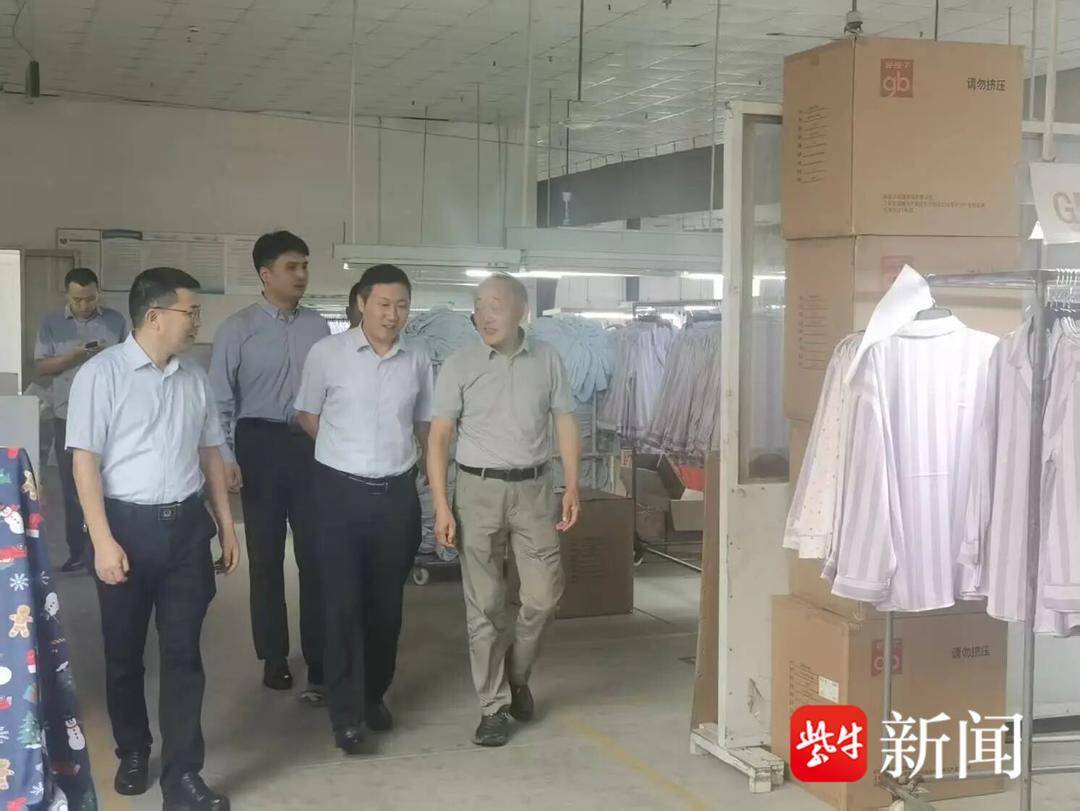
盐城市盐南高新区新河街道开展节前安全生产检查
Yang Zi Wan Bao Wang· 2025-09-30 10:01
Group 1 - The local government is conducting safety inspections in key industries and sectors to ensure safety during the upcoming National Day and Mid-Autumn Festival [1][3] - Inspections include gas stations, construction sites, and companies, focusing on identifying safety hazards and enforcing safety responsibilities [1][5] - Emphasis is placed on the importance of safety training and emergency response measures for employees, especially with increased foot traffic during the holidays [3][5] Group 2 - Specific inspections were carried out at gas stations, checking storage tanks, fuel dispensers, electrical lines, and lightning protection systems [3][6] - In residential areas, safety checks included gas and electricity usage, fire escape routes, and the use of gas cylinders in kitchens [5][6] - Companies are encouraged to establish a record of identified issues and ensure timely rectification to create a safe environment for residents during the holidays [5][8] Group 3 - Safety inspections at Salt City Haiwen Technology Co., Ltd. and Salt City Airi Clothing Co., Ltd. focused on operational safety and compliance with safety regulations [6][8] - The local government is promoting the sharing of safety management experiences to enhance safety levels in the clothing industry [8]