
煤炭开采

Search documents
港股收评:恒科指跌1.84%!应用软件股重挫,煤炭股集体爆发
Ge Long Hui· 2026-02-04 08:52
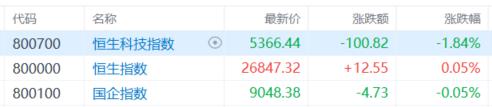
Group 1: Technology Sector - Major technology stocks experienced a collective decline, with Tencent Holdings down nearly 4%, NetEase down over 3%, and Baidu Group down over 2% [1][3] - Other tech stocks such as Xiaomi, JD.com, Meituan, Alibaba, and Kuaishou also reported declines [1][3] Group 2: Application Software and SaaS - Application software stocks led the decline, with Kingdee International dropping over 12% due to the impact of new tools from Anthropic [1][6] - Other companies in the SaaS sector, including Jushuitan and Inspur Digital, also saw significant declines [6] Group 3: Semiconductor Sector - Semiconductor and chip stocks fell, with companies like Hua Hong Semiconductor and Zhaoyi Innovation experiencing declines [1][7] Group 4: Coal Sector - Coal stocks surged following Indonesia's suspension of spot coal exports, with Yancoal Australia and Yanzhou Coal Energy rising over 10% [1][9] - The suspension raised global supply concerns, as Indonesia's production quotas were significantly reduced [9] Group 5: Real Estate Sector - Domestic real estate stocks strengthened, with Shimao Group leading with a nearly 15% increase [1][10] - The Shanghai government initiated a program to acquire second-hand housing for rental projects, supporting the sector [10] Group 6: Airline Sector - Airline stocks were active, with China Eastern Airlines and Air China both rising over 6% [1][12] - Domestic flight ticket bookings increased by 15% on average as the Spring Festival approached [12] Group 7: Heavy Machinery Sector - Heavy machinery stocks saw gains, with companies like Boleton rising over 3% [1][14] - A report indicated that demand for mining equipment is increasing, which is expected to drive sales growth [14] Group 8: Beverage Sector - Dongpeng Beverage rose by 9.53%, with a market capitalization of HKD 154.7 billion [16][19] - Citigroup initiated coverage on Dongpeng Beverage with a "Buy" rating, forecasting significant profit growth [19] Group 9: Market Outlook - Guosen Securities remains optimistic about the spring market, despite some negative impacts from the rebound of the US dollar index [21]

港股科网股,再度大跌
Di Yi Cai Jing Zi Xun· 2026-02-04 08:52
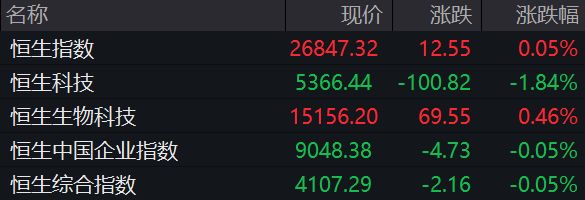
| 名称 | 现价 | 涨跌幅 ▲ | | --- | --- | --- | | 纳芯微 | 138.700 c | -6.66% | | 天域半导体 | 45.840 c | -6.41% | | 上海复日 | 47.880 c | -5.19% | | 华虹米昌体 | 102.400 c | -4.92% | | 兆易创新 | 304.400 c | -3.85% | | 伟志控股 | 0.790 c | -3.66% | | 峰昭科技 | 128.400 c | -2.65% | | 中村国际 | 68.750 c | -2.41% | | 普达特科技 | 0.224c | -2.18% | | 天岳先进 | 58.350 c | -1.77% | 煤炭股活跃,兖矿能源涨逾10%,中煤能源涨逾8%,中国神华涨逾5%。 2月4日,香港恒生指数收涨0.05%,恒生科技指数跌1.84%。 | 名称 | 现价 | 淵跌 | 涨跌幅 | | --- | --- | --- | --- | | 恒生指数 | 26847.32 | 12.55 | 0.05% | | 恒生科技 | 5366.44 | -100.82 ...

內房股大涨,融创中国涨超8%,万科涨超6%!恒生科技跳水,大型科技股齐跌 | 港股收盘
Mei Ri Jing Ji Xin Wen· 2026-02-04 08:44
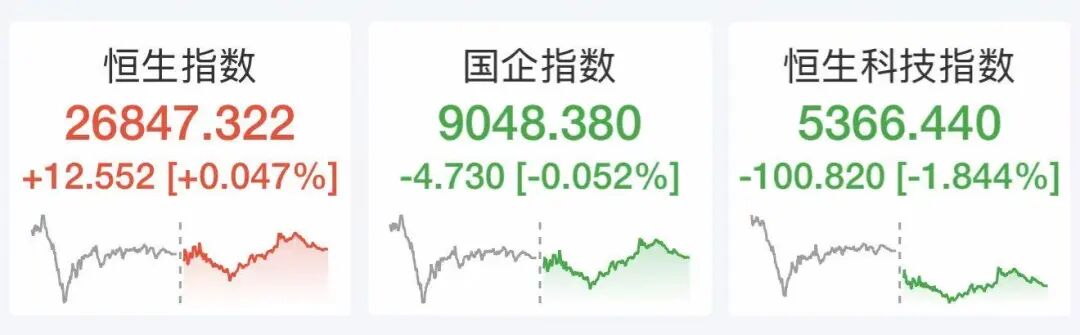
Group 1 - The Hong Kong stock market experienced fluctuations, with the Hang Seng Index closing at 26,847.322, a slight increase of 0.047% [1] - Real estate stocks saw significant gains, with Shimao Group rising over 14%, Sunac China up over 8%, Vanke Enterprises increasing over 6%, and Yuexiu Property up over 6% [1] - Coal stocks also performed well, with Yanzhou Coal Mining rising over 10% and China Shenhua Energy increasing over 5% [1] Group 2 - The Hang Seng Tech Index dropped by 1.844%, with major tech companies showing poor performance [3] - Tencent Holdings fell nearly 4%, Baidu Group declined nearly 3%, Xiaomi Group dropped over 1.8%, JD Group decreased over 1.6%, and Alibaba fell nearly 1% [3][4] - Semiconductor stocks were sluggish, with Fudan Shanghai falling over 5%, Hua Hong Semiconductor down nearly 5%, GigaDevice down over 3%, and SMIC down over 2% [5]


超3200只个股上涨,沪指重回4100点,光伏、煤炭板块掀涨停潮|A股收盘
Mei Ri Jing Ji Xin Wen· 2026-02-04 07:38
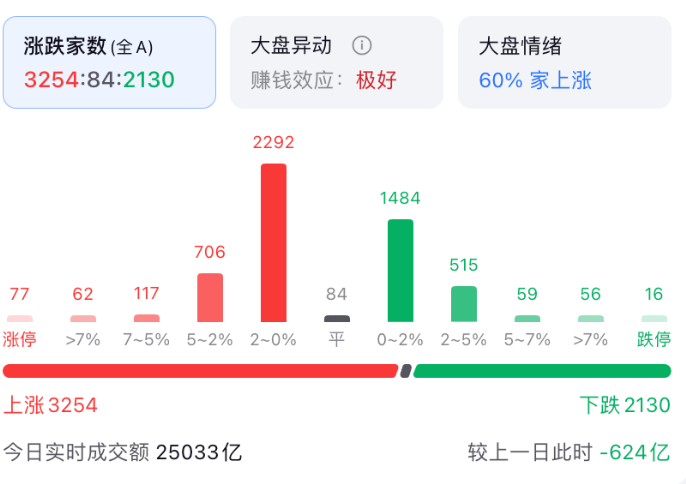
Market Overview - On February 4, the A-share market rebounded, with the Shanghai Composite Index returning to 4100 points, closing up by 0.85%, while the Shenzhen Component Index rose by 0.21%, and the ChiNext Index fell by 0.4% [1] - The total trading volume in the Shanghai, Shenzhen, and Beijing markets was 25,033 billion yuan, a decrease of 624 billion yuan compared to the previous day, with over 3,200 stocks rising [1] Sector Performance - The photovoltaic sector experienced a surge, with multiple stocks such as JinkoSolar, Longi Green Energy, Zhonglai Co., and Zerun New Energy hitting the 20% daily limit up [3] - The coal sector also saw significant gains, with several stocks reaching their daily limit up, including Hengyuan Coal Power, Kailuan Energy, and Shanxi Coking Coal, all showing increases of around 10% [5] Notable Company Activities - Reports indicate that Elon Musk's team conducted research on several Chinese photovoltaic companies, including TCL Zhonghuan, JinkoSolar, and Jinglong Technology, although these companies did not confirm the authenticity of the news [4]


今日涨跌停股分析:77只涨停股、14只跌停股,煤炭概念活跃,潞安环能、晋控煤业等涨停
Xin Lang Cai Jing· 2026-02-04 07:12
Group 1 - A-shares experienced significant market activity with 77 stocks hitting the daily limit up and 14 stocks hitting the limit down on February 4 [1] - The coal sector showed strong performance, with companies like Lu'an Environmental Energy and Jinkong Coal Industry reaching the limit up [1] - The civil aviation sector also performed well, with Huaxia Airlines and China Eastern Airlines hitting the limit up [1] Group 2 - Notable continuous gainers included *ST Lifang with 6 limit ups over 9 days, and ST Jinglan with 6 limit ups over 8 days [1] - Other stocks with consecutive gains included Hangzhou Electric, Mingdiao Co., and Tiantong Co., each achieving multiple limit ups [1] - Conversely, *ST Wanfa faced a continuous decline with 17 consecutive limit downs, while *ST Jinglun and *ST Chuntian also experienced multiple days of limit downs [1]

广发证券:预计26年煤炭行业盈利预期改善 板块估值和股息率优势明显
智通财经网· 2026-02-04 07:01
Core Viewpoint - The coal industry experienced a significant profit decline of 42% in 2025, but there is an expectation for improvement in profitability in 2026 as supply growth slows and demand recovers [1] Coal Industry Overview - In 2025, the coal industry faced a downturn, with total profits amounting to 352 billion yuan, a 42% year-on-year decrease. However, the second half of the year saw a shift from a loose supply-demand balance to a more stable one [1] - The coal sector outperformed the market in January, with an 8.3% increase year-to-date, surpassing the CSI 300 index by 6.7 percentage points [1] - The overall valuation metrics, including price-to-earnings and price-to-book ratios, are at historically high levels, with the price-to-earnings ratio ranking 5th among all market sectors [1] Market Dynamics - In 2025, the coal market experienced a loose supply-demand balance, with December electricity consumption flat year-on-year and coal imports up by 12%. January saw stable coal prices with slight increases [2] - Domestic coal production rose by 1.2% year-on-year, while imports fell by 9.6%. Global coal shipping volumes decreased by 2.8% [2] - The first quarter of 2026 is expected to see a tightening supply, with safety regulations impacting production levels [2] Recent Market Trends - Recent trends indicate a stabilization and potential increase in coal prices, with high consumption levels and a narrowing supply leading to a stable outlook for coal prices [3] - The coking coal market is currently in a demand lull, but there are signs of increased production in the steel sector, which may support future price stability [3] Key Companies - Companies with stable profits and dividends in the thermal coal sector include China Shenhua, Yanzhou Coal, Shaanxi Coal, and others [4] - High elasticity companies benefiting from rising coal prices include Huabei Mining, Shanxi Coking Coal, and others [4] - Companies with long-term growth potential include Huayang Co., Xinjie Energy, and others [4]

【央媒看山西】到采煤一线 看奋斗在井下400米深处的“青春力量”
Xin Lang Cai Jing· 2026-02-04 05:06
Core Viewpoint - The article highlights the working conditions and experiences of university student miners at Huayang Group's high-gas coal mine in Shanxi, emphasizing the integration of technology and the challenges faced in coal mining operations. Group 1: Working Conditions - Miners must wear heavy protective gear weighing over 20 pounds before entering the mine [1] - The journey to the coal face involves a 530-meter descent followed by a 12-kilometer ride on a small train, taking about 70 minutes [4][5][6] - The working environment is described as a large underground maze, with significant wind and a vertical distance of over 400 meters from the surface [6][9] Group 2: Technology and Operations - The mine utilizes advanced technology, including a 5G smart mining system, which has reduced labor requirements by nearly half while increasing coal output [11][19] - The coal cutting machine operates with a thickness of 0.8 meters, allowing for the extraction of 6,000 tons of coal per shift, an increase from 5,000 tons prior to technological upgrades [19] - Real-time monitoring systems are in place to ensure safety and efficiency, with video surveillance of operations [16] Group 3: Workforce Composition - The mining team consists of 20 workers, including various specialized roles such as coal machine operators and belt workers, with many being recent university graduates [5][6] - The miners express a sense of accomplishment in applying their academic knowledge to practical work in the mining industry [26] Group 4: Personal Experiences - Miners share feelings of fatigue and monotony due to the demanding nature of their work, which includes long hours and repetitive tasks [24][27] - The camaraderie among miners is highlighted, with older workers providing support and encouragement to younger colleagues [27]


午间涨跌停股分析:53只涨停股、13只跌停股,煤炭概念活跃,兖矿能源、晋控煤业等涨停
Xin Lang Cai Jing· 2026-02-04 03:43
Group 1 - A-shares saw a total of 53 stocks hitting the daily limit up and 13 stocks hitting the daily limit down during the first half of the trading day on February 4 [1] - The coal sector was notably active, with stocks such as Yanzhou Coal Mining and Jinko Energy reaching the daily limit up [1] - The civil aviation sector also showed strength, with Huaxia Airlines and China Eastern Airlines hitting the daily limit up [1] Group 2 - ST Jinglan achieved 6 consecutive limit ups over 8 days, while Hangzhou Electric and Mingdiao Co. recorded 4 consecutive limit ups [1] - Other stocks with consecutive limit ups include Tiantong Co. with 3 limit ups over 4 days, and ST Jingji, Minbao Optoelectronics with 3 consecutive limit ups [1] - Companies like CIMC and Yinlun Co. experienced 2 consecutive limit ups, while China Shipbuilding Technology and Hongsheng Huayuan reached the daily limit up [1] Group 3 - ST Wanfang faced a continuous decline with 17 consecutive limit downs, while ST Jinglun and ST Chuntian experienced 7 and 5 consecutive limit downs respectively [1] - ST Haihua and ST Guohua both faced 4 and 3 consecutive limit downs, respectively, along with ST Jieneng and other companies like Xishanghai and Wanfeng Co. also hitting the daily limit down [1]

平煤股份20260203
2026-02-04 02:27
Summary of Conference Call for Pingmei Shenma Energy Company Company Overview - **Company**: Pingmei Shenma Energy Company - **Industry**: Coal Mining and Energy Production Key Points Production and Sales Data - In 2025, the company reported a total coal production of over 25 million tons, which is a decrease of approximately 140-150 thousand tons compared to the previous year, representing a 5% decline from 26.5 million tons in the prior year [1][3] - The production of premium coal decreased to around 800-1000 thousand tons, reflecting a significant drop from the previous year's figures [1][3] - The planned production capacity was adjusted from 33.13 million tons to 32.33 million tons due to the sale of the Xiangshan mine [4] Future Production Plans - The production and sales plan for 2026 has not been finalized yet, but it is expected to be similar to the previous year [4][11] - The company anticipates a slight increase in production for 2026, with premium coal production expected to remain around 12 million tons [5][12] Pricing and Revenue - The average long-term contract price for coking coal in Q3 was reported at approximately 1237, with an increase to 1580 in October and reaching 1660 in November and December [15][16] - The average price for January was 1660, with a slight decrease to 1630 in February [17][19] - The fulfillment rate for long-term contracts for coking coal is around 90% [20] Supply and Demand - The company plans to maintain a supply of nearly 10 million tons of power coal, with stable pricing based on regulatory requirements [23][24] - The company has a competitive edge in pricing, being approximately 20 yuan higher than some local competitors due to better coal quality [25][26] Cost Structure - The average mining cost for premium coal is around 500-570 yuan per ton, with additional costs for washing and transportation [33][34] - The company has been focusing on improving the quality of its coal to maintain competitive pricing [25][26] Financial Performance - Several subsidiaries reported losses, primarily due to high operational costs and safety-related shutdowns, but improvements are expected in the second half of the year [37][38] - The financial company associated with Pingmei Shenma reported a profit of nearly 100 million yuan, mainly from investment income [41][42] Capital Expenditure and Future Projects - The company plans to invest approximately 6-7 billion yuan in capital expenditures for new projects, including the Iron Factory project, which is expected to take over two years to complete [44][47] - Future capital expenditures are projected to remain stable at around 4-5 billion yuan annually, focusing on safety and asset upgrades [49] Regulatory Environment - The safety production environment remains stable, with strict regulations in place, particularly for key monitoring units [51][53] - The company is adapting to regulatory changes regarding coal supply and pricing mechanisms, but no significant changes have been implemented yet [30][31] Dividend Policy - The company aims to maintain a dividend payout ratio of around 60%, ensuring consistent returns to shareholders [65][66] Market Position and Outlook - The company is optimistic about its market position, despite facing challenges in the coal industry, and is focused on sustainable growth and quality improvements [68][69] Conclusion - Overall, Pingmei Shenma Energy Company is navigating production challenges while maintaining a focus on quality, pricing strategy, and regulatory compliance, with plans for future growth and stability in the coal market.
国海证券:电力需求总量增长仍具韧性 维持煤炭开采行业“推荐”评级
智通财经网· 2026-02-04 02:05
Core Viewpoint - Emerging industries have a strong driving effect on electricity consumption, with resilient overall electricity demand growth. Short-term, the intermittent nature of wind and solar power highlights the importance of coal power for peak regulation, indicating a rigid demand for coal. High-quality coal assets still hold investment value, and leading coal companies exhibit characteristics of high profitability, high cash flow, high barriers, high dividends, and high safety margins. The coal mining industry maintains a "recommended" rating, focusing on stable and elastic coal targets [1]. Group 1: First Industry - The first industry shows high growth but low proportion, with electricity consumption expected to grow at a CAGR of 11.46% to 149.4 billion kWh from 2019 to 2025, contributing 2% to overall electricity growth. The livestock sector is a key driver, with significant growth in machinery power consumption [1]. Group 2: Second Industry - The second industry remains the main electricity consumer, with consumption projected to grow at a CAGR of 5.19% to 6.64 trillion kWh from 2016 to 2025, maintaining a 64.01% share. The internal structure is optimizing, with high-tech and equipment manufacturing gradually replacing high-energy-consuming sectors as the core growth drivers, particularly in computer communication electronics, electrical machinery, and automotive manufacturing, all expected to exceed 10% CAGR from 2018 to 2025 [2]. Group 3: Third Industry - The third industry is experiencing significant growth, with electricity consumption projected to reach 1.99 trillion kWh by 2025, growing at a CAGR of 10.73% from 2016 to 2025, and contributing 30.89% to overall electricity growth. Key growth sectors include wholesale and retail, driven by the rapid penetration of new energy vehicles, and information transmission, software, and IT services, driven by the rapid development of artificial intelligence [3]. Group 4: Urban and Rural Residential Electricity - Urban and rural residential electricity consumption is expected to grow at a CAGR of 7.81% to 1.59 trillion kWh from 2016 to 2025, with a 15.32% share. The growth is driven by the penetration of electrical appliances and increased demand due to extreme weather conditions, with a contribution rate peaking at 50.03% in 2022. Projections for 2026 indicate continued growth across all sectors, with overall electricity demand expected to grow by 5.1% [4].
