
数据产业

Search documents
《中国数据要素市场化配置研究报告(2025)》:数据要素有望成为经济增长的关键驱动力
Sou Hu Cai Jing· 2025-08-06 07:24
Core Viewpoint - The report emphasizes that the market-oriented allocation of data elements is crucial for promoting high-quality development of the digital economy, fostering new industries, models, and productive forces [1] Data Element Market Development - Since 2024, significant breakthroughs have been made in the development and utilization of data elements in China, accelerating the construction of the data element market and enhancing its role in economic development [1] - The scale of data transactions has expanded significantly, with data exchanges optimizing their functions and diversifying transaction categories, including financial, medical, and industrial data [1][2] Data Ecosystem and Market Size - The number of data enterprises in China has grown from 110,000 to over 1,000,000 in the past decade, playing a key role in revitalizing data resources [2] - The data element market is expected to continue expanding, becoming a key driver of economic growth and facilitating higher quality development [2] Recommendations for Market Reform - The report suggests accelerating the improvement of data property rights systems, establishing a unified regulatory framework for data transactions, and innovating fiscal and tax incentive mechanisms to promote the development and utilization of data elements [2][3] Infrastructure and Technology Innovation - There is a push to enhance high-performance computing centers and intelligent computing centers, as well as to develop a robust data transmission network to support the efficient operation of the data element market [3] - Encouragement for enterprises and research institutions to invest in key technologies such as privacy computing, blockchain, and artificial intelligence to improve data security and circulation efficiency [3] Market Participant Engagement - The report highlights the importance of activating various data holders, including government departments, enterprises, and research institutions, to participate in market transactions and data asset activities [3] - Support for the development of professional data operators and trusted data service providers is emphasized to create a comprehensive ecosystem for data supply, rights confirmation, pricing, and compliance [3] Data Security and Regulation - Establishing a robust data security assurance system and enhancing the management of data throughout its lifecycle is crucial for maintaining market order and protecting data security [3]



山东将聚焦激活数据要素价值、布局数字经济新赛道等五方面
Da Zhong Ri Bao· 2025-08-02 01:09
Core Viewpoint - The implementation of the "Implementation Opinions" aims to accelerate the deep integration of the digital economy with the real economy in Shandong Province, focusing on five key areas over the next three years [2][3]. Group 1: Key Focus Areas - The five key areas include activating data factor value, laying out new tracks for the digital economy, promoting intelligent transformation of the real economy, facilitating cross-domain and cross-regional collaboration, and optimizing the layout of digital infrastructure [2]. - The document emphasizes the importance of institutional construction in advancing the national data factor comprehensive pilot zone, which is a significant mission assigned to Shandong Province [2][3]. Group 2: Economic Growth Targets - By 2027, the core industry value added of the digital economy in Shandong is expected to grow at an average annual rate of over 10%, with its share of GDP steadily increasing [3]. - The province aims to implement a series of major foundational research projects and key technology breakthroughs annually, focusing on nurturing specialized small and medium-sized enterprises, "gazelle" companies, and unicorns in the digital economy sector [3]. Group 3: Data Utilization and Industry Development - Actions will be taken to enhance data factor supply, circulation, operation, and utilization, including the establishment of high-quality data sets and a comprehensive data resource aggregation initiative [3]. - Shandong has already cultivated 18 national-level digital leading enterprises and 46 national-level industrial internet platforms, ranking first in the country, with the information technology industry revenue growing by 18.6% in the first half of the year [3][4]. Group 4: Future Plans and Support - The province plans to build a digital economy statistical monitoring system covering provincial, municipal, and county levels, aiming to cultivate around 100 leading digital economy enterprises by the end of 2026 [4]. - There will be a focus on enhancing digital talent policies and establishing a digital talent evaluation system to support the growth of the digital economy [4].
威海绘就全域数字化转型路线图
Da Zhong Ri Bao· 2025-08-01 02:15
Core Viewpoint - Weihai City has issued an implementation opinion to deepen the construction of a new smart city and promote comprehensive digital transformation by 2027, aiming to establish an efficient, collaborative, and intelligent governance model while maintaining a leading position in the digital economy's contribution to GDP [1][2]. Group 1: Digital Economy and Industry Development - By 2024, the core industries of the digital economy in Weihai are expected to account for 5.75% of GDP, ranking third in the province [2]. - The city plans to create around 20 provincial-level industrial internet key platforms by the end of this year, leveraging key industrial clusters and parks to develop "industrial brains" for major sectors [2]. Group 2: Public Services and Governance - Weihai has implemented various online services, achieving 1,924 city-level government services available online and 910 services on the "Love Shandong" app for common matters [3]. - The city aims to cover 90% of smart communities and innovate application scenarios in key livelihood areas such as education, healthcare, and housing [3]. Group 3: Urban Management and Social Governance - The implementation opinion emphasizes the need for interconnected systems, data sharing, and collaborative business processes to innovate urban governance concepts and methods [3]. - The goal is to create a smart city that achieves precise, efficient, and holistic governance [3].
江西促进数据产业高质量发展
Zhong Guo Hua Gong Bao· 2025-07-30 06:12
Core Viewpoint - Jiangxi Province aims to establish a data element market system by 2027, with an annual compound growth rate of over 20% in the data industry and the cultivation of over 400 data enterprises, along with the creation of more than 10 data industry clusters [1] Group 1: Policy Measures - The measures include 12 specific actions to support the entire data industry chain, focusing on nurturing data enterprises, promoting data resource development, enhancing industrial support, and ensuring the availability of development factors [1] - A data enterprise cultivation database will be established to support data resource development, technological innovation, and service innovation [1] Group 2: Data Supply and Governance - The implementation of a "one data, one source" governance mechanism will be promoted, along with the enhancement of the provincial public data resource registration platform [1] - Encouragement for enterprises and individuals to legally register and circulate their data will be provided [1] Group 3: Application and Innovation - The focus will be on innovative application scenarios in industrial manufacturing and modern agriculture, aiming to create a number of high-impact and demonstrative data application scenarios [1] - Support will be given to enterprises in developing high-quality data sets [1] Group 4: Infrastructure and Security - The province will accelerate the construction of data infrastructure and improve the functionality of the provincial data aggregation and circulation platform [1] - High-standard advancement of national data circulation infrastructure pilot projects in Nanchang and Ganzhou will be prioritized [1]
浙江打造知识产权强省:率先开展数据知识产权试点 累计转化运用金额近77亿元
Mei Ri Jing Ji Xin Wen· 2025-07-28 15:04
Core Viewpoint - Zhejiang Province is leading the way in data intellectual property rights, promoting high-quality development and building a demonstration zone for common prosperity through innovative data utilization and protection measures [1][2]. Group 1: Data Intellectual Property Initiatives - Zhejiang has become the first province to incorporate data intellectual property rights into local regulations, establishing a registration system that provides preliminary proof of data ownership and rights protection [2]. - The "Shuzhitong" integrated service platform for data intellectual property has been launched, connecting 180 service agencies and facilitating the matching of supply and demand for data rights [2]. - Since the implementation of these initiatives, nearly 77 billion yuan has been realized in data utilization, highlighting the growing value of data assets [2]. Group 2: Sector-Specific Applications - The province is exploring data value in various sectors, including AI, marine data, traditional crafts, agriculture, and urban traffic management, with significant results such as a 20% increase in agricultural product quality [3]. - A total of 860 high-quality AI datasets have been registered, and a marine data intellectual property alliance has been established, generating over 100 million yuan in value [3]. Group 3: Support for Private Enterprises - Over the past three years, the number of effective invention patents held by private enterprises has increased by 150%, supported by a dual-channel communication mechanism between government and businesses [5]. - The establishment of a rapid rights protection center and the allocation of resources for patent pre-examination have been prioritized for private enterprises, enhancing their innovation capabilities [5]. Group 4: Enforcement and Protection Mechanisms - A streamlined complaint and reporting mechanism for intellectual property violations has been established, providing efficient channels for private enterprises to protect their rights [6]. - The introduction of simplified administrative procedures for intellectual property disputes has significantly reduced the time required for resolution, making it easier for businesses to defend their rights [6].
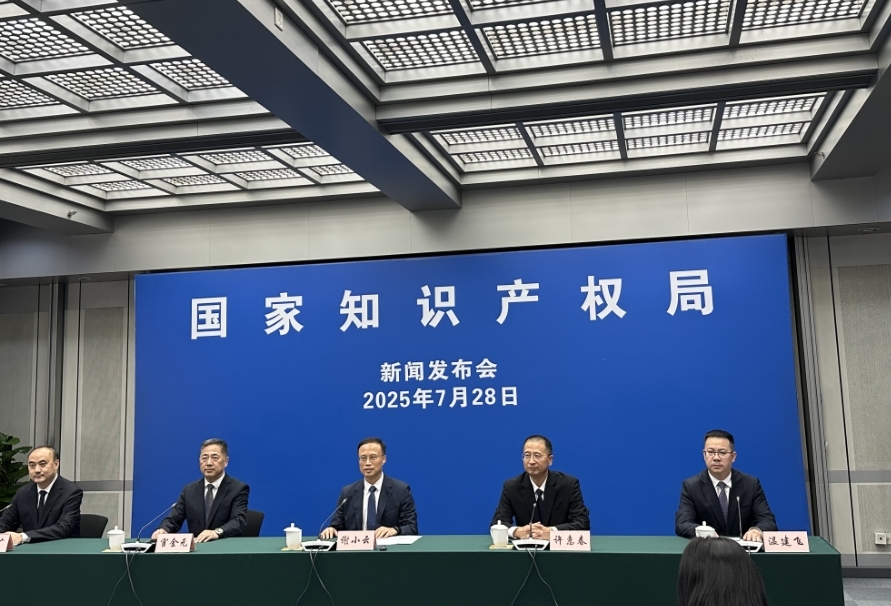
数据要素综合试验区建设首场新闻发布会召开 因地制宜探索特色发展路径
Zheng Quan Ri Bao Wang· 2025-07-25 13:26
Core Viewpoint - The establishment of national data element comprehensive pilot zones is a key strategic deployment to promote the market-oriented allocation of data elements and facilitate the deep integration of the digital economy with the real economy [1][5]. Group 1: Pilot Zone Construction - Ten national data element comprehensive pilot zones will be established in regions such as Beijing, Zhejiang, and Anhui, focusing on nurturing business entities and expanding the data market [1]. - By 2025, 35 key experimental tasks will be promoted in areas such as data property rights and market ecology [1]. - The construction of pilot zones is being actively advanced with high-level promotion and broad mobilization, with local governments prioritizing these initiatives in their work [1][2]. Group 2: Local Adaptation and Focus - Each pilot zone is tailoring its focus based on local resources and industrial development, with Beijing emphasizing the interaction between systems and practices, while Zhejiang is driving technological and industrial innovation in the data field [2]. - Other regions like Shandong, Henan, Guizhou, and Liaoning are exploring market-oriented allocation paths for data elements based on their unique regional characteristics [2]. Group 3: Innovative Practices and Achievements - Various localities have developed annual work priorities and made significant progress in data industry cultivation, with Anhui leading in recognizing provincial data enterprises and data industrial parks [2][3]. - In Shandong, the integration of public data resources has significantly improved the efficiency of the rose industry, doubling the overall industry chain value from 3 billion to 6 billion yuan [3]. - Beijing's public data authorization model has provided services over 400 million times to financial institutions and market entities, while the Beijing International Big Data Exchange has surpassed a transaction scale of 10 billion yuan [4]. Group 4: Policy Innovations - Anhui has pioneered the "data voucher" and "computing power voucher" pilot programs to stimulate data utilization, with nearly 400 million yuan disbursed to support over 200 enterprises [5]. - The pilot zones are expected to explore foundational systems for data property rights, circulation, revenue distribution, and security governance, creating replicable and scalable institutional norms for national data market construction [5].
国家数据局:加大力度支持数据要素综合试验区建设
Zhong Guo Jing Ji Wang· 2025-07-25 09:23
Core Viewpoint - The National Data Bureau is actively promoting the construction of data element comprehensive pilot zones, focusing on eight key areas and 35 pilot tasks to enhance data property rights and market ecology [1] Group 1: Pilot Zone Development - The pilot zone construction is characterized by high-level promotion and broad mobilization, with a focus on local conditions and key areas [1] - The National Data Bureau will increase support for pilot zone construction, track evaluations, and promote mutual learning to achieve "local innovation and national reuse" [1] Group 2: Regional Initiatives - Shandong Province emphasizes institutional development and data circulation to empower the real economy, achieving significant results in various sectors, including the rose industry, where data integration improved efficiency and increased the overall industry value from 3 billion to 6 billion [2] - Beijing has activated social innovation and market participation through public data operations, with over 400 million services provided to financial institutions and market entities, and a trading scale exceeding 10 billion at the Beijing International Big Data Exchange [3] Group 3: Data Industry Development - Guizhou Province focuses on high-quality data industry development by prioritizing public data sharing and utilization, establishing a comprehensive public data directory, and encouraging the creation of trusted data spaces in various sectors [4] - Hubei Province has made significant advancements in medical data utilization, particularly in pathology, with AI systems improving diagnostic speed by over 40% and reducing patient transportation costs by approximately 1.6 billion annually [5] Group 4: Data Market Cultivation - Anhui Province has taken the lead in cultivating data enterprises and industrial parks, introducing "data vouchers" and "computing power vouchers" to support data transactions and services, with nearly 400 million in subsidies benefiting over 200 enterprises [6][7]
安徽省数据资源管理局副局长王爱学:培育一批有竞争力的数据企业和数据产业集群
news flash· 2025-07-25 04:47
安徽省数据资源管理局副局长王爱学7月25日在 数据要素 综合试验区建设系列主题的首场新闻发布会上 表示,近年来,安徽省在全国率先培育认定省级数据企业和数据产业园,涌现出一批行业领先的数据要 素型企业,有力促进了数据要素市场的培育发展。下一步,安徽省将在国家数据局的指导支持下,举办 好9月20日数据要素综合试验区创新成果暨新模式新场景对接会,培育一批有竞争力的数据企业和数据 产业集群,为构建全国一体化数据市场贡献安徽力量。 (上证报) ...
国家数据局破题AI数据荒:7大标注基地已服务163个大模型
2 1 Shi Ji Jing Ji Bao Dao· 2025-07-22 23:18
Core Insights - High-quality, multi-modal, and well-annotated data is crucial for the development of artificial intelligence, with current industry feedback indicating a shortage of quality datasets hindering progress [1][5] - The National Data Bureau is actively promoting the construction of data industry clusters and enhancing the data element market, recognizing data as a key driver of the digital economy [2][3] Data Industry Development - As of mid-2023, seven data annotation bases have been established in cities like Hefei and Chengdu, producing 524 datasets exceeding 29PB in size, serving 163 large models [1] - The upcoming 2025 China International Big Data Industry Expo will feature activities focused on high-quality datasets and data annotation, including supply-demand matching events [1][5] Policy and Regional Initiatives - The National Data Bureau, along with other departments, has issued guidelines to promote high-quality data industry development, fostering a competitive and vibrant data ecosystem [3] - Cities such as Shanghai and Henan have implemented policies to support data industry growth, while Guizhou has established a data sharing platform to facilitate government data sharing [3][4] Infrastructure and Resources - Guizhou, as a key hub for the "East Data West Computing" strategy, has 28 large data centers with a storage capacity of 25EB and a computing power scale of 85EFLOPS, accounting for over 98% of the province's intelligent computing capacity [3][4] Future Plans - The National Data Bureau plans to optimize data industry planning and transition from "point breakthroughs" to "full-scale development," with initiatives to establish data industry cluster pilot projects in the second half of the year [4][6] - An ecological cultivation action will be launched to collect and promote high-quality dataset case studies, hold technical exchange activities, and create a regular supply-demand matching platform [5][6]
国家数据局将建设一批数据产业集聚区试点
Zhong Guo Jing Ji Wang· 2025-07-22 11:58
发展数据产业是推进数据要素市场化配置改革、加快构建以数据为关键要素的数字经济的重要举措。余 英透露,国家数据局计划布局建设一批数据产业集聚区试点,支持和引导有条件的地区,立足资源禀赋 和产业基础,打造协同互补、特色鲜明、优势突出、具有较强竞争力和示范带动性的数据产业集聚区, 发挥产业区域聚集和规模效应,探索多元化数据产业培育发展路径。 "我们正在组织相关研究力量,开展全国数据产业规模测算工作,为政策供给和产业发展提供决策参 考,相关研究成果计划在数博会期间以适当形式发布。此外,我们还将开展高质量数据集和数据标注交 流活动,举办数据标注和高质量数据集供需对接活动,发布一批高质量数据集典型案例。"余英说。 据悉,国家数据局已经开展高质量数据集典型案例征集和示范推广工作,挖掘医疗、工业、交通等重点 领域标杆实践;搭建常态化供需对接平台,促进数据供给方、技术提供方、场景应用方精准匹配;指导 合肥、成都等7个城市建设数据标注基地,截至今年上半年,7个数据标注基地建设数据集有524个,规 模超过29PB,服务大模型163个。(经济日报记者李芃达) 记者22日从国家数据局获悉,2025中国国际大数据产业博览会(数博会)将于 ...