
第三方支付

Search documents
稳定币:架构、生态和催化
2025-07-07 16:32
Summary of Stablecoin Industry and Market Dynamics Industry Overview - The stablecoin industry is characterized by its reliance on fiat currency credit, with USD-pegged stablecoins depending on the credibility of the US dollar. [1] - The stablecoin ecosystem consists of three segments: upstream (infrastructure, issuers, asset management), midstream (payment service providers, exchanges, cross-chain clearing institutions), and downstream (transaction settlement, cross-border payments). [1][4] Key Players and Market Share - USDT, issued by Tether, holds a dominant market position with approximately 60% market share and a market capitalization exceeding $150 billion. However, its reserve transparency has been questioned. [3] - USDC, issued by Circle, is viewed as a compliance benchmark but incurs higher costs, with over 50% of its revenue allocated to distribution expenses. [6] - DAI is a collateralized stablecoin that uses over-collateralization of crypto assets to enhance risk resistance, relying on complex algorithms. [6] Market Dynamics - The stablecoin market exhibits a "dual super, many strong" structure, with USDT and USDC accounting for about 85% of the market share. [5] - Stablecoins enhance the USD's status as a global reserve currency and may further penetrate international trade and financial systems through digital means. [1][6] - The expansion of stablecoin usage can increase fiat transaction volume, reinforcing its reserve status. [1] Regulatory Impact - Hong Kong's new regulations, set to take effect in August, represent the first comprehensive regulatory framework globally, expected to drive systemic changes in the industry. Beneficiaries include cross-border payment and clearing service providers, digital infrastructure firms, and banks involved in IT system upgrades. [11][12] Implications for the Chinese Yuan - The development of stablecoins presents both challenges and opportunities for the Chinese Yuan. While the Yuan is currently not a mainstream pegged currency, China is accelerating the development of a digital RMB to enhance its international influence. [7][9] - The stablecoin market could serve as a significant support for the internationalization of the RMB, reducing reliance on the SWIFT system and expanding usage scenarios. [14][15] Future Projections - By 2030, the RMB's share in global cross-border trade payments is projected to increase from 4% to 10%, driven by the growth of stablecoin technology. [16] - Traditional third-party payment companies are expected to benefit significantly from the increase in RMB cross-border payment volumes, with companies like LianLian and Newland positioned to capitalize on this growth. [18][19] Potential Beneficiaries in the Industry - Key beneficiaries in the stablecoin ecosystem include: - Payment service providers (e.g., LianLian, LaKaLa) - Digital infrastructure and security service providers (e.g., Hengbao) - IT system upgrade firms in banking (e.g., Yuxin Technology) [11][22] - The issuance of stablecoin licenses in Hong Kong is expected to create significant opportunities for early adopters in the sandbox experiment. [21] Conclusion - The stablecoin industry is poised for significant growth and transformation, with regulatory developments in Hong Kong likely to catalyze systemic changes. The interplay between stablecoins and traditional currencies, particularly the USD and RMB, will shape the future of global finance and cross-border transactions. [1][11][14]



今年第7张!人保科技支付牌照被注销
Guo Ji Jin Rong Bao· 2025-07-07 13:35
Group 1 - The payment license of Renbao Payment Technology (Chongqing) Co., Ltd. has been officially revoked as of July 1, 2023, marking the seventh payment license cancellation disclosed by the People's Bank of China (PBOC) this year [1] - Renbao Technology, originally known as Chongqing Lianfutong Network Settlement Technology Co., Ltd., was established in 2012 with a registered capital of 200 million yuan and obtained its payment business license in July 2014 for internet payment services [1] - The PBOC has cumulatively revoked 103 payment licenses since the issuance of the first batch in May 2011, with only 168 payment institutions currently holding valid licenses [2] Group 2 - The annual cancellation of payment licenses from 2015 to 2024 has varied, with a total of 103 licenses revoked, and prepaid card business institutions accounting for nearly 80% of these cancellations [2] - The number of payment licenses revoked each year from 2015 to 2024 includes: 2, 3, 19, 9, 1, 4, 9, 23, 16, and 10 respectively [2]
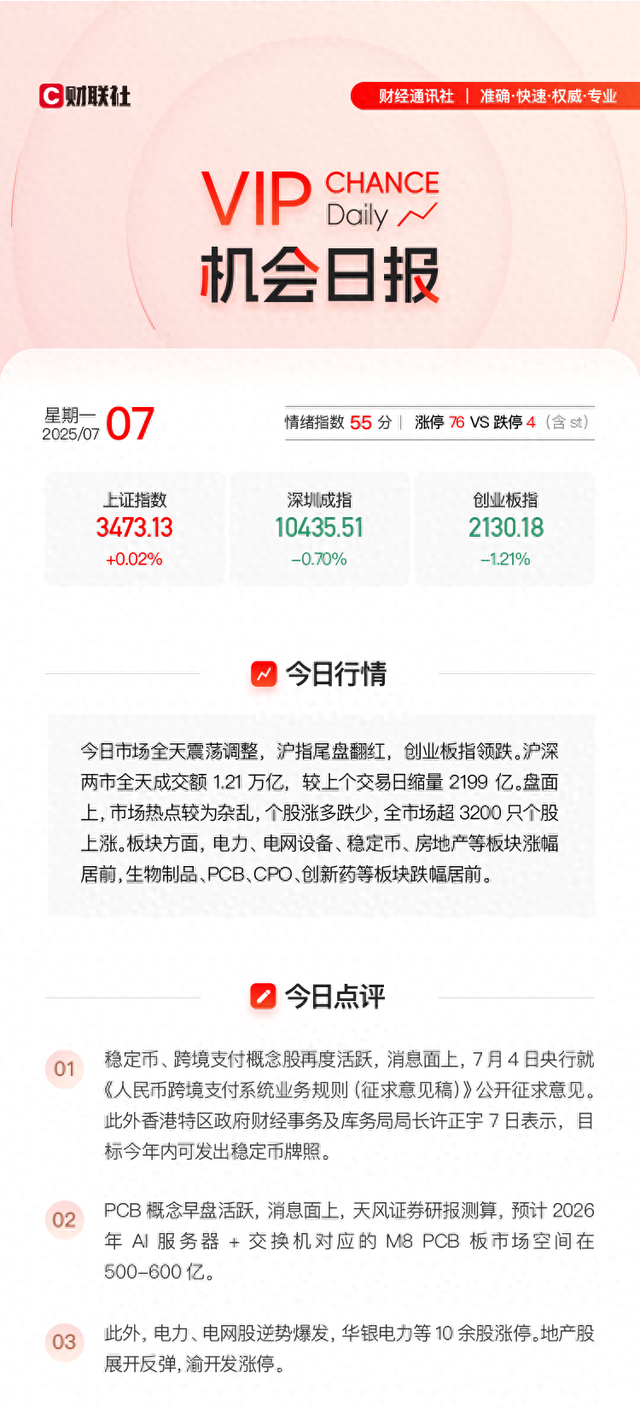
VIP机会日报政策催化下 跨境支付、稳定币概念再度活跃 栏目梳理焦点公司收获3连板
Xin Lang Cai Jing· 2025-07-07 09:50
转自:智通财经 注:智通财经VIP为内容资讯产品,并非投资建议。以下内容仅为资讯价值展示非对相关公 司的推荐建议,非未来走势预测。投资有风险,入市需谨慎。 市场热点一 跨境支付、稳定币 消息面上,7月4日央行就《人民币跨境支付系统业务规则(征求意见稿)》公开征求意见。此外香港特 区政府财经事务及库务局局长许正宇7日表示,目标今年内可发出稳定币牌照。 《公告全知道》:梳理隐藏在公告中的利好、利空。 6月30日21:58《公告全知道》 精选"金一文化"公司公告并展开梳理,发文指出:公司背靠北京海淀区国 资委,主营黄金珠宝首饰的研发设计及销售;公司积极拓展产业链,围绕金融科技纵、横方向发展,其 中开科唯识数字人民币产品利用区块链技术设计数币钱包的分布式账本,独立支持运营钱包核心处理体 系,掌握的部分技术可以应用于稳定币领域。金一文化收获3连板,5日最高涨幅达27.75%。 | | 金一文化(002721) | | | | | | | | | --- | --- | --- | --- | --- | --- | --- | --- | --- | | | 07-07 15:48:09 深 | | | | | | | ...



暴涨100%!风口上的拉卡拉,能顺利“突围”吗?
Sou Hu Cai Jing· 2025-07-07 00:20
Core Viewpoint - The digital currency industry is experiencing positive developments, benefiting companies like Lakala, which has seen its stock price rise over 100% in the past three months despite poor financial performance [1][3]. Financial Performance - Lakala reported a revenue of 5.762 billion yuan and a net profit of 351.2 million yuan for 2024, with revenue and net profit growth rates of -2.98% and -23.26% respectively, marking the second occurrence of "double decline" in three years [3][8]. - In Q1 of this year, Lakala's revenue was 1.3 billion yuan, with a revenue growth rate of -13.02%, and a net profit of 100.6 million yuan, reflecting a net profit growth rate of -51.17%, indicating the worst performance in Q1 historically [3][8]. Market Dynamics - The stock price surge began in April, driven by policy support, including the Shanghai International Financial Center's plan to enhance cross-border financial services and promote blockchain technology [3][6]. - The Hong Kong government's passage of the Stablecoin Bill has positioned it as a leading financial center for stablecoin regulation, igniting speculation in A-shares and boosting related stocks [3][5]. Business Model and Challenges - Lakala's main business is B-end acquiring, which accounted for 89.7% of its revenue in 2024. However, the company faces challenges in expanding its merchant base and increasing average net settlement rates due to intense market competition [7][8]. - The revenue from Lakala's payment business was 5.165 billion yuan in 2024, showing minimal growth from 5.18 billion yuan in 2023, indicating stagnation in its core operations [8]. New Business Directions - Lakala is focusing on new business opportunities in cross-border payments and stablecoins to overcome traditional business challenges. The company aims to enhance its international competitiveness through its planned Hong Kong listing [9][10]. - The cross-border payment market is substantial, with China's cross-border e-commerce import and export volume reaching 2.63 trillion yuan in 2024, but Lakala's cross-border payment transaction volume was only 49.2 billion yuan, representing a mere 1.16% of its total payment transaction volume [9][10]. Stablecoin Prospects - Currently, Lakala does not have stablecoin-related operations, and while it has hinted at accelerating the application of digital currencies in cross-border scenarios, the challenges of entering the stablecoin market are significant [11]. - The stablecoin sector is still in its early stages, facing regulatory, technical, and market acceptance challenges, making it difficult for Lakala to develop this business effectively [11]. Shareholder Activity - Following the stock price increase, Lakala's shareholders have begun to reduce their holdings, with significant share sales reported, including a planned reduction of up to 19.27 million shares by a major shareholder [11].

拉卡拉业绩滑坡分红25亿超净利 赴港上市突围遭联想控股减持3%
Chang Jiang Shang Bao· 2025-07-03 23:34
Core Viewpoint - The major shareholder of Lakala, Legend Holdings, plans to reduce its stake by up to 3% amid the company's declining profits and ongoing efforts to list in Hong Kong [1][9]. Group 1: Shareholder Actions - Legend Holdings intends to sell up to 2.36 million shares, representing 3% of Lakala's total share capital, within three months starting from July 23 [4]. - The first major shareholder, Legend Holdings, currently holds 26.54% of Lakala's shares, which amounts to approximately 2.09 billion shares [4]. - The third-largest shareholder, Sun Haoran, announced plans to fully liquidate his 2.45% stake, indicating a trend of shareholder exits [1][6]. Group 2: Financial Performance - Lakala's net profit for the first quarter of this year dropped by approximately 52% to 101 million yuan, marking the lowest level since 2018 [2][11]. - The company has distributed a total of 2.5 billion yuan in cash dividends since its IPO, which exceeds its cumulative net profit of 2.3 billion yuan [12]. - In 2022, Lakala faced significant losses due to an external expenditure of 1.396 billion yuan, leading to a total loss of 1.437 billion yuan for the year [10]. Group 3: Market Position and Strategy - Lakala is planning to list in Hong Kong to enhance its international presence and adapt to changing market conditions, particularly in the cross-border payment sector [11][12]. - The company has shifted its focus to serving small and medium-sized enterprises in response to competition from major players like Alipay and WeChat [9][10]. - Since its IPO in 2019, Lakala's revenue has shown growth, but recent trends indicate a decline in profitability and market share [10][11].
拉卡拉近期股价大涨 联想控股计划减持不超总股本3%股份
Zheng Quan Shi Bao Wang· 2025-07-01 15:21
Core Viewpoint - Lenovo Holdings plans to reduce its stake in Lakala by no more than 3% of the total share capital, which currently stands at 26.54% [1][2] Group 1: Shareholding Changes - Lenovo Holdings intends to reduce its stake through a centralized bidding method, limiting the reduction to 1% of the total share capital within three months starting from July 23, 2025 [1] - Additionally, Lenovo will utilize block trading to reduce its stake by up to 2% of the total share capital during the same period [1] - Another significant shareholder, Sun Haoran, plans to reduce his holdings of 19.27 million shares, representing 2.45% of the total share capital, with a maximum reduction of the same number of shares [3][4] Group 2: Company Background and Developments - Lakala, founded by Sun Taoran and others, is one of China's earliest third-party payment companies, having been established in 2005 [2] - Lenovo Holdings invested in Lakala in 2008, marking a collaboration between industry and finance [2] - Lakala became the largest offline financial service provider in China by 2009 and obtained a payment license from the central bank in 2011, leading to rapid business growth [2] - Recently, Lakala announced plans to accelerate the application of digital currency in cross-border scenarios, coinciding with the expansion of the digital yuan pilot [2] - On June 16, Lakala revealed plans to issue shares overseas (H-shares) and list on the Hong Kong Stock Exchange to promote its international strategy and enhance the application of digital currency [2]
拉卡拉:联想控股计划减持不超过2%公司股份
news flash· 2025-07-01 13:58
Group 1 - The core point of the article is that the shareholder Lenovo Holdings plans to reduce its stake in Lakala (300773.SZ) by up to 2.00%, which equates to a maximum of 15.76 million shares, within the next three months [1] - The reduction will be executed through centralized bidding and block trading methods [1] - The reason for the reduction is attributed to Lenovo Holdings' own business arrangements and needs [1]
移卡(09923):稳定币如何重塑传统支付服务方的商业模式?
Haitong Securities International· 2025-06-30 09:02
Investment Rating - The report does not explicitly state an investment rating for Yeahka (9923 HK) Core Insights - Stablecoins are reshaping the global cross-border payment landscape with advantages such as short settlement times, low costs, and resistance to exchange rate fluctuations, making them ideal for various payment scenarios [2][10] - Yeahka has expanded internationally since 2021, obtaining payment licenses in Singapore and the U.S., and launched its cross-border payment brand YeahPay in 2023, achieving an overseas transaction volume of over 1.1 billion RMB in 2024, a nearly 5-fold year-on-year increase [11][12] - The traditional cross-border payment model incurs fees of approximately 3-8% for merchants, while third-party payment platforms like Yeahka generate revenue through diverse models including transaction fees, currency conversion fees, and interest income from deposited funds [12][10] Summary by Sections Section: Stablecoins in Cross-Border Payments - Stablecoins enable peer-to-peer real-time settlement through distributed ledger technology, reducing transaction costs and compressing settlement times to minutes compared to the traditional banking system which relies on the SWIFT network [2][10] Section: Yeahka's Overseas Expansion - Yeahka has successfully launched its cross-border payment brand YeahPay and signed a global strategic cooperation memorandum with Alipay International, marking significant growth in its overseas business [11][12] Section: Existing Payment Industry Model - The revenue model for third-party payment platforms includes transaction fees, currency conversion fees, interest income from overseas payments, and technology output, showcasing a diverse approach to profitability [12][10] Section: Future Business Models for Third-Party Payment Providers - Stablecoins present new business opportunities for acquirers, allowing them to expand into overseas markets and diversify payment scenarios, such as providing one-stop services for merchants [13][14]
27万亿风口,“稳定币”牌照龙头,牵手蚂蚁+京东!
Sou Hu Cai Jing· 2025-06-29 11:51
Group 1 - The core viewpoint emphasizes that the market for digital currencies is far from reaching its peak, with the next leading companies being those that hold MSO licenses [1] - Companies that successfully obtain virtual asset trading qualifications can provide services for trading Bitcoin, stablecoins, etc., fundamentally altering industry valuation logic and unlocking growth potential [9][6] - The global market capitalization of Bitcoin has reached $2.1 trillion, ranking it as the sixth-largest asset globally, while the trading volume of stablecoins surged to $27.6 trillion last year [9][10] Group 2 - Two leading companies in the MSO sector have been identified for potential investment opportunities, particularly as their stock prices have not yet significantly increased [2] - Tianfeng Securities saw a stock price increase of 32% within five days, while Guotai Junan International experienced a remarkable 200% rise in a single day [2][4] - The scarcity of MSO licenses is highlighted as a symbol of wealth, similar to the historical performance of companies holding rare licenses [11][12] Group 3 - A specific company reported a 169% increase in performance, with its subsidiary holding an MSO license and providing comprehensive services including stablecoin issuance and cross-border payments [14] - Another company, the only one in the domestic market with a full license for cross-border RMB payments, also holds an MSO license and has attracted significant foreign investment interest [14]
A股公告精选 | 诺德股份(600110.SH)等多只连板股提示交易风险
智通财经网· 2025-06-25 12:23
Group 1 - Nord Shares' copper foil business for solid-state batteries contributes less than 1% to total revenue, indicating limited impact on overall performance [1] - Xiangtan Electric's subsidiary is collaborating with solid-state battery companies but has not yet generated revenue from this effort [2] - Xingye's phenolic resin for semiconductor photoresist is still in sample testing and has not yet signed supply contracts, thus not affecting company performance [3] Group 2 - Guoxuan High-Tech's solid-state battery technologies are in trial production and testing phases, with no commercial application yet, not significantly impacting overall performance [4] - Tianji's subsidiary has obtained a patent for lithium sulfide and is advancing towards industrialization, though risks remain regarding commercialization [5] - Longpan Technology's subsidiary is developing solid-state battery precursors, currently in testing stages, with no revenue generated yet [6] Group 3 - Sitiwei's major shareholder has reduced holdings by 261.2 million shares, representing 0.65% of total shares [7] - *ST Huamei's controlling shareholder is transferring shares to raise funds, changing the controlling entity to Jilin Provincial State-owned Assets Supervision and Administration Commission [8] - Zhina Compass confirms normal operations with no undisclosed significant matters affecting stock performance [9] Group 4 - Anlu Technology's major shareholder has reduced holdings to 5.94% after selling 3.29 million shares [10] - *ST Yazhen warns of potential stock trading anomalies and may apply for a trading suspension if necessary [11] - Hailian Jinhui is in the process of transferring ownership of a third-party payment business [12] Group 5 - Changchuan Technology expects a net profit increase of 67.54% to 95.46% for the first half of 2025, driven by strong demand in the integrated circuit industry [13]


