
数据产业

Search documents
2025数博会8月28日至30日将在贵阳召开 更加突出国际化、专业化、产业化三大特色
Zheng Quan Ri Bao Wang· 2025-07-22 09:15
Core Viewpoint - The 2025 China International Big Data Industry Expo (Big Data Expo) will be held from August 28 to 30 in Guiyang, Guizhou Province, focusing on the integration of data elements and artificial intelligence technology to drive high-quality economic development [1][2]. Group 1: Event Overview - The Big Data Expo, organized by the National Data Bureau and the Guizhou Provincial Government, has evolved into a significant platform for innovation trends, industry achievements, and open cooperation in the data field since its inception in 2015 [1]. - This year's theme is "Data Aggregates Industrial Momentum to Ignite New Development Chapters," emphasizing the role of data as a key element in reshaping industrial structures and fostering new productive forces [1]. Group 2: Key Features - The expo will highlight three key features: 1. **Internationalization**: It aims to serve as a platform for domestic and international supply-demand matching in digital economy innovation solutions, featuring an international cooperation exhibition area [2]. 2. **Professionalization**: The event will focus on creating a highly authoritative exchange platform in the data field, addressing challenges in the marketization and valuation of data elements [2]. 3. **Industrialization**: The expo will promote the transformation of technological innovation achievements from various market entities, encouraging collaboration and ecosystem building [2]. Group 3: Activities - The expo will include five categories of activities, with a focus on professional exhibitions, an opening ceremony, industry exchange activities, competitions, and special events [2]. - Six themed exhibition halls will showcase new technologies, products, solutions, and applications in the digital economy [2]. Group 4: Future Plans - The National Data Bureau plans to establish pilot data industry clusters to support regions in developing competitive and demonstrative data industry zones, exploring diverse paths for data industry cultivation and development [3].
国家数据局副局长余英:计划布局建设一批数据产业集聚区试点
news flash· 2025-07-22 03:44
Core Viewpoint - The National Data Bureau plans to optimize industrial planning and layout, transitioning the data industry from "point breakthroughs" to "holistic development" [1] Group 1: Industry Development - The National Data Bureau will implement multiple measures to promote the development of the data industry [1] - There are plans to establish a number of pilot data industry aggregation zones in the second half of the year [1] - The initiative aims to support regions with favorable conditions to create competitive and demonstrative data industry clusters [1] Group 2: Strategic Goals - The focus will be on leveraging regional resources and industrial foundations to build distinctive and complementary data industry clusters [1] - The goal is to explore diversified paths for the cultivation and development of the data industry [1] - The strategy emphasizes the importance of regional aggregation and scale effects in enhancing industry competitiveness [1]
国家数据局副局长余英:正在组织相关研究力量 开展全国数据产业规模测算工作
news flash· 2025-07-22 03:44
国家数据局副局长余英:正在组织相关研究力量 开展全国数据产业规模测算工作 智通财经7月22日电,国家数据局副局长余英今日在新闻发布会上表示,正在组织相关研究力量,开展 全国数据产业规模测算工作,为政策供给和产业发展提供决策参考,相关研究成果计划在数博会期间以 适当的形式发布。(记者 郭松峤) ...
粤港合作,共促大湾区数据要素市场一体化建设
Guang Zhou Ri Bao· 2025-07-21 11:57
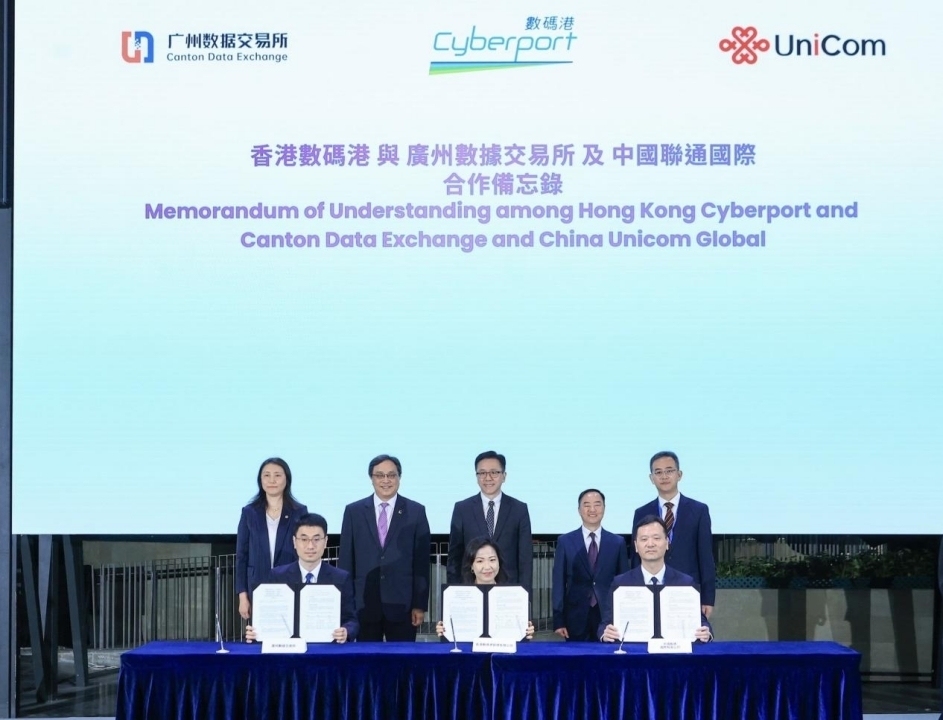
接下来,广州数据交易所将在广东省政务和数据局、广州市政务和数据局指导下,加强与香港方面合作,携手多行业数据企业,推动金融、低空、医疗等 内地成熟的数据应用场景解决方案在港落地,同时挖掘培育香港本土数据应用场景并助力其拓展内地市场,粤港携手共同推动数据产业协同发展。 此次论坛上,广州数据交易所与香港数码港、中国联通国际签署合作备忘录。未来三方将共同推动"内地孵化+香港落地"的数据产业协作模式,引入内地 成熟的数据应用场景与企业进驻香港,并提供技术平台与合规支持,助力企业拓展本地及海外市场,共同构建粤港数据经济创新生态,促进数据要素市场 的科技合作及融合发展。 近年来,各级政府部门出台多份政策文件要求推进数据跨境流动工作的开展。今年5月,"南沙金融30条"正式出台,明确指出,"支持广州数据交易所完善 数据流通交易综合性服务,与香港获许可的数字资产交易平台加强合作对接,创新数字资产交易服务方式"。政策发布以来,广州数据交易所积极落实政 策要求,探索与香港相关机构的合作,并于近期与香港数字资产金融服务集团HashKey签署战略合作协议,约定在粤港两地政府的支持下,双方共同探索 数字资产合规发行及粤港澳大湾区数字资产跨 ...

保海旭:加快培育全国一体化数据市场
Jing Ji Ri Bao· 2025-07-15 23:59
Group 1 - The core viewpoint emphasizes the strategic value of data as a fundamental resource in the digital economy, with China's data production expected to reach 41.06 zettabytes (ZB) in 2024, and the core industries of the digital economy contributing approximately 10% to GDP [1] - The market-oriented allocation of data resources is essential for high-level development and utilization of data, as well as for enhancing the digital economy [1] - The 20th National Congress of the Communist Party of China highlighted the need to cultivate a unified national technology and data market to activate data productivity and build new advantages in digital economic development [1] Group 2 - A preliminary data infrastructure has been established, with the issuance of the "Opinions on Constructing Data Basic Systems" in December 2022, which outlines the framework for data market system construction [2] - The establishment of data property rights and the promotion of data circulation and transaction standards are key focuses, with efforts to create a legal foundation for data flow [2] - The principle of "reward based on contribution" has been implemented, enhancing the distribution mechanism for data elements [2] Group 3 - The construction of data infrastructure is improving, with a focus on trustworthy data circulation and efficient computing power supply, leading to significant advancements in data infrastructure construction and operation levels [3] - The "East Data West Computing" project has made breakthroughs, utilizing local green energy resources to significantly reduce computing costs [3] - The data industry is developing positively, with over 190,000 related enterprises and a data industry scale exceeding 2 trillion yuan [3] Group 4 - The cultivation of a unified national data market is a complex long-term project, currently facing challenges in data confirmation, pricing, and circulation [4] - The lack of a national standard for data property registration and significant regional differences hinder the cross-regional transaction of data resources [4] - Addressing these challenges is essential for unleashing data productivity and activating the momentum of digital economic development [4] Group 5 - A layered pricing system for data markets should be constructed, anchored by public data, which influences the overall data value perception in society [5] - The establishment of a government-guided pricing standard for public data and market-driven pricing for enterprise and personal data is recommended [5] - A multi-layered and diversified data pricing system will transform data resources into important assets for high-quality development [5] Group 6 - Breaking the "island effect" is crucial for creating a secure and efficient data circulation ecosystem [6] - The establishment of unified technical standards for data flow and the development of a trustworthy data space are necessary to eliminate technical barriers [6] - Strengthening data security and creating a safe and efficient environment for data circulation through standardized classification and anonymization protocols is essential [6]
珠海数据条例9月起施行,明确算力布局、数据跨境
2 1 Shi Ji Jing Ji Bao Dao· 2025-07-15 10:25
Core Viewpoint - The introduction of the "Regulations on the Development and Utilization of Data Resources in Zhuhai Special Economic Zone" marks a significant step in promoting the market-oriented allocation of data elements and the high-quality development of the digital economy in Zhuhai, effective from September 1, 2025 [1][2]. Group 1: Legislative Framework - The regulations consist of six chapters and forty-three articles, covering general principles, data infrastructure, data resource development, data resource utilization, legal responsibilities, and supplementary provisions [1]. - The regulations aim to provide a solid legal foundation for the development and utilization of data resources in Zhuhai, leveraging the legislative power of the special economic zone [1][3]. Group 2: Data Infrastructure and Investment - The regulations include provisions for incorporating data infrastructure into key fiscal investment areas, gradually increasing overall investment levels, and establishing a multi-source investment mechanism involving finance, enterprises, and society [2][5]. - A unified public data management system will be established, focusing on both quantity and quality, to ensure effective management and service responsibilities [2][4]. Group 3: Data Flow and Utilization - The regulations promote a "registration first, authorization later" approach for public data, encouraging collaborative development of data application scenarios and innovation laboratories [2][5]. - There is a focus on supporting the construction of a digital trade international hub in the Hengqin Guangdong-Macao Deep Cooperation Zone, facilitating data processing trade and international data center operations [2][6]. Group 4: Future Development and Collaboration - Zhuhai plans to enhance cross-border service-oriented computing power clusters and improve backbone network speed and capacity, deploying 5G and all-optical networks to create a reliable data flow infrastructure [6][7]. - The city will explore cross-border data flow rules and strengthen exchanges with Hengqin and Macau, establishing a multi-level service network to reduce compliance costs for enterprises [7].
全球首个跨境数据空间标准IEEE P1988正式启动
Zhong Guo Chan Ye Jing Ji Xin Xi Wang· 2025-07-11 07:38
Core Points - The IEEE P1988 international standard aims to establish a secure, efficient, and scalable environment for cross-border data flow and sharing, addressing key barriers such as privacy protection and technological fragmentation [1][5] - The standard is a collaborative effort involving the Next Generation Internet National Engineering Center, the International Data Space Association (IDSA), and the IEEE Standards Association, marking a significant step towards global data cooperation [2][3] Group 1: Standard Overview - IEEE P1988 focuses on the secure circulation and trusted interaction of data across organizations and regions, serving as a foundational framework for global data infrastructure development [2][3] - The standard emphasizes interoperability, trust mechanisms, privacy protection, and cross-domain collaboration, defining a universal data space model and interface protocols [3][4] Group 2: Technical Architecture - The technical architecture of IEEE P1988 integrates IDSA's international data space architecture and DSP connection protocols, utilizing advanced data protection technologies such as IPv6 virtual private networks, data sandboxes, privacy computing, and blockchain [3][4] - The standard aims to facilitate cross-organizational data sharing while ensuring data sovereignty and privacy [3][5] Group 3: Pilot Projects and Applications - Multiple pilot projects are underway across various sectors, demonstrating the adaptability and applicability of the IEEE P1988 standard [4] - Initiatives include the "Guangdong-Hong Kong-Macao Cross-Border Scientific Research Innovation Data Space" and projects in smart connected vehicles focusing on carbon emissions data and supply chain information [4] Group 4: Future Implications - The launch of IEEE P1988 represents a pivotal moment in the establishment of a global data circulation system, addressing the lack of unified technical standards and trust mechanisms in cross-border data flow [5] - The standard is expected to foster a collaborative environment for data exchange, shifting the focus from risk-based approaches to trust-driven frameworks [5]
加速数据流通交易便利化进程 四类典型场景示范文本正式发布
Zheng Quan Ri Bao Wang· 2025-07-07 06:00
Group 1 - The core viewpoint of the articles emphasizes the importance of data as a key production factor in the digital economy, with the release of standardized contract templates aimed at facilitating data circulation and transactions [1][2] - The standardized contract templates are designed to lower transaction costs, establish trust, and prevent disputes by clearly defining responsibilities and rights within data transactions [2][3] - The templates cover four typical data circulation scenarios: data provision, data entrusted processing, data fusion development, and data intermediary services, providing a framework for businesses to engage in data transactions [3] Group 2 - The initiative aims to promote a fair competitive environment by protecting the interests of all parties involved in data transactions and fostering a cooperative atmosphere [2] - The implementation of the standardized contracts aligns with existing laws and regulations, ensuring compliance and enhancing the security of data transactions [2] - The clarity in ownership and rights provided by the templates is expected to reduce concerns among businesses regarding data asset ownership, thus encouraging data collaboration and innovation [3]
南通:开发数据资源,加快培育数字经济新生态
Xin Hua Ri Bao· 2025-07-02 23:43
Core Viewpoint - Nantong City is prioritizing the development of the digital economy by promoting the market-oriented allocation of data elements and enhancing the utilization of public data, aiming to build a comprehensive data industry ecosystem and strengthen the digital economy [1] Group 1: Enhancing Data Supply Capacity - Nantong City has successfully validated 10 primary indicators, 30 secondary indicators, and 96 tertiary indicators for the CR21021 underground defense project, streamlining the planning and human defense processes [2] - The city is implementing a "one account" approach for public data, introducing scenario models to enhance the efficiency of data supply across multiple departments and levels [2] - Over 33,000 public data resource directories have been compiled, with 38,300 shareable resources and 31,800 open resources published, aiming to leverage high-value public data sets to empower enterprise development [2] Group 2: Exploring Data Monetization - The first successful issuance of data asset securitization in China occurred with the listing of the Ping An-Rugao Phase 1 Asset-Backed Special Plan, amounting to 130 million yuan [3] - Nantong City is focusing on the development and utilization of state-owned enterprise data assets, with 15 data products launched on the Jiangsu Provincial Data Exchange, totaling 24.6458 million yuan from 17 state-owned enterprises [3] - The city plans to create over 30 exemplary data products and services within the year, establishing a pathway for the valuation, accounting, and trading of data resources [3] Group 3: Building a Data Development Ecosystem - The "Fangzhi Cloud" AI platform has been developed to provide one-stop services for over 500 merchants, significantly reducing the cost of design services [4] - Nantong City has established a trusted data space for the home textile industry, exploring solutions for value co-creation and mutual benefits [4] - The "Action Plan for Promoting High-Quality Development of the Data Industry" aims for an annual growth rate of over 20% in the data industry, targeting the establishment of 100 data enterprises and 200 typical data products within three years [4]
江苏发布创新提升数字贸易政策措施
Xin Hua Ri Bao· 2025-07-02 21:40
Group 1 - The core viewpoint of the article is that Jiangsu Province aims to leverage digital trade to promote high-quality development of service trade, with a target of reaching a service trade scale of 600 billion yuan and digital delivery service trade of 300 billion yuan by 2030, accounting for approximately 50% of the service trade [1] - Jiangsu will focus on institutional openness in digital trade, creating a digital trade ecosystem, and aligning with high-standard economic and trade rules, including pilot cooperation in digital trade with Singapore [1] - The province plans to establish national service trade innovation development demonstration zones and national digital trade demonstration zones, enhancing infrastructure and public services in key areas like Nanjing Software Valley to facilitate domestic and international industrial chain collaboration [1] Group 2 - A significant highlight of the policy is industry empowerment, with Jiangsu focusing on developing digital product trade in the cultural industry, strengthening cultural trade bases in cities like Nanjing, Wuxi, and Suzhou, and promoting exports in sectors such as animation and film [2] - The province aims to expand digital technology trade in advantageous fields, advance high-end software development, and implement an "Artificial Intelligence+" action plan to upgrade service outsourcing and promote enterprise transformation [2] - Jiangsu will enhance international transportation service capabilities, optimize international route networks, and accelerate the development of smart ports and waterways, while also improving the international competitiveness of tourism services and supporting international education services [2]