水路运输

Search documents
盛航股份:8月6日召开董事会会议
Mei Ri Jing Ji Xin Wen· 2025-08-06 09:28
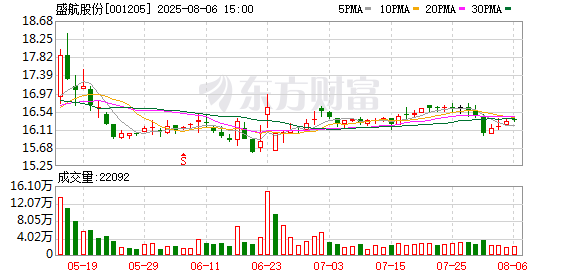
Group 1 - The company, Shenghang Co., Ltd. (SZ 001205), announced on August 6 that its 28th meeting of the fourth board of directors was held, discussing the proposal to convene the second extraordinary general meeting of shareholders in 2025 [2] - For the year 2024, the revenue composition of Shenghang Co., Ltd. is as follows: waterway transportation accounts for 95.29%, sales of goods account for 3.69%, road transportation accounts for 0.68%, and others account for 0.34% [2]


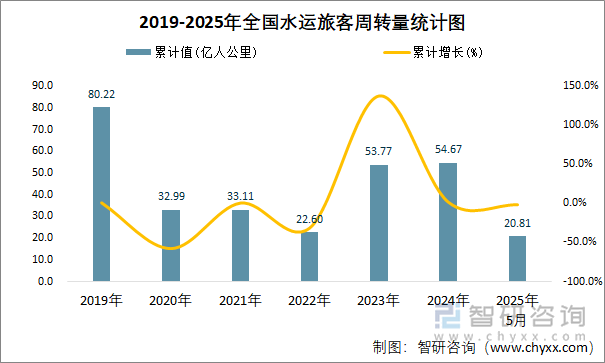
2025年1-5月全国水运旅客周转量统计分析:累计值20.81亿人公里,累计下降1.8%
Chan Ye Xin Xi Wang· 2025-08-03 02:16
Group 1 - The national water transport passenger turnover from January to May 2025 was 20.81 billion person-kilometers, representing a cumulative decrease of 1.8% [1] - In May 2025, the national water transport passenger turnover was 5.46 billion person-kilometers, showing a year-on-year growth of 9.2%, with an increase of 10.7 percentage points compared to the same period last year, and a month-on-month growth of 16.42% [1]
亚通股份: 亚通股份董事会审计委员会议事规则
Zheng Quan Zhi Xing· 2025-07-29 16:34
上海亚通股份有限公司 董事会审计委员会议事规则 第一章 总则 第一条 为充分发挥审计委员会对公司财务信息、内部控制、内外部审 计等工作的监督作用,健全公司内部监督机制,根据《中华人民共和国公司法》 《中华人民共和国证券法》《上市公司独立董事管理办法》等法律、行政法 规、部门规章、规范性文件和自律规则,制定本议事规则。 第二章 审计委员会的设立与运行 第二条 公司应当设立审计委员会,审计委员会的构成应当满足以下条 件: (一)由三名以上董事构成; (二)成员不得在公司担任高级管理人员; (三)独立董事应当过半数; (四)由独立董事中的会计专业人士担任召集人。 公司应当在公司章程中对审计委员会的组成、职责等作出规定。董事会 负责制定审计委员会工作规程,明确审计委员会的人员构成、任期、职责范 围、议事规则、档案保存等相关事项。 第八条 审计委员会每季度至少召开一次会议;两名及以上成员提议, 或者召集人认为有必要时,可以召开临时会议。审计委员会会议须有三分之 二以上成员出席方可举行。 审计委员会会议原则上应当采用现场会议的形式,在保证全体参会成员 能够充分沟通并表达意见的前提下,必要时可以采用视频、电话或者其他方 式 ...

亚通股份: 亚通股份董事会议事规则
Zheng Quan Zhi Xing· 2025-07-29 16:34
Core Points - The document outlines the rules for the board of directors of Shanghai Yatong Co., Ltd, aiming to standardize meeting procedures and decision-making processes to enhance the board's effectiveness and compliance with relevant laws and regulations [1][12]. Group 1: Board Structure and Meetings - The board consists of 7 to 9 directors, with independent directors making up at least one-third of the board [1]. - Regular meetings must be held at least twice a year, while special meetings can be convened under specific circumstances [3][7]. - The chairman of the board is responsible for convening and presiding over meetings, with provisions for a vice chairman or other directors to take over if necessary [3][5]. Group 2: Proposal and Voting Procedures - Proposals for meetings must be submitted in writing, detailing the agenda and relevant materials [2][6]. - A quorum for meetings requires the presence of more than half of the directors, and decisions are made based on majority votes [4][19]. - Directors must avoid conflicts of interest and are required to abstain from voting on matters where they have a personal stake [8][20]. Group 3: Documentation and Record-Keeping - Meeting records must include details such as the date, attendees, agenda, and voting results [26][30]. - All meeting documentation must be preserved for a minimum of ten years [11]. - The board secretary is responsible for maintaining these records and ensuring compliance with confidentiality obligations [30][31].
交通行业上半年经济运行稳中有进,固定资产投资规模维持高位
Di Yi Cai Jing· 2025-07-26 01:55
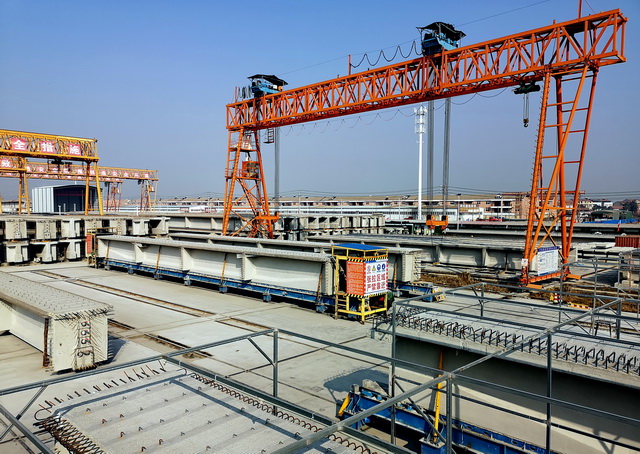
Core Insights - The Ministry of Transport emphasizes the importance of solidifying the "14th Five-Year" highway planning to enhance transportation services and support regional economic development [1][6] - The transportation sector in China shows stable economic performance in the first half of the year, with growth in port cargo throughput and high levels of fixed asset investment [1][4] Transportation Volume and Growth - In the first half of the year, China's total freight volume reached 28.03 billion tons, marking a year-on-year increase of 3.9% [1] - By mode, freight volumes increased by 1.8% for rail, 4.0% for road, 4.3% for waterway, and 14.6% for civil aviation, with ocean freight by Chinese shipping companies rising by 9.4% [1] - Express delivery services handled 95.6 billion packages, reflecting a year-on-year growth of 19.3% [1] Port and Container Throughput - Port cargo throughput reached 8.90 billion tons, up 4.0% year-on-year, with domestic and foreign trade throughput increasing by 5.0% and 1.8%, respectively [1] - Container throughput totaled 17 million TEUs, a 6.9% increase year-on-year, with domestic and foreign trade throughput growing by 4.0% and 8.9%, respectively [1] Passenger Travel Trends - The volume of inter-regional passenger flow reached 33.76 billion person-times, a year-on-year increase of 4.2% [2] - By mode, passenger volumes increased by 6.7% for rail, decreased by 2.5% for waterway, and increased by 6.0% for civil aviation, with civil aviation international routes seeing a significant rise of 28.5% [2] Fixed Asset Investment - Fixed asset investment in transportation reached 1.6474 trillion yuan, with rail, road, waterway, and civil aviation investments at 355.9 billion, 1.1291 trillion, 109.3 billion, and 53.1 billion yuan, respectively [2] - Many regions achieved over 50% of their annual investment targets by mid-year, with significant investments reported in provinces like Sichuan and Jiangsu [5][6] Major Projects and Developments - In Sichuan, significant projects include the completion of the Baima Tunnel and ongoing construction of highways, with a total investment of 134.9 billion yuan in waterway and road construction [5] - Jiangsu reported 1.2217 trillion yuan in transportation fixed asset investment, accounting for 53.1% of its annual plan, with several key projects underway [5] - Yunnan's transportation investment reached 920 billion yuan, with multiple projects making progress, including highways and airport developments [5]
上半年我国人员出行持续旺盛 跨区域人员流动量超337亿人次
news flash· 2025-07-25 09:10
Core Insights - The transportation industry in China has maintained stable economic operations in the first half of the year, contributing to employment and market stability [1] - There has been a significant increase in personnel mobility, with a total of 33.76 billion trips made, reflecting a year-on-year growth of 4.2% [1] - International air travel has seen a remarkable growth, with a year-on-year increase of 28.5% in international passenger volume [1] Transportation Modes - Railway passenger volume increased by 6.7% year-on-year [1] - Waterway passenger volume decreased by 2.5% year-on-year [1] - Road passenger flow grew by 4.0% year-on-year [1] - Civil aviation passenger volume increased by 6.0% year-on-year [1] Investment in Transportation - Fixed asset investment in transportation reached 1.6474 trillion yuan, maintaining a high level [1] - Investment breakdown includes 355.9 billion yuan for railways, 1.1291 trillion yuan for roads, 109.3 billion yuan for waterways, and 53.1 billion yuan for civil aviation [1]
设施网络完善、装备技术领先、便捷服务升级——“十四五”交通强国建设交出亮眼答卷
Xin Hua She· 2025-07-21 13:48
Core Viewpoint - The article highlights the significant progress and achievements in China's transportation infrastructure and services during the "14th Five-Year Plan" period, emphasizing the construction of a comprehensive transportation network and advancements in technology and service quality [1]. Infrastructure Development - The national comprehensive transportation network has been significantly improved, with railway operating mileage reaching 162,000 kilometers, total highway mileage at 5.49 million kilometers, and 263 certified civil aviation airports [2]. - Major transportation networks in regions such as Beijing-Tianjin-Hebei, Yangtze River Delta, and Guangdong-Hong Kong-Macao Greater Bay Area have been established, enhancing connectivity and service efficiency [2]. - The "six axes, seven corridors, and eight channels" framework of the national comprehensive transportation network has been largely completed, connecting over 80% of county-level administrative regions and serving about 90% of the country's economic and population totals [2]. Technological Advancements - The article discusses breakthroughs in technology and the introduction of advanced equipment, including the deployment of autonomous vehicles and smart logistics systems [4][6]. - Innovations in the transportation sector include the digital transformation of infrastructure, which has improved traffic efficiency and emergency response times by approximately 20% and 30%, respectively [5]. - Major engineering projects, such as the Shenzhen-Zhongshan Bridge and the CR450 train set, have set multiple world records, showcasing China's technological prowess in transportation [6]. Service Quality Improvement - The quality of public transportation services has improved, with high-speed rail and civil aviation becoming the preferred modes of travel for many citizens [7][8]. - Daily, approximately 1.3 billion people choose to travel by car, and around 1 billion people use public transport, indicating a shift towards more efficient commuting options [8]. - The aviation sector has seen a significant increase in passenger numbers, with about 350 million people flying during the "14th Five-Year Plan" period, making China the country with the largest aviation population globally [7].
加快建设交通强国实现良好开局
Zhong Yang Ji Wei Guo Jia Jian Wei Wang Zhan· 2025-07-21 12:21
Core Viewpoint - The "14th Five-Year Plan" period has seen significant improvements in China's transportation capabilities and service quality, marking a strong start towards building a transportation powerhouse [2][3]. Infrastructure Development - By the end of 2024, China's railway operating mileage is expected to reach 162,000 kilometers, an increase of approximately 16,000 kilometers from the end of the "13th Five-Year Plan," with high-speed rail increasing by 10,000 kilometers [3]. - The total length of highways will reach 5,490,000 kilometers, an increase of about 290,000 kilometers, including an increase of 30,000 kilometers in expressways [3]. - The navigable length of high-grade waterways will reach 17,600 kilometers, an increase of 1,600 kilometers [3]. - The number of port berths for vessels over 10,000 tons will reach 2,971, an increase of 379 [3]. - The number of certified civil aviation transport airports will reach 263, an increase of 22 [3]. Global Connectivity - Major projects such as the China-Laos Railway, the China-Russia Heihe Highway Bridge, and the Peru Chancay Port have been completed, enhancing global transportation connectivity [3]. - The China-Europe Railway Express has operated over 110,000 trains, and the annual operation of the new western land-sea corridor's sea-rail intermodal trains has approached 10,000 [3]. Transportation Efficiency - On average, about 180 million people travel across regions daily, with 160 million tons of goods transported and 478 million express parcels collected each day [4]. - Urban rail transit operating mileage is approximately 11,000 kilometers, ranking first in the world, while the total length of urban public transport lines has increased by 48.5% and 18.3% respectively compared to the end of the "13th Five-Year Plan" [4]. - The turnover of railway and waterway freight has increased by 17.5% and 33.6% respectively [4]. - Logistics costs for the entire society have been reduced by over 400 billion yuan, with transportation costs decreasing by approximately 280 billion yuan [4]. Technological Advancements - China's high-speed rail, roads, bridges, ports, and express delivery services have become prominent "Chinese business cards" [5]. - Major engineering projects such as the Shenzhen-Zhongshan Bridge have set multiple world records, and significant technological achievements have emerged from projects like the Pinglu Canal and Xiaoyangshan North Container Terminal [5]. - Over 4,000 kilometers of highways have undergone intelligent upgrades, and the automated terminal construction is leading globally in scale, operational efficiency, and technology [5]. Rural Transportation Development - The "Four Good Rural Roads" initiative has seen over 4.9 trillion yuan invested in rural road fixed assets and over 1.2 trillion yuan in maintenance funds since the 18th National Congress of the Communist Party of China [6]. - By the end of 2024, the total length of rural roads is expected to reach 4,640,000 kilometers, significantly improving rural connectivity [6]. - The initiative has enhanced rural living conditions, supported the construction of beautiful villages, and contributed to local economic development [6].
高质量完成“十四五”规划|“十四五”交通运输领域成绩单发布 “人享其行、物畅其流”美好愿景加快实现
Xin Hua She· 2025-07-21 12:14
Core Viewpoint - The Chinese government has made significant progress in enhancing the transportation sector's comprehensive capabilities, service quality, and operational efficiency since the start of the 14th Five-Year Plan, aiming to realize the vision of "smooth travel for people and goods" [1] Group 1: Infrastructure Development - By the end of 2024, China's railway operating mileage is expected to reach 162,000 kilometers, an increase of approximately 16,000 kilometers compared to the end of the 13th Five-Year Plan [1] - The total length of highways will reach 5.49 million kilometers, an increase of about 290,000 kilometers [1] - The navigable length of high-grade waterways will reach 17,600 kilometers, an increase of 1,600 kilometers [1] - The number of port berths for vessels over 10,000 tons will reach 2,971, an increase of 379 [1] - The number of certified civil aviation transport airports will reach 263, an increase of 22 [1] Group 2: Transportation Services - On average, approximately 180 million people travel across regions daily, with 160 million tons of goods transported and 478 million express deliveries collected [2] - Urban rail transit operating mileage is about 11,000 kilometers, and the total length of urban bus routes has reached 1.75 million kilometers, representing increases of 48.5% and 18.3% respectively compared to the end of the 13th Five-Year Plan [2] - The freight turnover for railways and waterways has increased by 17.5% and 33.6% respectively compared to the end of the 13th Five-Year Plan [2] - The annual growth rate of port container rail-water intermodal transport is approximately 15% [2] Group 3: Technological Advancements - Major projects such as the Shenzhen-Zhongshan Link have set multiple world records, and significant engineering achievements like the Pinglu Canal and Xiaoyangshan North Container Terminal have emerged [2] - The CR450 high-speed train set has been launched, the first domestically produced large cruise ship has commenced operations, and the C919 large passenger aircraft is now in regular commercial operation [2] - Automation in terminal construction, operational efficiency, and technological standards are among the best in the world, with advancements in autonomous driving, smart shipping, and intelligent logistics flourishing [2] Group 4: International Cooperation - The construction of the Shanghai International Shipping Center is progressing, with innovative breakthroughs in aviation and shipping policies at the Hainan Free Trade Port [3] - Major projects such as the China-Laos Railway, the China-Russia Heihe Highway Bridge, and the Peru Chancay Port have been completed and are operational [3] - The cumulative number of China-Europe freight trains has exceeded 110,000, with nearly 10,000 annual operations of the Western Land-Sea New Corridor's sea-rail intermodal trains [3] Group 5: Future Plans - The transportation sector aims to accelerate the construction of a strong transportation nation, focusing on the completion of the 14th Five-Year Plan and the preparation of the 15th Five-Year Plan [3] - Efforts will be made to promote the integration of transportation, enhance safety, upgrade intelligence, and transition to green practices, providing robust transportation support for national modernization and rejuvenation [3]
高质量完成“十四五”规划|综合立体“交通网”织就百姓“幸福路”
Yang Shi Wang· 2025-07-21 06:48
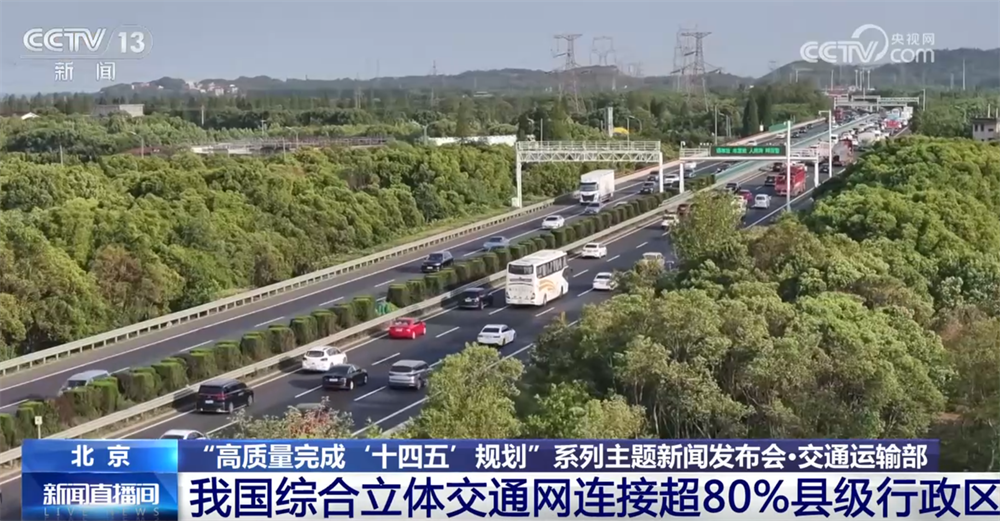
Core Points - The "14th Five-Year Plan" has led to the establishment of the world's largest high-speed railway network, highway network, and postal express network in China [1][4] - The national comprehensive three-dimensional transportation network connects over 80% of county-level administrative regions, serving approximately 90% of the country's economic and population total [2][12] Group 1: High-Speed Rail and Highway Development - The "Eight Vertical and Eight Horizontal" high-speed rail network has been completed and put into operation at 81.5%, with a total operating mileage of 48,000 kilometers, accounting for over 70% of the world's high-speed rail total mileage [4] - The highway mileage has reached 191,000 kilometers, covering 99% of cities with a population of over 200,000 [6] Group 2: Waterway and Air Transport Infrastructure - The "Four Vertical and Four Horizontal Two Networks" of national high-grade waterways has been completed at approximately 84%, with port capacity maintaining the world's largest for many years [8] - Air transport services cover 92.6% of prefecture-level administrative units and 91.2% of the population [8] Group 3: Transportation Hub Development - The construction of "large hubs" is accelerating, with 80% of newly built passenger hubs having an average transfer distance of no more than 200 meters [10] - The national comprehensive freight hub system is being enhanced, with key freight transfer times reduced to 1-2 times and multi-modal transport transfer rates exceeding 85% within one hour [10] Group 4: International Connectivity - The China-Europe Railway Express reaches 229 cities in Europe and over 100 cities in Asia, while the "Air Silk Road" has expanded to 83 countries and 213 cities [14] - The "Silk Road Maritime" international shipping network has global coverage, with China's maritime connectivity maintaining the world's highest level for 19 consecutive years [14]