储能

Search documents
电力设备新能源2026年3月投资策略:开展绿色燃料保障能源安全,海外局势刺激储能需求
Guoxin Securities· 2026-03-10 12:46
Group 1: Core Insights - The report emphasizes the importance of green fuels as a key direction for energy security and green development, with the establishment of a national low-carbon transition fund highlighted [1] - The potential of space photovoltaic technology is noted, with several domestic photovoltaic companies actively engaging in this sector and collaborating with commercial space enterprises [1] - The report suggests focusing on leading component companies in the photovoltaic equipment sector and space business, such as Maiwei Co., JinkoSolar, Junda Co., and Dongfang Risen [1] Group 2: AIDC Power Equipment Sector - Major global tech giants are significantly increasing their capital expenditures for 2026, with Amazon expected to reach approximately $200 billion, Google between $175 billion and $185 billion, and Meta between $115 billion and $135 billion, indicating a robust demand for power equipment in the AI era [2] - The report highlights the growth of solid-state and sodium batteries, with advancements in equipment and materials, and suggests monitoring companies like Xiamen Tungsten, Ronbay Technology, and others involved in these technologies [2][3] Group 3: Energy Storage Demand - Global energy storage demand is projected to grow steadily, with an expected installation demand of 455 GWh by 2026, representing a 40% year-on-year increase [3] - The report recommends focusing on companies such as CATL, EVE Energy, and others that are well-positioned to benefit from this growth in energy storage [3] Group 4: Wind Power Sector - The profitability of wind turbine manufacturers is recovering, with domestic wind power installations expected to grow by 10%-20% in 2026, supported by saturated orders and stable pricing [3] - Key companies in the wind power sector include Goldwind, Sany Heavy Energy, and others, which are expected to benefit from this growth [3] Group 5: Investment Recommendations - The report advises monitoring the development of controllable nuclear fusion, green hydrogen and ammonia industries, global energy storage demand, and the expansion of AIDC power equipment industry opportunities [4] - It also highlights the importance of supply-side adjustments in the photovoltaic industry and the recovery of the grid equipment sector [4] Group 6: Company Earnings Forecasts - The report provides earnings forecasts and investment ratings for key companies, including Delijia, Pinggao Electric, and Sifang Co., with expected earnings per share (EPS) growth and price-to-earnings (PE) ratios indicating favorable investment opportunities [4]
2GWh!14家企业入围!阳光电源/比亚迪/新源智储/上能电气等预中标南源储能储能系统集采
中关村储能产业技术联盟· 2026-03-10 10:49
Core Viewpoint - Nanyuan Energy has confirmed its participation in the 14th International Energy Storage Summit and Exhibition (ESIE 2026), inviting industry peers to visit their booth [3][10]. Procurement Project Summary - The procurement project for Nanyuan Energy's lithium iron phosphate electrochemical energy storage system equipment has a total scale of 2GWh, divided into three lots: 1.2GWh for 0.25C and 0.8GWh for 0.5C [5][6]. - The candidates for Lot 1 (Battery Cabin Integration Package) include BYD Auto, Shanghai Pylon Energy Technology, Tianjin Ruiyuan Electric, Xiamen Beichen Star Energy Development, and Xinyuan Zhichu Energy Development [4][6]. - The candidates for Lot 2 (PCS Power Conversion Package) include Suzhou Inovance Technology, Tianjin Ruiyuan Electric, Shangen Electric, Yisite Group, and Sungrow Power Supply [4][6]. - The candidates for Lot 3 (Energy Management System) include Nanjing Zhonghui Electric Technology, Yisite Group, Guoneng Rixin Technology, and Tianjin Ruiyuan Electric [4][6]. Project Requirements - The project requires bidders to have a cumulative supply performance of no less than 2GWh within one year and at least one single project performance of 400MWh or more [6][7]. - The procurement includes lithium iron phosphate batteries, battery management systems, bidirectional inverters, energy management systems, and various supporting facilities [6][8]. Event Details - The opening of bids took place on March 5, 2026, at a designated location in Lanzhou, Gansu Province [7]. - The public announcement of the shortlisted suppliers will be from March 11 to March 13, 2026 [7][8]. - The ESIE 2026 event will be held from April 1 to April 3, 2026, at the Capital International Exhibition Center in Beijing [10].






远景邀您共聚第十四届储能国际峰会暨展览会ESIE 2026
中关村储能产业技术联盟· 2026-03-10 10:49
Core Insights - The article emphasizes the significance of the upcoming 2026 ESIE (Energy Storage International Summit and Exhibition) as a pivotal event for the energy storage industry, showcasing advancements in AI-driven energy systems [1][6]. Group 1: Event Details - The 2026 ESIE will take place from April 1 to April 3, 2026, at the Beijing Capital International Exhibition Center [6][7]. - The summit will feature discussions on the latest trends and technologies in energy storage, particularly focusing on AI applications [4][6]. Group 2: AI Energy Technology - The article highlights the introduction of new AI energy storage products, specifically the Tianji and Tianshu models, which are expected to drive innovation in the sector [4]. - The concept of "Energy Storage + X" is introduced, indicating the integration of energy storage solutions across various scenarios and applications [4]. Group 3: Industry Participation - Over 800 leading companies in the energy storage sector are expected to participate, indicating a strong interest and growth in the industry [9]. - The event will also facilitate connections with over 100 international buyers, enhancing global collaboration and resource sharing [9].
倒计时22天!ESIE 2026储能展交通&住宿指南
中关村储能产业技术联盟· 2026-03-10 10:49
Core Points - The 14th International Energy Storage Summit and Exhibition (ESIE 2026) will take place from April 1 to April 3, 2026, at the Beijing Capital International Exhibition Center [9] - The summit aims to gather over 800 industry leaders and focuses on the development and trends of the global energy storage market [11] Transportation - The venue is accessible via multiple subway lines, including Line 15, which connects with Lines 5, 8, 13, 14, and the Changping Line [3] - The distance from Beijing Capital International Airport to the exhibition center is approximately 7.5 kilometers, while from Beijing Daxing International Airport, it is about 80 kilometers [3] - Taxi rides from various train stations to the exhibition center range from approximately 1 hour to 1 hour and 50 minutes, depending on the station [4][6] Accommodation - A list of hotels near the exhibition center includes options such as the Crowne Plaza Beijing International Airport, with prices ranging from 750 to 1250 yuan per night [5][7] - The hotels offer various room types and amenities, with some including breakfast in the rate [5][7] Event Details - The summit will feature thematic forums on topics such as the collaborative development of energy storage and new business models, as well as safety and standards [11] - There are opportunities for free exhibition access and media cooperation for attendees [8]
户储专家交流
2026-03-10 10:17
Summary of Key Points from the Conference Call Industry Overview - The energy storage industry is expected to experience explosive growth in overseas demand in 2026, with an overall growth rate of 30%-40%+. The U.S. large-scale storage is driven by AIDC (AI Data Center) integration, Europe by subsidies and energy independence, and the Middle East by energy transition and conflict impacts [2][4][9]. Core Insights and Arguments - **AIDC Integration Demand**: In the U.S., AIDC integration is projected to contribute an additional demand of 20-30 GWh in 2026, compared to a base of 50 GWh in 2025. The product premium is expected to be 10%-20% higher than traditional large-scale storage, with integration durations evolving towards 8 hours or more [2][12][14]. - **European Market Dynamics**: The inventory reduction in Europe is nearly complete as of 2025, with current levels at a normal three-month supply. Demand in Europe is expected to increase by 20%-30% year-on-year, driven by policies in Hungary and Australia [2][4][8]. - **Global Supply Chain Status**: The supply chain is operating at full capacity with slight upward pressure on battery cell and raw material prices. European policies require 30% of future production capacity to be localized, with leading domestic companies already establishing operations in Poland and Hungary [2][6][11]. - **Regional Competition**: The U.S. market has high entry barriers and longer certification cycles (approximately one year), with prices 20%-30% higher than in Europe. In contrast, the European market is dominated by Chinese brands, which offer significant cost advantages [2][5][13]. Additional Important Insights - **Impact of Natural Gas Prices**: The recent surge in overseas natural gas prices has led to increased demand for both household and large-scale storage, indicating a positive short-term impact on the renewable energy sector [4][9]. - **Subsidy Effects**: Subsidies and policies are positively influencing demand, particularly in Australia and Hungary, where significant incentives have been introduced [7][8]. - **Market Growth Projections**: The overall growth for 2026 is expected to be at least 30%-40%+, with the U.S. and Europe leading the charge. Emerging markets in Southeast Asia and India are also anticipated to see substantial growth, albeit from a smaller base [9][10]. - **Inventory Levels in Europe**: The inventory levels in Europe are currently at a normal state, having been reduced from a high of 6 months to 1 year during late 2023 to early 2024 [10][11]. - **AIDC Certification and Market Dynamics**: The certification process for AIDC integration is more complex and time-consuming than for household storage, with a significant focus on reliability and performance [12][13]. Conclusion The energy storage industry is poised for significant growth in 2026, driven by various regional dynamics and policy incentives. The U.S. and Europe are expected to lead in demand, while emerging markets also present substantial opportunities. The supply chain is currently under pressure but remains dynamic, with ongoing adjustments to meet the increasing demand.
特朗普又taco了,伊朗不答应怎么办?
格隆汇APP· 2026-03-10 09:02
Core Viewpoint - The article discusses the recent volatility in the oil market, driven by geopolitical tensions, particularly the U.S.-Iran conflict, and the implications for energy supply chains and investment opportunities in renewable energy and strategic resources [5][24]. Geopolitical Tensions and Oil Market - The oil market experienced significant fluctuations, with record highs and lows in a single day, attributed to President Trump's announcements regarding the U.S.-Iran conflict [5][10]. - Trump's claims of military successes against Iran, including the destruction of naval capabilities and missile launch systems, are questioned in light of Iran's retained nuclear materials and industrial capabilities [14][16]. - Iran's nuclear program remains a critical issue, with the country reportedly possessing 60% enriched uranium, which could be escalated to weapons-grade levels [17][20]. Energy Supply Chain Security - The ongoing geopolitical instability in the Middle East is expected to heighten concerns over energy supply chain security, particularly for major economies like China and the U.S. [24]. - The vulnerability of global oil supplies, especially through the Strait of Hormuz, may drive countries to diversify their energy sources, increasing demand for renewables such as solar, wind, and nuclear energy [24]. - China's renewable energy sector is highlighted as having significant advantages, with leading companies already surpassing previous performance highs, indicating potential for recovery and valuation reassessment [24]. Strategic Resource Demand - The demand for strategic resources is anticipated to rise, paralleling efforts by countries like China and the U.S. to bolster their resource reserves amid geopolitical tensions [25]. - The emergence of resource nationalism, characterized by export restrictions, is noted as a growing trend that could impact global supply chains [25]. AI and Economic Considerations - The article emphasizes the increasing demand for energy and strategic minerals driven by the AI narrative, which is seen as a strong and certain trend in the current market [27]. - However, concerns about a potential U.S. economic recession, indicated by recent labor market data, could negatively affect commodity prices linked to macroeconomic cycles [29]. Market Volatility and Investment Strategies - The investment landscape is characterized by significant volatility, influenced by both AI developments and geopolitical events, making it challenging for investors to navigate [32]. - A strategy to capitalize on market volatility, such as going long on volatility, is suggested as a potential approach for investors [32].

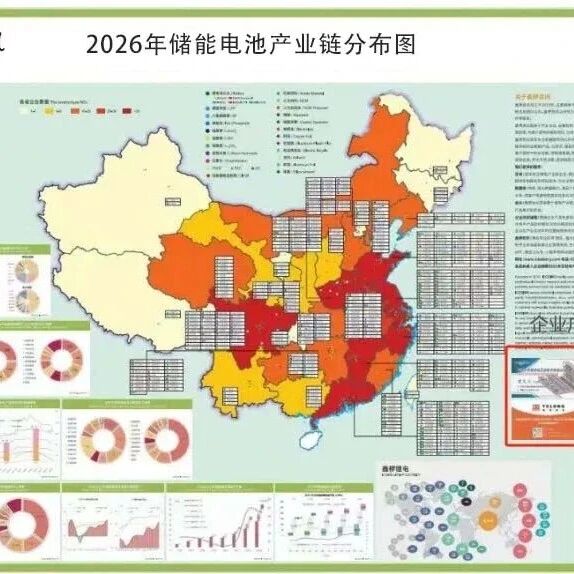
招商!鑫椤资讯2026中国储能产业分布图
鑫椤锂电· 2026-03-10 08:06
Core Viewpoint - The article emphasizes the importance of a distribution map for energy storage companies, serving as a targeted advertisement to reach decision-makers in the industry [1]. Group 1: Target Audience - The distribution map is aimed at key stakeholders including energy storage system procurement decision-makers, upstream and downstream enterprises in the industry chain, government investment departments, and investment institutions and industry analysts [3]. Group 2: Map Features - The regional layout heat map precisely marks leading enterprises and industrial clusters in key provinces and cities across the country [4]. - The industry chain panorama covers core enterprises from lithium mining to battery cells, PCS, system integration, EPC, and applications [4]. - Key projects are highlighted within the map [4]. Group 3: Policy Insights - The policy heat index provides a clear overview of subsidy intensity, energy storage requirements, and electricity pricing policies across various provinces [5].
海博思创、亿纬等巨头2026开年5场“极端火烧”:从“硬扛”到“阻断”的防线重构
中关村储能产业技术联盟· 2026-03-10 04:10
Core Viewpoint - The article discusses the recent large-scale fire tests conducted by leading companies in the energy storage industry, highlighting the industry's shift towards larger battery cells and the associated safety challenges. It emphasizes the need for advanced safety measures and proactive systems to prevent fire incidents rather than merely relying on physical containment [3][6][25]. Group 1: Industry Trends and Challenges - Five major companies have conducted large-scale fire tests, focusing on battery systems with capacities of 5MWh to 6.25MWh, with some cells reaching capacities of 1175Ah [3][6]. - Companies are increasingly opting to disable active fire suppression systems during tests, relying instead on inherent safety designs, reflecting the challenges faced in the transition to the "large cell era" [6]. - The rise in energy density of battery cells increases the pressure on safety designs to manage extreme thermal runaway scenarios effectively [6]. - The optimization of site layouts is becoming critical as companies compress container spacing to maximize space utilization, raising concerns about heat transfer management between adjacent units [6]. - International safety standards, such as NFPA 855 (2026 version) and UL 9540A, are evolving, making large-scale fire tests a prerequisite for project approvals in the energy storage sector [6]. Group 2: Fire Test Results - The fire tests conducted by various companies showed effective containment of fire within single modules or containers, preventing chain reactions [7]. - Key results from the tests include: - Haibo's test lasted 16 hours with a maximum temperature of 1400°C, and adjacent cells only reached 56°C [7]. - EVE Energy's test lasted 13 hours, with no collapse or burning through of the A box, and internal temperatures remained below national standards [7]. - Jinko's test showed neighboring cells maintained temperatures between 38.3°C and 51.3°C without thermal runaway [7]. - Hichain's test demonstrated innovative design features that maintained structural integrity and prevented heat spread [7]. - Trina's test indicated effective thermal management with neighboring cells only reaching temperatures between 23.9°C and 43.9°C [7]. Group 3: Advanced Fire Protection Strategies - The industry is moving towards more refined fire protection strategies, shifting from traditional full-container flooding methods to targeted interventions that prevent re-ignition and contain fires at the module level [10][11]. - Companies like Fugu Technology are implementing layered protection strategies, utilizing internal gas and heat anomaly detectors within battery modules to deliver extinguishing agents directly [10]. - The development of compact fire suppression devices, such as those from Hubei Andun, allows for integration within battery modules, enhancing flexibility and effectiveness in fire scenarios [11]. - New extinguishing agents, such as composite high-stability micro-foam, are being developed to provide long-lasting cooling and prevent re-ignition, addressing the limitations of traditional agents [13][15]. Group 4: Early Warning Systems - The industry consensus is to advance risk monitoring to detect early signs of thermal runaway, with gas emissions serving as critical indicators [16][19]. - Technologies that monitor multiple parameters, including CO and H2 emissions, are being developed to enhance early detection and response capabilities [17]. - The integration of advanced sensors allows for proactive measures, such as automatic shutdown and cooling, to be initiated upon detecting anomalies [17][20]. Group 5: Compliance and Safety Standards - As energy storage companies expand into international markets, compliance with stringent safety standards is becoming essential for project approvals [22][24]. - The upcoming NFPA 855 (2026 version) emphasizes the importance of explosion management and pressure relief designs as integral components of safety systems [22][23]. - Companies that can provide robust empirical data and meet international standards are positioned to succeed in high-demand markets [24]. Group 6: Conclusion and Future Outlook - The series of large-scale fire tests conducted by leading companies has validated the baseline safety of energy storage systems under extreme conditions, highlighting the importance of proactive safety measures [25]. - The upcoming ESIE 2026 event will showcase advancements in integrated fire protection technologies, emphasizing the trend towards comprehensive safety solutions in the energy storage sector [25][27].


《工业加速器法案》落地:欧盟IAA新规下,中国储能企业的“入场券”之变
中关村储能产业技术联盟· 2026-03-10 04:10
Core Viewpoint - The European Commission has introduced the Industrial Accelerator Act (IAA) to enhance the competitiveness of strategic sectors and technologies within the EU, particularly focusing on energy-intensive sectors and net-zero technologies, aiming to reduce import dependency and strengthen local manufacturing while achieving decarbonization and climate goals [3]. Group 1: Key Provisions of the Act - The act identifies battery energy storage systems as a crucial component of net-zero technologies, emphasizing their importance in energy transition and manufacturing capability enhancement [5]. - Strict requirements are set for the procurement of net-zero technology products, mandating that all battery energy storage systems over 1MWh must utilize EU-manufactured Battery Management Systems (BMS) one year after the act's enactment, and within three years, they must include EU-manufactured cells, BMS, and at least one other key component [5]. - The act outlines regulations for foreign direct investment, requiring investors from countries controlling over 40% of global capacity in this field and investing more than €100 million in the EU to meet four out of six specified criteria, including mandatory joint ventures with foreign ownership capped at 49%, enforced technology transfer, and local employment and procurement requirements [5]. Group 2: Implications for Chinese Energy Storage Companies - The growing energy storage demand in the EU presents opportunities for Chinese companies, which possess significant competitive advantages in technology diversity and complete industrial chains [6]. - However, the EU's emphasis on local manufacturing and supply chain development may raise entry barriers for Chinese products, increasing operational costs for Chinese energy storage firms in the EU market [6]. - To navigate these challenges, Chinese energy storage companies may need to establish local production facilities, engage in industrial cooperation, and enhance local service systems to participate effectively in the European energy storage market [6].
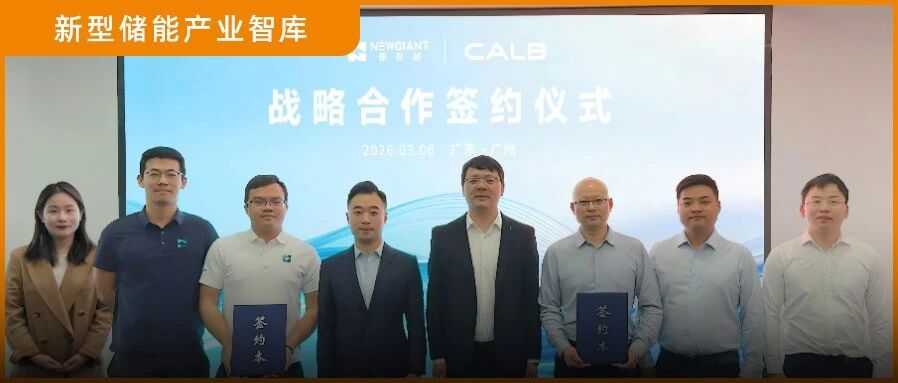
10GWh!新巨能与中创新航达成战略合作
行家说储能· 2026-03-10 02:53
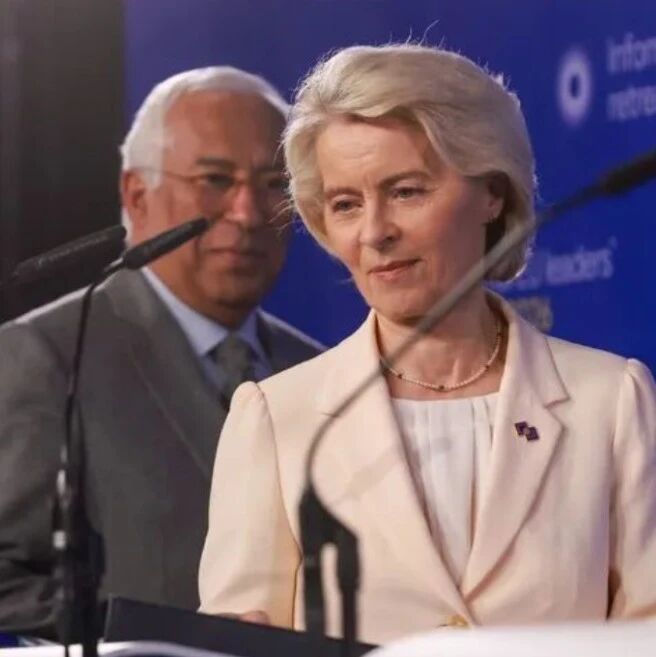
Core Viewpoint - The signing of a long-term procurement agreement for 10GWh of energy storage components between Xinjuneng and Zhongchuangxin Hang marks a significant trend in the energy storage industry, emphasizing the shift towards long-term partnerships that integrate battery cells, systems, and investment operators [4][12]. Group 1: Agreement Details - Xinjuneng will procure no less than 10GWh of 392Ah battery cells and DC-side equipment from Zhongchuangxin Hang between January 1, 2026, and December 31, 2027 [4]. - This agreement is a crucial step for Xinjuneng in stabilizing its supply chain and controlling costs, laying a solid foundation for the scale development of its energy storage business [4][12]. Group 2: Strategic Importance - The collaboration between Xinjuneng and Zhongchuangxin Hang represents a complementary resource advantage and aligns with the trend of collaborative development across the energy storage industry [8]. - The choice of 392Ah battery cells is based on considerations of technological maturity, supply chain stability, and system economics, which are essential for project implementation and system performance [9][11]. Group 3: Market Outlook - The 10GWh procurement agreement reflects Xinjuneng's confidence in future market growth and serves as a strategic move to secure supply chain safety and cost advantages amid price fluctuations [12]. - Xinjuneng aims to deepen its market expansion and innovate business models, focusing on commercial energy storage and independent storage projects [12][13]. Group 4: Future Vision - Xinjuneng believes that the true potential of energy storage lies in the maturity of the electricity market, which will enhance the sustainability and robustness of its business model [13]. - The company plans to collaborate with industry partners to promote technological advancements and ecological upgrades in the energy storage sector, contributing to the optimization of China's energy structure [13].