博物馆

Search documents
卢浮宫抢劫案造成经济损失达8800万欧元
Xin Hua She· 2025-10-21 23:06
据巴黎检方消息,19日9时30分左右,4名蒙面人来到卢浮宫外,分工配合操作升降装置,从建筑物外部 阳台潜入室内,抢走陈列珠宝,其间还用角磨机威胁博物馆保安。数分钟内,9件珠宝被抢,其中一顶 属于欧仁妮皇后的皇冠已被警方找到,其余8件珠宝至今下落不明。 巴黎检察院检察官洛尔·贝屈奥当天表示,8800万欧元仅是经济损失,抢劫案造成的历史性损失则无可 估量。她奉劝犯罪分子不要为了销赃而拆解、熔化这些珠宝。 自卢浮宫抢劫案发生以来,外界对该博物馆安保工作的质疑声四起。对此,法国文化部长达蒂21日在国 民议会接受质询时说,"(卢浮宫的)安全设施没有失灵"。卢浮宫管理层当天也对法媒表示,2019年12 月安装的新展柜在安全方面取得了"重大进步"。 新华社巴黎10月21日电(记者张百慧 乔本孝)法国巴黎检方21日表示,卢浮宫博物馆遭抢的8件珠宝仍 然下落不明,经济损失预估可达8800万欧元。 责编:陈菲扬、姚凯红 ...
新时代中国调研行之文化中华丨走进合浦汉代文化博物馆
Xin Hua Wang· 2025-10-21 18:43
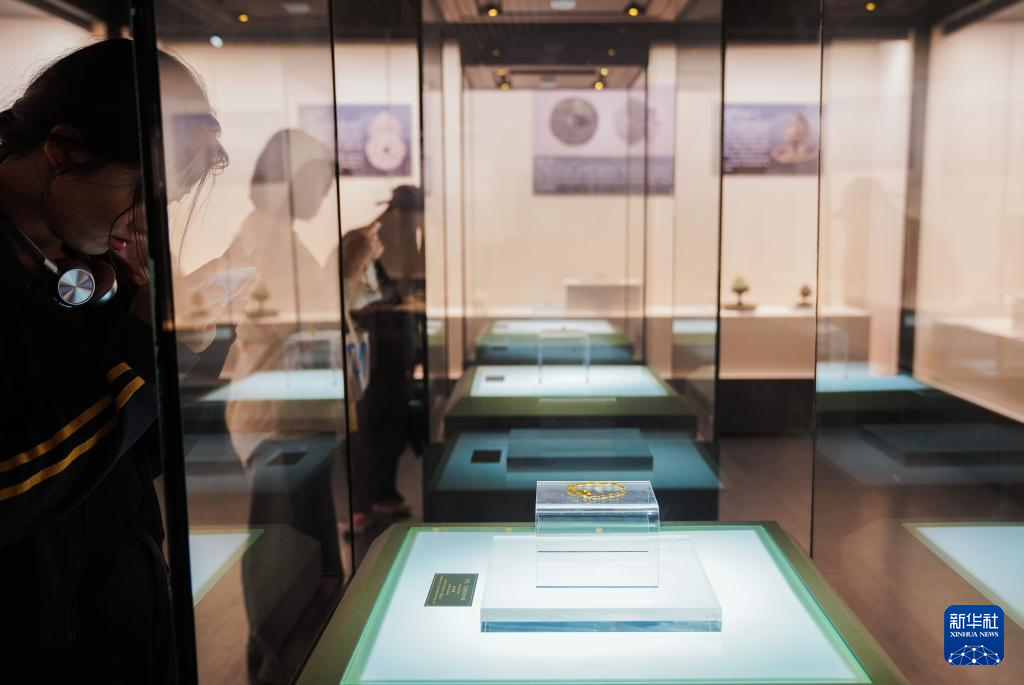
广西合浦汉代文化博物馆成立于1978年,是以汉代海上丝绸之路历史文化展示为主的专题遗址类博物馆。馆区占地面积13300平方米,总建筑面积 4105平方米,馆藏文物5208件(套)。馆中陈列的合浦汉墓出土的我国古代青铜器、陶器和域外陶器、琥珀、琉璃等文物,展示了汉代北部湾地 区对外通商交往史。 这是10月21日在广西合浦汉代文化博物馆拍摄的铜凤灯。新华社记者 周佳谊 摄 这是10月21日在广西合浦汉代文化博物馆拍摄的陶屋。新华社记者 周佳谊 摄 10月21日,游客在广西合浦汉代文化博物馆拍摄波斯陶壶。新华社记者 周佳谊 摄 10月21日,游客在广西合浦汉代文化博物馆参观。新华社记者 周佳谊 摄 10月21日,游客在广西合浦汉代文化博物馆的汉墓保护展示厅参观。新华社记者 周佳谊 摄 10月21日,游客在广西合浦汉代文化博物馆拍摄莲花顶。新华社记者 周佳谊 摄 10月21日,游客在广西合浦汉代文化博物馆参观。新华社记者 周佳谊 摄 这是10月21日在广西合浦汉代文化博物馆拍摄的活链提梁铜灯。新华社记者 周佳谊 摄 这是10月21日在广西合浦汉代文化博物馆拍摄的串饰。新华社记者 周佳谊 摄 10月21日,游客在广西合 ...

秋景出圈!老舍纪念馆一票难求,石刻博物馆刷屏
Bei Jing Ri Bao Ke Hu Duan· 2025-10-21 09:39
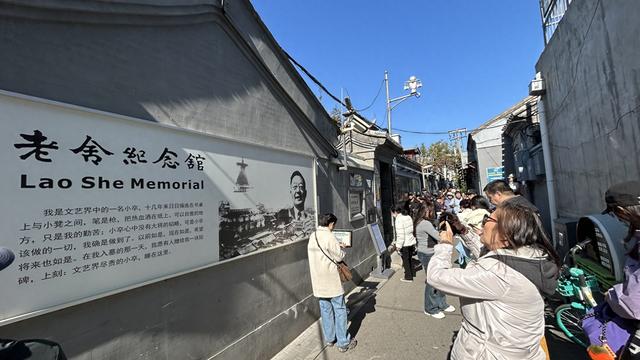
Core Points - The "Lao She Memorial Museum" has increased its daily visitor reservation limit to 2,000 during the "Shang Shi Qi" period, but tickets remain hard to obtain due to high demand and the need to ensure visitor experience and artifact safety [1][3] - The museum has implemented a visitor cap of 60 people at a time to manage crowd flow and maintain quality [5] - The popularity of the museum is part of a broader trend where many smaller museums in Beijing are experiencing a surge in visitors during the autumn season, highlighting the cultural significance of the season [6][10] Visitor Experience - Visitors express a strong desire to experience the literary charm associated with Lao She's works, with some even setting alarms to secure free tickets [3] - The museum's "Dan Shi Xiao Yuan" has become a popular autumn destination, attracting long queues of visitors eager to see the ripe persimmons [5] - Other museums in the area, such as the Beijing Stone Carving Art Museum and various small museums, are also seeing increased visitor interest due to the autumn scenery [8][10] Challenges - The surge in visitors has led to challenges such as ticket scalping, with unauthorized individuals offering to reserve tickets for popular venues [10] - The Lao She Memorial Museum emphasizes that it does not charge for admission and encourages visitors to use official channels for reservations [10]
“博物馆热”持续升温的背后——文旅市场产品与服务质量观察系列报道之三
Zhong Guo Zhi Liang Xin Wen Wang· 2025-10-21 06:47
Core Insights - The "museum fever" in China is a growing trend driven by increased living standards and a heightened demand for cultural experiences among the public [1][5] - Museums are evolving from mere exhibition spaces to multifunctional cultural hubs that offer educational, entertainment, and social experiences [4] Group 1: Visitor Experience Enhancements - Many museums have implemented policies to reduce entry barriers, such as eliminating reservation requirements, which has led to a significant increase in daily visitor numbers [1] - Digital services like online exhibitions, audio guides, and VR/AR technologies are enhancing visitor engagement and accessibility [2] - Museums are focusing on personalized services for diverse demographics, including tailored educational programs for students and slow-paced tours for seniors [3] Group 2: Nighttime and Immersive Experiences - The popularity of "museum night tours" has surged, with search interest increasing over 100% in the past month, reflecting changing consumer habits [4] - Innovative formats like "immersive theater tours" are being developed to attract younger audiences and enhance visitor participation [3][4] - The integration of technology and artistic lighting is transforming the nighttime museum experience, making it more dynamic and interactive [4]
卢浮宫遭劫 意大利宣布运用AI技术加强文物安保
Xin Hua She· 2025-10-21 06:08
Core Insights - The Italian Ministry of Culture announced the development of an AI-based security system to identify abnormal behavior near valuable cultural artifacts, coinciding with a major robbery at the Louvre Museum in France [1] Group 1: AI and Security Initiatives - The Italian Ministry is engaged in two large experimental projects specifically targeting archaeological heritage, utilizing AI, big data analysis, and cybersecurity technologies to enhance the prevention and monitoring capabilities in artifact protection [1] - These projects are funded by the European Union, with an investment exceeding €70 million [1] Group 2: Security System Features - The security system employs intelligent video analysis technology to detect abnormal behavior and suspicious movements while strictly adhering to privacy regulations, enabling timely predictive alerts [1] - The system is driven by specially trained algorithms that can increasingly accurately identify behavioral patterns and risk signals [1] Group 3: Context of Security Concerns - The announcement follows a robbery at the Louvre on the morning of the 19th, where four masked individuals used a lift to access the museum and stole several valuable exhibits, threatening security personnel with a grinder [1] - French Minister of Justice Darmanin indicated that there were security vulnerabilities at the Louvre that allowed the robbers to exploit the situation [1] - The Italian Ministry's statement emphasized that the security of cultural heritage is now a top priority [1]
卢浮宫珍宝失窃案发现场:持续闭馆中,碎玻璃窗已盖上木板
Xin Jing Bao· 2025-10-21 03:33
当地时间10月20日下午,案发后第二天,卢浮宫现场竖起了"因特殊原因关闭"的告示牌。不少区域围着 护栏,能听到装修声,附近也时不时传来警笛声。一名警卫表示,卢浮宫或许将在星期三(10月22日) 早上重新开馆。 新京报讯(记者彭冲)距离卢浮宫8件珠宝被盗已过去超过24小时。截至发稿,这座世界最著名的博物 馆之一仍在临时闭馆状态。当地时间10月20日下午,案发现场,盗贼打碎的玻璃窗已被盖上一块木板。 当地时间10月20日,卢浮宫现场竖起了"因特殊原因关闭"的告示牌。 刘畅 根据卢浮宫发布的公告,失窃的是阿波罗画廊,这处画廊收藏着法国王室珠宝和"王冠钻石"系列。被盗 走的8件珠宝,此前都被放置在两座高安全级别展柜中。 央视新闻援引法国媒体《巴黎人报》的消息报道,嫌犯共有四人,其中两人身穿工人装及黄色反光背心 伪装成施工人员,乘升降吊篮进入博物馆;另外两人各自驾驶摩托车接应。警方称,嫌犯疑似从塞纳河 一侧施工区进入建筑后,使用切割工具打开展厅玻璃,盗走珠宝。 在案发现场,嫌疑人作案使用的升降车已经驶离,被打破的玻璃窗已盖上木板,一辆警车停在路边,对 面有不少记者在蹲守。 据央视新闻报道,法国内政部长努内兹当天表示,嫌 ...
铺展故宫博物院百年长卷
Ren Min Ri Bao Hai Wai Ban· 2025-10-20 22:53
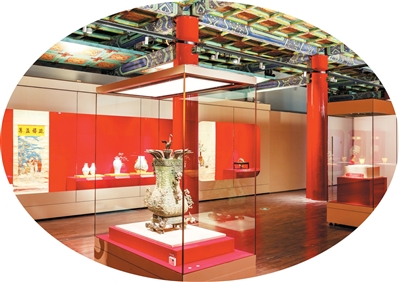
Core Viewpoint - The Palace Museum is celebrating its 100th anniversary with a major exhibition titled "Centennial Guardianship - From the Forbidden City to the Palace Museum," showcasing 200 selected cultural relics that highlight the museum's century-long journey and its commitment to cultural preservation and innovation [8][9]. Group 1: Exhibition Overview - The exhibition is divided into three sections: "Cultural Heritage," "Centennial Legacy," and "Diverse Manifestations," featuring a total of 200 artifacts [8]. - The narrative combines artifacts and archival documents to comprehensively present the development of the Palace Museum over the past century [9]. Group 2: Historical Significance - The Palace Museum was established on October 10, 1925, transforming from a restricted imperial palace into a cultural institution open to the public [11]. - During the Second Sino-Japanese War, the museum undertook the largest and longest cultural relic relocation in history, successfully preserving thousands of artifacts [11]. Group 3: Notable Artifacts - The exhibition includes significant pieces such as the "Five Cows" painting, which is the earliest existing paper painting, and the "Qingming Shanghe Tu," a famous silk scroll depicting life in the Northern Song Dynasty [12][13]. - The "Baiyuan Tie," a calligraphy work from the Eastern Jin Dynasty, is highlighted as a rare treasure that was repurchased from Hong Kong in 1951 [12]. Group 4: Cultural Representation - The exhibition emphasizes the importance of the Palace Museum in promoting Chinese civilization and cultural identity, showcasing artifacts that reflect the rich history and diversity of Chinese culture [16][17]. - Key artifacts like the "Golden Cup of Eternal Stability" symbolize the stability and prosperity of the nation, while others illustrate the cultural exchanges along the ancient Silk Road [17].
卢浮宫遭盗抢闭馆 案发点离《蒙娜丽莎》仅250米
Jing Ji Guan Cha Bao· 2025-10-20 09:41
Core Points - The Louvre Museum in Paris was temporarily closed on October 19, 2023, following a robbery incident that occurred in the morning, where several masked suspects stole multiple valuable items, including eight pieces of jewelry from the Napoleonic era [1][2] Summary by Sections Incident Details - The robbery involved masked suspects who entered the museum from a construction area along the Seine River, using an elevator to access the Apollo Gallery, where they broke glass and stole items [1] - The stolen items included eight pieces of jewelry, such as necklaces, brooches, and earrings, with one crown belonging to Empress Eugénie found abandoned outside the museum [1][3] Security Concerns - The security measures at the Louvre, which receives millions of visitors annually, have come under scrutiny, especially regarding the effectiveness of the alarm system during the incident [1] - The prosecutor indicated that while the alarm system was operational, there are doubts about whether security personnel heard the alarm and if it sounded in the exhibition hall where the robbery occurred [1] Staff and Visitor Issues - There have been complaints from museum staff regarding the high volume of visitors and insufficient security personnel, which has raised concerns about safety [2] - In June, museum employees held a strike due to the overwhelming number of visitors and inadequate staffing, highlighting the potential risks associated with the museum's operations [2]

卢浮宫短暂开放后再度闭馆
Xin Hua She· 2025-10-20 09:38
Core Points - The Louvre Museum in France announced a temporary closure shortly after reopening some exhibition halls due to security vulnerabilities that allowed robbers to infiltrate the museum [1] - French Justice Minister Darmanin stated that the robbery incident has negatively impacted France's image and acknowledged failures in museum security [1] Summary by Sections Incident Details - On October 19, around 9:30 AM, four masked individuals executed a coordinated operation to enter the Louvre from an external balcony, using a lifting device and a grinder to threaten security personnel while stealing jewelry [1] - The perpetrators are currently at large, and the incident is preliminarily classified as organized crime [1] Museum Operations - The Louvre was scheduled to reopen parts of its exhibition at 9 AM on October 20, but delays were announced shortly after due to the ongoing security concerns [1] - By 10 AM, the museum's official website confirmed a complete temporary closure for the day, with full refunds offered to visitors who had made reservations [1]
一年22亿也买不来安全,卢浮宫安保形同虚设?
Hu Xiu· 2025-10-20 09:14
Core Viewpoint - The recent robbery at the Louvre Museum highlights significant security vulnerabilities within the French museum system, raising concerns about the adequacy of security measures in place to protect valuable artifacts [2][3][4]. Group 1: Incident Details - A group of robbers disguised as construction workers infiltrated the Louvre during peak visiting hours, taking only 7 minutes to break into high-security display cases and steal 9 valuable pieces of jewelry from the Napoleonic era [2][17][20]. - The stolen items included crowns and jewelry that belonged to notable historical figures, such as Queen Marie-Amélie and Empress Eugénie, with one crown later found abandoned outside the museum [20][24][26]. Group 2: Security Concerns - The Louvre has faced multiple thefts over the past century, with the most famous being the 1911 theft of the "Mona Lisa" [3][27]. - In the last 15 years, the museum has cut approximately 200 full-time security positions, leading to concerns about understaffing and inadequate security measures [4][29]. - The museum's operational costs for 2024 are projected to be €267.2 million (approximately 2.2 billion RMB), with personnel costs accounting for €130 million [5][30]. Group 3: Response and Future Measures - Following the incident, French President Macron announced the "New Renaissance of the Louvre" initiative aimed at enhancing security measures, with an estimated budget of up to $930 million [31]. - The French Ministry of Culture plans to improve security by deploying a new generation of surveillance cameras [32].