创业投资

Search documents
顶固集创(300749.SZ):拟与专业投资机构共同投资认购基金份额
Ge Long Hui A P P· 2025-10-21 14:11
Core Viewpoint - The company, Dinggu Jichuang (300749.SZ), is strategically expanding its investment activities into emerging industries by leveraging professional investment institutions to enhance its insights into these sectors and incubate more projects [1] Group 1: Investment Strategy - The company plans to engage in equity investments in emerging industries while maintaining its core business focus [1] - A total of RMB 3 million will be invested as a limited partner in the "Muhua Shuijing (Shanghai) Venture Capital Partnership" [1] - The partnership agreement was signed on October 20, 2025, with Waterwood Huqing (Beijing) Venture Capital Fund Management Co., Ltd. and other partners [1] Group 2: Investment Focus Areas - The investment fields include but are not limited to artificial intelligence, embodied intelligence, new energy materials, advanced manufacturing, semiconductors, and life sciences [1] - Investment methods will encompass equity investments, convertible bond investments with applicable legal conditions, and other legally permissible investment methods [1]

南京金雨茂物战新软信人工智能创投企业登记成立
Zheng Quan Shi Bao Wang· 2025-10-21 03:40
人民财讯10月21日电,企查查APP显示,近日,南京金雨茂物战新软信人工智能创业投资合伙企业(有 限合伙)成立,出资额10亿元,经营范围为创业投资。企查查股权穿透显示,该企业由江苏南京软件和 信息服务产业专项母基金(有限合伙)等共同出资。 ...
温氏股份等在云南成立创业投资基金,出资额约4.8亿
Zhong Guo Neng Yuan Wang· 2025-10-20 09:42
Core Viewpoint - The establishment of the Wenrun Agricultural Biotechnology (Yunnan) Venture Capital Fund with a total investment of approximately 480 million RMB highlights a significant move towards promoting venture capital in the agricultural sector in Yunnan province [1] Group 1: Fund Details - The Wenrun Agricultural Biotechnology (Yunnan) Venture Capital Fund is a limited partnership with a focus on venture capital [1] - The total investment amount for the fund is around 480 million RMB [1] - The fund is co-invested by several entities, including the Yunnan Plateau Characteristic Agriculture Equity Investment Fund, Guangdong Wen's Investment Co., Ltd. under Wen's Group (300498), and the Hengqin Guangdong-Macao Deep Cooperation Zone Industrial Investment Fund [1]

温氏股份等在云南成立创业投资基金,出资额约4.8亿元
Xin Lang Cai Jing· 2025-10-20 09:29
Group 1 - The core point of the article is the establishment of a new investment fund focused on agricultural biotechnology in Yunnan, China, with a total investment of approximately 480 million RMB [1] Group 2 - The fund is named "Wenrun Agricultural Biotechnology (Yunnan) Venture Capital Partnership (Limited Partnership)" and is aimed at venture capital activities [1] - The fund is jointly funded by several entities, including Yunnan Provincial Plateau Characteristic Agriculture Equity Investment Fund Partnership (Limited Partnership), Guangdong Wens Foodstuff Group Co., Ltd. under Wens Group, and Hengqin Guangdong-Macao Deep Cooperation Zone Industry Investment Fund (Limited Partnership) [1]
温氏股份等在云南成立创业投资基金 出资额约4.8亿
Xin Lang Cai Jing· 2025-10-20 09:10
天眼查App显示,近日,温润农业生物科技(云南)创业投资基金合伙企业(有限合伙)成立,出资额 约4.8亿人民币,经营范围为创业投资,由云南省高原特色农业股权投资基金合伙企业(有限合伙)、 温氏股份(300498)旗下广东温氏投资有限公司、横琴粤澳深度合作区产业投资基金(有限合伙)等共 同出资。 ...
中国人民银行副行长邹澜 着力培育支持科技创新的金融市场生态
Shang Hai Zheng Quan Bao· 2025-10-19 18:49
Core Insights - The People's Bank of China aims to cultivate a financial market ecosystem that supports technological innovation, enhancing financial support capabilities and inviting domestic and foreign investors to participate in China's tech development [2][4] Group 1: Financial Support for Technology Innovation - Different types of technological innovation and the lifecycle stages of tech companies have varying risk characteristics and financial needs, necessitating tailored financial solutions [2] - For growth and mature-stage companies, indirect financing like bank credit can quickly respond and guide social capital towards tech sectors, while seed and early-stage companies benefit more from direct financing through capital markets [2][4] Group 2: Growth of Technology Enterprises - The number of global unicorns has increased to 1,500, with the time taken to scale operations significantly reduced, some achieving this in just four to five years [3] - Traditional bank credit struggles to provide adequate support due to mismatched risk and return, leading to reliance on equity financing such as venture capital and angel investments for rapid growth [4] Group 3: Development of Financial Systems - The support intensity and service diversity for tech SMEs have improved, with loans maintaining over 20% growth for several years, and over 2,000 "specialized, refined, unique, and innovative" companies listed on the A-share market [4] - China's bond market, now exceeding 190 trillion yuan, is the second largest globally and offers unique advantages for supporting tech innovation due to its large scale, low cost, and long duration [4][5] Group 4: Bond Market Innovations - Since the launch of the bond market "Tech Board," approximately 670 billion yuan in tech innovation bonds have been issued by around 280 entities, with diverse structures and widespread distribution across 26 provinces [5] - Nearly half of the tech companies issuing bonds have terms of three years or more, with an average bond term of 5.8 years for equity investment institutions, and an average coupon rate of about 2% [5]

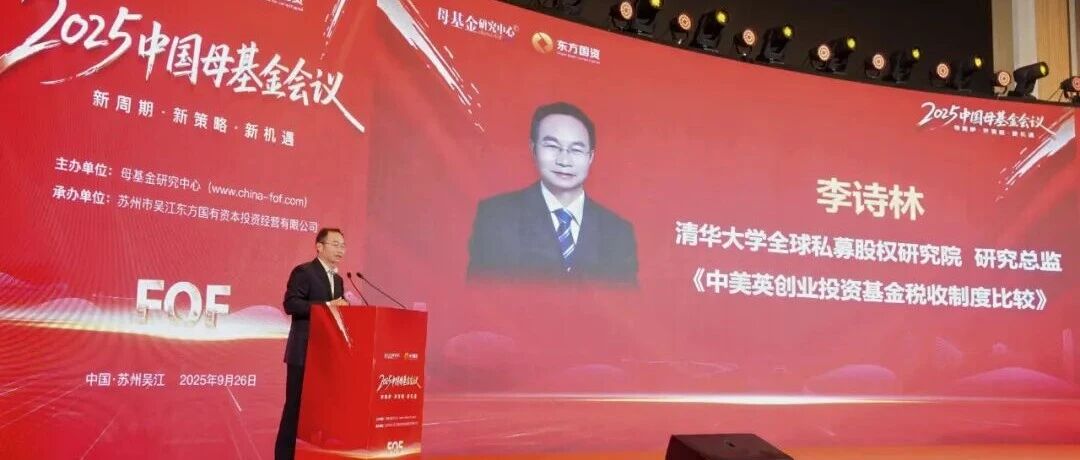
李诗林:破局创投寒冬,税收制度是关键
母基金研究中心· 2025-10-18 08:50
Core Viewpoint - The article discusses the challenges and opportunities in the Chinese venture capital market, particularly focusing on the impact of tax policies on investment dynamics and the need for reform to stimulate private capital involvement [3][11][12]. Group 1: Current Market Situation - Despite the government's emphasis on technological innovation and venture capital development, the actual market performance has been underwhelming, with the venture capital market in China still in a downward trend as of 2025 [3][5]. - The investment scale of venture capital funds in China has reverted to levels seen around 2016, indicating a significant decline since 2021 [5]. - The funding sources for venture capital have shifted, with government and state-owned enterprises contributing nearly 60% of the total funding by 2023, highlighting a structural change in the market [5]. Group 2: Tax Policy Comparison - The article compares the tax systems of the US, UK, and China, noting that the US has a more favorable tax structure for venture capital, allowing for tax benefits that encourage investment in early-stage companies [6][8]. - The US tax system allows for capital gains to be taxed at lower rates compared to ordinary income, with specific provisions for small business investments that provide significant tax relief [7][9]. - In contrast, China's tax regime imposes higher tax rates on venture capital gains, with personal partners facing rates up to 35%, which is significantly higher than the 20% rates in the US and UK [10][11]. Group 3: Challenges in China's Tax System - China's current tax system for venture capital is based on outdated regulations that classify venture capital funds as ordinary partnerships, leading to mismatched tax rules that do not align with the nature of equity investments [11]. - Key issues include a lack of stability in tax rules, incomplete tax information transparency, and high capital gains tax rates that deter investment [11][12]. - The execution of policies aimed at supporting early-stage investments has been poor, with many investors unaware of the available tax incentives due to complex application processes [12]. Group 4: Recommendations for Reform - To enhance the venture capital landscape, the article suggests establishing a dedicated tax system for venture capital funds that clarifies the tax treatment of limited partnerships and allows tax benefits to extend to upper-tier investors [13][15]. - It advocates for increased tax incentives for investments in seed and early-stage technology companies, proposing a tiered tax relief system based on the duration of investment [15]. - Simplifying the application process for tax incentives and improving awareness among investors are also recommended to boost participation in the venture capital market [15].
创投基金逐浪中国科技创新“星辰大海”
Zheng Quan Ri Bao· 2025-10-16 16:16
Group 1 - The meeting chaired by Premier Li Qiang emphasized the need for a first-class industrial ecosystem, addressing disorderly and irrational competition in industries, and promoting cooperation among enterprises of all sizes [1] - Venture capital funds are crucial for early-stage financing of high-growth potential startups in China, receiving significant attention from the government for their high-quality development [1][2] - The government aims to enhance the regulatory framework for venture capital funds and strengthen policy financial support to accelerate the development of venture capital and patient capital [1] Group 2 - The venture capital industry has reached a consensus on investing early, small, long-term, and in hard technology, highlighting its role in identifying potential in cutting-edge technologies and facilitating efficient transformation of scientific achievements [2] - Venture capital funds act as "trend discoverers," guiding innovation resources towards emerging fields and promoting the development of new productive forces [2] - The commercial logic of venture capital involves investing in the future, requiring insights that surpass ordinary market levels to identify potential value tracks [2] Group 3 - As "risk sharers," venture capital funds provide strong support for exploring and validating cutting-edge technologies by diversifying risks through portfolio investments [3] - The essence of venture capital is to make precise "bets" on future certainties based on deep analysis of technology trends and industry logic, providing a safety net for early-stage innovations [3] - Venture capital funds facilitate the transition of technologies from theoretical feasibility to practical application, accelerating technological advancements in hard tech [3] Group 4 - Venture capital funds fill the critical gap of long-term capital and systematic resource support for innovative enterprises, providing stable funding and deep empowerment through governance participation and resource integration [4] - The unique attribute of "patient capital" allows venture capital funds to help companies overcome bottlenecks from R&D to commercialization, transforming innovation potential into sustainable competitive advantages [4] - Overall, venture capital funds are seen as key drivers of China's technological innovation and economic resilience, contributing to high-quality economic development [4]
加快构建科技金融体制,北京打算这么干!
Zheng Quan Shi Bao Wang· 2025-10-16 08:16
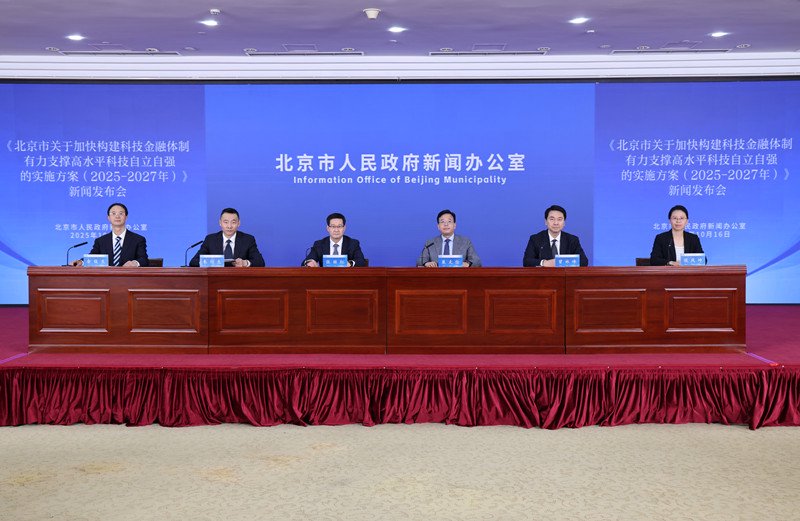
Core Viewpoint - Beijing is accelerating the construction of a technology finance system to support high-level technological self-reliance and innovation, with a clear implementation plan set for 2025-2027 [1] Group 1: Implementation Plan Goals - By the end of 2027, the plan aims to introduce over 1 trillion yuan in new funds for technology innovation, with technology loans and loans to technology enterprises expected to exceed 5.5 trillion yuan and 2.5 trillion yuan respectively, growing faster than the national average [1] - The issuance scale of technology innovation bonds, technology insurance, and listings of technology enterprises is expected to rank among the top in the country [1] Group 2: Support for Technology Enterprises - The Beijing Securities Regulatory Bureau will enhance support for qualified unprofitable technology enterprises to go public, particularly encouraging listings on the Beijing Stock Exchange [2][10] - In the first nine months of this year, Beijing added 11 new listed companies, leading the country in the number of companies listed on the Beijing Stock Exchange and the New Third Board [4] Group 3: Investment and Financing Initiatives - The Beijing Municipal Financial Office has introduced policies to promote high-quality development of venture capital and equity investment, with significant transactions completed in fund share transfers and pledges [5] - As of August, loans to technology SMEs in Beijing grew by 30.9%, significantly outpacing the overall loan growth rate [6] Group 4: Regulatory and Policy Framework - The National Financial Supervision Administration has implemented several initiatives to promote technology finance, including pilot projects for equity investment and long-term insurance fund investments [7] - The Beijing Financial Regulatory Bureau is focused on ensuring the implementation of the plan while managing risks effectively [8] Group 5: Capital Market Development - The plan emphasizes the role of capital markets in supporting technological innovation, with efforts to enhance private equity fund establishment and improve the listing process for technology enterprises [9] - The Beijing Securities Regulatory Bureau will support the issuance of REITs for new infrastructure projects, including artificial intelligence and smart cities [10]
官宣更名丨海愿资本:紫金港资本品牌升级了!
Sou Hu Cai Jing· 2025-10-16 03:53
Core Viewpoint - The company, formerly known as Zijin Port Capital, has officially rebranded to "Haiyuan Capital," reflecting its commitment to long-term investment in hard technology and a global innovation perspective [1][3]. Group 1: Company Background and Achievements - Haiyuan Capital has been focused on hard technology investments for 11 years, managing a total scale of 7 billion yuan and successfully investing in over 120 innovative companies, with 8 of them having gone public [1][3]. - The firm has maintained a core investment philosophy of "invest early, invest small, invest well, and invest in hard technology," particularly in sectors such as semiconductors, artificial intelligence, new energy materials, and life sciences [1][3]. Group 2: Strategic Vision and Internationalization - The rebranding signifies a deeper understanding of the brand and an exploration of international strategies in hard technology investment, aiming to establish deep collaborations with top overseas institutions like MIT and Imperial College [3][5]. - The company plans to enhance its global resource and innovation network, focusing on technology collaboration and market integration between domestic and international enterprises [8][10]. Group 3: Investment Approach and Future Commitments - Haiyuan Capital will adhere to three main commitments: focusing on hard technology, upgrading global resources, and strengthening investment capabilities to achieve long-term win-win outcomes with limited partners and invested companies [8][10]. - The firm emphasizes a dual-core model of "investment + empowerment," providing comprehensive support from technology transformation to global expansion for its portfolio companies [6][8]. Group 4: Market Outlook and Innovation - The company recognizes the challenges and opportunities presented by the era of artificial intelligence and aims to continue discovering resilient entrepreneurs and innovative companies [12][14]. - Haiyuan Capital is optimistic about transformative forces in artificial intelligence, quantum computing, and life sciences, believing that innovation will shine through passion and persistence [14][16].