
工业母机

Search documents
两融余额、国际金价历史新高!工业母机大涨,603177“天地板”
Zheng Quan Shi Bao· 2025-09-02 02:40
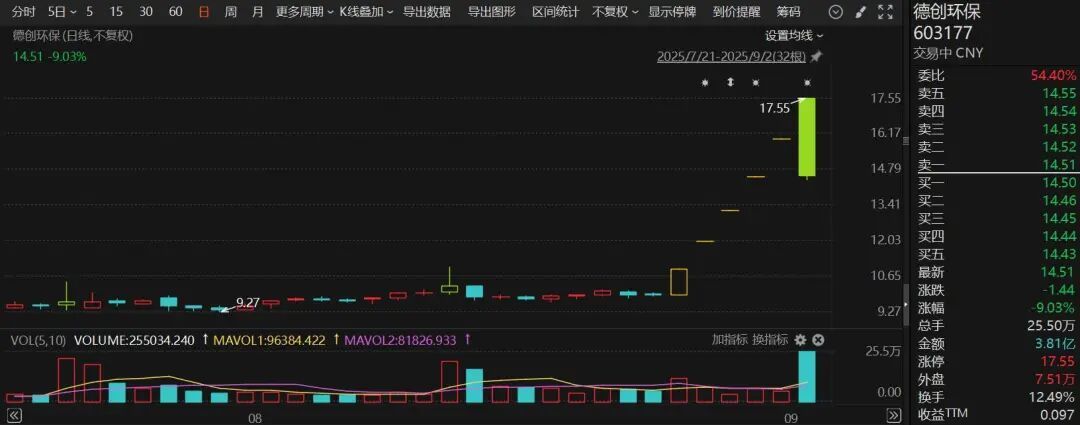
Group 1: Industrial Machinery and Gold Market - The industrial machinery concept saw a significant rise, with companies like Huadong CNC and Bojie shares hitting the daily limit up [5] - The price of gold reached a historic high of over $3500 per ounce, marking a year-to-date increase of over 33% [10] - Gold mining companies reported strong performance in the first half of the year, with Zhaojin Mining achieving a revenue growth of 98.27% and a net profit increase of 181.36% [14] Group 2: Market Performance and Indices - The A-share margin balance reached a record high of 2.3 trillion yuan, surpassing the previous peak in June 2015 [1] - The Hong Kong Hang Seng Index opened down 0.11% but later turned to a slight increase [4] - The three major indices in China showed mixed performance, with the Shanghai Composite Index up 0.04% and the Shenzhen Component and ChiNext Index down slightly [1] Group 3: Company-Specific Developments - Dechuang Environmental experienced a rapid decline, hitting the daily limit down after a five-day limit up streak [2] - Solid-state battery concepts gained traction, with companies like Saiwu Technology and Shanghai Xiba achieving significant price increases [8] - Tianpu Co. and Dexin Technology issued warnings about stock price volatility, yet both stocks hit the limit up again [9]


利好来袭,工业母机概念股早盘表现活跃
第一财经· 2025-09-02 02:10
Core Viewpoint - The article highlights the active performance of the industrial mother machine sector and the establishment of a high-quality standard system aimed at enhancing product quality and promoting industrial development by 2026 and 2030 [1][2]. Group 1: Industry Performance - On September 2, the industrial mother machine sector showed strong activity, with companies like Huadong CNC, Bojie Co., and Ningbo Jingda hitting the daily limit up [1]. - Notable gainers included Huazhong CNC, Huizhou Intelligent, and Rifa Precision Machinery, which had significant price increases [1]. Group 2: Standard System Development - The National Standardization Administration and the Ministry of Industry and Information Technology issued a plan for the construction of a high-quality standard system for industrial mother machines, aiming for a basic establishment by 2026 [2]. - The plan includes the revision of at least 300 standards and the leadership in revising at least 5 international standards, with a target of 90% conversion rate of international standards [2]. - By 2030, a comprehensive standard system will be formed, with advanced levels in material reduction and additive manufacturing standards [2]. Group 3: Financial Performance of Companies - According to data, there are 21 industrial mother machine concept stocks in the A-share market with net profits exceeding 10 million yuan in the first half of the year [2]. - Companies like AVIC High-Tech and Changying Precision reported net profits exceeding 100 million yuan, while Huadong CNC, Qiaofeng Intelligent, Genesis, and Guosheng Zhike had the highest year-on-year profit growth rates of 140.53%, 56.43%, 47.38%, and 32% respectively [2].

贵金属板块延续涨势
Di Yi Cai Jing Zi Xun· 2025-09-02 02:07
Group 1: Stock Market Movements - Baijiu stocks experienced significant upward movement, with Jinhuijiu rising over 5%, and Luzhou Laojiao, Laobai Ganjiu increasing over 2%, while Kweichow Moutai, Gujing Gongjiu, and Wuliangye rose over 1% [2] - Industrial mother machine concept stocks opened higher, with Huadong CNC hitting the daily limit, and other stocks like Huazhong CNC, Haitan Precision, and Kede CNC also showing strong gains [3] - The A-share market opened with mixed results, with the Shanghai Composite Index up 0.04% at 3877.09 points, while the Shenzhen Component Index and the ChiNext Index fell by 0.09% and 0.18% respectively [5] Group 2: Sector Performance - The precious metals sector continued its upward trend, with notable gains in industrial mother machine and port shipping sectors, while AI PCs, consumer electronics, tourism and hotels, and film and television sectors saw declines [5] - In the Hong Kong market, the Hang Seng Index fell by 0.11%, while the precious metals sector saw widespread gains, with China Silver Group and China Gold International rising over 3% [7] - The central bank conducted a 7-day reverse repurchase operation of 255.7 billion yuan at an interest rate of 1.40%, maintaining previous levels [8] Group 3: Currency and Futures - The RMB depreciated against the USD by 17 basis points, with the central parity rate reported at 7.1089 [9] - FTSE China A50 index futures opened lower, down 0.15% [10]

利好来袭,工业母机概念股早盘表现活跃
Di Yi Cai Jing· 2025-09-02 02:04
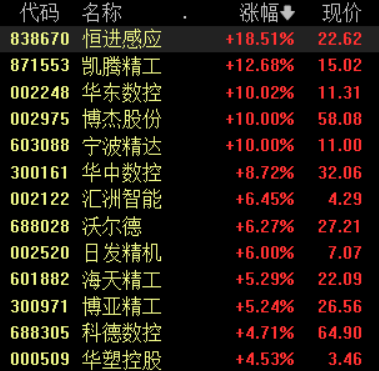
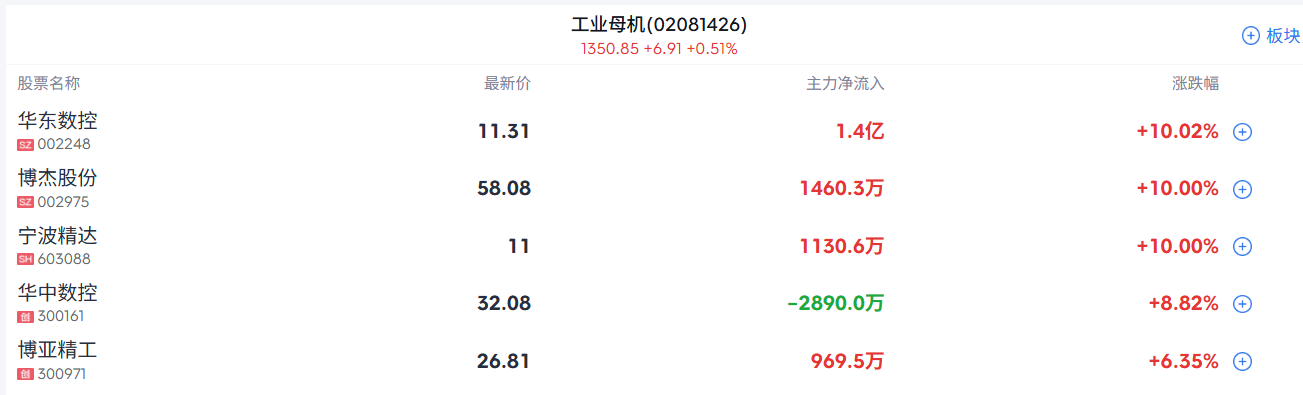
Group 1 - The industrial mother machine sector showed strong performance on September 2, with stocks such as Huadong CNC, Bojie Co., and Ningbo Jingda reaching the daily limit increase [1] - Notable gainers included Huadong CNC (+10.02% to 11.31), Bojie Co. (+10.00% to 58.08), and Ningbo Jingda (+10.00% to 11.00) [2] - The National Standardization Administration and the Ministry of Industry and Information Technology released a plan to establish a high-quality standard system for industrial mother machines by 2026, aiming to enhance product quality and equipment upgrades [3] Group 2 - In the first half of the year, 21 industrial mother machine concept stocks in the A-share market reported net profits exceeding 10 million, with seven stocks, including AVIC High-Tech and Changying Precision, exceeding 100 million [4] - Huadong CNC, Qiaofeng Intelligent, Genesis, and Guosheng Zhike reported significant year-on-year net profit growth of 140.53%, 56.43%, 47.38%, and 32% respectively [4]




贵金属板块延续涨势
第一财经· 2025-09-02 01:58
Core Viewpoint - The article highlights the performance of various sectors in the stock market, particularly focusing on the movements of liquor stocks and industrial mother machine stocks, as well as the overall market trends in A-shares and Hong Kong stocks [3][4][5]. Group 1: Liquor Stocks - Liquor stocks experienced significant upward movement, with Jinhuijiu rising over 5%, and other notable brands like Luzhou Laojiao and Laobai Gan Jiu increasing by over 2% [3]. - Major brands such as Kweichow Moutai, Gujing Gongjiu, and Wuliangye also saw gains exceeding 1% [3]. Group 2: Industrial Mother Machine Stocks - The industrial mother machine sector opened strong, with Huadong CNC hitting the daily limit up, and other companies like Huazhong CNC and Haitan Precision also showing high opening prices [4]. Group 3: Market Overview - The A-share market opened with mixed results; the Shanghai Composite Index rose by 0.04% to 3877.09 points, while the Shenzhen Component Index fell by 0.09% to 12817.03 points, and the ChiNext Index decreased by 0.18% to 2951.03 points [5]. - The precious metals sector continued its upward trend, while sectors such as AI PCs, consumer electronics, tourism and hotels, and film and television showed declines [5]. Group 4: Hong Kong Market - The Hong Kong stock market opened with the Hang Seng Index down by 0.11%, and the Hang Seng Tech Index also fell by 0.11%. The precious metals sector saw broad gains, with companies like China Silver Group and China Gold International rising over 3% [7]. Group 5: Monetary Policy - The central bank conducted a 7-day reverse repurchase operation amounting to 255.7 billion yuan, maintaining an interest rate of 1.40% [8]. - The Chinese yuan depreciated against the US dollar by 17 basis points, with the central parity rate reported at 7.1089 [9].

工业母机概念拉升,华东数控、博杰股份涨停,恒进感应等大涨
Zheng Quan Shi Bao Wang· 2025-09-02 01:57
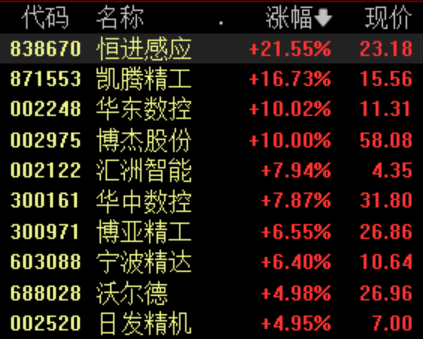
Core Viewpoint - The industrial mother machine sector experienced a significant surge in stock prices following the announcement of a new high-quality standard system aimed at enhancing product quality and driving industry development by 2026 [1] Group 1: Stock Performance - Hengjin Induction surged over 20% - Kaiteng Precision Engineering rose over 19% - Huadong CNC and Bojie shares hit the daily limit - Huazhong CNC and Boya Precision increased by over 8% [1] Group 2: Policy Announcement - On September 1, the National Standardization Administration and the Ministry of Industry and Information Technology issued the "High-Quality Standard System Construction Plan for Industrial Mother Machines" - By 2026, a high-quality standard system for industrial mother machines is expected to be established, promoting product quality improvement and equipment upgrades [1] Group 3: Standard Development Goals - The plan includes the revision of no less than 300 standards and leading the revision of at least 5 international standards - The target is to achieve a 90% conversion rate of international standards and optimize the structure of standard supply [1] Group 4: Innovation and Technology - The initiative aims to accelerate the development of standards for high-end industrial mother machines, advanced CNC systems, and key components - It emphasizes the need for a close linkage between standards and technological innovation in the industry [1] Group 5: Long-term Vision - By 2030, a comprehensive standard system that supports the high-quality development of the industrial mother machine industry is expected to be fully formed - The technical level and internationalization of standards are projected to significantly improve, with manufacturing standards reaching world-leading levels [1]
A股开盘速递 | A股红盘震荡!光伏概念拉升 CPO板块继续活跃
智通财经网· 2025-09-02 01:55
Market Overview - A-shares experienced fluctuations in early trading on September 2, with the Shanghai Composite Index up 0.03%, the Shenzhen Component Index up 0.07%, and the ChiNext Index up 0.55% [1] - The industrial mother machine sector saw significant gains, with stocks like Bojie Co. and East China CNC hitting the daily limit [1] - Precious metals, including gold and silver, continued their strong performance, with silver stocks achieving consecutive gains [1][5] Key Sectors Industrial Mother Machine Sector - The industrial mother machine sector was active, with Bojie Co. and East China CNC reaching their daily limit, while other stocks like Huazhong CNC and Haitan Precision also saw increases [3] - The release of the "High-Quality Standard System Construction Plan for Industrial Mother Machines" aims to establish a comprehensive standard system by 2030, promoting domestic production and new industry opportunities [3] Precious Metals - Precious metals maintained their strong momentum, with silver prices surpassing $40 per ounce for the first time since 2011, and gold prices nearing historical highs [5] - The expectation of interest rate cuts is seen as a key driver for current gold prices, with long-term macroeconomic uncertainties enhancing gold's safe-haven appeal [5] Individual Stocks - Chengdu Huami saw a significant increase of over 15% after announcing a new high-precision RF ADC chip and receiving intention orders [2] Institutional Insights - Guotai Junan believes that the stock index will continue to reach new highs, with a diversified market participation and investment logic [7] - Galaxy Securities anticipates a short-term market operating at a high level, with potential for consolidation after previous gains, while maintaining active trading and structural opportunities [8] - Dongfang Securities asserts that short-term market fluctuations do not alter the bullish trend, with continued potential for upward movement in indices [10]

滚动更新丨沪指开盘涨0.04%,工业母机概念股走高
Di Yi Cai Jing· 2025-09-02 01:50
Group 1 - Precious metals sector continues to rise, with spot gold reaching a historical high of $3504.5 per ounce, up 0.8% [1] - Industrial mother machine stocks opened higher, with notable gains in companies like Huadong CNC and Huazhong CNC [1][3] - The liquor sector saw significant movements, with Jinhuijiu rising over 5% and other major brands like Luzhou Laojiao and Moutai also experiencing gains [1][3] Group 2 - A-shares opened mixed, with the Shanghai Composite Index up 0.04% at 3877.09 points, while the Shenzhen Component and ChiNext Index saw slight declines [3] - The Hang Seng Index opened down 0.11%, with the precious metals sector showing broad gains, particularly in China Silver Group and China Gold International [5] - The central bank conducted a 7-day reverse repurchase operation of 255.7 billion yuan at an interest rate of 1.40%, unchanged from previous operations [6]
A股早评:沪指微涨0.04%,贵金属、工业母机板块活跃!国际金价新高,白银有色2连板,湖南白银、西部黄金涨超5%
Ge Long Hui· 2025-09-02 01:48
Market Overview - The A-share market opened with mixed performance among the three major indices, with the Shanghai Composite Index up by 0.04%, the Shenzhen Component down by 0.09%, and the ChiNext Index down by 0.18% [1] Sector Performance - The precious metals sector remained active, with silver-related stocks such as Hunan Silver and Western Gold rising over 5%, as international gold prices reached new highs and spot silver prices hit a nearly 14-year high [1] - The industrial mother machine concept stocks opened high, with companies like East China CNC and Bojie Co. hitting the daily limit [1] - Conversely, the cross-border payment concept stocks saw a decline at the start, with companies like AsiaInfo and Runhe Software dropping over 4% [1]


A股早评:沪指微涨0.04%,贵金属、工业母机板块活跃
Ge Long Hui· 2025-09-02 01:33
Market Overview - The A-share market opened with mixed performance among the three major indices, with the Shanghai Composite Index up by 0.04%, while the Shenzhen Component Index and the ChiNext Index were down by 0.09% and 0.18% respectively [1] Sector Performance - The precious metals sector remained active, with silver and non-ferrous metals stocks experiencing a two-day consecutive rise, including Hunan Silver and Western Gold, which both increased by over 5%. International gold prices reached a new high, and the spot silver price hit a nearly 14-year peak [1] - The industrial mother machine concept stocks opened high, with Huadong CNC and Bojie Co. hitting the daily limit up [1] - The cross-border payment concept stocks saw a decline at the start, with AsiaInfo Technology and Runhe Software dropping by over 4% [1]
