无人驾驶

Search documents
AI+无人物流场景验证 佑驾创新(02431)小竹无人车驶入华强北
智通财经网· 2025-10-27 03:46
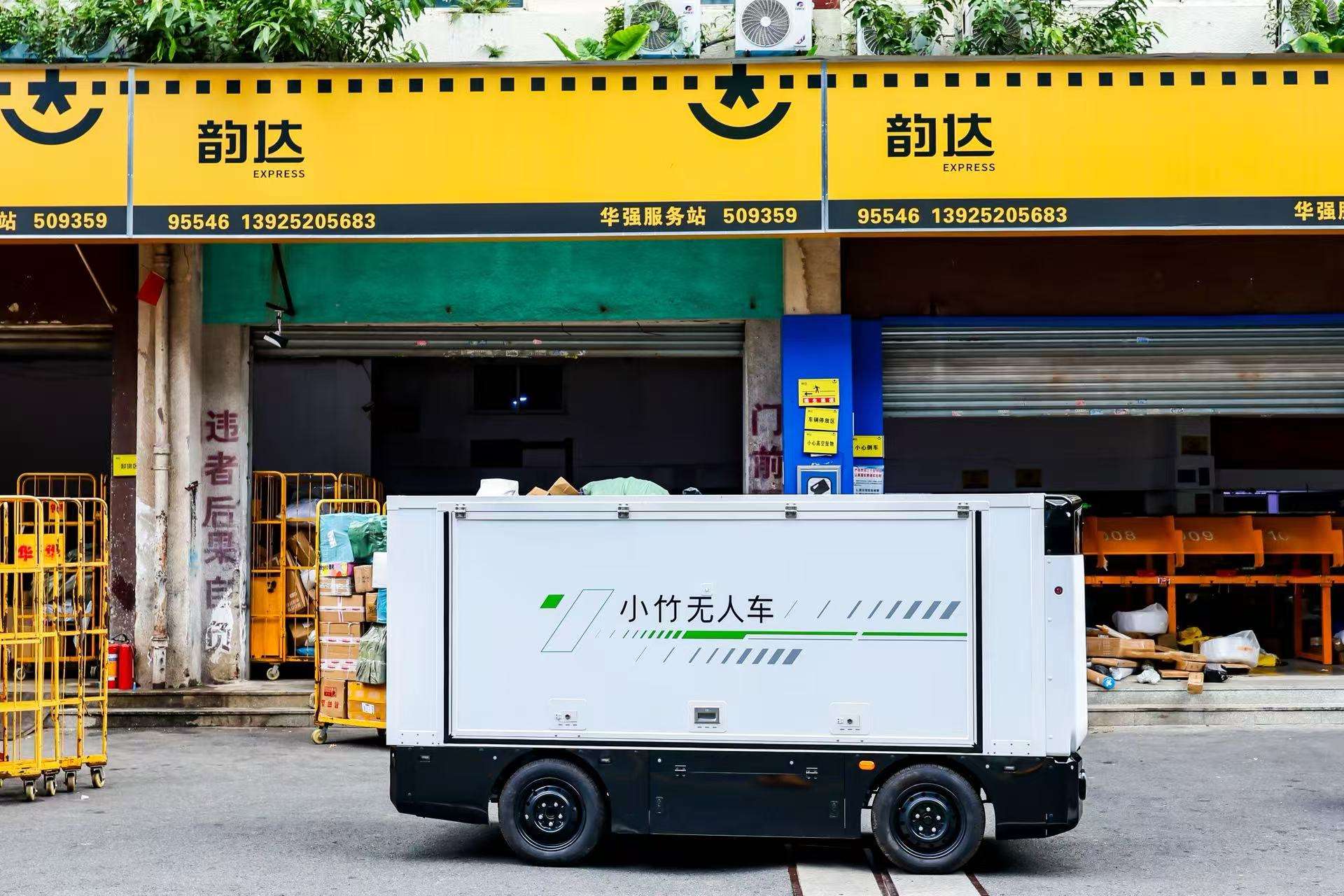
Group 1 - The Shenzhen Huaqiangbei area has launched a trial operation project for "AI + unmanned logistics vehicles," marking a significant step for Youjia Innovation in the smart logistics sector [1] - The project is guided by the Futian District Artificial Intelligence Industry Office and involves collaboration with Shenzhen Bus Group, which handles technical and vehicle scheduling [1][3] - The unmanned logistics vehicles will operate in key logistics parks, providing intelligent pickup and delivery services with a fixed schedule of three daily trips [1] Group 2 - The Xiaozhu unmanned vehicle is equipped with self-developed software algorithms, featuring three LiDAR sensors and eleven cameras, achieving L4-level autonomous driving [3] - The vehicle can carry 400-700 standard packages, supporting high-frequency logistics demands and multi-tasking delivery [3][4] - Youjia Innovation has received a "buy" rating from Western Securities, highlighting the company's unexpected performance in L4 new business [3][4] Group 3 - Youjia Innovation is recognized as a pioneer in the gradual development of intelligent driving in China, achieving breakthroughs in key areas such as ADAS, DMS, and OMS [4] - The company is expanding its smart cockpit business and has successfully assisted vehicle manufacturers in obtaining EU GSR certification [4] - The L4-level unmanned minibus business is expected to become a significant growth driver for the company, with commercial operations set to launch in Suzhou in Q1 2025 [4]

佑驾创新小竹无人车驶入华强北,开启智慧物流新实践
Ge Long Hui· 2025-10-27 03:01
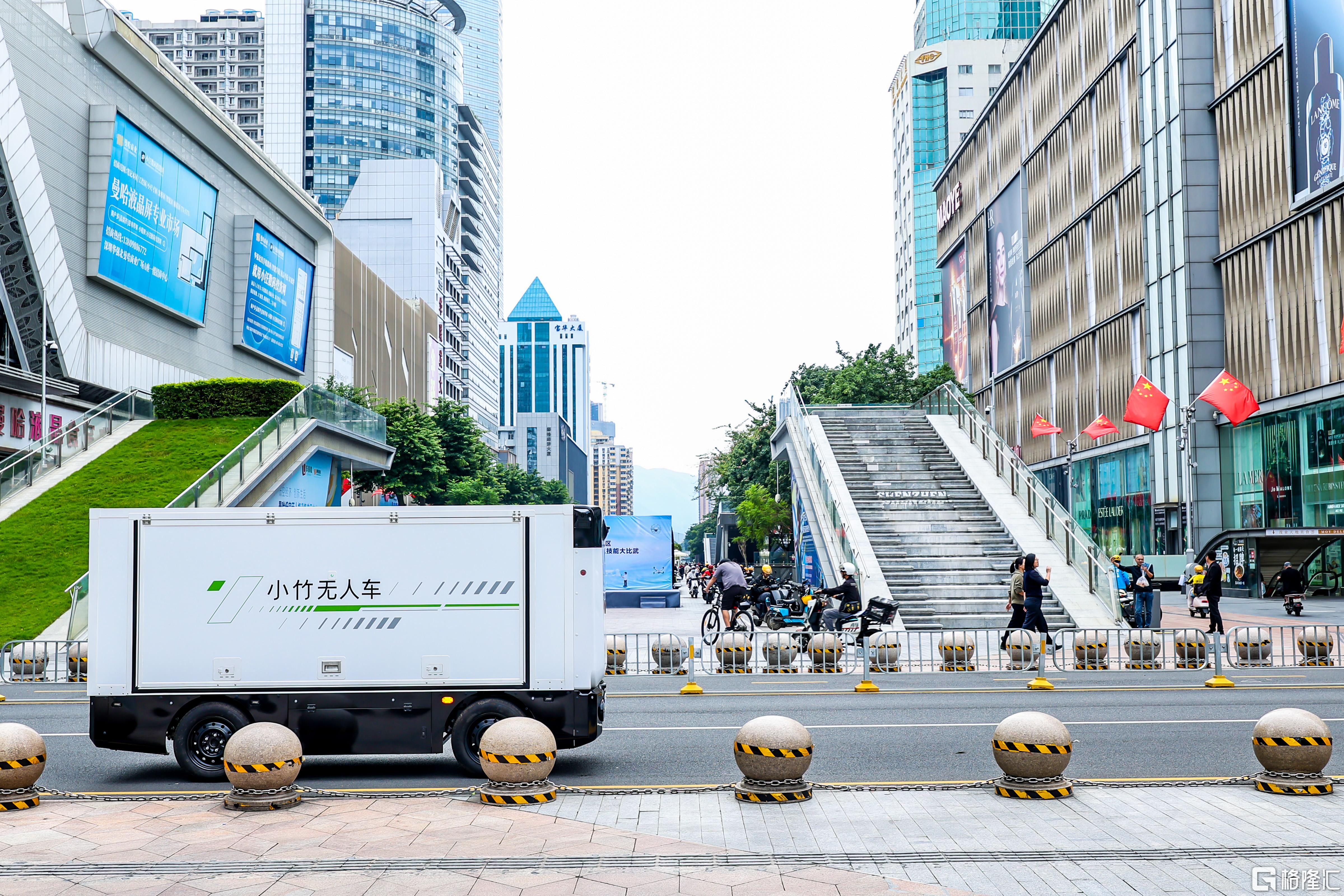
Core Insights - The introduction of "AI + unmanned logistics vehicles" in Shenzhen's Huaqiangbei marks a significant step for Youjia Innovation in the smart logistics sector, addressing the challenges of high logistics density and road congestion in a bustling commercial area that handles over 1.5 million packages daily [1][4]. Group 1: Project Overview - The project is a collaboration between the Futian District AI Industry Office and Shenzhen Bus Group, aimed at optimizing logistics operations in Huaqiangbei, which sees an annual shipment volume exceeding 1 billion packages and a total value surpassing 100 billion yuan [4]. - Youjia Innovation provides the unmanned driving technology, while Shenzhen Bus Group manages the technical and vehicle scheduling aspects of the project, with participation from logistics companies like Yunda and SF Express for scenario testing [4]. Group 2: Technology and Operations - The Xiaozhu unmanned vehicle operates on a fixed schedule with three daily trips, utilizing advanced perception and decision-making capabilities to navigate the complex traffic environment of Huaqiangbei [8]. - Equipped with proprietary software algorithms, three LiDAR sensors, and eleven cameras, the Xiaozhu vehicle can handle typical challenges such as vehicle merging, pedestrian interactions, and parking lot access [8]. - The vehicle's cargo space has been optimized to carry 400-700 standard packages, making it one of the largest in its class, and it supports multiple delivery tasks and reverse collection methods to meet the area's logistics demands [8]. Group 3: Future Prospects - The deployment of Xiaozhu unmanned vehicles signifies the integration of artificial intelligence into daily life, transitioning smart transportation from experimental phases to practical applications [9]. - Youjia Innovation aims to collaborate with government and logistics partners to expand unmanned vehicle technology from single logistics scenarios to comprehensive smart city services, enhancing urban logistics solutions through technological innovation [9].
无人环卫车在深规模化应用 已突破400辆,形成多元竞争格局
Shen Zhen Shang Bao· 2025-10-26 08:07
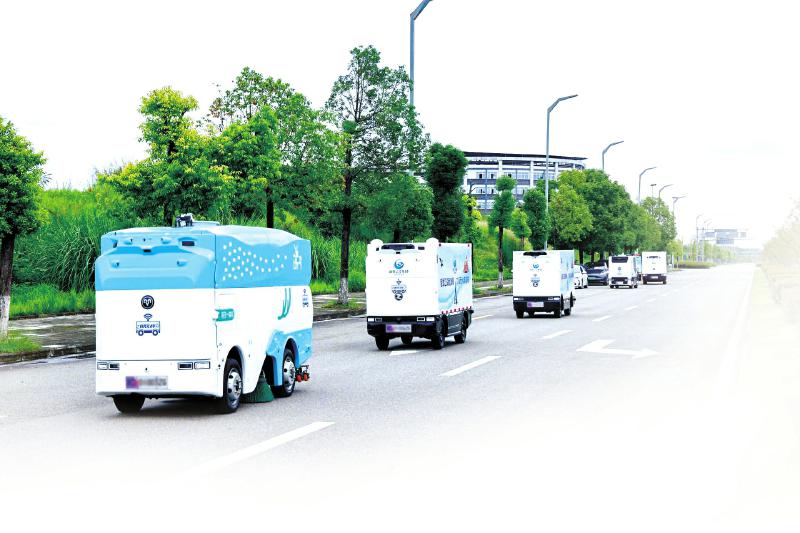
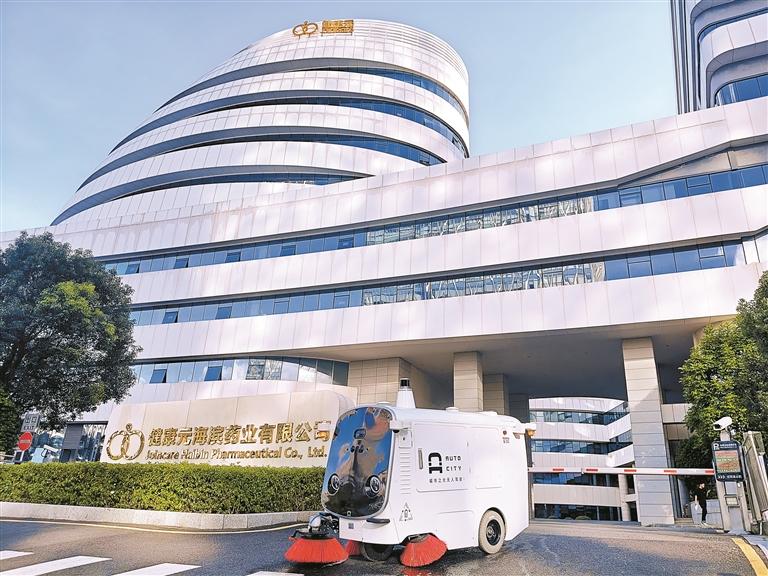
Core Insights - The article highlights the rapid development and commercialization of autonomous sanitation vehicles in Shenzhen, marking 2025 as a pivotal year for the industry [3][4][7] - The market for autonomous sanitation services in China is projected to reach 280 billion yuan by 2025, driven by technological advancements and diverse business models [5][6] Industry Overview - As of July 2025, the application scale of autonomous sanitation vehicles in Shenzhen has surpassed 400 units, transitioning from pilot demonstrations to large-scale applications [2][3] - The autonomous sanitation vehicle market is experiencing a growth rate exceeding 60% annually, addressing long-standing issues of high labor costs and low operational efficiency in the sanitation industry [7] Competitive Landscape - The market features a diverse competitive landscape, with traditional sanitation companies, new energy vehicle manufacturers, and technology firms all vying for market share [2][5] - Leading companies like Yingfeng Environment have introduced advanced systems that enhance operational efficiency by 300%, showcasing the integration of smart technologies in sanitation operations [3][6] Financial Metrics - In the first half of 2025, over 290 new projects in the autonomous driving sector were publicly announced, with a total value exceeding 6.9 billion yuan, of which sanitation projects accounted for over 5.5 billion yuan [4] - The operational costs of autonomous sanitation are estimated to be reduced by approximately 50% compared to traditional methods, with potential savings ranging from 15% to 78.57% depending on the operational model [6] Technological Advancements - Companies are focusing on developing L4-level autonomous driving algorithms and utilizing big data to optimize operations, with vehicles capable of cleaning areas exceeding 8,000 square meters [5][6] - The latest autonomous sanitation vehicles are equipped with features such as garbage recognition and edge cleaning, enhancing their operational capabilities [5] Challenges Ahead - Despite the promising outlook, the industry faces challenges related to the maturity of technology and the sustainability of business models, particularly in complex operational environments [7] - Companies that can establish stable cash flows and data-driven operational models are likely to demonstrate greater resilience in the market [7]

一笔融了43亿,北京跑出最火独角兽
投中网· 2025-10-26 07:04
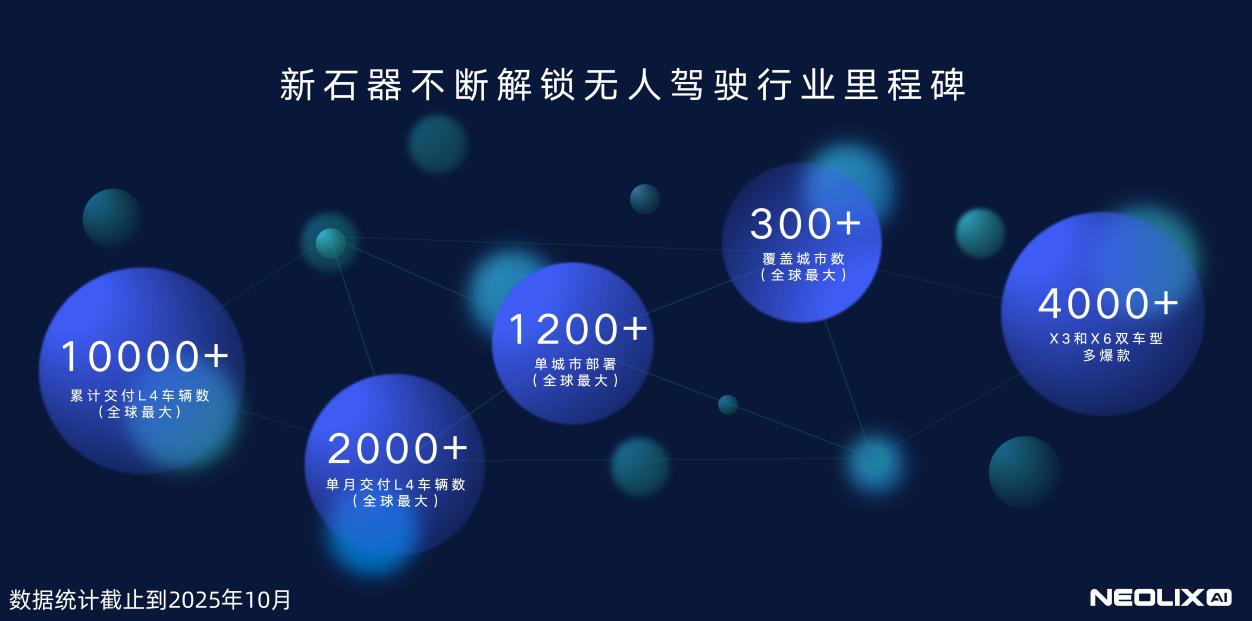
Core Viewpoint - New Stone Technology has completed over $600 million in Series D financing, marking it as the largest private equity financing in China's autonomous driving sector to date, with plans to expand into the UAE as a strategic market entry point [4][6]. Financing and Investment - The Series D round was led by UAE's Stone Venture, with participation from several prominent investors including Gaocheng Investment, Xincheng Capital, and others, indicating strong confidence in the company's growth potential [4][6]. - This financing round is significant as it positions New Stone Technology as a unicorn in the industry, following a previous $10 million C+ round earlier this year [6]. Technological Advancements - New Stone Technology has made key advancements in autonomous driving technology, particularly with its L4-level driverless technology, which has begun commercial delivery [6][10]. - The company has achieved a milestone of delivering over 10,000 L4 autonomous vehicles, becoming the first in the world to reach this number [9][10]. Market Position and Strategy - The company has deployed over 1,200 vehicles in Qingdao, making it the city with the highest number of autonomous vehicles globally [10]. - New Stone Technology aims to establish the UAE as a launchpad for further expansion into the Belt and Road Initiative and other regions [6][10]. Industry Context - The autonomous delivery vehicle market in China is projected to grow significantly, with an estimated industry value increase of 594.8 billion yuan [14]. - Major players in the industry include both startups like New Stone Technology and established companies such as Baidu and JD Logistics, which are actively investing in autonomous driving technology [14].

新石器拿到6亿美元融资,冲击10亿年营收
2 1 Shi Ji Jing Ji Bao Dao· 2025-10-25 04:05
Core Insights - New Stone Technology completed a $600 million Series D financing round, led by UAE's Leishi Capital, with participation from several other investment firms, marking a significant recognition of the company's growth and potential in the autonomous delivery vehicle sector [1][2]. Company Overview - Founded in 2018, New Stone Technology specializes in L4 level autonomous delivery solutions, initially facing challenges in gaining market recognition [1]. - The company has developed a strong competitive moat characterized by aggressive algorithm strategies, robust hardware-software integration capabilities, and a team with expertise in both AI and logistics [3][4]. Delivery and Market Expansion - As of September, New Stone Technology has delivered over 10,000 units, with a monthly delivery rate exceeding 2,000 units, aiming to reach 3,000 units per month [5][6]. - The surge in delivery volume is attributed to increasing market demand and the company's accumulated capabilities, with over half of current orders coming from industries outside of traditional express delivery, potentially rising to 70%-80% by 2026 [6]. Financial Performance - The company has achieved profitability, with continuous monthly profits reported from January to June, and expects to reach full profitability by 2026, projecting revenues of approximately 1 billion yuan by 2025 [8]. Future Plans and International Expansion - The newly acquired funds will be allocated towards product development and capacity expansion, with a goal of delivering 100,000 vehicles by 2026 [10]. - New Stone Technology is also expanding internationally, having obtained the first public road autonomous vehicle license in the UAE, with plans to deploy 5,000 vehicles in the region by the end of next year [10].
宁德时代与易控智驾签署战略协议聚焦电动无人矿山场景
Xin Lang Cai Jing· 2025-10-24 21:12
Core Insights - CATL and Easy Control Intelligent Driving Technology Co., Ltd. have signed a strategic cooperation agreement to focus on electric unmanned mining scenarios, marking a shift from technology validation to large-scale industrial development [1][2] - The collaboration aims to integrate power batteries, intelligent manufacturing, and autonomous driving, along with a "vehicle-road-cloud" system [1] Summary by Categories Collaboration Focus - Joint research on battery technology will utilize operational data from over 20 mines to develop next-generation specialized batteries suitable for extreme conditions [1] - The partnership aims to create a benchmark for unmanned transportation in open-pit mining, ensuring safety, efficiency, and replicability [1] Market Expansion - After validating various typical scenarios domestically, the companies plan to promote integrated "new energy + autonomous driving" solutions globally and contribute to establishing international green mining standards [1] Operational Goals - By September 2025, the partnership aims to operate over 2,000 electric unmanned mining trucks, achieving a cumulative operating mileage of over 65 million kilometers across various mining types [2]

小马智行(PONY.US)涨近8% 冲刺千辆车队目标并实现单车盈亏平衡
Zhi Tong Cai Jing· 2025-10-24 14:34
Core Viewpoint - Pony.ai has achieved a significant milestone by launching its 300th jointly manufactured ARCFOX Alpha T5 autonomous taxi, accelerating its progress towards large-scale deployment and commercialization [1] Group 1: Company Developments - The launch of the 300th ARCFOX Alpha T5 marks an important production milestone for Pony.ai, contributing to its goal of expanding its fleet to 1,000 vehicles by the end of the year [1] - The company is steadily producing and rolling out its seventh-generation Robotaxi fleet, aiming for single-vehicle economic breakeven [1] Group 2: Financial Activities - Pony.ai plans to go public in Hong Kong within two weeks, with a target to raise over $500 million [1]
美股异动 | 小马智行(PONY.US)涨近8% 冲刺千辆车队目标并实现单车盈亏平衡
Zhi Tong Cai Jing· 2025-10-24 14:20
Core Insights - Pony.ai (PONY.US) shares rose nearly 8% to $19.29 following the announcement of its 300th jointly manufactured ARCFOX Alpha T5 autonomous taxi, marking a significant production milestone that accelerates the company's path towards large-scale deployment and commercialization [1] Company Developments - The company is steadily producing and launching its seventh-generation Robotaxi fleet, aiming to expand its fleet to 1,000 vehicles by the end of the year and achieve economic breakeven on a per-vehicle basis [1] - Pony.ai plans to go public in Hong Kong within two weeks, with a fundraising target exceeding $500 million [1]
新石器公司宣布完成逾6亿美元D轮融资 拟加速规模化商业应用步伐
Zheng Quan Ri Bao Wang· 2025-10-24 07:27
Core Insights - Neolix, a provider of L4 autonomous delivery solutions, has completed a Series D funding round exceeding $600 million, marking the largest single private equity investment in the autonomous driving sector to date [1][2] - The funding will enhance Neolix's technological capabilities and market competitiveness in the autonomous delivery sector, accelerating the commercial application of autonomous vehicles to meet the growing demand in domestic and international markets [1][4] Funding Details - The funding round was led by Stone Venture and included participation from various investors such as Gaocheng Investment, Xincheng Capital, and several others, with existing shareholders also increasing their stakes [1] - Neolix's CEO highlighted the significance of this funding in the context of the current investment environment, suggesting it may be one of the largest cross-industry financings in the private equity space this year [1] Technological Advancements - Neolix has achieved several technological breakthroughs, including the introduction of a foundational model called "visual action" for freight, which utilizes only 13 sensors, making it the least sensor-dependent in the industry [2] - The company has launched the first pure L4-level solution without high-precision maps, reducing related costs by over 90% and addressing challenges in acquiring cross-border qualifications for high-precision maps [2] - Neolix has developed a comprehensive intelligent scheduling hub specifically for autonomous vehicles, optimizing dispatch without considering driver income, thus enhancing efficiency [2] Operational Milestones - In October, Neolix's L4 vehicles surpassed 50 million kilometers in driving distance, contributing valuable data for testing and operational optimization [3] - Since obtaining the first autonomous delivery license in 2021, Neolix has experienced exponential growth, achieving over 60% market share in cumulative shipments and over 70% in monthly new shipments [3] Market Outlook - The market for autonomous delivery vehicles is expected to experience exponential growth, with projections indicating a demand for over 100,000 units by 2027 in both domestic and international markets [4] - Major cities are anticipated to have thousands of autonomous delivery vehicles operating within three years, potentially leading to the establishment of an "intelligent logistics network" that enhances overall logistics efficiency [4]
48辆L4级无人车已在自贡累计行驶超20万公里 能送货 会巡逻 无人车驶进自贡城乡
Si Chuan Ri Bao· 2025-10-24 06:41
Core Insights - The article highlights the advancements in autonomous vehicle applications in Zigong, China, particularly focusing on logistics and urban governance, showcasing the city's ambition to fully integrate autonomous vehicles into various sectors [2][4]. Group 1: Autonomous Vehicle Deployment - Zigong has launched a new delivery channel using autonomous vehicles, allowing residents to receive packages directly in their villages, thus eliminating the need to travel to town for pickups [2][3]. - The city has issued special license plates for the first batch of 48 autonomous vehicles and has established 26 demonstration routes covering a total of 879 kilometers, connecting 237 points across various districts [2][3]. Group 2: Cost Efficiency and Service Expansion - The use of autonomous vehicles for delivery has proven to be cost-effective, with delivery costs reduced from approximately 0.2 yuan per package to 0.1 yuan, while also providing more stable delivery times [3]. - Autonomous vehicles are not only enhancing urban delivery efficiency but also addressing the logistics gap in rural areas, enabling the establishment of comprehensive service stations in villages [3]. Group 3: Safety and Regulatory Framework - Zigong has implemented a comprehensive management system for autonomous vehicles, including a city-level dynamic monitoring platform and specific safety standards for L4 autonomous vehicles [5][6]. - The regulations require all autonomous vehicles to have redundant systems and dual-mode control capabilities, ensuring safety through real-time monitoring by trained personnel [5][6]. Group 4: Industry Development and Investment - The establishment of the Jiushi Intelligent Technology Company in Zigong, with a total investment of 5 billion yuan, aims to fill the gap in the low-speed autonomous vehicle manufacturing sector in the region [7][8]. - The local government supports the project, which will include a full manufacturing line capable of producing 20,000 autonomous vehicles annually, positioning Zigong as a core hub for the autonomous driving industry [8].