休闲娱乐

Search documents
跨年消费多元化:宅家体验“微醺”,在洗浴中心“猫冬”
Nan Fang Du Shi Bao· 2025-12-31 07:55
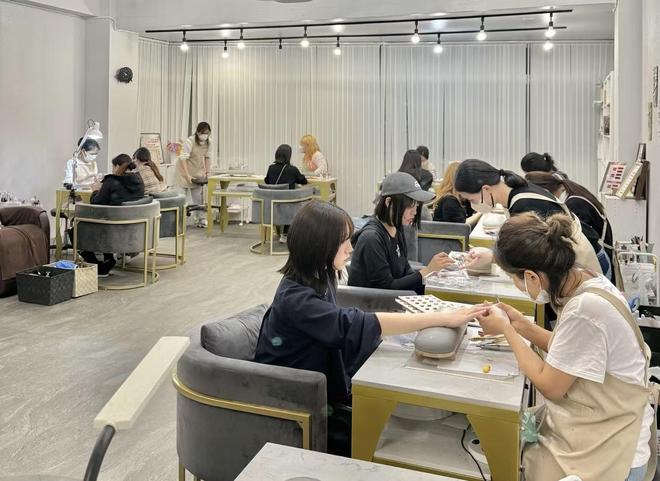
Core Insights - The New Year's consumption trend is shifting towards a more diversified and decentralized approach, with young consumers opting for home celebrations and experiences rather than traditional large gatherings [1][11] Group 1: Consumption Trends - Home-based celebrations are becoming popular among young consumers, with significant increases in sales of alcoholic beverages and digital products. For instance, craft beer and white wine sales have both seen over 100% year-on-year growth, while brandy sales surged by over 230%. Smartwatches and tablets also emerged as popular self-gifting items, with smartwatch sales increasing by 610% [3][5] - The search volume for unique and low-alcohol beverages has risen, indicating a shift in consumer preferences towards emotional value and participation rather than excessive drinking [5][11] Group 2: Service Consumption - Service consumption is trending towards collective relaxation, with significant increases in searches for beauty services such as haircuts, manicures, and eyelash extensions, which have doubled year-on-year. The popularity of KTV and bathing centers has also surged, with KTV transactions increasing by nearly 30% in the weeks leading up to New Year's [8][10][11] - The bathing industry is expected to experience significant growth by 2025, with a notable increase in transaction volumes during the winter season, particularly in cities like Harbin, where transaction growth exceeded 211% [10][11]

Dave & Buster's(PLAY) - 2026 Q3 - Earnings Call Transcript
2025-12-09 23:00
Financial Data and Key Metrics Changes - In Q3 2025, comparable store sales decreased by 4% year-over-year, with a notable improvement in the final month of October, where sales were down only approximately 1% [14][15] - Revenue for the third quarter was reported at $448 million, with a net loss of $42 million, translating to a loss of $1.22 per diluted share, and an adjusted EBITDA of $59 million, resulting in an adjusted EBITDA margin of 13% [15][16] - Operating cash flow for the quarter was $58 million, ending with $14 million in cash and $442 million in total liquidity [15][16] Business Line Data and Key Metrics Changes - The new food and beverage menu launched in October contributed to positive same-store sales, with October being the best month of the year for food sales [7][8] - The Eat & Play Combo promotion has seen a significant increase in guest attachment, now representing a double-digit percentage of guests since the beginning of the year [8][9] - The entertainment segment also showed improvement, with sequential growth noted throughout the quarter [33] Market Data and Key Metrics Changes - The company opened one domestic D&B store and three new domestic Main Event stores in Q3, bringing the total new store openings year-to-date to nine [17] - The company expects to open four more international franchise locations over the next six months, with agreements secured for over 35 additional stores in the coming years [17] Company Strategy and Development Direction - The company is focused on executing its Back-to-Basics plan, which includes enhancing marketing strategies, improving food and beverage offerings, and revamping game selections [4][5] - A new remodel program is underway, with three remodels under construction and plans for six new remodels in the next five months [11][18] - The leadership team has been strengthened with the addition of key executives, enhancing the company's capabilities for growth [12] Management's Comments on Operating Environment and Future Outlook - Management expressed confidence in the ability to improve operating results and drive value creation for guests and shareholders [5][14] - The company anticipates continued improvement in same-store sales and cash flow, positioning itself for sustained growth [44] Other Important Information - The company is committed to generating free cash flow while investing in new store growth and high ROI initiatives [16] - A comprehensive initiative to identify efficiencies across the business is underway, aimed at optimizing the cost structure [15] Q&A Session Summary Question: What marketing messages have resonated with consumers? - Management noted that smart value offers, rather than discounts, have been effective, with combo offers appealing to guests [20][21] Question: How are consumers spending in the Midway? - There has been an increase in both spending and time spent in the Midway, with positive trends observed [24][23] Question: Are refinements to the marketing media mix sufficient? - Management emphasized the importance of data-driven media planning and the need for investment in converting reach into real customers [26][27] Question: What are the learnings from the remodel prototype? - The company continues to see a positive impact from remodels, with a focus on capital investment that directly enhances guest experience [28][29] Question: How did the special events business perform in Q3? - Special events experienced mid-single-digit growth year-over-year, with expectations for continued growth in Q4 [40][41]

陆河县城弗利欧休闲娱乐室(个体工商户)成立 注册资本20万人民币
Sou Hu Cai Jing· 2025-12-09 10:13
Core Viewpoint - A new individual business named "Luhua County Freely Leisure and Entertainment Room" has been established, focusing on various entertainment and food-related services [1] Group 1: Company Overview - The legal representative of the newly established business is Peng Dongliu [1] - The registered capital of the business is 200,000 RMB [1] Group 2: Business Scope - The business operates in general projects including internet sales (excluding items requiring permits), manufacturing of specialized equipment for food, beverage, and tea production, and sales of agricultural products [1] - It also includes sales of pre-packaged health foods and food products, as well as cultural and entertainment brokerage services [1] Group 3: Licensed Activities - The business is authorized to conduct various licensed activities such as commercial performances, internet sales of food, food production, catering services, and small-scale food operations [1] - Additional licensed activities include the sale of alcoholic beverages, tobacco retail, bar services (excluding performance entertainment), electronic cigarette retail, and providing accommodation services for electronic sports entertainment [1]
在抖音,个体创业者正把“小梦想”做成大生意
Zhong Guo Shi Pin Wang· 2025-12-01 05:43
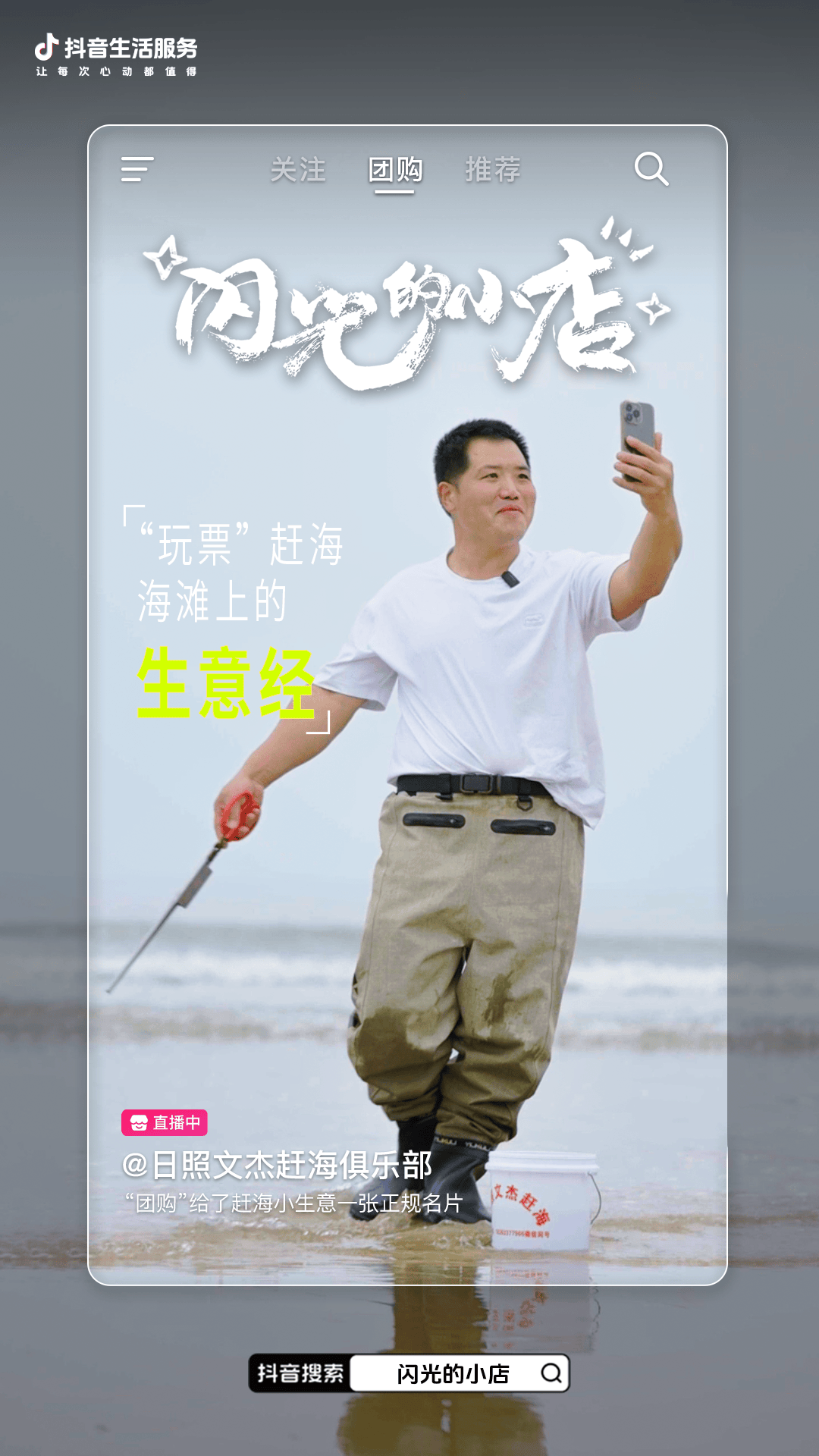
Core Insights - The article discusses how individual entrepreneurs are leveraging Douyin (TikTok) to transform their hobbies and skills into successful businesses, highlighting various success stories and strategies employed by different entrepreneurs [1][37]. Group 1: Individual Entrepreneurs' Success Stories - Wenjie from Rizhao turned his passion for beachcombing into a thriving business by utilizing Douyin to attract customers through engaging video content [5][7]. - Wei Wei, the owner of Daiwei Beauty in Yushan, transitioned from being an apprentice to a business owner, using Douyin to build her personal brand and connect with local customers, which significantly improved her shop's foot traffic [15][21]. - Lao Yu, who has run Yuji Whole Lamb Restaurant for over 20 years, faced challenges in maintaining business during off-seasons but found a solution through Douyin by creating engaging food videos that attracted new customers and revitalized his business [26][29]. Group 2: Strategies for Leveraging Douyin - Entrepreneurs are encouraged to analyze audience preferences and feedback on Douyin to refine their offerings and marketing strategies, ensuring they meet customer expectations [11][24]. - Building a personal brand and engaging with customers through relatable content can enhance trust and loyalty, leading to repeat business [21][24]. - Utilizing Douyin for content marketing allows businesses to showcase their unique selling points and differentiate themselves in a competitive market [29][35]. Group 3: The Role of Douyin in Entrepreneurship - Douyin serves as a powerful platform for individual entrepreneurs to gain visibility, connect with potential customers, and drive sales through creative content [1][37]. - The platform enables entrepreneurs to adapt to market changes and consumer preferences, fostering a dynamic business environment [35]. - The success stories of various entrepreneurs illustrate the potential of Douyin to transform small businesses into thriving enterprises, contributing to a vibrant economic ecosystem [1][37].


抖音生活服务《全运会数据报告》:十五运会相关视频播放量超26.5亿,广深消费增长逾120%
Zhong Guo Jing Ji Wang· 2025-11-26 11:27
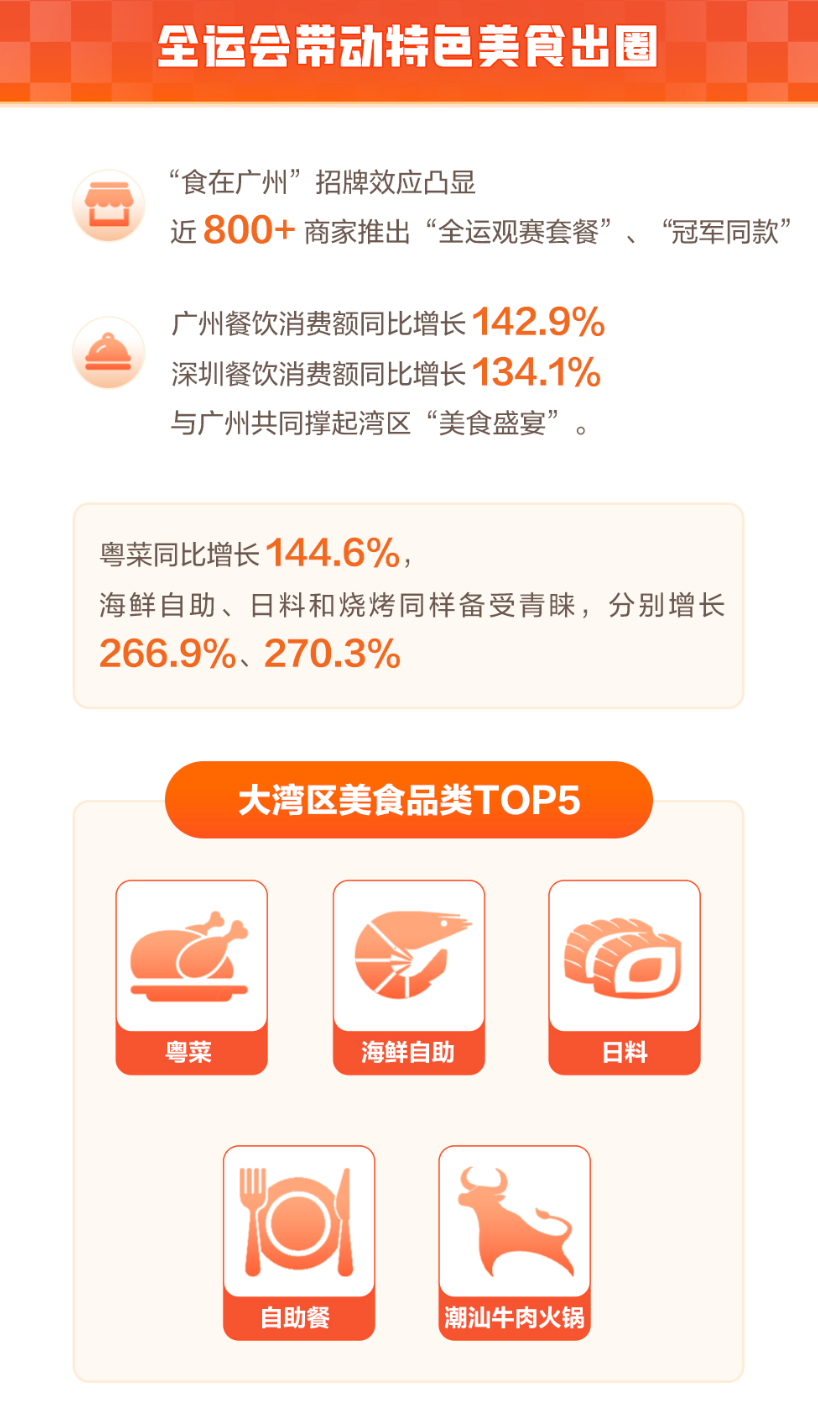
Core Insights - The 15th National Games significantly boosted consumption in the Guangdong-Hong Kong-Macao Greater Bay Area, with ticket sales evolving into comprehensive consumption, injecting new momentum into the market [12][13]. Group 1: Online to Offline Consumption - Online engagement surged, with "2025 National Games" videos exceeding 2.65 billion views, and related keyword searches increasing by 258.4% [2][14]. - Guangzhou's gross merchandise volume (GMV) rose by 136.5% year-on-year, while Shenzhen's increased by 128.4%, creating a complete consumption loop from online attraction to offline experience [2][14]. Group 2: Restaurant Sector Growth - The "Eat in Guangzhou" brand effect was amplified, with nearly 800 restaurants offering special "National Games viewing packages" and "champion-style" products, leading to a 142.9% increase in Guangzhou's restaurant consumption and a 134.1% increase in Shenzhen [3][16]. - Cantonese cuisine saw a remarkable growth of 144.6%, with seafood buffets, Japanese cuisine, and barbecues experiencing growth rates exceeding 260% [3][16]. Group 3: Small and Medium Enterprises (SMEs) Participation - The economic benefits of the National Games extended to SMEs, with their transaction volume in Guangzhou and Shenzhen increasing by 81.3% year-on-year [6][20]. - Local specialty shops became popular online destinations, leveraging platforms like Douyin to attract customers through live streaming and themed marketing [6][32]. Group 4: Integration of Viewing and Tourism - The combination of viewing and tourism activated cross-city consumption, with Guangzhou's accommodation spending rising by 114.5% and recreational spending by 134.2%, while Shenzhen's accommodation and recreational spending increased by 87.8% and 143.7%, respectively [8][22]. - Leisure and entertainment consumption also surged, with Guangzhou and Shenzhen seeing increases of 134.9% and 128.8%, respectively, in this sector [8][28]. Group 5: Platform Initiatives - The "Champion Greater Bay Area" initiative, in collaboration with sports stars and media resources, enhanced the economic impact of the event through city events and promotional activities [32]. - The initiative generated over 2 billion yuan in payments, reaching over 12 million users, with a daily order volume nearing 900,000 and an overall transaction growth exceeding 120% [33].
2025冬季消费趋势洞察报告-DT商业观察
Sou Hu Cai Jing· 2025-11-21 06:18
Core Insights - The 2025 winter consumption trends highlight a diversification and experiential focus, with key areas being ice and snow tourism, indoor leisure, and winter cuisine, driven by consumer demand for warmth, social interaction, and emotional value [1][2] Ice and Snow Tourism - Ice and snow tourism has become a core choice for winter travel, with nationwide ski visits increasing by 12.9% year-on-year, and the average number of ski trips per person reaching a new high [1][24] - Families with children represent 54% of the GMV at ski resorts, with a significant increase in participation from the post-2000 generation [1][24] - The trend of "southerners heading north" is emerging, with tourists from southern cities like Wuhan, Shanghai, and Chongqing becoming a new force in skiing [1][24] - The "one-stop ski + eat, stay, play" model is boosting surrounding consumption, with searches for ice and snow hotels increasing by 172% and orders for guesthouses and homestays rising by 97% [1][41] Indoor Leisure - The "refined cat winter" trend is evident, with consumers shifting from staying at home to going out for leisure, leading to a 63% increase in leisure entertainment searches and a 393% surge in GMV [2] - Bathing centers are transforming into comprehensive leisure spaces, with search volume and GMV increasing by 36% and 64% respectively, becoming popular gathering spots for the 18-23 age group [2] Winter Cuisine - Winter food consumption is on the rise, with hot pot becoming the main dish, seeing a 21% increase in search volume and a 50% increase in GMV, with regional flavors like Sichuan hot pot leading the way [2] - There is a notable increase in demand for traditional winter foods, with searches for cherries and roasted sweet potatoes skyrocketing, and ice cream experiencing a 71% year-on-year increase in orders [2][19] Overall Trends - The overall winter consumption in 2025 revolves around three core themes: warmth, social interaction, and healing, with an emphasis on enriching consumption scenarios and emotional value driving consumer decisions [2]

Topgolf Callaway Brands (MODG) - 2025 Q3 - Earnings Call Transcript
2025-11-06 23:00
Financial Data and Key Metrics Changes - Consolidated revenues for Q3 2025 were $934 million, a 3% increase year-over-year, driven by growth in both Topgolf and golf equipment segments [19][20] - Q3 adjusted EBITDA was $115 million, a decrease of $4 million year-over-year, primarily due to $12 million in incremental tariffs [19][20] - The company raised its full-year 2025 revenue guidance to a range of $3.90 to $3.94 billion, up $60 million at the midpoint [22][23] Business Line Data and Key Metrics Changes - Golf equipment revenue increased 4% year-over-year to $305 million, with a 4% increase in golf clubs and a 6% increase in golf balls [20] - Topgolf revenue increased 4% year-over-year to $472 million, driven by the addition of six new venues and a 1% increase in same-venue sales [20] - Active lifestyle segment revenue was approximately flat at $156 million, with operating income down due to tariffs [10][20] Market Data and Key Metrics Changes - The US golf market is up 2% year-to-date, with mid-single-digit growth in sell-through reports [5][6] - Rounds played are up 1.4% year-to-date, indicating strong participation in the sport [6] - Market conditions in Europe and the UK are positive, while Japan and Korea are experiencing declines [6] Company Strategy and Development Direction - The company is focused on delivering "demonstrably superior and pleasingly different" products to enhance pricing power and market share [8][11] - Continued emphasis on value initiatives at Topgolf, including promotions like Sunday Funday and half-off golf, has driven traffic growth [12][13] - The company is committed to the separation of Topgolf and is actively evaluating strategic alternatives [18][40] Management's Comments on Operating Environment and Future Outlook - Management expressed confidence in the strategic direction and raised full-year guidance based on strong Q3 performance and positive trends observed in October [4][18] - The company anticipates challenges from ongoing tariffs but is implementing cost management initiatives to mitigate impacts [11][23] - Management noted that consumer engagement in golf remains strong, with positive trends in both participation and sell-through [33][37] Other Important Information - The company experienced an incremental tariff expense of $12 million in Q3, with a forecast of approximately $40 million for the full year [10][20] - The company implemented a reduction in force of about 300 positions as part of cost management efforts [11] - New venues for Topgolf continue to open successfully, with four new venues planned for the year [17] Q&A Session Summary Question: Pricing power on golf equipment given strong demand - Management indicated that pricing power is dependent on product differentiation and will consider strategic pricing adjustments to mitigate tariff impacts [28][29] Question: Trends in Topgolf visitation and food and beverage sales - Management reported strong traffic growth and positive trends in food and beverage sales, driven by new offerings and increased visitation [30][31] Question: Sell-through trends and consumer behavior changes - Management noted strong sell-through trends, with higher engagement from consumers and a positive outlook for the upcoming product launches [32][33] Question: Visibility on corporate event bookings for Q4 - Management confirmed reasonable visibility on corporate event bookings, with over half booked 30 days out [44] Question: Update on CEO search and its impact on separation timing - Management stated that the CEO search is ongoing, and while timing for separation is uncertain, the existing team is performing well [48][49]

Bowlero (BOWL) - 2026 Q1 - Earnings Call Presentation
2025-11-04 22:00
Business Overview - Lucky Strike operates 369 locations as of November 2025, well-positioned in attractive North American markets and expanding into Family Entertainment Centers (FECs) through the acquisition of Boomers[24] - The company's diversified portfolio includes bowling (46%), food & beverage (35%), and amusement & other (19%) revenue streams in FY25, mitigating seasonality and consumer discretionary spending risks[26] Financial Performance - Total Revenue increased by 4% from $1,154,614 thousand in FY24 to $1,201,333 thousand in FY25[55] - Same Store Revenue decreased by 3.7% from $1,029,251 thousand in FY24 to $990,678 thousand in FY25[55] - Adjusted EBITDA increased from $361,497 thousand in FY24 to $367,687 thousand in FY25, with margins of 31.3% and 30.6% respectively[59] - Adjusted Location EBITDA margin was 36% in Q1 FY25, 42% in Q2 FY25, 44% in Q3 FY25, and 40% in Q4 FY25[57] Strategic Initiatives - The company sold 260,000 summer passes in 2025, with members visiting 9 times per pass, driving loyalty and year-round revenue[18] - Lucky Strike plans to rebrand nearly 100 locations by the end of the year and complete the rebrand by the end of 2026[33] Acquisitions and Value Creation - Lucky Strike acquired AMF for $310 million in 2013, with Lucky Strike contributing $20 million of equity, resulting in an estimated value creation of $1.3-$1.5 billion[20] - The company acquired Brunswick locations in 2014 for $260 million and immediately entered into a Sale-Leaseback Transaction reducing purchase price to $60 million[20, 21] - The company deployed $700 million of capital into acquisitions in the past three years[21]

“巴伐利亚回响”歌剧节启幕 周边商圈餐饮业两位数增长
Jie Fang Ri Bao· 2025-10-03 02:21
Core Insights - The Shanghai Grand Theatre has seen significant growth in the surrounding dining and entertainment sectors during the National Day holiday, with restaurant sales increasing by 15.9% year-on-year and 19.5% month-on-month, while leisure and entertainment sectors grew by 13.3% year-on-year and 17.1% month-on-month [1] Group 1: Performance and Attendance - The premiere of Wagner's "The Flying Dutchman" at the Shanghai Grand Theatre was a sold-out event, with an average ticket sales rate exceeding 90% across six performances during the holiday [1] - Many attendees traveled from cities like Beijing and Changsha, and some even flew in from abroad specifically to attend the performances [1] Group 2: Artistic Presentation - The Bavarian State Opera's production of "The Flying Dutchman" features a modern interpretation that contrasts historical and contemporary elements, with the first act resembling a dark Rembrandt painting and the second act set in a modern gym [3][4] - The production is directed by Peter Konwitschny and has been a milestone in Wagner's staging since its premiere in Munich over 20 years ago [2] Group 3: Technical Aspects - The stage setup for the production involved seven shipping containers and 70 hours of continuous work by 35 staff members, achieving scene changes in as little as 1 minute and 20 seconds [4] - The visual effects, including the use of gauze and lighting to create an oil painting texture, enhance the audience's experience of the performance [4]
“苏超”常规赛收官,江苏4个月抖音团购消费额同比涨66%
Yang Zi Wan Bao Wang· 2025-09-30 12:22
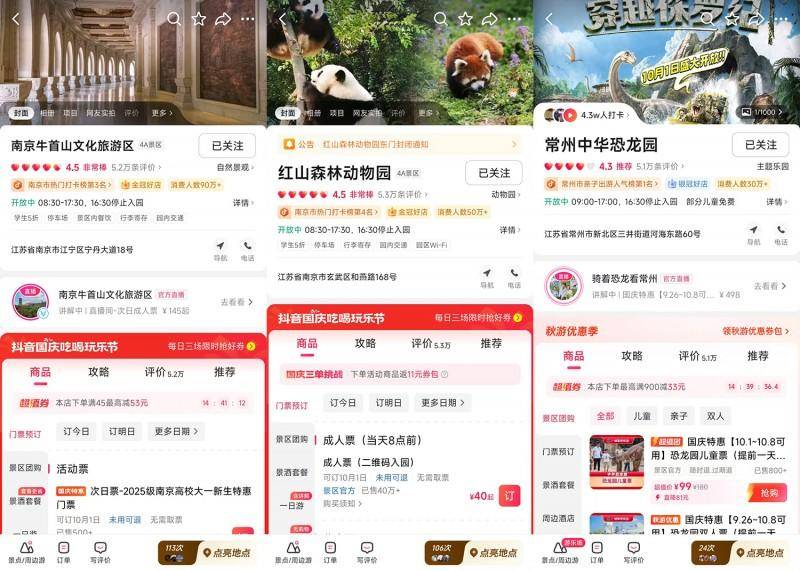
Core Insights - The "Su Super" league has significantly boosted local consumption in Jiangsu Province, with a notable increase in offline consumer enthusiasm during the tournament period [1][3][5] Group 1: Tournament Impact - Eight teams advanced to the quarter-finals of the "Su Super" league, generating excitement and engagement among local fans [1] - The league has led to a 23% year-on-year increase in Douyin group purchase orders and a 66% increase in sales from May 10 to September 15 [1] - Cities like Wuxi, Changzhou, and Suqian have seen particularly strong growth in group purchase consumption [1] Group 2: Tourism and Hospitality - Hotel accommodation orders in Jiangsu Province increased by 55% on Douyin during the same period, driven by visitors traveling to watch the matches [3] - Popular tourist attractions such as Nanjing Niushoushan Cultural Tourism Area and Changzhou China Dinosaur Park have gained significant attention [3] - Various promotional activities, including free entry on match weekends and special tickets, have been implemented to attract tourists [3] Group 3: Food and Beverage Sector - The tournament has also highlighted local culinary offerings, with a 49% increase in Douyin group purchase orders for Jiangsu's intangible cultural heritage cuisine and a 209% increase in sales [3] - Influencers and local personalities have promoted regional dishes, further enhancing the visibility of Jiangsu's food culture [3][5] Group 4: Entertainment and Leisure - There has been a 40% increase in Douyin group purchase orders for leisure and entertainment services, with sales rising by 122% [5] - The demand for sportswear has surged, with a 113% increase in orders and a 155% increase in sales for sports and leisure apparel [5]