健身服务

Search documents
乐刻私教,卷成“网约车司机”
盐财经· 2025-06-12 09:40
Core Viewpoint - The article discusses the shift in the personal training market driven by budget gyms like LeKe, which offer significantly lower prices for personal training sessions, impacting traditional gyms and trainers' earnings [3][5][6]. Group 1: Market Dynamics - Traditional gyms charge an average of 400-500 RMB per session for personal training, while LeKe offers sessions at an average price of 177 RMB, attracting more customers [3][6][9]. - The pricing strategy of LeKe disrupts the traditional pricing model, making personal training more accessible to a broader audience [9][10]. - The low-price trend has led to a reduction in commissions for trainers, who now earn less due to the shift from high-price, low-volume to low-price, high-volume sales [4][32]. Group 2: Trainer Experience - Trainers at LeKe experience a significant decrease in income compared to traditional gyms, with some reporting earnings cut by half [20][23]. - The role of trainers has shifted from being salespeople to service providers, with less pressure to sell but also lower base salaries and no benefits [15][25]. - New trainers face challenges in gaining visibility on the platform due to algorithmic prioritization, making it difficult to attract clients without established reputations [27][34]. Group 3: Business Model and Profitability - LeKe's business model focuses on a "thin profit, high sales" approach, where the platform handles marketing and trainers must enhance their skills to attract clients [32][33]. - The company is exploring additional profit segments, such as the FEELINGME brand, which offers a subscription model for personal training, further diversifying its offerings [40][41]. - Despite the low pricing strategy attracting more customers, the sustainability of trainer earnings remains a concern, as the model may lead to a decline in service quality [45][52]. Group 4: Market Potential - The current penetration rate of gym memberships in China is only 3.2%, indicating significant growth potential for the fitness industry [53]. - The article suggests that while lowering prices can attract more customers, there are limits to how much trainers can work, highlighting the need for a balanced approach to pricing and trainer compensation [54][56].


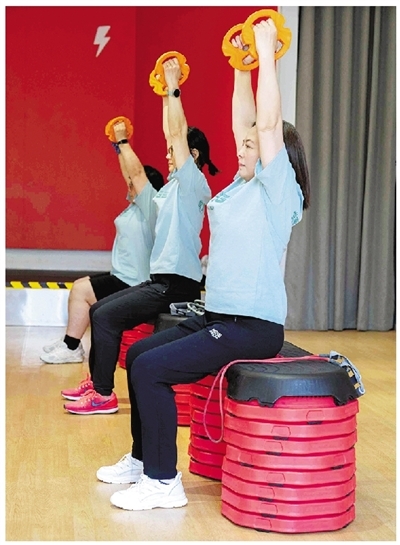
唤醒“初老族”健康管理意识——“50+健身新兵”组团“撸铁”
Hang Zhou Ri Bao· 2025-05-15 02:18
Core Insights - The article discusses a fitness initiative in Hangzhou aimed at the "50+" demographic, focusing on tailored exercise programs to promote health and wellness among older adults [3][4]. Group 1: Program Overview - The "You Live Younger Plan" launched by Xixi Street in collaboration with LeKe Sports offers customized fitness courses for individuals aged 50 and above, addressing issues like muscle loss and joint injuries [3][4]. - The program incorporates three main goals: preventing osteoporosis, alleviating joint pain, and enhancing cardiovascular health through strength, balance, and endurance training [3][4]. Group 2: Participant Experience - Initial participants showed high responsiveness and completion rates during their first training session, indicating a positive reception to the program [4]. - Participants had prior physical activity habits, such as hiking and brisk walking, but lacked professional guidance, which led to injuries; the program aims to correct this through proper training techniques [4]. Group 3: Demographic Context - Xixi Street's initiative is part of a broader effort to address the aging population in Xihu District, which has an aging rate of 20.11% and is expected to rise [4]. - The project aims to shift the perception of older adults from merely "aging" to "enjoying life," focusing on health management for those in the early stages of aging [4]. Group 4: Market Development - The initiative promotes a "government platform, market service" model, encouraging businesses to develop products for the elderly, thus opening new avenues in the silver economy [5]. - In addition to in-person classes, an online program called "Silver Age Revitalization" is available, allowing seniors to follow AI-guided workouts tailored to their individual health profiles [5].
新消费快讯|PIAGET伯爵官宣全智贤为全球品牌大使;李子园推出AD钙奶
新消费智库· 2025-04-28 12:30
这是新消费智库第 2 6 2 4 期文章 新消费导读 1. 甘源推出两种全新风味坚果 新消费 1. 甘源推出两种全新风味坚果 近日, J immy Choo 与 Malbon 再度推出高尔夫联名限定系列,最新系列巧妙融合 Malbon 在高尔夫休闲服饰领域的经典美学与 J immy Choo 标志性的奢华格调,并在第一代成功合作基础上全新升级 。 ( TOPBRAND ) 2. DQ 推出 0 蔗糖减脂酸奶冰淇淋碗 3. J immy Choo 联手 Malbon 发布高尔夫联名系列 4. HOKA CLIFTON 10 跑鞋正式发布 5. 李子园推出 AD 钙奶 6. 中粮包装今日正式从港交所退市 7. Happy Howl 获得种子轮融资 8. 百合股份拟收购新西兰 Ora 56% 股权 9. 女性健康品牌 Moom Health 获融资 10. Argand Partner s 收购舞蹈服饰品牌 Capez io 母公司 11. BOSS 官宣崔胜哲为全球品牌代言人 12. 24 小时无人健身空间 The Gym Pod 登陆香港 13. 紫燕食品在长沙成立新餐饮公司 14. Blue Bottle C ...
周均健身3.3次,男性爱练胸,女性要练腹|2025年轻人健身报告
36氪· 2025-03-28 10:17
Core Insights - The article discusses the evolving fitness habits among young people, highlighting that fitness has become a popular lifestyle choice and a common topic of conversation among the youth [4][6][71] - A survey conducted by "后浪研究所" reveals diverse motivations for fitness, including health, stress relief, and personal satisfaction, rather than solely aesthetic goals [20][71] Group 1: Demographics and Participation - The survey included a diverse demographic, with 46.2% male and 53.8% female participants, predominantly from the post-90s and post-95s generations [7][8] - Young people engage in fitness an average of 3.3 times per week, with each session lasting approximately 1.3 hours, indicating a strong commitment to fitness as part of their lifestyle [8][10] Group 2: Fitness Preferences and Goals - The survey indicates that fitness goals vary significantly between genders, with men focusing on muscle gain and women prioritizing core strength and overall health [21][30] - The preferred fitness activities show a gender divide, with men favoring weight training and women leaning towards group classes and personal training [23][24] Group 3: Spending and Consumption Trends - On average, women spend 996.3 yuan monthly on fitness, which is over 200 yuan more than men, reflecting a trend of higher investment in fitness among female participants [41][42] - A significant majority (74.1%) of respondents prefer budget-friendly alternatives to high-end fitness products, indicating a shift towards practical spending in fitness [45][46] Group 4: Attitudes Towards Fitness - The article emphasizes that fitness is increasingly viewed as a means of self-improvement and personal enjoyment rather than a chore, with many young people seeking a balance between fitness and other life aspects [71][72] - The survey results suggest that young individuals are moving away from traditional fitness norms, focusing instead on personal satisfaction and well-being [20][71]