
新一代信息技术产业

Search documents
广东技工教育:以专业革新助力制造强省“硬核”人才矩阵
Nan Fang Du Shi Bao· 2025-05-27 00:59
Core Insights - Guangdong Province has launched a new service platform aimed at enhancing high-quality professional settings to promote skill-based employment, integrating data from over 2500 vocational schools across the province [1] - The vocational education system in Guangdong is structured around a dual-track professional framework that aligns with 15 major professional categories and focuses on strategic industry clusters [3] Group 1: Professional Structure and Industry Alignment - The dual-track professional structure combines national standards with provincial characteristics, facilitating the development of a professional system that resonates with 20 strategic industry clusters [3] - The vocational schools in Guangdong are strategically distributed, with the Pearl River Delta region focusing on cutting-edge fields such as intelligent connected vehicles and industrial robotics, while other regions develop specialized professional systems [3] Group 2: Dynamic Optimization and Professional Iteration - Guangdong's vocational education has introduced new programs in areas like chip design and intelligent robotics, while phasing out 11 outdated programs that no longer meet market demands [5] - Enrollment in intelligent manufacturing, new generation information technology, and artificial intelligence programs has shown consistent growth, with an average annual growth rate of 5.8%, 0.5%, and 12.69% respectively [5] Group 3: World Skills Competition Integration - Guangdong has transformed its vocational education by integrating achievements from the World Skills Competition, with 21 out of 26 related programs being offered in schools, achieving an 80.77% opening rate [7] - The province has established a feedback mechanism where World Skills champions contribute to curriculum development, enhancing the quality of education [7] Group 4: Talent Development and Industry Collaboration - The total enrollment in Guangdong's vocational schools exceeds 660,000, with a balanced structure of intermediate and advanced level students, indicating a robust talent pipeline [10] - Partnerships with leading companies like Huawei and BYD have resulted in the establishment of 170 industry-education integration projects, ensuring that students are well-prepared for the demands of the job market [10] Group 5: Future Directions - Guangdong's vocational education aims to deepen the integration of professional settings, industries, and careers, enhancing the precision of talent supply to meet the evolving needs of the manufacturing sector [11]
4月全省经济延续稳中向好态势 主要指标增速均高于全国平均水平
He Nan Ri Bao· 2025-05-24 23:26
Economic Overview - The province's economy continued to show a stable and positive development trend in April, with industrial growth remaining robust and investment and consumption growth accelerating, with key indicators surpassing the national average [4] Industrial Growth - In April, the province's industrial added value above designated size increased by 8.0% year-on-year, exceeding the national average by 1.9 percentage points [1] - The automotive and parts industry and the electronic information industry saw year-on-year added value growth of 17.3% and 13.0%, contributing 10.7% and 9.9% to the province's industrial growth, respectively [1] - The electrical machinery and equipment manufacturing industry experienced a year-on-year added value growth of 23.0%, accelerating by 0.7 percentage points compared to March, outpacing the province's industrial growth by 15 percentage points [1] - From January to April, the province's industrial added value increased by 8.6% year-on-year, higher than the national average by 2.2 percentage points [1] Investment Trends - From January to April, fixed asset investment in the province grew by 6.4% year-on-year, accelerating by 1 percentage point compared to the first quarter and surpassing the national average by 2.4 percentage points [2] - Investment in projects above 100 million yuan increased by 10.6% year-on-year, contributing 6.7 percentage points to the overall investment growth [2] - Industrial investment surged by 26.6% year-on-year, accelerating by 4.7 percentage points compared to the first quarter, significantly exceeding the national average by 14.9 percentage points [2] - Equipment and tool purchase investment rose by 54.2% year-on-year, accelerating by 7.9 percentage points compared to the first quarter [2] - Private investment increased by 9.7% year-on-year, slightly accelerating compared to the first quarter and surpassing the national average [2] Consumption Growth - In April, the total retail sales of consumer goods reached 206.739 billion yuan, with a year-on-year growth of 8.1%, accelerating by 0.7 percentage points compared to March and exceeding the national average by 3 percentage points [3] - The retail sales of computers and related products, wearable smart devices, household appliances, and audio-visual equipment saw significant year-on-year growth of 140.4%, 110.0%, 42.6%, respectively, contributing 3.1 percentage points to the overall retail sales growth [3] - From January to April, the total retail sales of consumer goods amounted to 946.793 billion yuan, with a year-on-year growth of 7.2%, slightly accelerating compared to the first quarter and exceeding the national average by 2.5 percentage points [3] Emerging Industries - In April, the added value of high-tech manufacturing above designated size increased by 13.5% year-on-year, with the new energy vehicle industry and the next-generation information technology industry growing by 14.5% and 11.5%, respectively, outpacing the overall industrial growth rate [3] - High-tech manufacturing investment from January to April grew by 24.6% year-on-year, accelerating by 7.9 percentage points compared to the first quarter [3] - The proportion of new energy power generation in the total industrial power generation reached 23.5%, increasing by 1.7 percentage points compared to the first quarter and 6.1 percentage points compared to the full year of 2024 [3]
拔节生长见未来——民营企业加快技术突破和转型升级
Jing Ji Ri Bao· 2025-05-11 21:52
Core Insights - The private sector is increasingly focusing on technological breakthroughs, industrial innovation, and green transformation, as evidenced by the establishment of 94,000 new private enterprises in the new generation information technology industry and 254,000 in AI software development in Q1 [1][2]. Group 1: Industry Trends - Private enterprises are accelerating their development towards high-end, intelligent, and green industries, with industrial investment maintaining double-digit growth [2][4]. - The emergence of new industries is highlighted by the successful development of a 5 million pixel infrared detector by GaoDe Infrared, breaking foreign technology monopolies and filling domestic technological gaps [2][6]. - The establishment of 836,000 new "four new" economic private enterprises in Q1 indicates a strong trend towards innovation and new business models [5]. Group 2: Technological Innovation - Continuous technological innovation is crucial for private enterprises to transition from followers to leaders in their respective fields [2][6]. - The development of the Huazhong 10 intelligent CNC system demonstrates advancements in smart manufacturing, enhancing production efficiency through AI integration [3][6]. - The flexibility of private enterprises allows for rapid adjustments in production strategies and innovation applications, which is essential for maintaining competitiveness [6][9]. Group 3: Green Development - The integration of green technologies is becoming a significant opportunity for enterprises, as seen in the 550MW fish-solar complementary project by ZhengTai Group, which promotes ecological upgrades [3][4]. - The commitment to green transformation is reflected in ZhengTai Group's 2030 sustainable development strategy, emphasizing the importance of green practices across all operational processes [6][8]. Group 4: Challenges and Opportunities - Private enterprises face challenges such as funding constraints and talent shortages, which can hinder their ability to innovate and transform [8][9]. - The government is encouraged to provide support through policies that facilitate innovation and reduce financial burdens on technology-driven SMEs [9].
北京一季度新增赋码量同比增长超两成
Zhong Guo Zhi Liang Xin Wen Wang· 2025-05-07 07:44
Group 1 - In the first quarter of this year, Beijing saw a total of 74,600 new entities assigned a unified social credit code, representing a year-on-year growth of 22.43% [1] - The number of entities in strategic emerging industries reached 38,200, marking a year-on-year increase of 39.55% [2] - The new generation information technology sector experienced a remarkable growth of over 200% in assigned codes, driven primarily by advancements in artificial intelligence [2] Group 2 - The cultural and related industries saw a year-on-year growth of 25.9% in assigned codes, with the news information service sector growing nearly 150% [3] - The digital economy and its core industries experienced a significant year-on-year growth of 91.3%, with digital technology applications growing by 168.64% [4] - The private economy's assigned codes increased by 24.1%, with private enterprises and individual businesses growing by 22.98% and 30.13%, respectively [5] Group 3 - The Plain New Town area (including Shunyi, Daxing, Changping, Fangshan, and Yizhuang) showed the highest growth in assigned codes, with an increase of 87.67% in strategic emerging industries [2] - The Fengtai District, Changping District, and Daxing District exhibited outstanding performance, with year-on-year growth rates of 290.8%, 284.65%, and 198.36% in the digital economy, respectively [4] - Overall, the rapid development of strategic emerging industries and cultural industries is injecting strong momentum into the high-quality economic development of the capital [5]
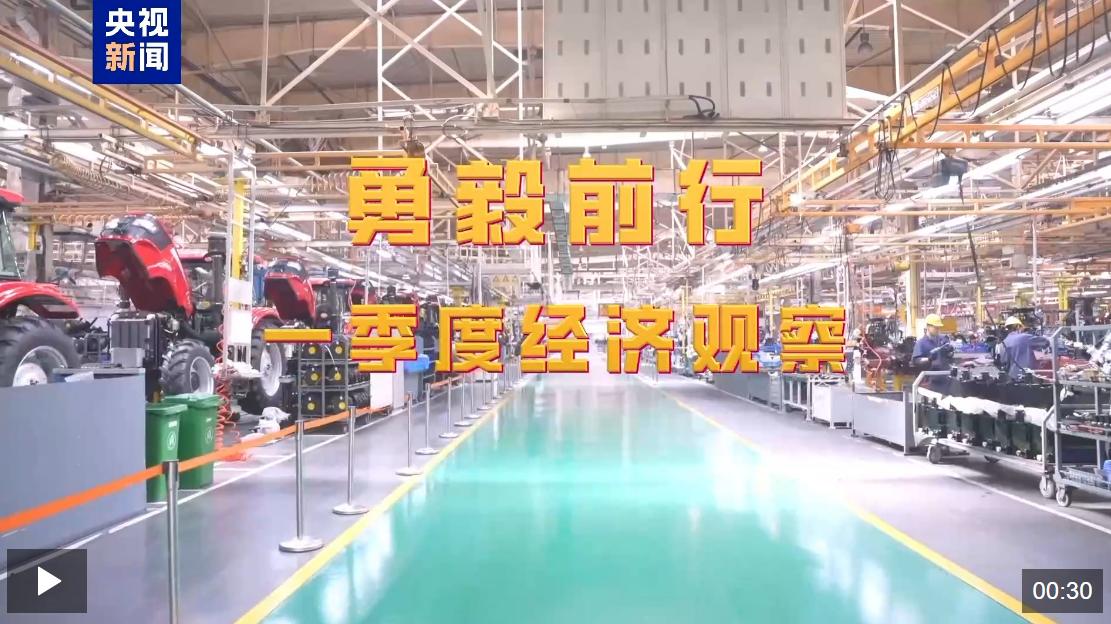
勇毅前行·一季度经济观察丨就业数据看经济 高质量发展向新向好
Yang Shi Xin Wen Ke Hu Duan· 2025-05-01 07:06
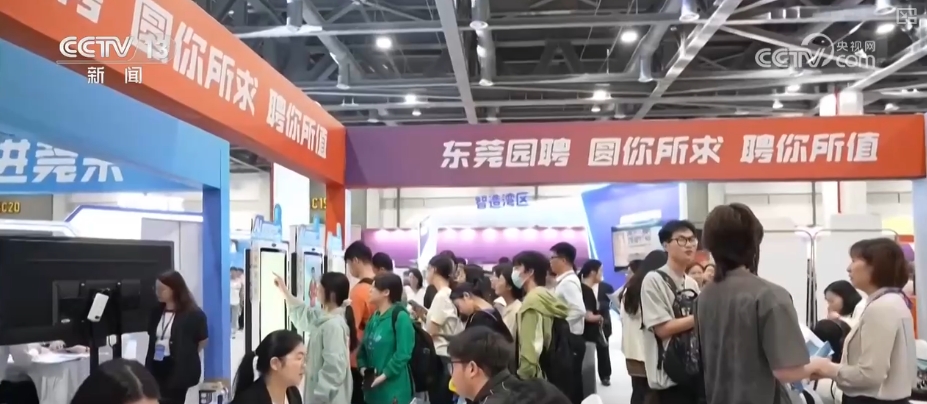
Group 1 - The demand for high-skilled talent is increasing rapidly in China as the industrial structure undergoes transformation and upgrading, particularly in manufacturing hubs like Dongguan, which has sent 580 companies to Zhejiang for recruitment [2][9] - Dongguan is offering over 14,790 job positions mainly in fields such as new generation information technology, high-end equipment manufacturing, new materials, artificial intelligence, and healthcare [2] - The recruitment focus has shifted towards digital economy talents, with companies seeking algorithm engineers and decision-making engineers due to the critical phase of industrial upgrading [4][8] Group 2 - The employment structure in Dongguan is changing, with over 30,000 positions for skilled workers and technical professionals in demand during the first quarter, and resume submissions increasing by over 70% [9] - Companies are now looking for a diverse range of talents, including optical, mechanical, electrical, software, and process engineers, as well as AI professionals to enhance competitiveness through digitalization [11] - In regions like Weihai, local governments are implementing supportive measures to retain skilled talent, including establishing training bases and providing financial support for talent development [15] Group 3 - Nationally, the first quarter saw an increase of 3.08 million urban jobs, reflecting a positive trend in China's economic development [17] - There has been a significant rise in demand for jobs in the service sector, with online life services, transportation logistics, and elder care seeing year-on-year increases of 43%, 35%, and 17% respectively [19] - The demand for technical and skilled positions in manufacturing is rapidly increasing, with job openings for mechanical engineers and automation engineers growing by 40% and 10% respectively [19]

多维度观察“金三银四”招聘旺季 火热细分数据折射中国经济向新向好
Yang Shi Wang· 2025-04-30 03:52
Group 1 - The core viewpoint is that there is a strong demand for high-skilled talent in China due to the accelerated transformation and upgrading of the industrial structure since 2025, particularly in manufacturing hubs like Dongguan [1][5] - Dongguan has sent 580 companies to Zhejiang for recruitment, offering over 14,790 positions mainly in new generation information technology, high-end equipment manufacturing, new materials, artificial intelligence, and healthcare [1][5] - The demand for skilled workers and professional technical positions in Dongguan exceeded 30,000 in the first quarter of 2025, with a resume submission increase of over 70% [5] Group 2 - Not only coastal regions but also central and western regions, as well as third and fourth-tier cities, are enhancing talent acquisition efforts to build high-skilled talent teams around their characteristic industries [6][7] - Local governments are implementing various support measures to retain and effectively utilize skilled talent, such as establishing training bases and providing financial support [7] - The "Skills Illuminate the Future" training initiative has been launched nationwide to provide targeted vocational training for skilled workers, facilitating their career development [9] Group 3 - In the first quarter of 2025, 3.08 million new urban jobs were created, an increase of 50,000 year-on-year, reflecting a positive trend in China's economic development [10] - Consumer spending on services grew by 5.4%, significantly boosting demand for jobs in the life services sector, with online life services, transportation logistics, elderly care, and residential services seeing year-on-year recruitment demand increases of 43%, 35%, 17%, and 10% respectively [12] - The ongoing advancement of high-end, intelligent, and green manufacturing is leading to a rapid increase in demand for technical skill positions, with mechanical engineers and automation engineers seeing recruitment demand growth of 40% and 10% year-on-year, respectively [14]
聚焦就业适应力!专家学者纵论高校毕业生就业
Zhong Guo Jing Ji Wang· 2025-04-29 21:40
Group 1 - The conference focused on the opportunities and challenges of employment for college graduates, emphasizing the need to enhance their adaptability in the job market [1] - Experts highlighted the importance of vocational education and skills enhancement, aligning with the national development strategy as outlined in the "Education Strong Nation Construction Plan" [1] - The conference gathered nearly 50 experts from various institutions, including government departments and universities, to discuss new dynamics in employment [1] Group 2 - In regions like the Pearl River Delta and Yangtze River Delta, vocational education has shown advantages in aligning with market demands, with Shenzhen Information Vocational Technology College maintaining a graduate employment rate above 95% over the past five years [2] - More than half of the graduates from Shenzhen Information Vocational Technology College are employed in high-tech industries, new generation information technology, and the internet sector, with about a quarter entering leading and large-scale enterprises [2] - Experts suggested that schools should enhance career planning education and strengthen industry analysis and school-enterprise cooperation to better align students with market needs [2]