
海洋能源

Search documents
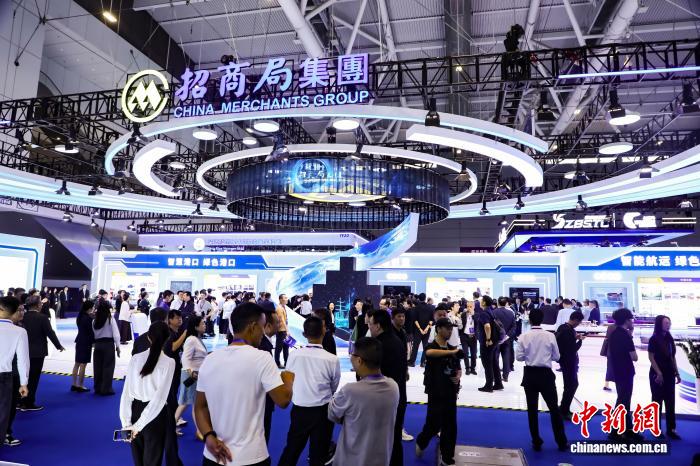
海博会启幕,新产品集中亮相,300多家龙头企业集结
Nan Fang Du Shi Bao· 2025-10-28 12:37
Core Insights - The 2025 China Marine Economy Expo (Marine Expo) opened in Shenzhen, featuring over 300 leading enterprises and technology companies, and aims to create a platform for marine economic exchange and cooperation [1][4] - The expo highlights significant achievements in deep-sea technology and showcases new products such as underwater robots, while also hosting nearly 50 marine-themed activities to engage the public [1][11] Industry Developments - The expo focuses on smart development trends, featuring four core exhibition areas: marine energy, deep-sea technology, marine intelligent equipment, and marine electronic information, along with three high-potential application fields [4][6] - Major companies such as China Merchants Group, China Communications Construction Company, and leading telecommunications firms like China Mobile and China Unicom are participating, showcasing innovations that empower marine industry upgrades [6][8] International Collaboration - The Marine Expo adopts a market-oriented approach, emphasizing full industry chain services and facilitating connections between enterprises and resources [8] - Seven core forums are planned, covering topics like blue economy growth and global marine governance, with participation from academia, industry, and government representatives [8][10] Public Engagement - The expo includes public outreach initiatives such as open days for scientific research vessels and educational activities aimed at enhancing marine awareness among citizens [11] - A series of thematic activities will be held, focusing on art, knowledge, taste, sports, leisure, and ecology, providing a rich cultural experience related to the ocean [11]


300多家涉海龙头企业集结2025中国海博会
Zhong Guo Xin Wen Wang· 2025-10-28 11:23
Core Points - The 2025 China Marine Economy Expo (referred to as "Marine Expo") opened in Shenzhen, themed "Digital Intelligence Deep Blue, Co-creating the Future," with an exhibition area exceeding 40,000 square meters and over 300 leading enterprises and technology companies participating [1][3] - The expo adopts a market-oriented approach, focusing on full industry chain services, facilitating enterprise demand matching, resource linking, and transaction cooperation to enhance market vitality [1][3] - The expo features four core exhibition areas: marine energy, deep-sea technology, marine intelligent equipment, and marine electronic information, along with three high-potential application fields: modern marine services, marine biomedicine, and coastal tourism [3] Industry Insights - The event attracts Fortune Global 500 companies, large state-owned enterprises, listed companies, and specialized "little giant" enterprises, showcasing the collaborative innovation power of China's coastal economic belt [3] - Seven core forums are planned, covering topics such as blue economy growth, marine legal construction, and global marine governance, with participation from academia, industry, and government representatives to address marine development challenges [3][5] - The expo will launch the Blue Innovation Enterprise List and awards for outstanding exhibitors and contributions to the blue economy, aimed at enhancing the visibility and competitiveness of quality enterprises [5] Public Engagement - The expo includes public outreach activities such as open days for scientific research vessels and marine knowledge programs in schools, making marine science accessible to the public [5][7] - A series of themed activities under the "Same Ocean, Same Dream" initiative will take place, covering art, knowledge, taste, sports, leisure, and ecology, with nearly 50 engaging marine-themed events planned [7]
亨通光电:控股子公司中标±500kV直流海缆等海洋能源项目
Mei Ri Jing Ji Xin Wen· 2025-10-27 11:16
Group 1 - The core point of the article is that Hengtong Optic-Electric has won multiple contracts for marine energy projects, totaling 1.868 billion yuan [1] - The company confirmed winning bids for the Dandong Donggang Phase I offshore wind power project, which includes the supply and construction of ±500kV DC submarine cables and 66kV collection cables [1] - Additional projects include the Jiangsu Guoxin Dafeng offshore wind power project, Guangdong offshore wind power project, and the CGN Yangjiang Fanshi offshore wind farm project, focusing on turbine installation and construction [1] Group 2 - Hengtong Optic-Electric's revenue composition for 2024 is projected to be 97.47% from manufacturing, 1.64% from services, and 0.88% from other businesses [1] - As of the report, the market capitalization of Hengtong Optic-Electric is 54 billion yuan [1]

亨通光电:中标多个海洋能源项目 中标总金额18.68亿元
Zheng Quan Shi Bao Wang· 2025-10-27 11:05
Core Viewpoint - Hengtong Optic-Electric (600487) announced on October 27 that its controlling subsidiary has received project award notifications and signed contracts for marine energy projects, with a total bid amount of 1.868 billion yuan [1] Group 1 - The company has confirmed winning the bid for the Dandong Donggang Phase I 1 million kW offshore wind power project [1] - The bid includes the supply and construction of ±500kV DC submarine cables and 66kV collection submarine cables [1]
中天科技获17.88亿海洋系列大单 巩固领先优势近三年半累盈百亿
Chang Jiang Shang Bao· 2025-10-19 23:36
Core Viewpoint - Zhongtian Technology (600522.SH) has secured significant contracts, with a recent announcement indicating a total of approximately 1.788 billion yuan in marine project contracts, which represents 3.72% of the company's audited revenue for 2024 [1][2]. Group 1: Recent Contracts and Financial Impact - The company has announced a total of 7.127 billion yuan in major contracts since 2025, which is expected to positively influence its future operating performance [1][3]. - Recent contracts include projects in the marine energy sector, such as a ±500kV DC submarine cable project and various offshore wind farm projects, contributing to the total of 1.788 billion yuan [2][3]. Group 2: Business Transformation and Performance - Since divesting from low-margin trading operations in 2022, Zhongtian Technology has focused on energy interconnection and information communication, leading to a significant improvement in its operational performance [1][5]. - The company reported cumulative net profits exceeding 10 billion yuan over the past three and a half years, with net profits of 32.14 billion yuan, 31.17 billion yuan, and 28.38 billion yuan for the years 2022 to 2024, respectively [6][7]. Group 3: Research and Development Investment - Zhongtian Technology has invested heavily in R&D, with total R&D expenses amounting to 6.448 billion yuan over the past three and a half years, reflecting its commitment to enhancing its competitive edge [7]. - The company has established a comprehensive capability in the marine energy and information transmission sectors, creating a differentiated competitive advantage through its "technology depth + full-chain service" model [7].

海洋经济驶入发展快车道 相关上市公司频频斩获订单
Zheng Quan Ri Bao Zhi Sheng· 2025-10-17 15:36
Group 1: Industry Overview - The marine economy in China is rapidly developing due to the national marine power strategy and increasing global demand for marine resource development [1] - Companies in the marine industry are securing significant domestic and international project orders, showcasing strong market competitiveness and growth potential [1] Group 2: Company Highlights - Zhongtian Technology Co., Ltd. announced that its subsidiaries have received project bids totaling approximately 1.788 billion yuan, including various marine series projects [1] - Zhongtian Technology has won multiple significant projects in marine energy and deep-sea technology, including a ±500kV DC submarine cable project and deep-sea drilling equipment for Hunan University [1] - The company has established a comprehensive core capability in the marine energy and information transmission sectors, focusing on deep-sea oil and gas, mining, and disaster prevention applications [2] Group 3: Competitor Insights - Ningbo Dongfang Cable Co., Ltd. reported winning bids totaling approximately 2.374 billion yuan, which accounts for 26.11% of its audited revenue for 2024 [2] - Jiangsu Hengtong Optic-Electric Co., Ltd. has secured significant orders in the marine energy sector, with a total order amount of approximately 20 billion yuan for submarine cables and related projects [2][3] - The marine infrastructure investment is expanding, driven by globalization and the internet, creating new growth opportunities for industry players [3]
中天科技:下属公司合计中标/预中标约17.88亿元海洋系列项目
Zheng Quan Shi Bao Wang· 2025-10-16 09:05
Core Viewpoint - Zhongtian Technology (600522) has announced multiple successful bids and pre-bids for marine projects, indicating strong performance in the marine energy and deep-sea technology sectors, with a total project value of approximately 1.788 billion yuan [1] Group 1: Marine Energy Projects - Zhongtian Technology's subsidiary, Zhongtian Technology Submarine Cable Co., Ltd., has won the bid for the ±500kV DC submarine cable project for a wind farm in Zhejiang [1] - The company has also received a pre-bid notice for the 500kV submarine cable supply and laying project for the Yangjiang Sanshan Island offshore wind farm [1] - Additionally, Zhongtian Technology secured a bid for the Bohai Zhong 26-6 oilfield development (Phase II) project [1] Group 2: Deep-Sea Technology Projects - The company has won the bid for the deep-sea drilling rig research equipment project at Hunan University of Science and Technology [1]
中国海洋生产总值首破10万亿,下一步怎么走
21世纪经济报道· 2025-10-12 07:38
Core Viewpoint - The global ocean economy is projected to exceed $3 trillion by 2030, becoming comparable to the world's seventh-largest economy, driven by technological innovations and the transformation of traditional maritime hubs into innovative ocean cities [1][3]. Group 1: Global Ocean Economy - The global ocean economy's value has surpassed $2.5 trillion, with a forecasted increase to $3 trillion by 2030, reflecting a significant growth trajectory [1][3]. - The ocean economy directly creates over 31 million jobs and indirectly supports more than 200 million jobs worldwide [3]. - The expansion of the ocean economy is attributed to the collaborative growth of various sectors, including maritime transport, fisheries, energy, and tourism [3]. Group 2: Ocean City Competitiveness - The "Global Ocean City Competitiveness Index Report (2025)" evaluates cities based on five dimensions: economic vitality, technological innovation, maritime services, international influence, and urban governance [1]. - Traditional maritime hubs like London and Oslo are transitioning towards high-end maritime services, maintaining their global influence despite changes in port throughput [3][4]. - Singapore ranks as the top Asian city due to its efficient governance and comprehensive maritime service industry, while Tokyo and Busan also show strong performance in various dimensions [6][10]. Group 3: China's Ocean Economy - China's ocean production value has surpassed 10 trillion yuan, accounting for 7.8% of GDP, with cities like Shanghai, Shenzhen, and Qingdao leading the charge in the global blue economy competition [2][10]. - Chinese cities are encouraged to shift from being "supply chain participants" to "value chain creators," addressing the current challenges of being large but not strong [15][16]. - The report highlights the need for cities like Shanghai to leverage digital transformation and high-value services, while Shenzhen and Qingdao should focus on integrating research and industry for better innovation outcomes [16][17]. Group 4: Technological Innovation - The report emphasizes that technological innovation is a key variable in the competitiveness of ocean cities, moving beyond traditional maritime capabilities to include deep-sea development, green energy, and smart equipment [7][13]. - The OECD warns that the global ocean economy is at a crossroads, with potential for significant growth through clean technology revolutions [13]. - Cities are encouraged to develop comprehensive systems that integrate economic, technological, governance, and ecological factors to enhance their ocean economy capabilities [13][15].
“十万亿”后,中国海洋经济落子何处?
2 1 Shi Ji Jing Ji Bao Dao· 2025-10-12 01:43
Core Insights - The global ocean economy has surpassed $2.5 trillion and is projected to reach $3 trillion by 2030, comparable to the world's seventh-largest economy [1][4] - The shift in ocean economic strength is moving from traditional port metrics to technology-driven innovations, with breakthroughs in deep-sea exploration, marine renewable energy, and marine biomedicine becoming core competitive advantages [1][4] Ocean Economy Overview - China's ocean production value has exceeded 10 trillion yuan for the first time, accounting for 7.8% of GDP, driven by cities like Shanghai, Shenzhen, and Qingdao [2] - The global ocean economy is expanding due to the collaborative growth of marine transportation, fisheries, energy, and tourism, with over 31 million direct jobs created and over 200 million indirect jobs anticipated [4] Global Ocean City Competitiveness - Traditional shipping centers remain dominant in the global ocean city rankings, with cities like London and Oslo leading in various dimensions such as economic vitality and technological innovation [5][7] - Singapore ranks first in Asia, benefiting from efficient governance and a complete industrial chain in marine engineering [7] Innovation as a Key Variable - The "Global Ocean City Competitiveness Index Report (2025)" offers a new perspective on evaluating ocean cities, emphasizing the transition from traditional maritime hubs to innovative ocean cities [9][12] - Both the LMC report and the new competitiveness index highlight the stability of top-tier ocean cities, with Singapore, London, and Rotterdam consistently leading [9] Strategic Pathways for Chinese Cities - Chinese cities are encouraged to transition from "supply chain participants" to "value chain creators," addressing the current challenges of being large but not strong [15][16] - Shanghai can leverage digital port technologies to enhance high-value services, while cities like Qingdao and Shenzhen should focus on integrating research and industry to foster innovation [16][17] Future Projections - The report predicts that Chinese cities will rise in global rankings, with Shanghai potentially entering the top three, and Qingdao moving closer to the first tier due to advancements in AI and marine technology [18]
“耕海牧渔”有新解
Ren Min Ri Bao· 2025-10-07 05:20
Core Viewpoint - The development of marine economy in China is gaining momentum, with innovative technologies and projects enhancing the potential of ocean resources, leading to a new era of "farming the sea" and economic growth [1][2][3] Group 1: Technological Innovations - The "Nankun" floating wave energy generator, the world's first megawatt-level device, can produce an average of 10,000 kWh daily, sufficient for approximately 1,500 households [1] - The integration of IoT, big data, and AI into modern marine ranching is transforming traditional fishing practices into data-driven operations [2] - The "Guoxin 1" smart fishery vessel can produce around 3,600 tons of high-quality fish annually using an innovative "onboard compartment breeding" model [1][2] Group 2: Resource Utilization - The establishment of a commercial underwater data center in Hainan has effectively reduced energy consumption by utilizing seawater for cooling [1] - The "Cold Spring Ecosystem Research Facility" in Guangzhou aims to explore the potential of methane and biological resources in cold spring areas [2] - The combination of offshore wind power and marine ranching has generated over 2 billion kWh and nearly 100 million yuan in annual income from aquaculture [2] Group 3: Policy and Strategic Goals - The Chinese government emphasizes the importance of high-quality development in the marine economy, aiming to create industrial hubs in oceanic regions [3] - There is a call for innovation in marine technology to achieve self-reliance and to avoid the pitfalls of pollution associated with resource development [3] - The focus is on developing new productive forces in the marine sector and constructing a modern marine industry system to contribute to national strength [3]