
粮食种植与加工

Search documents
近三年储存、运输、加工环节粮食年均损失率约为2%——耕好节约减损这块“良田”
Jing Ji Ri Bao· 2025-10-16 22:11
Core Viewpoint - The article emphasizes the importance of food conservation and loss reduction as essential strategies for ensuring food security in China, particularly during the ongoing "14th Five-Year Plan" period [1][6]. Group 1: Food Loss and Waste - Food loss and waste occur throughout the entire supply chain, with an estimated annual loss of about 2% of China's grain production in storage, transportation, and processing over the past three years [3]. - The storage loss rate is approximately 1.9%, with farmers experiencing a storage loss rate of about 3%, which has decreased by 5 percentage points compared to a decade ago [3]. - The comprehensive loss rate in grain storage facilities is maintained below 1%, while transportation and processing loss rates have been reduced to 0.8‰ and 0.8%, respectively [3]. Group 2: Technological Empowerment - The approach to food conservation and loss reduction has shifted towards innovation-driven strategies, utilizing technology to optimize the entire food supply chain [4]. - Farmers are increasingly adopting high-quality varieties that are resistant to lodging and suitable for storage, along with advanced technologies such as Beidou navigation, drones, and IoT sensors for precision farming [4]. - Modern storage facilities are being developed, incorporating green storage technologies that maintain low temperatures to inhibit pest and mold growth, achieving a comprehensive loss rate of under 1% [4]. Group 3: Processing Innovations - Leading companies are promoting moderate processing techniques that utilize advanced equipment to maximize the retention of nutrients and improve yield rates [5]. - Technologies such as color sorters and flexible milling machines are being employed to enhance product quality while minimizing waste [5]. Group 4: Long-term Mechanisms - Establishing a long-term mechanism for food conservation and loss reduction is crucial, requiring systematic governance and a focus on sustainable practices [6]. - The need for a dual approach of increasing production while simultaneously reducing waste is highlighted, especially given the tight balance between food supply and demand [6]. - The promotion of green storage technologies and the implementation of national whole grain action plans are essential for improving food conservation efforts [6]. Group 5: Standards and Public Participation - The establishment of national standards for grain products is being emphasized to guide enterprises in optimizing processing precision and improving yield rates [7]. - There is a call for public participation in food conservation efforts, promoting a culture of thrift and food-saving practices within society [7].
人多地少为何还能年净调出40亿斤粮?
Xin Hua Ri Bao· 2025-10-16 00:09
Core Insights - Jiangsu province ranks 8th in total grain production in China, contributing approximately 4 billion jin annually to national food security [1] - The province faces challenges in balancing its large population and limited land resources while ensuring food supply [1] Grain Purchase and Sales - Jiangsu maintains a stable grain purchase and sales system, with annual grain acquisition around 55 billion jin over the past three years [2] - The province's wheat and rice purchase volumes rank 4th and 2nd nationally, respectively, benefiting local farmers [2] - Policies such as the grain joint guarantee fund and the role of state-owned enterprises enhance market stability and farmer income [2][3] Storage and Emergency Response - The province's grain storage capacity is robust, with over 90% of finished grain oil reserves maintained [3] - A comprehensive emergency supply network has been established, including 3,288 emergency guarantee enterprises and 2,738 supply points [3] - The number of local storage facilities has been streamlined from 424 to 204, improving management and safety [3] Modern Storage and Logistics - Jiangsu has invested significantly in modern grain storage facilities, achieving a storage capacity of 49 million tons and a drying capacity of 15.8 tons per day [4][5] - The province's logistics capabilities are enhanced by a network of dedicated grain terminals and rail lines, facilitating efficient grain distribution [6] Technological Advancements and Branding - Innovative storage technologies, such as the "six-sided active temperature control" system, are being implemented to improve grain preservation [7] - The "Water Rhythm Su Rice" brand has gained recognition, with significant increases in high-quality rice production and sales [8][10] - Jiangsu has established a provincial-level grain technology innovation research institute, leading in national grain technology advancements [9]
山东仍有全省性降雨过程 或进一步延缓秋收进度
Zhong Guo Xin Wen Wang· 2025-10-15 12:54
Core Viewpoint - Shandong province is experiencing significant rainfall, which is delaying the autumn harvest and affecting agricultural operations [1][7]. Weather Impact on Harvest - Rainfall on October 15 has forced a pause in the ongoing autumn harvest efforts, with further rain expected on October 17 [1]. - The average temperature is expected to drop by around 10°C due to the cold air accompanying the rain, which is unfavorable for soil moisture management [1]. Agricultural Response - The Shandong government has mobilized 31,000 drainage equipment units to address waterlogging issues in farmlands [3]. - Recommendations include using small excavators to dig drainage ditches and employing mobile pumping equipment for forced drainage [3][4]. Drying and Storage Solutions - High demand for corn drying has led to the suggestion of a "segmented drying method" to temporarily store wet grains before final drying [4]. - Local drying towers in Heze city are operating at full capacity, with some capable of processing up to 900 tons of corn daily [4]. Crop Management Strategies - With over 80% of corn harvested in five cities, the focus will shift to land preparation and sowing once weather conditions improve [7]. - Late sowing of wheat is anticipated, necessitating careful selection of high-yielding wheat varieties and adjustments in sowing rates based on soil moisture conditions [7][8]. Historical Weather Data - Since September, Shandong has recorded an average of 23.8 days of cloudy weather and 23.2 days of rainfall, significantly above historical averages [8]. - As of October 14, nearly 80% of monitoring stations reported soil moisture levels above 90%, with over 72 million acres of farmland experiencing excessive moisture [8].

聊城|“鲁西粮仓”打响秋收保卫战
Da Zhong Ri Bao· 2025-10-15 01:08
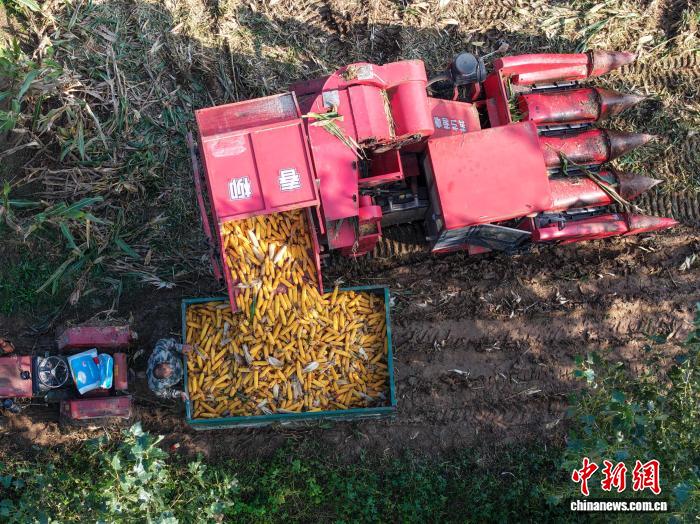
推动"烘干+收购+储存"一体化服务 "鲁西粮仓"打响秋收保卫战 粮满仓、天下安,粮食安全是"国之大者",保障粮食安全始终是关系国计民生的头等大事。多年 来,聊城作为产粮大市,粮食播种面积、单产、总产稳居全省前列,有"鲁西粮仓"之称。眼下正值玉米 收获的关键时期,聊城却遭遇罕见的连绵阴雨天气,给秋粮归仓带来严峻挑战。 受持续阴雨天气影响,玉米收获后含水量较高,如不及时烘干,易引发霉变、发芽,将直接威胁粮 食品质与农民收益。各县市区全力与时间赛跑,加快玉米烘干进度,为秋粮安全归仓筑牢防线。 在东昌府区,24台烘干设备日处理能力达2400余吨。为高效推进烘干工作,东昌府区建立实时更新 的"烘干资源台账"。针对部分乡镇需求突增、设备满负荷运转的情况,采取及时调配移动式烘干设备、 共享烘干时段等方式,缓解局部压力。同时,积极推动"烘干+收购+储存"一体化服务,指导烘干点与 粮食收购企业、仓储单位对接,减少转运环节,降低产后损失。 10月11日,在东阿县鑫田粮食种植专业合作社,两台日烘干粮300吨和四台日烘干粮80吨的烘干设 备正开足马力运转。合作社负责人于茂新告诉记者,今年合作社种植玉米四千余亩,目前已收割大半, 但还 ...
抢!应对连阴雨,秋收一线直击(秋收进行时)
Ren Min Ri Bao· 2025-10-12 22:10
Core Insights - The article discusses the ongoing autumn harvest in China, particularly in the Huang-Huai-Hai region, which is crucial for the country's grain production. The region's grain output accounts for over one-third of the national total. Continuous rainy weather has raised concerns about the quality of the harvest and the potential delay in sowing winter crops [3][4]. Harvest Situation - The keyword for this year's autumn harvest is "rushing," as farmers are working hard to collect mature crops despite challenging weather conditions. In Shandong, farmers are using specialized machinery to navigate wet fields, while in Henan, many smallholders have completed their harvests [4][5]. - As of October 10, the harvest progress in the Huang-Huai-Hai region is nearing 80% completion [6]. Grain Drying and Storage - After harvesting high moisture grains, immediate drying is essential to prevent spoilage. Various provinces have set up grain drying centers and provided contact information to local farmers [7][8]. - In Shandong, a major drying enterprise has processed over 15,000 tons of corn, emphasizing the importance of timely drying to minimize post-harvest losses [8]. Financial Support and Policy Measures - The government has allocated significant funds to support grain drying and harvesting efforts, including 300 million yuan for drying machinery subsidies and 10 million yuan for disaster relief in specific regions [9]. - The Ministry of Agriculture has dispatched teams to provide on-the-ground support for the entire grain production process, focusing on harvesting, drying, and selling [9]. Winter Crop Sowing - The article addresses concerns about potential delays in sowing winter wheat due to excessive soil moisture. However, experts suggest that late sowing can still yield good results with proper management techniques [10][11]. - Recommendations include improving soil conditions before sowing and selecting appropriate seed varieties to enhance resilience against adverse weather [11][12].
“中原粮仓”冒雨抢秋收 烘干点开足马力“全天候”
Zhong Guo Xin Wen Wang· 2025-10-11 13:42
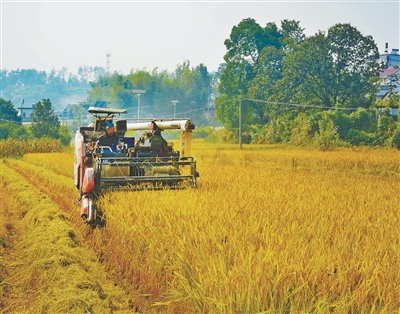
Core Viewpoint - The article highlights the challenges and efforts in the autumn harvest in Henan Province, particularly focusing on the innovative use of modified agricultural machinery and increased drying capacity to cope with adverse weather conditions. Group 1: Weather Impact and Harvesting Efforts - Henan Province is experiencing its highest rainfall in 64 years for this time of year, significantly affecting the harvesting and drying of autumn crops [1][3] - Various modified agricultural machines are being utilized to harvest crops in muddy conditions, with local cooperatives successfully adapting equipment to improve efficiency [3][5] Group 2: Drying Capacity and Strategies - There is a significant push to enhance drying capabilities, with many drying facilities operating 24/7 to manage the influx of wet grain [5][6] - The New Tian Di Cooperative has a drying capacity exceeding 1,000 tons per day and is actively managing the harvest to alleviate drying pressure [5][6] - Local farmers are utilizing various drying methods, including the use of idle spaces and forced ventilation techniques, to prevent spoilage of harvested crops [6]
山东新泰:全链条服务让秋粮归仓“一路畅行”
Qi Lu Wan Bao Wang· 2025-10-11 07:20
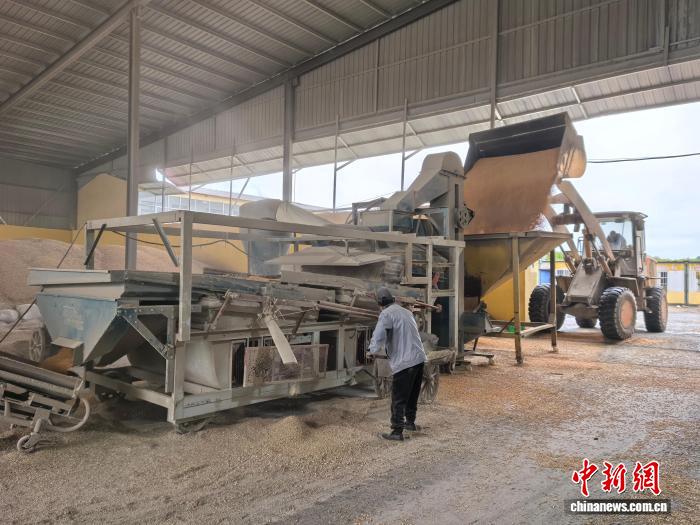
新泰市楼德供销合作有限公司负责人公进介绍说:"最近这段时间连续下雨,给农户收粮带来了很大的 困扰。我们这个烘干塔24小时连轴转,每天能烘干500多吨粮食,为周边农户解了燃眉之急,也算是为 秋粮收获出了一份力。" "今年村集体流转了60亩地种植高粱,亩产达到了1200斤,预计收入能有7万元左右。现在正是高粱收获 的关键时期,可连日的降雨让机械根本没法下地作业。"汶河北村党支部书记李善禄站在地头介绍 道:"好在今天下午,我们瞅准了降雨的间歇,赶紧调拨了两台履带式收割机进行抢收。这一下午的时 间,就收获了高粱1.2万多斤。收下来的高粱会马上烘干、进仓入库。" 据悉,今年翟镇种植高粱1000多亩,依托省级示范合作社,通过订单农业,采取保护价收购,实行统一 播种、施肥、管理、收割、结算的"六统一"模式进行管理,预计高粱总产量30多吨。合作社建设的烘干 塔,日烘干能力100吨左右,确保收获的粮食能及时烘干,颗粒归仓。 走进新泰市楼德镇的粮食烘干中心,机器的轰鸣声不绝于耳,烘干塔正全天候高速运转。刚从田间收获 的潮粮通过传送带,源源不断地被送入塔内。工作人员轮班值守,密切关注着设备的运行情况,密切关 注设备运行情况,及时将 ...
收烘储并举,闭环抢秋粮
Da Zhong Ri Bao· 2025-10-11 01:05
Core Viewpoint - The article discusses the comprehensive measures taken in Shandong to address the challenges posed by continuous rainy weather during the critical "Three Autumns" agricultural production period, focusing on the urgent harvesting and drying of autumn grain. Group 1: Agricultural Measures - Shandong has integrated meteorological warnings, drainage, agricultural machinery allocation, and grain drying to ensure timely harvesting of autumn crops [2][3] - Local authorities are actively using communication channels like village broadcasts and WeChat groups to provide real-time weather updates and harvesting guidance to farmers [2] - Specific measures include deploying specialized machinery, such as six tracked harvesters, to work in muddy fields and coordinating the transport of high-performance harvesting equipment from Henan [2][3] Group 2: Infrastructure and Equipment - The agricultural cooperative in Beizhu Geng Village has invested nearly 700,000 yuan in two large drying towers to meet local drying needs, operating 24/7 to handle the wet grain [3][4] - The East Ying City Qilong River Ecological Agricultural Technology Company operates a drying tower with a daily processing capacity of 300 tons, ensuring that harvested wet corn is dried to a moisture content of below 14% [4] - Companies are adjusting drying standards temporarily to improve efficiency, allowing for moisture content of 15%-17% for storage, while also investing in color sorting equipment to ensure quality [5] Group 3: Logistics and Support - Grain logistics companies are operating around the clock to accelerate the drying and storage processes, ensuring that autumn grain is stored safely and timely [3] - The company in Jining is providing comprehensive agricultural services, including grain drying and storage, and has adjusted operations to accommodate the high moisture content of harvested corn [5] - Local governments are collaborating with companies to provide free drying services to small farmers, enhancing community support during the harvest season [4]
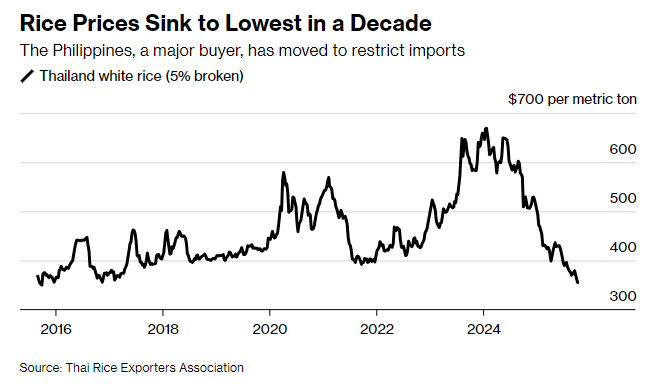
亚洲米价探底十年新低 菲律宾进口限制加剧跌势
Zhi Tong Cai Jing· 2025-10-10 03:23
2024年,受强劲需求与供应担忧影响,大米价格曾飙升至十五年高位。随着全球产量逐步改善,价格开 始稳步回落。据联合国粮农组织预测,2025-26年度全球大米产量预计将达到创纪录的5.564亿吨,推动 库存水平上升。 此外,全球最大出口国印度遭遇超常季风降雨,反令本季收成预期提升。这将进一步扩大全球供应盈 余,促使这个南亚国家取消出口限制以避免国内积压,从而增加国际市场发货量。 亚洲地区的大米基准价格已跌至十年来最低水平,这意味着家庭及依赖大米进口的国家将面临更低的粮 食开支。 根据泰国大米出口商协会数据,周三泰国5%破碎率白米批发价格下跌1.9%,至每吨355美元,创下2015 年9月以来新低。此次价格下跌正值全球最大大米进口国菲律宾计划延长进口限制措施,以扶持本国稻 农。 尽管出口价格传导至零售端需要时间,但来自泰国等主要供应国的价格下跌,将有望降低亚洲、非洲及 部分中东地区的主粮成本。大米是全球数十亿人口的重要主食,在东南亚等多地,大米贡献了居民每日 50%的卡路里摄入量。 ...
新技术新服务改造农业造福乡村
Jing Ji Ri Bao· 2025-10-06 22:04
Core Insights - The article highlights the successful transformation of the millet industry in Aohan Banner, Inner Mongolia, driven by improved seed varieties and agricultural technology [1][2] - The integration of processing enterprises and the establishment of cooperative models have enhanced the value chain and marketability of Aohan millet [2] Group 1: Agricultural Practices - The introduction of the Aogu 8000 variety has increased average yield by over 20%, with net profits reaching around 1200 yuan per mu [1] - The coverage rate of quality millet seeds in the region has reached 96%, supported by the establishment of a genetic resource protection base and the cultivation of 8 specialty varieties [1] - The implementation of advanced agricultural techniques, such as water and fertilizer integration and soil testing for fertilization, has stabilized millet planting area at over 1 million mu, with annual production exceeding 600 million jin [1] Group 2: Industry Development - The Aohan Millet Industry Development Group has unified 46 local processing enterprises under a "1+N" model, standardizing processing and sharing logistics resources [1] - The group has developed 9 deep-processing products, including millet oil and millet wine, along with 22 functional products like colored millet and selenium-rich millet [1] - The Hui Long Grain Planting Farmers' Cooperative has established a "cooperative + base + farmer" model, providing comprehensive support services to farmers, resulting in higher prices for their produce [2] Group 3: Marketing and Consumer Engagement - Efforts are being made to enhance the reputation and market reach of Aohan millet through the establishment of a millet museum and product exhibition hall [2] - A smart agriculture platform has been created to allow real-time monitoring of soil conditions, millet growth, and processing status, ensuring traceability and consumer confidence [2]