
药店零售

Search documents
国家医保局:对定点药店“阴阳价格”问题严肃核查处置
Bei Ke Cai Jing· 2025-10-11 12:58
Core Viewpoint - The National Medical Insurance Administration (NMI) is addressing the issue of "dual pricing" in designated retail pharmacies, where the same medication is sold at a higher price to insured patients compared to uninsured patients, indicating a violation of regulations and potential exploitation of the medical insurance fund [1][2][5]. Group 1: Regulatory Actions - The NMI has issued a notification to enhance monitoring of "dual pricing" practices in designated pharmacies, emphasizing the need for data screening and on-site verification [1][3]. - The notification categorizes "dual pricing" as a violation of the use of medical insurance funds, urging local medical insurance departments to recognize the infringement of insured individuals' rights and the negative impact on the insurance fund [2][4]. - Local medical insurance departments are required to include "dual pricing" behavior in their key monitoring items and to conduct thorough investigations based on pricing discrepancies and public complaints [3][4]. Group 2: Consumer Impact - Reports from various regions indicate that consumers are increasingly avoiding physical pharmacies due to the "dual pricing" issue, which has been highlighted by media coverage [2][5]. - The phenomenon of "dual pricing" is not isolated, with multiple consumers in cities like Chongqing and Wuhan reporting significant price differences when using insurance versus cash payments [2][5]. Group 3: Expert Insights - Experts suggest that the "dual pricing" issue arises partly from delayed reimbursements from the insurance system, leading pharmacies to pass costs onto consumers [5][6]. - The practice of "dual pricing" is seen as a violation of both the Medical Insurance Service Agreement and various laws, including the Price Law and Social Insurance Law of the People's Republic of China [6][7]. - Experts emphasize that while regulatory oversight is challenging due to the complexity of the retail drug market, the NMI's recent measures are a step towards addressing these issues effectively [7][8]. Group 4: Future Measures - The NMI plans to implement a smart regulatory system to recover losses from the insurance fund and will conduct regular analyses of suspicious data to combat fraudulent practices [8]. - Designated pharmacies will be subject to flying inspections, and any violations will be dealt with according to the law, ensuring accountability and compliance [8].
药店买药,医保价反而更贵?医保局严查整治“阴阳价格”
第一财经· 2025-10-11 08:38
Core Viewpoint - The article highlights the issue of "yin-yang pricing" in designated retail pharmacies, where the same medication is sold at a higher price to insured patients compared to those paying out-of-pocket, prompting the National Healthcare Security Administration (NHSA) to take action against this practice [3][4][5]. Group 1: Issue Identification - "Yin-yang pricing" is identified as a discriminatory pricing behavior where designated pharmacies charge insured patients more than non-insured patients for the same medication [3][4]. - The NHSA has classified this practice as price fraud, violating agreements that prohibit unfair pricing for insured individuals [3][5]. Group 2: Regulatory Response - The NHSA has issued a notification requiring local healthcare departments to investigate and manage the "yin-yang pricing" issue, emphasizing the need for regular monitoring of drug prices in designated pharmacies [3][6]. - The notification encourages the public to report instances of "yin-yang pricing" to assist in the enforcement of regulations [5][6]. Group 3: Challenges and Recommendations - Experts note that the difficulty in price regulation stems from the large number of retail pharmacies and frequent price changes, making comprehensive monitoring challenging [4][5]. - Recommendations include enhancing market monitoring, improving the transparency of pricing, and utilizing big data to identify pharmacies with significant price discrepancies [5][6]. Group 4: Enforcement Measures - The NHSA has outlined strict penalties for pharmacies found engaging in "yin-yang pricing," ranging from warnings to suspension of their healthcare settlement qualifications [6][7]. - Ongoing management of drug prices in designated pharmacies is emphasized, including the use of price comparison tools and regular audits of high-risk drug categories [7][8].


药店买药,医保价反而更贵?医保局严查整治“阴阳价格”
Di Yi Cai Jing· 2025-10-11 08:01
Core Viewpoint - The National Healthcare Security Administration (NHSA) has classified the "yin-yang pricing" behavior of designated retail pharmacies as suspected price fraud, highlighting the issue of pharmacies charging higher prices to insured patients compared to uninsured ones [1][2]. Group 1: Regulatory Actions - The NHSA issued a notification requiring local healthcare departments to rigorously investigate and manage the "yin-yang pricing" issue, emphasizing the need for ongoing price management in designated pharmacies [1][4]. - The notification defines "yin-yang pricing" as a discriminatory pricing practice where pharmacies charge insured patients more than uninsured ones, violating agreements that prohibit unfair pricing [1][2]. - Local healthcare departments are encouraged to actively monitor and report instances of "yin-yang pricing," utilizing big data to identify high-volume and high-price differential drugs [2][4]. Group 2: Challenges in Regulation - The issue of "yin-yang pricing" arises partly due to the difficulty in price regulation, as the retail drug market is vast and prices fluctuate frequently, making comprehensive monitoring challenging [2]. - Many insured individuals are less sensitive to the funds in their personal medical accounts, leading them to accept higher prices when using insurance, which creates opportunities for pharmacies to exploit this behavior [2]. Group 3: Enforcement and Compliance - Pharmacies found to engage in "yin-yang pricing" may face penalties ranging from warnings to suspension of their insurance settlement qualifications or even termination of their service agreements [4]. - The NHSA mandates that pharmacies display clear pricing information to insured patients and prohibits discriminatory pricing practices [4]. - The introduction of measures aims to not only standardize pharmacy pricing behavior but also enhance the effectiveness of regulatory oversight through collaboration with market regulation departments [4].
益丰药房(603939):门店布局优化,线上业务快速发展
EBSCN· 2025-09-01 10:24
Investment Rating - The report has downgraded the investment rating to "Accumulate" [4] Core Views - The company reported a slight decline in revenue but a solid increase in net profit, indicating improved profitability despite challenges in the retail pharmacy sector [2][4] - The company is optimizing its store layout and slowing down the pace of new store openings, focusing on enhancing operational efficiency and profitability [3][4] - The online business is rapidly developing, with significant growth in membership and internet sales, contributing positively to overall revenue [3][4] Summary by Sections Financial Performance - For the first half of 2025, the company achieved revenue of 117.22 billion and a net profit of 8.80 billion, with a year-on-year change of -0.34% and +10.32% respectively [1] - The operating cash flow for the same period was 15.70 billion, reflecting a decrease of 13.84% year-on-year [1] Store Network and Strategy - As of the first half of 2025, the total number of stores reached 14,701, with a net increase of only 17 stores, indicating a strategic shift towards optimizing existing locations rather than aggressive expansion [3] - The company has closed 272 stores while opening 81 new direct-operated stores and 208 new franchise stores [3] Online Business Development - The company has built a membership base of 110 million, a year-on-year increase of 14.59%, with membership sales accounting for approximately 84.93% of total sales [3] - Internet business revenue reached 13.55 billion, a year-on-year increase of 23.63%, representing 11.56% of total revenue [3] Profitability and Forecast - The report forecasts a decrease in net profit for 2025 and 2026, with estimates of 17.53 billion and 20.33 billion respectively, reflecting a downward adjustment of 20% and 25% from previous estimates [4] - The projected net profit for 2027 is 23.13 billion, with corresponding P/E ratios of 16, 14, and 12 for the years 2025, 2026, and 2027 respectively [4][5]

Should You Invest in CVS Health (CVS) Based on Bullish Wall Street Views?
ZACKS· 2025-08-20 14:31
Core Viewpoint - The article discusses the reliability of brokerage recommendations, particularly focusing on CVS Health (CVS), and highlights the importance of using these recommendations in conjunction with other indicators like the Zacks Rank for making informed investment decisions [1][5]. Brokerage Recommendations for CVS Health - CVS Health has an average brokerage recommendation (ABR) of 1.32, indicating a consensus between Strong Buy and Buy, based on recommendations from 25 brokerage firms [2]. - Out of the 25 recommendations, 20 are classified as Strong Buy, accounting for 80%, while 2 are classified as Buy, making up 8% of the total recommendations [2]. Limitations of Brokerage Recommendations - Studies indicate that brokerage recommendations have limited success in guiding investors towards stocks with the highest price increase potential [5]. - Analysts from brokerage firms often exhibit a strong positive bias in their ratings due to vested interests, with five "Strong Buy" recommendations for every "Strong Sell" [6][10]. Zacks Rank as an Alternative Indicator - The Zacks Rank categorizes stocks into five groups based on earnings estimate revisions, providing a more reliable indicator of a stock's price performance in the near future [8][11]. - The Zacks Rank is updated more frequently than the ABR, reflecting timely changes in earnings estimates and business trends [13]. Earnings Estimate Revisions for CVS Health - The Zacks Consensus Estimate for CVS Health has increased by 4% over the past month to $6.32, indicating growing optimism among analysts regarding the company's earnings prospects [14]. - This increase in consensus estimates has contributed to a Zacks Rank of 2 (Buy) for CVS Health, suggesting a positive outlook for the stock [15].

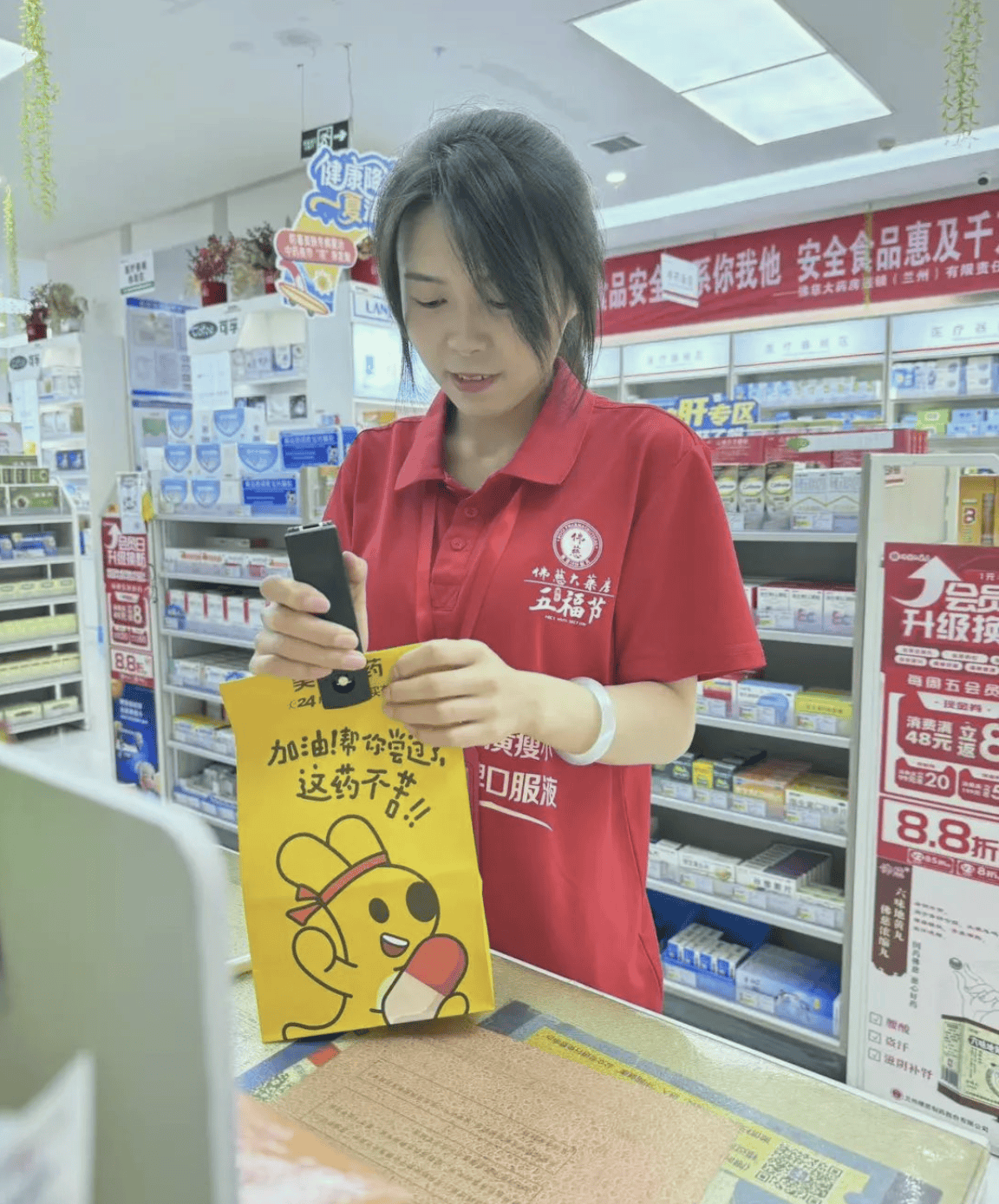
三个月做到商圈第一!小药店如何凭即时零售突围
Sou Hu Cai Jing· 2025-08-14 18:58
Core Insights - The retail pharmacy industry is undergoing a rational adjustment, with a net decrease of approximately 3,000 stores in the first quarter of 2025, bringing the total number of stores below 700,000 [1] - Analysts suggest that the market is experiencing a positive transformation, with inefficient stores being phased out, thereby creating opportunities for high-quality pharmacies [1] - Small and medium-sized chains are finding ways to survive and innovate amidst the challenges posed by larger competitors and market dynamics [1] Group 1: Industry Trends - In the first quarter of 2025, 7,118 new pharmacies opened while 10,284 closed, indicating a significant shift in the industry landscape [1] - The focus is shifting towards consolidation among leading chains, while small and medium-sized chains are implementing differentiated strategies to carve out their niche [1][3] - The rise of instant retail is becoming a key strategy for pharmacies, with companies like Yinpian Pharmacy and Foci Pharmacy successfully leveraging this model to enhance their market presence [2][4] Group 2: Operational Strategies - Strategic determination is crucial for small chains to excel in instant retail, as demonstrated by the experiences of Liu Simiao from Yinpian Pharmacy and Yu Yue from Foci Pharmacy [2][3] - Both companies have adopted a "Tianji's horse racing" strategy, focusing on specific market segments to avoid direct competition with larger chains [4][6] - Yinpian Pharmacy has utilized data insights from Meituan to optimize its operations, transforming a large store into a 24-hour delivery outlet, which has led to significant order volume increases [6][8] Group 3: Resource Management - Small chains are effectively managing their operations with minimal staff, as seen with Yinpian Pharmacy operating over 90 stores with just 1.5 personnel dedicated to online operations [8] - The digital infrastructure provided by platforms like Meituan has enabled these pharmacies to streamline their operations and enhance efficiency [8] - Training programs such as Meituan's "Accelerator Program" are helping small chains develop digital operational skills, which are essential for navigating the evolving retail landscape [8]

做好中小连锁药店数字化小帮手,美团买药推出“加速器计划”
Xin Lang Cai Jing· 2025-08-01 04:26
Core Insights - The article highlights the rising trend of instant retail "online schools" among small and medium-sized chain pharmacies, driven by Meituan's new initiatives to enhance digital operations and supply chain efficiency [1][2] Group 1: Digital Transformation Initiatives - Meituan's "Accelerator Program" for small and medium-sized chain pharmacies includes a digital talent growth plan and an ecological resource efficiency plan, aiming to cultivate digital operation talents and restructure supply chains [1] - The O2O (Online to Offline) training courses organized by Meituan have seen overwhelming participation, indicating a strong demand for digital operational skills among pharmacy staff [3] Group 2: Challenges and Opportunities - Small and medium-sized chain pharmacies face challenges such as lack of online operation experience, absence of professional teams, and insufficient supply of popular products during their digital transformation [2] - The shift from scale competition to refined operations allows these pharmacies to explore online development opportunities, particularly in local markets [2] Group 3: Supply Chain Innovations - Meituan's new model connects upstream industrial brands directly with small chain pharmacies, effectively reducing costs and ensuring supply, especially during peak demand periods [4] - The implementation of a three-party co-construction model has been successful in addressing the mismatch of supply and demand for high-demand medications, enhancing online visibility and coverage for pharmacies [4] Group 4: Regulatory Support - The recent joint action plan by multiple government departments positions retail pharmacies as core scenes for health promotion, encouraging them to expand their roles in health and nutrition [4]


7月31日电,CVS健康公司美股盘前涨超4%。此前,公司上调2024财年调整后每股收益指引至6.30-6.40美元,原预期为6.00-6.20美元,市场预估6.13美元。
news flash· 2025-07-31 10:34
Core Viewpoint - CVS Health Company shares rose over 6% in pre-market trading following the upward revision of its fiscal year 2024 adjusted earnings per share guidance to $6.30-$6.40, compared to the previous expectation of $6.00-$6.20, while market estimates were at $6.13 [1] Summary by Category - **Earnings Guidance** - CVS Health has increased its adjusted earnings per share guidance for fiscal year 2024 to a range of $6.30 to $6.40 [1] - The previous guidance was set between $6.00 and $6.20 [1] - Market expectations were at $6.13 [1]
Buy CVS Stock Ahead of Its Upcoming Earnings?
Forbes· 2025-07-30 13:15
Core Insights - CVS Health is set to announce its earnings on July 31, 2025, with historical stock behavior around earnings releases being a key focus for event-driven traders [2] - The consensus estimate for CVS's upcoming earnings is $1.46 per share on revenue of $94.59 billion, indicating a decline in profitability compared to the previous year [4][5] - CVS Health currently has a market capitalization of $76 billion and generated $379 billion in revenue over the last twelve months, with operating profits of $11 billion and net income of $5.3 billion [5] Historical Performance - Over the past five years, CVS stock has shown a tendency toward positive one-day returns post-earnings, with 55% of instances resulting in a positive return and a median gain of 4.4% [3][10] - There have been 20 earnings data points recorded in the last five years, with 11 positive and 9 negative one-day returns observed [6] - The percentage of positive returns increases to 58% when considering data from the last three years [10] Trading Strategies - Traders typically employ pre-earnings positioning, assessing historical probabilities before the earnings report, and post-earnings positioning, observing stock movements after the earnings release [7] - Understanding the correlation between short-term and medium-term returns post-earnings can inform trading strategies, particularly if 1D and 5D returns show high correlation [8][9]
药店推行阴阳价,别把医保卡当套利卡
Bei Jing Qing Nian Bao· 2025-07-08 03:30
Core Viewpoint - The article highlights the issue of "dual pricing" in pharmacies, where the price of a medication is higher when paid through health insurance compared to cash payments, leading to increased costs for insured individuals and undermining the integrity of the health insurance system [1][2][3] Group 1: Pricing Mechanism - The phenomenon of "dual pricing" results in insured individuals facing higher medication costs, transforming health insurance personal accounts into tools for paying inflated prices [2] - Pharmacies exploit the lack of sensitivity among insured individuals regarding their health insurance accounts, creating a dilemma where consumers feel they lose money regardless of their payment method [1][2] Group 2: Impact on Health Insurance System - The existence of price discrepancies diminishes public trust in the health insurance system, as individuals realize they cannot purchase medications at equivalent prices using their insurance [2] - The practice of "dual pricing" is seen as a means for pharmacies to extract funds from health insurance, potentially leading to fraudulent behaviors and significant leakage of health insurance funds [2] Group 3: Regulatory Recommendations - To address these issues, it is recommended that health insurance authorities establish a dynamic price monitoring mechanism and enhance daily management of designated pharmacies, including increased inspections and penalties for violations [2][3] - The implementation of immediate settlement reforms for health insurance funds is suggested to alleviate financial pressure on pharmacies, thereby reducing the incentive for "dual pricing" practices [3] - A graded management system for designated pharmacies should be established, linking compliance with pricing to health insurance payment limits, rewarding compliant operators while penalizing violators [3]