
交易策略

Search documents
Axi 推出由 Kathy Lien 主持的播客节目《The Strategy Room》
Globenewswire· 2026-03-26 08:19
Group 1 - Axi has launched a new podcast series titled "The Strategy Room," hosted by renowned currency strategist Kathy Lien, aimed at providing traders with insights on trading strategies, risk management, and market dynamics [1][2] - The podcast is part of Axi Select, a program dedicated to trader education and community building, designed to discover and support talented traders in scaling their strategies [2] - Each episode will feature discussions on how market participants respond to volatility, changing economic cycles, and emerging trading opportunities [1][2] Group 2 - Axi is a global online trading brand that offers trading channels for forex, indices, commodities, and digital assets, serving clients in over 100 countries [3] - The Axi Select program provides funded trading opportunities and structured support for trader development [3]


PB-ROE模型仓位择时与交易策略
HUAXI Securities· 2026-03-04 05:08
Group 1: Core Insights - The report introduces the PB-ROE model, which establishes a linear relationship between the logarithm of price-to-book (PB) ratio and return on equity (ROE) under the assumption of no dividends and clean surplus [6][8] - The model is effective in explaining current stock pricing and predicting future return differences, indicating that abnormal ROE will converge to the required return rate over the long term [9][11] - The empirical analysis of the A-share market shows that the PB-ROE model has a strong explanatory power, with an adjusted R-squared value exceeding 0.80, indicating that PB is primarily driven by earnings, real interest rates, and inflation [20][21] Group 2: Trading Strategies - The report outlines a position timing strategy based on the PB-ROE valuation deviation, categorizing market conditions into four states: very high, relatively high, relatively low, and very low valuation deviations [41][43] - The backtesting results from January 3, 2014, to February 27, 2026, show that the timing strategy significantly reduces drawdowns, with cumulative returns of 283.45% compared to a benchmark of 122.61% [47][48] - The report emphasizes the importance of adjusting positions based on valuation states to optimize trading outcomes [41][43] Group 3: Key Trading Signals - The report provides statistical analysis of trading signals based on valuation deviations, indicating that high valuation deviation areas yield high win rates and odds for long positions, while mid-high valuation areas are more favorable for short positions [57][59] - The performance of trading signals varies significantly across different valuation deviation regions, with specific thresholds identified for optimal trading strategies [56][60] - The analysis suggests that when valuation deviations exceed certain thresholds, the probability of successful trades increases, highlighting the model's utility in identifying trading opportunities [59][61] Group 4: Industry Rotation - The report applies the PB-ROE model to industry analysis, revealing that different industries exhibit distinct valuation deviation characteristics and their correlation with future returns [67][68] - A long-short industry portfolio strategy is proposed, where positions are adjusted based on the valuation deviation of each industry, leading to significant outperformance of the long portfolio compared to a benchmark [71][76] - The findings indicate that industries with positive correlation coefficients should have increasing positions as valuation deviations rise, while those with negative coefficients should see decreasing positions [68][69]
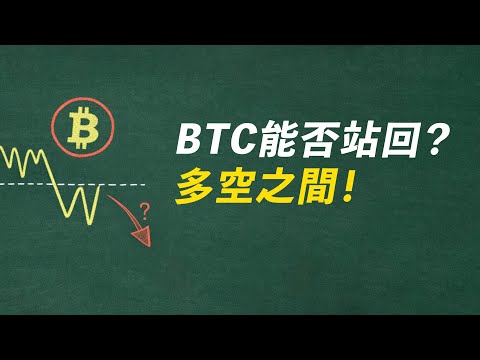
BTC一跌不復返?是否能站回?多空之間!
提阿非羅大人TiaBTC· 2026-02-03 19:45
朋友們2026年2月3日華爾街午盤 時間 我們來更新比特幣的行情 這個是比特幣的日線圖 從日線級別來看 我們發現比特幣是把前面 的低點跌破了之後 有在進行一段時間的盤整 目前來說好像還沒有站回去 那麼我們的交易策略是非常的清晰 也就是說任何時候只要是它還沒有站回去 我們就意味著說沒有任何做多的條件 那麼如果說它站回去了 會認為它有反彈 否則的話它仍然是有可能 和之前這個地方一樣 你也看到跌破了盤整沒有漲回去 也就意味著說沒有做多的交易 然後就再繼續往下跌 那麼目前來看 我們發現它確實也是把前面的低點 出現了跌破 然後盤整目前來說仍然是在這個地方糾結 並沒有出現站回來的情況 我們可以看到小級別一小時 我們發現這邊盤整前面低點跌破 然後收回盤整前面低點跌破收回 但是這都是非常小級別的交易 那麼如果說它在這邊盤整之後站回來 我們才首先考慮要不要去做多 否則的話它仍然是在這邊盤整 仍然有可能盤整到這個上面 把前面的平行的高點獵殺一下 缺口補足然後再繼續往下跌 目前來說小級別 你想要去做一些超短線的交易 那麼有這種比如說跌破收回 跌破收回這樣的交易 可以去嘗試一下 但是我個人還是更留意 來到前面這一帶 平行頂附近的價格 ...
黄金买卖实操宝典:选对渠道抓准时机,稳健布局资产保值之路
Sou Hu Cai Jing· 2026-01-29 12:35
Core Viewpoint - Gold remains a crucial asset for investors due to its unique anti-inflation and safe-haven characteristics, especially in the context of rising interest rate expectations and geopolitical disturbances in 2026 [1] Group 1: Compliance and Security - The first step in gold trading is to select compliant and legal trading channels, which directly impacts the safety of investor funds and transaction fairness [3] - Main compliant channels include commercial banks, securities and fund platforms, and Hong Kong Gold Exchange member units, each catering to different investor needs [3] - Gold trading platforms like Jinsong Precious Metals, as an AA member of HKGX, provide reliable options with independent fund management and transparent transaction processes [3] Group 2: Matching Trading Products - Different gold trading products vary significantly in risk levels, trading rules, and capital requirements, necessitating investors to align their choices with their risk tolerance and investment goals [5] - Physical gold, account gold, gold ETFs, and gold derivatives each serve different investor profiles, from beginners to experienced traders [5][6] - New investors are advised to start with non-leveraged products like account gold or gold ETFs before exploring more complex options [6] Group 3: Understanding Price Influences - Gold prices are influenced by multiple factors, including macro monetary policy, geopolitical tensions, and central bank gold purchases, which can drive demand and price fluctuations [7] - The expectation of continued interest rate cuts by the Federal Reserve in 2026 is a significant factor supporting rising gold prices [7] - The relationship between the U.S. dollar index and gold prices is typically negative, with a stronger dollar leading to decreased demand for gold [7] Group 4: Practical Strategies and Common Pitfalls - Effective trading strategies and avoiding common mistakes are essential for successful gold trading [8] - Investors should adhere to the principle of using "idle money" for investments and maintain a reasonable allocation of 5%-15% of total assets in gold [8] - Timing the market is crucial, with different trading sessions exhibiting distinct volatility characteristics, necessitating careful planning and risk management [8][9] Group 5: Long-term Investment Philosophy - The essence of gold trading lies in achieving long-term stable value rather than seeking short-term profits, emphasizing the importance of compliance and risk management [10] - Platforms like Jinsong Precious Metals that prioritize compliance and investor service can support a stable investment journey [10] - A rational mindset and strategic approach are vital for investors to realize the value preservation and gradual asset appreciation that gold offers [10]

“期货式”生活应变指南
Qi Huo Ri Bao· 2026-01-16 02:11
Group 1 - The futures market is characterized by constant fluctuations influenced by geopolitical changes, policy adjustments, and unexpected events, requiring traders to adapt their strategies flexibly [1] - Market volatility creates uncertainty but also presents hidden opportunities, necessitating a proactive approach to data analysis and strategy development [1] - Professionals in the industry must maintain a clear mind and sharp insight under pressure, continuously monitoring global news and market changes to capitalize on fleeting opportunities [1] Group 2 - The ability to remain calm and adjust strategies in response to unexpected events is a valuable skill developed in the futures market, which can also enhance personal life experiences [2][3]
anzocapital 发现交易稳定盈利的投资者,都有良好交易习惯
Sou Hu Cai Jing· 2026-01-13 00:25
Group 1 - The core idea emphasizes the importance of developing good trading habits in forex trading, comparing it to walking on the edge of a cliff where one can fall at any moment [1] - Anzocapital highlights that novice traders are more likely to develop bad habits, which can persist throughout their trading careers [1] Group 2 - Many traders on the Anzocapital platform do not consider tracking trades and analyzing them at the end of trading sessions as important, viewing it as a tedious task [3] - Keeping a trading journal is encouraged, where traders should document their trading plans, including the instruments to trade, reasons for trading, entry points, stop-loss levels, and trade sizes [3] - It is noted that most traders fail to adhere to their plans, often entering trades too early or exiting too late, or making impulsive trades instead [3] - By strictly following the habit of maintaining a trading log, traders can better understand their mistakes and establish the discipline needed to correct them [3] - Regardless of the trading platform, cultivating good trading habits is crucial for traders to identify their issues and continuously improve their trading strategies [3]

把熟悉的策略用好、用精
Qi Huo Ri Bao Wang· 2025-12-02 02:28
Core Insights - Wang Xiaolu won the "Zhengshang Futures Options Player Award" in her first participation in the national futures (options) trading competition, showcasing her skills in options trading [1] - Her successful strategy involved selling put options on PTA, capitalizing on market conditions and volatility [1][2] - Wang emphasizes the importance of risk management and has developed a method to keep risk levels below 70% to mitigate potential market shocks [1][2] Group 1 - Wang Xiaolu's notable trades included PTA, caustic soda, peanuts, and ferrosilicon, with a standout performance in PTA options [1] - The successful PTA trade involved selling put options during a market uptrend, allowing her to profit from volatility, direction, and time [1] - Wang's position management was effective, as she adjusted her positions upwards during the price increase, maximizing her gains [1] Group 2 - The biggest challenge faced during the competition was unexpected market volatility, which required using futures to hedge risks [2] - Wang Xiaolu's award has enhanced her sense of achievement and engagement as a professional investor [3] - For newcomers to options trading, she advises finding a good mentor and emphasizes the importance of practicing with simulated trading to improve skills [3] Group 3 - Wang highlights that successful trading does not require complex strategies but rather a clear understanding of market direction and effective psychological management [3] - Her transition from the stock market to the options market took two years, built on a deep understanding of the market and strict risk control [3] - The focus should be on effectively utilizing familiar strategies rather than chasing after complex ones [3]
交易无最优 取舍即智慧
Qi Huo Ri Bao Wang· 2025-11-26 01:00
Group 1 - The core viewpoint emphasizes the importance of a consistent trading strategy for long-term success in the futures market [2] - The trader, nicknamed "Linglong Twin," achieved the eighth position in the long-term stable profit category of the 19th National Futures (Options) Real Trading Competition, showcasing a deep understanding of trading principles [1] - The trader's approach focuses on high-volatility and liquid commodities, applying trend-following strategies to capitalize on market opportunities [2] Group 2 - The transition from high win-rate low-risk arbitrage to low win-rate high-risk trend trading was marked by significant challenges, leading to a re-evaluation of risk management practices [3] - A pivotal moment in the trader's career occurred between the ages of 40 and 44, influenced by the book "The Turtle Trading Rules," which clarified the processes of earning money and controlling losses [3] - The trader's philosophy rejects perfectionism, advocating for a balanced approach between win rates, risk-reward ratios, and position sizing [4] Group 3 - Risk management is a fundamental principle for the trader, with strict adherence to stop-loss rules being essential for survival in trading [4] - Initial position sizes are determined through objective strategy backtesting, considering factors such as win rates, risk-reward ratios, and maximum drawdowns [4] - Profit-taking strategies are contingent on the nature of the funds, with a distinction made between pressure funds and surplus funds [4]
复杂的事简单做、简单的事重复做
Qi Huo Ri Bao Wang· 2025-11-24 01:21
Core Insights - The article highlights the journey of He Yue, a participant in the national futures trading competition, emphasizing his growth and learning experiences in trading [1][4]. Group 1: Trading Experience and Strategy - He Yue achieved fifth place in the industry group of the national futures trading competition, showcasing his trading skills [1]. - Initially, He participated in the competition to assess his trading capabilities against others, acknowledging the increasing competition and the need for self-improvement [2]. - He faced significant challenges, including a major drawdown in April, which reinforced the importance of hedging in trading, particularly with options [2][3]. - His trading strategy is based on macroeconomic policy judgments, with a focus on index futures and options, predicting a long-term bull market following government policy changes [2]. Group 2: Trading Philosophy and Risk Management - He emphasizes the balance between "extremes" and "hedging" in trading, which has allowed him to seize opportunities while protecting profits [3]. - His trading journey began in 2008, evolving from initial confidence to a period of self-reflection and learning from past mistakes [4][5]. - He advocates for a disciplined approach to trading, focusing on understanding market policies and personal trading psychology [6]. - He maintains strict risk management rules, including keeping positions below 30% and using only 2% to 5% of capital for short-term trades to minimize anxiety [6].
七年磨一剑 坚守平衡之道
Qi Huo Ri Bao Wang· 2025-11-18 00:55
Core Insights - The interview highlights the success of He Ran, who won the championship in the hedging arbitrage group of the national futures (options) trading competition, emphasizing the importance of adhering to one's trading strategy despite market fluctuations [1] Group 1: Trading Philosophy and Strategy - He Ran attributes his success to the principle of "sticking to one's strategy," which helped him navigate through significant profit drawdowns and periods without gains during the competition [1] - His trading approach focuses on swing trading and arbitrage, primarily utilizing cross-commodity arbitrage in stock index futures and hedging arbitrage in options, capitalizing on the considerable profit potential in a volatile market [1] Group 2: Risk Management and Emotional Control - He Ran has established clear trading principles, using K-line breakthroughs as critical references for opening positions, stop-loss, and take-profit decisions [2] - He emphasizes strict adherence to stop-loss rules, such as a maximum loss of 0.5% per trade and a daily drawdown limit of 3%, which he believes is essential for protecting capital [2] - He Ran acknowledges the impact of emotions like anxiety, greed, and fear on trading decisions and advises distancing oneself from the market during negative emotional states to avoid larger losses [2] Group 3: Future Outlook and Advice for New Traders - He Ran views his recent competition success as a new starting point, focusing on strategy optimization rather than short-term rankings, aiming for long-term stable profits [2] - He offers practical advice for novice traders, recommending starting with simulated trading to achieve stable profits before transitioning to real trading with small capital, while prioritizing capital protection [2]