集装箱航运

Search documents
全球媒体聚焦丨多家外媒认为 中美经贸会谈取得的实质性进展为全球经济纾压增加信心
Sou Hu Cai Jing· 2025-05-13 10:38
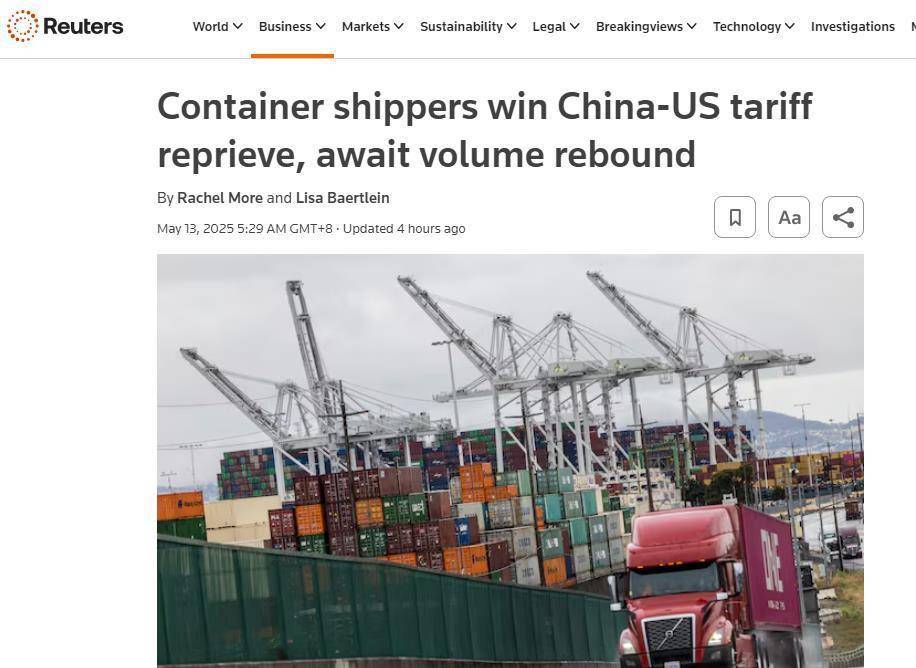
Group 1 - The high-level economic talks between China and the US have made substantial progress, alleviating global concerns about escalating trade tensions and boosting confidence in the global economy [1] - The agreement to suspend punitive tariffs has been welcomed by the container shipping industry, with potential for increased shipping demand as importers of critical medical supplies may initiate emergency restocking [4] - The average shipping time for trans-Pacific trade is approximately 22 days, and many clients may utilize the 90-day suspension period to transport as many goods as possible to the US [4] Group 2 - The 90-day suspension period provides Chinese e-commerce platforms with time to replenish inventory in the US, potentially allowing for bulk shipments via container ships [7] - The progress made in the Geneva economic talks has positively impacted global financial markets, with the S&P 500 index rising by 3.3% and the Nasdaq composite index increasing by 4.3% [8] - The Nikkei index experienced its highest increase since February 25, indicating a positive market response to the developments in the US-China economic discussions [8]

专家访谈汇总:养宠养成“伴侣”,谁能吃到情绪价值的溢价?
阿尔法工场研究院· 2025-05-13 10:25
Group 1: Cross-Border Tourism - The global cross-border tourism market is set to fully recover in 2024, with travel volume reaching 1.4 billion and market size exceeding $1.6 trillion, only 4% short of pre-pandemic peak levels [3] - China, as the largest source country, recorded 180 million outbound trips and nearly $290 billion in cross-border tourism revenue, significantly outpacing the global average in recovery speed and scale [3] - Data from the May Day holiday indicates a 173% year-on-year surge in inbound travel orders, while outbound travel is concentrated in Southeast Asia and Japan/Korea, with flight bookings increasing over 25% [3] - The trend towards short-haul cross-border travel is becoming mainstream, supported by the recovery of flight routes and reflecting the middle class's demand for "value for money" and "fragmented" leisure experiences [3] - The return of Chinese tourists is reshaping global tourism consumption structures and will substantially boost various segments of the global tourism-related industry chain, including airport operators, airlines, destination marketing agencies, and outbound travel service providers [3] Group 2: Veterinary Medicine Market - The veterinary medicine market in China has reached hundreds of billions in 2024, with an expected annual growth rate of 5%-8%, driven by the scale-up of traditional livestock farming and the rise of the pet economy and animal health awareness [4] - Key consumer demands include disease prevention, new vaccines, enhanced safety, and green low-residue products, leading to a shift in product structure from chemical drugs to biological products [4] - The industry is experiencing a "bipolarization" trend, where large enterprises dominate in brand, channel, and capacity, while small enterprises seek differentiation in niche markets such as pet medicine and localized disease prevention [4] - New operational entities, represented by large livestock farming companies, are increasingly focused on prevention efficiency, product residue, and economic benefits, demanding higher quality and stability in veterinary products [4] Group 3: Oral Healthcare Market - The oral healthcare market is expanding due to high rates of edentulism among those aged 65 and above (over 50%) and a 70% prevalence of malocclusion among adolescents, driven by both functional and aesthetic needs [6] - From 2025 to 2030, the average annual growth rate in lower-tier markets is expected to exceed that of first-tier cities by 5-8 percentage points, becoming a core expansion direction for private chains and telemedicine platforms [6] - With the implementation of centralized procurement policies covering implants and orthodontic materials, domestic companies are expected to see an increase in localization rates to 35%-40% over the next five years [6] - Public institutions remain dominant in handling severe cases and educational resources, while private institutions are more flexible, focusing on user experience and brand marketing, particularly in self-funded projects like implants, orthodontics, and aesthetic restorations [6] - Guangdong, Jiangsu, and Shandong account for over 50% of national oral healthcare resources, with Guangdong having a well-established full industry chain in equipment, consumables, and service institutions [6] - Over the next five years, policy direction and technological advancements will drive a shift in oral healthcare services from "treatment-oriented" to "prevention + personalized management + long-term repurchase" consumption cycles [6] Group 4: U.S.-China Trade Talks Impact on LPG - A significant breakthrough in U.S.-China trade relations occurred on May 12, 2025, with 91% of tariffs being lifted and the remaining "reciprocal tariffs" reduced to 10% within 90 days [8] - The reduction in tariffs has substantially improved the cost structure of U.S. products, leading to a $43 per ton increase in June FEI propane paper prices, indicating a rise in market optimism [8] - Chinese ports (e.g., Binzhou, Jiaxing, Ningbo, Tianjin) received a 31.44% increase in shipments of U.S. goods in April, reflecting anticipatory market behavior [8] - The decrease in U.S. tariffs is expected to alter the structure of LPG imports, opening a window for U.S. LPG to re-enter the Chinese market, particularly benefiting energy importers and LPG shipping companies with U.S. procurement capabilities [8] - The rapid increase in June FEI propane paper prices from $517 to $560 per ton (an 8.3% rise) reflects market expectations for U.S. products to re-enter the Asia-Pacific region [8] - In the medium term, U.S. production capacity and tariff advantages will create arbitrage opportunities, suggesting a focus on LPG traders and storage companies with long-term contracts and futures hedging capabilities [8] Group 5: Shipping Industry Response to U.S. Trade Policy - Following the May 12 U.S.-China joint statement, which lifted 91% of tariffs and provided a 90-day suspension on 24% of "reciprocal tariffs," a surge in shipping activity was observed, particularly on routes to the U.S. [9] - The export surge is driven by two key factors: the release of previously delayed shipments due to high tariffs and companies' anticipation of future policy volatility, prompting them to utilize the low-tariff window for deliveries or inventory replenishment [9] - Shipping companies had previously reduced capacity on U.S. routes due to cautious expectations regarding U.S.-China trade tensions, reallocating some capacity to more stable Southeast Asia and European routes [9] - Data from the Shanghai Shipping Exchange indicates that freight rates for U.S. West and East Coast routes have increased by 3.3% and 1.6%, respectively, with further increases expected in the coming weeks [9] - Shipping-related companies (e.g., container shipping, port operations, freight forwarding platforms) will directly benefit from the increased turnover rates and enhanced bargaining power resulting from this export surge [9] - The current "explosion" in shipping activity reflects both the release of market sentiment due to policy changes and the sensitivity of U.S.-China trade structures to external variables [9] - Small exporters, such as Shuangma Plastics and factories in the Yangtze River Delta, report a rapid restart of U.S. customer orders and accelerated payment and scheduling actions within the 90-day tariff relief window [9]
阿波罗首席经济学家:中美贸易战将重创美国小企业
财富FORTUNE· 2025-05-06 12:34
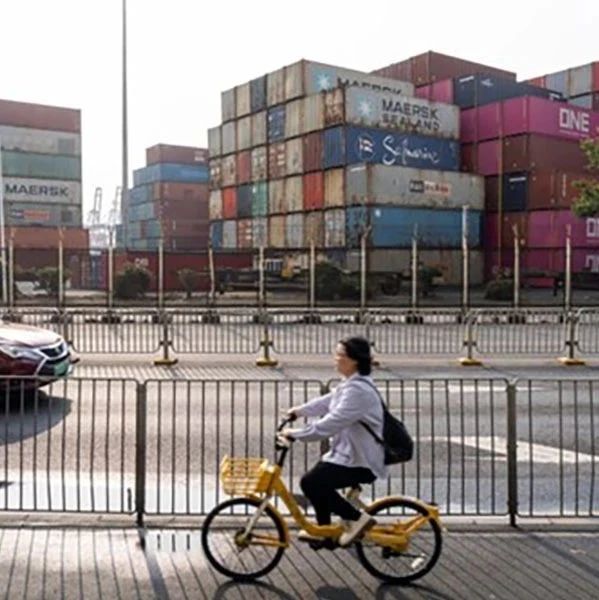
Core Viewpoint - The trade between China and the United States is experiencing a sharp decline, leading to potential shortages in U.S. stores and a dual crisis of rising prices and unemployment [1][4]. Group 1: Trade Dynamics - The shipping volume from China surged in late March and early April as companies rushed to transport goods before tariffs took effect, but it sharply declined after the tariffs were implemented on April 9 [1]. - The U.S. has imposed tariffs as high as 145% on most Chinese goods, while China has responded with 125% tariffs on many U.S. imports, although some exemptions have been introduced for specific industries [1][5]. Group 2: Economic Impact - The decline in demand is impacting revenue across the shipping and logistics industry, leading to significant layoffs that could further drag down the economy [3][4]. - Small businesses, which rely heavily on affordable imported goods, are particularly vulnerable due to their limited financial reserves compared to larger corporations [4][5]. - In 2023, small businesses employed approximately 62 million Americans, accounting for over 46% of private sector employment, highlighting their critical role in the economy [4]. Group 3: Consumer Behavior and Business Sentiment - Recent surveys from regional Federal Reserve banks indicate a sharp decline in new orders and stagnation in capital expenditure plans, reflecting growing anxiety among businesses [5]. - Companies like Southwest Airlines, Chipotle, and PepsiCo have expressed concerns in their earnings calls about consumers reducing spending amid economic uncertainty [5].
摩根士丹利:集装箱航运- 中远海运控股股份有限公司与上海出口集装箱运价指数对比
摩根· 2025-04-23 10:46
Investment Rating - The industry investment rating is "In-Line" for Hong Kong/China Transportation & Infrastructure [5] Core Insights - The Shanghai Containerized Freight Index (SCFI) decreased by 1.7% week-over-week for the week ending April 18, 2025, compared to a 0.1% increase in the previous week, indicating a potential negative impact on COSCO Shipping Holdings' revenues and profits [8] - The SCFI is viewed as a leading indicator of actual shipping rates, which are correlated with the stock performance of COSCO Shipping Holdings [8] - Changes in shipping rates for various routes include a decrease of 2.9% for European routes, an increase of 0.8% for Mediterranean routes, a decrease of 4.5% for US West Coast routes, and minor increases for Southeast Asia and South America routes [8] Summary by Sections - **Industry Overview**: The report focuses on the container shipping sector within the Asia Pacific region, particularly analyzing COSCO Shipping Holdings in relation to the SCFI [4][60] - **Market Performance**: The SCFI's recent performance reflects a downward trend, which may adversely affect the financial outlook for COSCO Shipping Holdings [8] - **Stock Performance Correlation**: The report emphasizes the correlation between SCFI movements and COSCO Shipping Holdings' stock performance, suggesting that fluctuations in shipping rates directly influence the company's market valuation [8]