体育赛事

Search documents
大看台|述评:体育之窗展现中国式现代化万千气象
Xin Hua She· 2026-01-02 01:24
Group 1 - The core message of the articles highlights the vibrant development of sports in China, showcasing the integration of sports with national development and the promotion of a strong sports culture [1][4][10] - The 2025 National Games, held across the Guangdong-Hong Kong-Macao Greater Bay Area, marked a significant milestone as the first cross-border event, demonstrating the successful collaboration between the three regions under the "One Country, Two Systems" policy [3][4] - The popularity of grassroots sports events, such as the "City Super" and "Village Super," has attracted over 2.43 million spectators, indicating a growing interest in local sports and their economic impact [4][6] Group 2 - The ice and snow sports sector is projected to generate a market value of 1 trillion yuan by 2025, reflecting the transformation of cold resources into a vibrant economy and promoting regional development [6][10] - The integration of technology in sports is evident with the emergence of humanoid robots in competitions, showcasing China's advancements in cutting-edge technology and its application in sports [7][10] - The government's policies aim to cultivate world-class sports enterprises and events, with the sports industry expected to exceed 7 trillion yuan by 2030, emphasizing the importance of sports in the new development paradigm [6][10]


体育之窗展现中国式现代化万千气象
Xin Hua Wang· 2026-01-02 01:19
Core Viewpoint - The article highlights the vibrant development of sports in China, showcasing its role in national modernization and unity, as well as the integration of technology in sports. Group 1: Sports Events and Achievements - The 2025 National Games, co-hosted by Guangdong, Hong Kong, and Macau, exemplify the innovative practice of "One Country, Two Systems" in sports, fostering collaboration among the three regions [2] - China successfully hosted two major international events in 2025, the Harbin Asian Winter Games and the Chengdu World Games, promoting friendship and cultural exchange [3] Group 2: Grassroots Sports and Economic Impact - Grassroots sports events like "City Super" and "Village Super" have gained immense popularity, with the "Su Super" event attracting over 2.43 million spectators and setting a record of 62,329 attendees at the finals [4] - The integration of sports with tourism and commerce has led to the rise of "event economy" and "ticket economy," enriching people's lives and driving economic growth [4] - The ice and snow industry in China is projected to generate 1 trillion yuan by 2025, transforming "cold resources" into a "hot economy" [4] Group 3: Policy and Industry Development - The State Council's policy aims to cultivate world-class sports enterprises and events by 2030, with the sports industry expected to exceed 7 trillion yuan in total scale [5] Group 4: Innovation and Technology in Sports - Advances in embodied intelligence technology have led to the emergence of robotic athletes, with events showcasing human-robot competitions and highlighting China's innovation in technology [6] - The integration of technology in sports is enhancing athlete performance and making fitness more engaging through smart equipment and virtual environments [7] - Institutional innovations are being explored to create a more sustainable sports development ecosystem, including market-oriented reforms and deeper integration of education and sports [7]
中国田径协会10公里精英赛(苏州·太仓站)开跑
Su Zhou Ri Bao· 2026-01-02 00:38
Core Viewpoint - The 2026 China Athletics Association 10km Elite Race in Taicang marks a significant event in the domestic running industry, showcasing high-level competition and international recognition for participants [1] Group 1: Event Overview - The race took place on January 1, 2026, with approximately 6,000 participants from both domestic and international backgrounds [1] - This event is recognized as an "A-level event" by the China Athletics Association, representing the highest standard for 10km road running events in China [1] - The race follows the successful 2024 Taicang Sino-German Half Marathon, indicating a trend of hosting high-profile running events in Taicang [1] Group 2: Race Features - The racecourse is designed to be speed-friendly and suitable for all participants, featuring a return design that enhances performance conditions [1] - Participants' results will be recorded in a national database, allowing for the application of public runner rankings, and the results are also recognized by the World Athletics (IAAF) competition calendar [1]
河北体育市场为高质量发展注入新动能
Xin Lang Cai Jing· 2026-01-01 21:51
Core Insights - The sports industry in Hebei has experienced an average annual growth rate of over 10% since the 14th Five-Year Plan, with an expected total scale of 300 billion yuan by 2025, contributing to the province's economic transformation and high-quality development [1] Group 1: Sports Industry Growth - The total scale of the sports industry in Hebei reached 225.05 billion yuan in 2023, accounting for 1.75% of the provincial GDP, which is 0.6 percentage points higher than the national average [1] - The province's sports market is becoming increasingly active, with the growth in the sports industry providing new momentum for economic development [1] Group 2: Event Economy Development - The "Hebei Five-a-Side" football league has become a new platform for integrating sports events with cultural and commercial tourism, generating over 18 million yuan in cooperative funding through market development [2] - Policies have been implemented to support the development of the event economy, including financial subsidies for hosting high-level events, with the highest subsidy for international ice and snow events reaching 15 million yuan [2] Group 3: Outdoor Sports and Events - Hebei is leveraging its unique geographical advantages to host various outdoor sports events, with over 14,800 sports events held from 2024 to November 2025, attracting over 35 million participants and generating over 63.56 billion yuan in related consumption [3] - The province has established a three-tier youth event system and is promoting local特色品牌赛事 (characteristic brand events) based on regional strengths [3] Group 4: Outdoor Sports Destination Development - Hebei is actively promoting high-quality outdoor sports destination construction, with several locations recognized as national-level outdoor sports destinations, ranking first in the country alongside provinces like Jiangsu and Zhejiang [5] - The province has developed five major outdoor sports and leisure scenes, enhancing its appeal as a destination for outdoor activities [6] Group 5: Winter Sports Economy - The post-Olympic period has seen a significant increase in winter sports events, with 260 professional ice and snow sports events planned for the 2024-2025 season, including 8 international events, making Hebei a leader in this sector [7] - The province's winter sports tourism has seen a visitor increase of 18% year-on-year, with over 5.2 million tourists expected during the 2024-2025 winter season [7] Group 6: Sports Manufacturing and Consumption - Over 3,000 sports manufacturing enterprises in Hebei have expanded their markets, providing equipment and services for major national and international events [8] - The province has issued 70 million yuan in sports consumption vouchers over five years, promoting sports consumption among residents, with total sports consumption reaching 159.613 billion yuan in 2024 [8]
赛事精彩不断 今年有你好看
Xin Lang Cai Jing· 2026-01-01 16:39
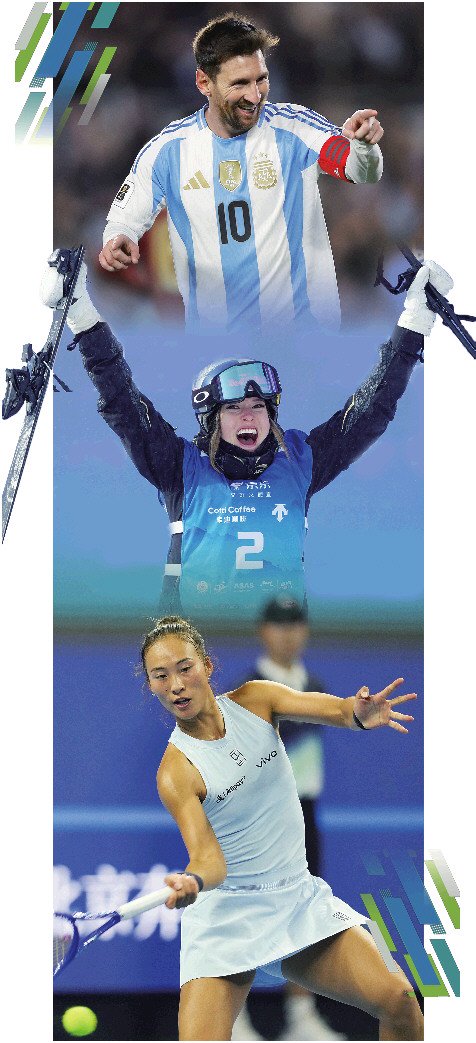
Group 1: Major Sporting Events in 2026 - The year 2026 will feature significant sporting events including the Winter Olympics, FIFA World Cup, and Asian Games, along with various major tennis and basketball tournaments [2][3][4]. Group 2: Australian Open - The Australian Open will officially start on January 18, 2026, with top players like Sabalenka, Swiatek, and Djokovic participating [3][4]. - Chinese tennis player Zheng Qinwen will make her return to the court on January 13, 2026, after recovering from surgery, having dropped from a career-high ranking of 4 to 24 due to injuries [2][15]. Group 3: Winter Olympics in Milan - The 25th Winter Olympics will take place from February 6 to 22, 2026, with the Chinese short track speed skating team securing full participation slots [5]. - Athletes like Gu Ailing and Su Yiming are expected to compete for gold medals, with the Chinese team aiming to surpass their previous best performance of 5 golds, 2 silvers, and 4 bronzes from the 2010 Vancouver Olympics [5]. Group 4: Women's Asian Cup - The Women's Asian Cup will be held in Australia from March 1 to 21, 2026, featuring 12 teams, with China expected to advance from the group stage [6][7]. Group 5: Thomas and Uber Cup - The Thomas and Uber Cup will take place in Denmark from April 24 to May 3, 2026, with the Chinese badminton teams aiming to defend their titles amid challenges from emerging players [8]. Group 6: World Table Tennis Championships - The World Table Tennis Championships will occur in London from April 28 to May 10, 2026, marking the largest event in its history with 64 teams in both men's and women's categories [9]. Group 7: FIFA World Cup - The FIFA World Cup will be held from June 11 to July 19, 2026, featuring 48 teams, with legendary players like Messi and Ronaldo potentially participating in their final World Cups [10]. Group 8: Women's Basketball World Cup - The Women's Basketball World Cup is scheduled for September 4 to 13, 2026, in Berlin, with China expected to qualify easily and player Zhang Ziyu being a key focus [11]. Group 9: Asian Games - The 20th Asian Games will take place from September 19 to October 4, 2026, in Japan, with China aiming to maintain its top position after a record performance in the previous edition [12].
亮眼答卷!河北体育这些“全国第一”很硬核
Xin Lang Cai Jing· 2026-01-01 12:37
Core Insights - Hebei Province has achieved significant milestones in its sports development during the "14th Five-Year Plan" period, with all planned objectives fully accomplished [3] - The province has established itself as a leader in various sports sectors, including the highest number of ski resorts and indoor ice rinks in China [3] - The performance of Hebei athletes at national and international competitions has improved, contributing to the province's reputation and sports culture [5][8] Sports Infrastructure and Development - Hebei has 84 ski resorts and 98 indoor ice rinks, both ranking first in the nation [3] - The province has built 126 new standard sports parks, achieving full coverage across all counties [3] - The sports industry in Hebei has seen an average annual growth rate of over 10% in the past five years, supporting economic transformation [3] Competitive Achievements - At the 15th National Games, Hebei's sports delegation won 15 gold, 16 silver, and 16 bronze medals, improving its national ranking by five positions [5] - Hebei athletes have made history by winning medals at the Asian Winter Games, contributing to China's overall medal tally [11] - Notable athletes from Hebei, such as Gong Lijiao and Sun Yingsha, have been recognized as top athletes in China for their outstanding performances [8] Economic Impact - Over 10,000 sports events were held in Hebei from January to November 2025, attracting 24.9 million participants and spectators, generating over 47.3 billion yuan in consumption, a 207.57% increase [12] - The province's sports events have become a driving force for economic development, with local events like the "Hebei Five-a-Side" league promoting community engagement [15] Recognition and Future Prospects - Three locations in Hebei have been recognized as high-quality outdoor sports destinations, ranking the province among the top in the country [17] - Hebei is set to host multiple international and national-level snow sports events, featuring top athletes, further enhancing its sports profile [21] - The achievements during the "14th Five-Year Plan" period set a strong foundation for future sports development in Hebei [23]

全国新年登高健身大会广东主会场活动佛山南海启幕
Xin Lang Cai Jing· 2026-01-01 11:32
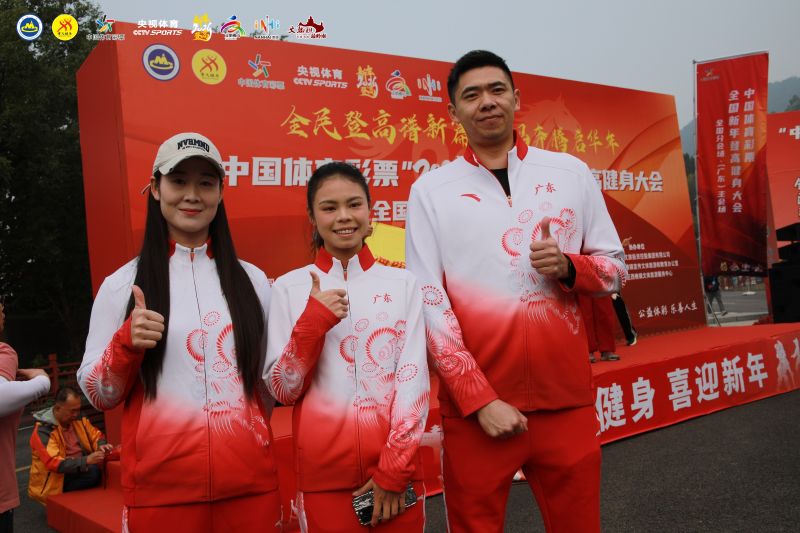
Core Viewpoint - The 2026 National New Year Climbing Fitness Conference in Guangdong marks a significant event for promoting sports and cultural tourism integration, showcasing the province's commitment to high-quality development and public health initiatives [2][4]. Group 1: Event Overview - The event, themed "Climb High to Write a New Chapter, Gallop into a Prosperous Year," features an upgraded route and starting point, integrating sports passion, cultural heritage, and consumer vitality [2]. - This year's event attracted nearly 20,000 visitors on New Year's Day, highlighting its status as a key sports event in Guangdong [5]. Group 2: Athlete Participation - Notable athletes, including Mo Jiadie, Liu Xuelian, and Wu Yuangen, participated, sharing their inspiring stories and embodying the spirit of perseverance and teamwork [4]. - Their achievements in various sports events resonate with the theme of climbing and self-overcoming, aligning with Guangdong's reform spirit [4]. Group 3: Infrastructure and Experience - The event features a 10.18-kilometer climbing route that connects natural wonders, historical sites, and innovative cultural tourism projects, creating an immersive experience for participants [5]. - Safety measures include route markers, professional inspections, medical assistance, and supply stations to ensure a secure and enjoyable experience for all participants [5]. Group 4: Future Developments - The Guangdong Nanhai "Lingnan Fantasy" International Digital Cultural Tourism Resort, with a total investment of 3 billion yuan, is under construction and aims to enhance the cultural tourism industry in conjunction with the climbing event [5]. - The province plans to host over 75 mass sports events during the New Year holiday, promoting a fitness craze and expanding sports consumption scenarios [7].
回望2025 我国消费市场好戏连台
Yang Shi Wang· 2026-01-01 11:01
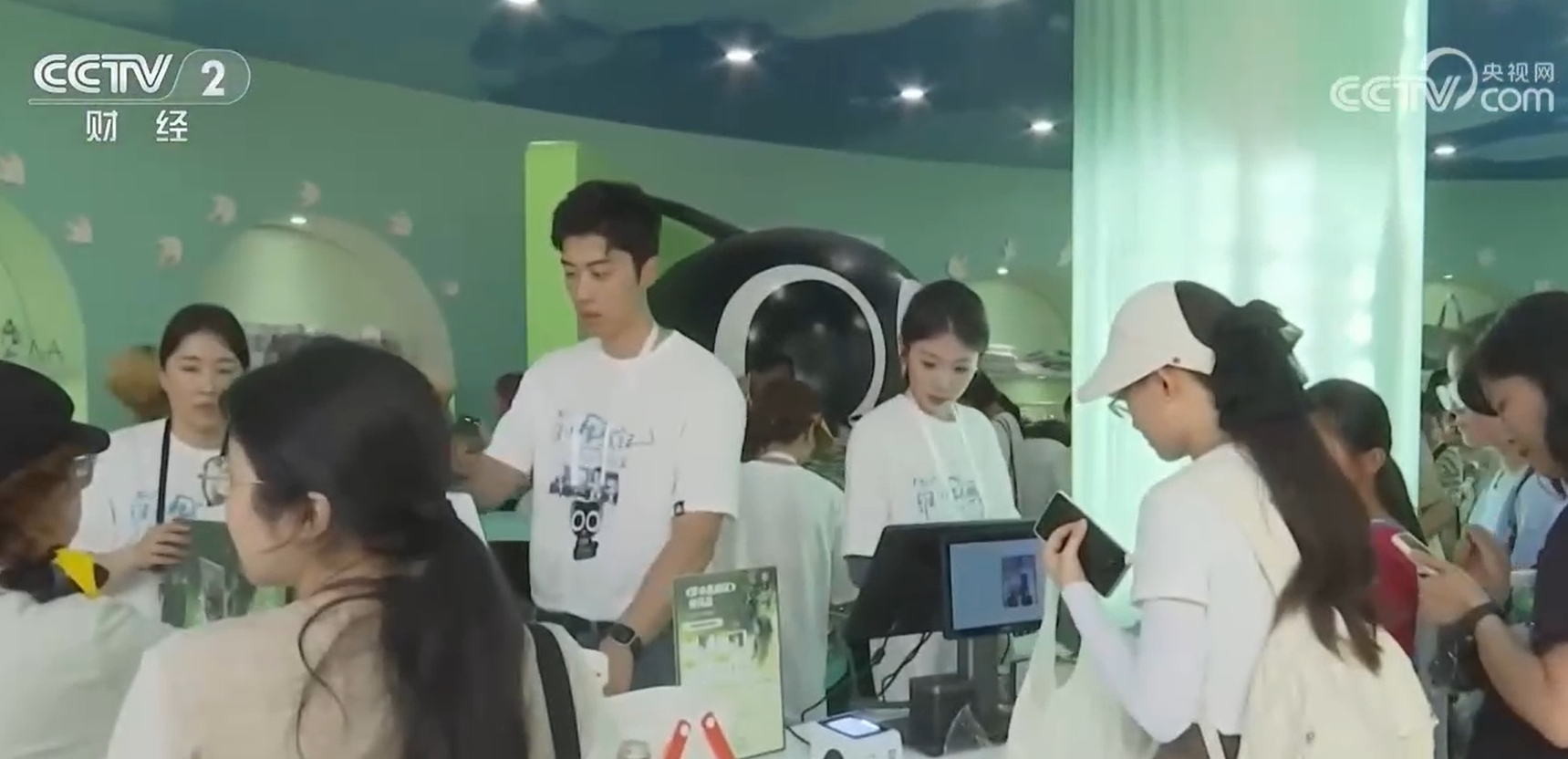
Group 1: Economic Overview - In 2025, China's economy is characterized by strong growth and a focus on quality, with consumption as a key driver [1] - The total box office for the Chinese film market has surpassed 50 billion yuan, showcasing its robust vitality [2] Group 2: Film Industry Insights - The animated film "Ne Zha" has achieved a global box office of over 15.9 billion yuan, ranking among the top five in global box office history [2] - The integration of film IP and "ticket root economy" is notable, with significant sales of merchandise related to films like "The King's Avatar" [4] Group 3: Sports Economy - The 15th National Games introduced a "whole sports package," enhancing regional consumption and generating nearly 38 billion yuan in service revenue from five monitored locations [6] - The Xiang Super League has also contributed to significant consumption, with direct and indirect related consumption exceeding 20 billion yuan [6] Group 4: Youth and Trendy Products - The rise of trendy toys has created a new consumption ecosystem, with the market for "doll clothing" expanding significantly [9] - New professions such as IP designers and toy planners are emerging, driven by the growth of the trendy toy market [9] Group 5: Silver Economy - The elderly population in China has surpassed 310 million, leading to a shift in consumption patterns towards quality and self-indulgence [10] - Sales revenue from cultural and entertainment activities for the elderly has increased by 20.7%, with tourism services up by 26.2% and sports health services by 23.9% in the first half of 2025 [10] Group 6: Lifelong Learning for Seniors - The elderly are increasingly engaging in knowledge-based consumption, with the elderly education market expected to exceed 400 billion yuan by 2025 [11] - A new ecosystem for elderly education is forming, blending online and offline learning experiences [11]
2025中国匹克球巡回赛青少年总决赛厦门落幕
Xin Lang Cai Jing· 2026-01-01 10:31
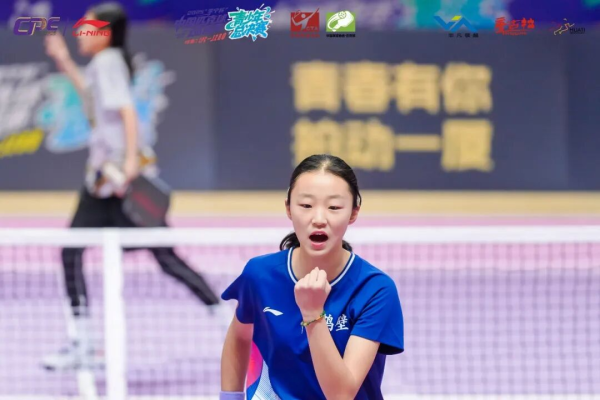
Core Insights - The 2025 "Li Ning Cup" China Pickleball Tour Youth Finals successfully concluded in Xiamen, featuring 453 elite young players from 26 provinces and Hong Kong competing across five age groups [1][3] - The event served as a professional platform for young athletes to showcase their skills and further promoted the development of pickleball among youth in China [1] Group 1 - The event provided a comprehensive competitive and exchange platform for young pickleball players, effectively assessing their training outcomes [1] - The successful organization of the finals was supported by the excellent facilities and services at the Xiamen International Exhibition Center, ensuring a safe and fair environment for all participants [3] Group 2 - The 2025 "Li Ning Cup" China Pickleball Tour attracted thousands of young participants across multiple cities, indicating a growing interest in the sport [3] - The event's conclusion marks a significant milestone in the promotion and popularization of pickleball among the youth in China, with expectations for more young talents to emerge in the future [3]
来怀柔过大年!解锁冬季文旅新体验
Xin Lang Cai Jing· 2026-01-01 09:28
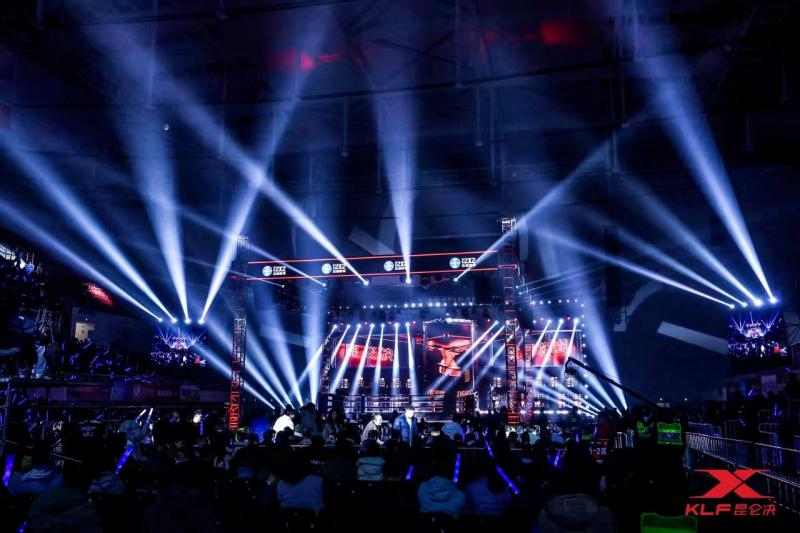
转自:北京青年报客户端 1月1日,2026"来怀柔过大年"冬季文旅发布会举行。怀柔区推出22项文旅活动、4条特色线路、多项惠民福利,全 方位解锁怀柔冬季文旅新体验,诚邀四海宾朋共赴冰雪之约、同享年味盛宴。 北京青年报记者了解到,22项特色文旅活动横跨元旦、春节,涵盖AI互动脱口秀、昆仑决格斗冠军赛等新潮体 验,以及红螺寺新春游园、敛巧饭民俗活动、非遗美食市集等传统项目。 春节期间,国际顶尖格斗赛事品牌"昆仑决"将首度落户北京雁栖湖国际会展中心。农历正月初五至初六,中外搏 击选手将齐聚赛场,围绕70公斤级洲际金腰带、61公斤级世界金腰带展开巅峰对决,为市民游客献上一场兼具视 觉冲击与体育魅力的新春盛会。 农历正月十六,延续百年乡情的敛巧饭民俗文化活动,将在琉璃庙镇杨树底下村举办。活动涵盖传统祈福仪式、 民俗展演、互动体验及文化展示等丰富内容,让市民游客在浓浓的年味儿中,沉浸式感受非遗民俗的独特韵味。 此外,怀柔精心推出长城艺术之旅、湖光戏雪之旅、探寻体验之旅3条"雪韵怀柔"特色线路与1条全链条康养线 路。其中,长城艺术之旅串联慕田峪长城、北沟国际文化村及精品民宿,游客可在登临雄关、漫步村落间,感受 历史文化与艺 ...