
食品制造业

Search documents
梅花生物(600873)8月1日主力资金净流出3776.14万元
Sou Hu Cai Jing· 2025-08-01 14:27
Group 1 - The core viewpoint of the news is that Meihua Biological (600873) has shown a decline in stock price and mixed financial performance, with a notable increase in net profit despite a decrease in total revenue [1][3] - As of August 1, 2025, Meihua Biological's stock closed at 11.16 yuan, down 0.8%, with a trading volume of 260,100 hands and a transaction amount of 292 million yuan [1] - The company's latest quarterly report indicates total revenue of 6.269 billion yuan, a year-on-year decrease of 3.36%, while net profit attributable to shareholders reached 1.019 billion yuan, a year-on-year increase of 35.52% [1] Group 2 - Meihua Biological has made investments in 20 companies and participated in 71 bidding projects, indicating active engagement in business expansion [2] - The company holds 91 trademark registrations and 18 patents, showcasing its commitment to intellectual property [2] - Meihua Biological has 40 administrative licenses, reflecting its compliance and operational capabilities in the industry [2]

美国就业“塌方式”降温?特朗普移民政策副作用炸裂!
Jin Shi Shu Ju· 2025-08-01 11:13
Group 1 - The Trump administration's immigration policies are increasingly straining an already weakening labor market, with July non-farm payrolls expected to show only 110,000 new jobs, down from 147,000 in June and below the average of 130,000 for the year [2] - The demand for labor is decreasing due to uncertainty from Trump's tariff policies, particularly affecting industries reliant on foreign labor such as agriculture, construction, and food manufacturing [2][3] - The U.S. labor force decreased by 130,000 in June, with a total decline of 364,000 since the beginning of the year, and the labor force participation rate fell to 62.3%, the lowest since December 2022 [2] Group 2 - The number of immigrants detained by ICE has increased from an average of 15,000 per month in 2024 to nearly 40,000 by June this year, while deportations have risen from an annualized rate of 400,000 to about 600,000 [2] - The total number of foreign workers in the U.S. has decreased by over 1 million in the past four months, with a record 5.4 million people exiting the labor market in May alone [3][4] - The share of foreign workers in the U.S. labor force fell to 19.1% in June from 19.8% in March, indicating a significant impact on industries struggling to replace lost labor [5] Group 3 - The labor shortage related to immigration could reduce the potential annual economic growth rate in the U.S. from 2% to 1% [6] - The job market is experiencing a split, with labor shortages in construction, hospitality, and agriculture, while white-collar job recruitment is slowing due to economic uncertainty [6] - The stable unemployment rate, which slightly decreased from 4.2% to 4.1%, may lead the Federal Reserve to refrain from interest rate cuts despite a significant slowdown in job growth [6]
东宝生物(300239)8月1日主力资金净流入1403.03万元
Sou Hu Cai Jing· 2025-08-01 10:59
Group 1 - The stock price of Dongbao Biological (300239) closed at 6.13 yuan on August 1, 2025, with an increase of 2.34% and a turnover rate of 8.42% [1] - The company reported a total revenue of 188 million yuan for Q1 2025, a year-on-year decrease of 22.23%, and a net profit attributable to shareholders of 19.04 million yuan, down 26.64% year-on-year [1] - Dongbao Biological has a current ratio of 4.494, a quick ratio of 3.112, and a debt-to-asset ratio of 33.71% [1] Group 2 - Dongbao Biological has made investments in 8 companies and participated in 43 bidding projects [2] - The company holds 169 trademark registrations and 49 patents, along with 60 administrative licenses [2]

煌上煌(002695)8月1日主力资金净流入1369.74万元
Sou Hu Cai Jing· 2025-08-01 10:59
通过天眼查大数据分析,江西煌上煌集团食品股份有限公司共对外投资了17家企业,参与招投标项目78 次,知识产权方面有商标信息116条,专利信息66条,此外企业还拥有行政许可54个。 来源:金融界 煌上煌最新一期业绩显示,截至2025一季报,公司营业总收入4.46亿元、同比减少2.53%,归属净利润 4436.97万元,同比增长36.21%,扣非净利润3948.50万元,同比增长48.25%,流动比率5.838、速动比率 4.686、资产负债率15.92%。 天眼查商业履历信息显示,江西煌上煌集团食品股份有限公司,成立于1999年,位于南昌市,是一家以 从事食品制造业为主的企业。企业注册资本55694.7081万人民币,实缴资本55694.7081万人民币。公司 法定代表人为褚浚。 金融界消息 截至2025年8月1日收盘,煌上煌(002695)报收于13.97元,上涨5.99%,换手率4.76%,成 交量24.33万手,成交金额3.33亿元。 资金流向方面,今日主力资金净流入1369.74万元,占比成交额4.11%。其中,超大单净流入514.43万 元、占成交额1.54%,大单净流入855.31万元、占成交额2. ...

宏辉果蔬(603336)8月1日主力资金净流入2207.67万元
Sou Hu Cai Jing· 2025-08-01 10:12
天眼查商业履历信息显示,宏辉果蔬股份有限公司,成立于1992年,位于汕头市,是一家以从事食品制 造业为主的企业。企业注册资本57036.7668万人民币,实缴资本10000万人民币。公司法定代表人为黄 暕。 通过天眼查大数据分析,宏辉果蔬股份有限公司共对外投资了14家企业,参与招投标项目9次,知识产 权方面有商标信息69条,专利信息4条,此外企业还拥有行政许可26个。 来源:金融界 金融界消息 截至2025年8月1日收盘,宏辉果蔬(603336)报收于7.45元,上涨2.19%,换手率6.13%, 成交量34.98万手,成交金额2.63亿元。 资金流向方面,今日主力资金净流入2207.67万元,占比成交额8.39%。其中,超大单净流入396.58万 元、占成交额1.51%,大单净流入1811.09万元、占成交额6.88%,中单净流出流出25.30万元、占成交额 0.1%,小单净流出2182.37万元、占成交额8.3%。 宏辉果蔬最新一期业绩显示,截至2025一季报,公司营业总收入2.46亿元、同比增长13.71%,归属净利 润450.47万元,同比减少44.38%,扣非净利润439.86万元,同比减少43.8 ...

黑芝麻(000716)8月1日主力资金净流入6900.00万元
Sou Hu Cai Jing· 2025-08-01 08:50
来源:金融界 黑芝麻最新一期业绩显示,截至2025一季报,公司营业总收入4.42亿元、同比减少3.74%,归属净利润 225.11万元,同比减少29.61%,扣非净利润138.27万元,同比减少139.61%,流动比率1.081、速动比率 0.750、资产负债率39.18%。 天眼查商业履历信息显示,南方黑芝麻集团股份有限公司,成立于1993年,位于玉林市,是一家以从事 食品制造业为主的企业。企业注册资本75348.955万人民币,实缴资本3801.46万人民币。公司法定代表 人为李玉珺。 通过天眼查大数据分析,南方黑芝麻集团股份有限公司共对外投资了28家企业,参与招投标项目44次, 知识产权方面有商标信息170条,专利信息47条,此外企业还拥有行政许可14个。 金融界消息 截至2025年8月1日收盘,黑芝麻(000716)报收于6.54元,上涨4.81%,换手率11.74%,成 交量83.45万手,成交金额5.38亿元。 资金流向方面,今日主力资金净流入6900.00万元,占比成交额12.83%。其中,超大单净流入4948.07万 元、占成交额9.2%,大单净流入1951.93万元、占成交额3.63%,中单 ...

深市公司积极分红:14家上市企业公布中期方案,回报投资者成常态
Huan Qiu Wang· 2025-08-01 08:09
Group 1 - As of July 30, 14 companies in the Shenzhen market have announced mid-term profit distribution plans, with a total dividend amount of 10.251 billion yuan [1] - By July 15, 775 listed companies in the Shenzhen market had disclosed their mid-term performance forecasts for 2025, with 453 companies expecting a year-on-year increase in net profit, accounting for nearly 60% [3] - The awareness of regular returns to investors among Shenzhen-listed companies has been increasing, with 8 out of the 14 companies announcing mid-term dividends for the first time [3] Group 2 - Since the release of the new "National Nine Articles," the capital market has seen continuous improvement in basic systems, leading to a market environment where companies are willing to distribute dividends regularly [4] - In 2023, 165 companies in the Shenzhen market have published shareholder dividend return plans for the next three years, indicating a commitment to stable returns for investors [4] - A total of 216 companies in the Shenzhen market announced medium to long-term shareholder dividend return plans in 2024, with some companies already fulfilling their commitments this year [4]




研判2025!中国速溶咖啡产业链、发展背景、发展现状、竞争格局及发展趋势分析:雀巢、麦斯威尔等外资品牌处于领先地位[图]
Chan Ye Xin Xi Wang· 2025-08-01 01:31
Overview - The instant coffee market in China is projected to reach a market size of 83.18 billion yuan in 2024, with a year-on-year growth of 5.85% [1][10] - Despite rapid growth, per capita consumption remains significantly lower than the global average, indicating substantial future growth potential [1][10] Market Policy - Instant coffee falls under the "Manufacturing Industry" category, specifically "Food Manufacturing," and is subject to strict regulations regarding raw material procurement, production, and quality testing to ensure food safety [3] - Recent policies have been implemented to enhance food safety and streamline food processing, which will positively impact the instant coffee industry [5] Industry Chain - The upstream of the instant coffee industry includes suppliers of coffee beans, sugar, and packaging materials, while the midstream involves the production and processing of instant coffee [6][8] - Coffee bean production in China is concentrated in regions like Yunnan and Hainan, with a projected coffee production of 151,800 tons in 2024, a year-on-year increase of 0.82% [8] Competitive Landscape - Major players in the instant coffee market include Nestlé and Maxwell, with domestic companies like Jiahe Foods and Hainan Lishen Investment Group also gaining traction [12][14] - Jiahe Foods reported a total revenue of 2.311 billion yuan in 2024, with coffee business revenue accounting for 12.04% [14] - Hainan Lishen has established itself as a modern food production enterprise with a complete coffee industry chain [16] Development Trends - Future trends indicate a shift towards flavor innovation and healthier options, with consumers increasingly favoring low-sugar, low-fat, and organic instant coffee products [18]


湖南东安创新融资机制 助小微企业蓬勃发展
Zhong Guo Xin Wen Wang· 2025-07-31 19:45
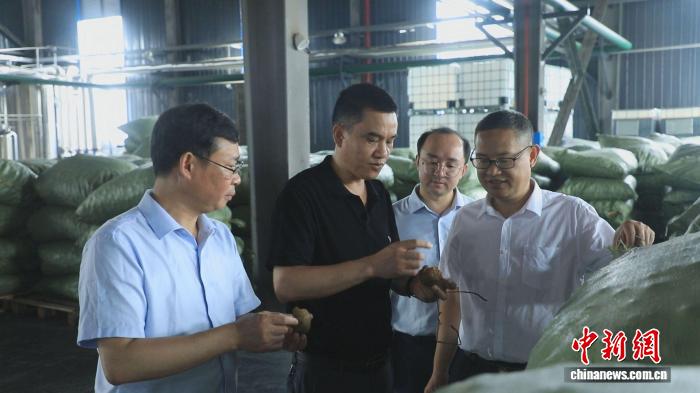
Core Viewpoint - Small and micro enterprises are crucial for expanding employment and stimulating the market, and local governments are implementing policies to address their financing challenges [1] Group 1: Financing Support for Small and Micro Enterprises - Hunan's Yongzhou City has established a dedicated task force to assess the financing needs of small and micro enterprises and create a comprehensive "financial service network" [1][2] - Hunan Tianman Biotechnology, a subsidiary of Greenman Biotechnology, faced financing difficulties due to a lack of collateral, impacting its production [2] - The local financial regulatory bureau and agricultural bank provided tailored support, resulting in a successful loan of 10 million yuan for Hunan Tianman Biotechnology, enabling the company to procure raw materials and equipment [2] Group 2: Impact of Financing Initiatives - As of the end of April this year, the task force has visited 21,661 enterprises, processed financing requests from 2,489, granted credit to 1,402, and disbursed loans to 1,095 enterprises, totaling approximately 70.18 million yuan [3] - These initiatives have alleviated the cash flow pressures on small and micro enterprises and enhanced their market competitiveness, injecting new vitality into the local economy [3]
A股中期分红升温,20余家公司拟派发逾百亿现金“红包
Di Yi Cai Jing Zi Xun· 2025-07-31 15:35
Core Viewpoint - A significant number of listed companies in the A-share market are increasing their mid-term dividend distributions, with over 20 companies announcing plans to distribute more than 10 billion yuan in cash dividends for the first half of 2025 [1][2][3]. Group 1: Dividend Announcements - Companies such as Ningde Times plan to distribute over 4.57 billion yuan in cash dividends, with a payout ratio of 15% [2][3]. - Other companies like WuXi AppTec and Dongpeng Beverage have also announced cash dividends exceeding 1 billion yuan [2][3]. - As of July 31, over 20 listed companies have disclosed their mid-term profit distribution plans, with total cash dividends exceeding 10 billion yuan [3][4]. Group 2: Performance and Growth - Most companies announcing mid-term dividends have reported positive year-on-year growth in net profits for the first half of the year, with some companies like WuXi AppTec and DingTong Technology seeing net profit growth exceeding 100% [3][4]. - Ningde Times reported total revenue of 178.89 billion yuan for the first half of the year, a 7.3% increase year-on-year, with net profit reaching 30.49 billion yuan, up 33.3% [2][3]. Group 3: Regulatory Environment and Trends - Regulatory policies have emphasized the need to enhance investor returns and increase the frequency of dividends, leading to a record high in both the frequency and amount of mid-term dividends among A-share listed companies [4][6]. - In 2024, over 700 A-share companies implemented mid-term dividends, with total distributions exceeding 580 billion yuan, marking a doubling in both the number of companies and the total amount compared to previous years [6][7]. - Companies are increasingly establishing long-term dividend return plans, with some like Zhongfang Biao outlining their profit distribution management policies to ensure reasonable returns to investors [6][7].