医疗卫生

Search documents
看病负担做“减法”,健康服务做“加法”——安徽这样拓展“三明医改”
Xin Hua Wang· 2025-09-30 00:53
Core Viewpoint - Anhui Province is implementing the "Sanming Medical Reform" experience to enhance public hospital services, focusing on improving healthcare accessibility and affordability for the local population [1][2]. Group 1: Financial Support and Policy Implementation - Anhui Province has allocated 820 million yuan for public hospital development and clinical specialty construction, marking a 13.6% increase in health investment compared to the previous year [2]. - The province has established a dynamic allocation system for public hospital staffing, optimizing resources across over 200 public medical institutions [2]. - In Fuyang City, the proportion of fiscal investment in public hospitals has increased to 15.2% in 2024, up by 6.3 percentage points since 2020 [2]. Group 2: Resource Allocation and Service Improvement - Over 5 billion yuan has been invested in the construction of healthcare facilities at county, township, and village levels in Shouxian County, addressing the healthcare needs of its population [3]. - The county has reduced the external transfer rate of cancer patients by 12.9% through the enhancement of clinical specialties and local healthcare capabilities [3]. - Collaborative efforts among hospitals have led to the establishment of regional specialty medical centers, improving local healthcare service quality [3][4]. Group 3: Technological Integration and Patient Services - The Anhui Provincial Hospital has connected with over 60 hospitals for remote consultations, completing over 3,000 online consultations and 500 remote pathology diagnoses in the past three years [4]. - A comprehensive medical imaging cloud has been established, linking 2,385 medical institutions for mutual recognition of medical examination results [5]. - Online services such as appointment scheduling and electronic health record access have been implemented, enhancing patient convenience and reducing the need for physical visits [6].
破解用药难,广州逾百家基层医疗机构开通一类门特外配处方服务
Di Yi Cai Jing· 2025-09-29 10:06
Core Insights - The article discusses the efforts made by Guangzhou to improve access to medications at the grassroots level, addressing the challenges of limited drug variety and inefficient referral systems in primary healthcare [1][3]. Group 1: Policy Implementation - Guangzhou has launched a service allowing 103 grassroots medical institutions to provide external prescriptions for specific diseases, prioritizing chronic diseases like hypertension and diabetes [1][3]. - The initiative is part of a systematic plan by the Guangzhou Health and Medical Commission and the Medical Insurance Department, focusing on strengthening grassroots healthcare, optimizing contracts, and addressing pain points [1][3]. Group 2: Service Expansion - The Guangzhou Medical Insurance Department has integrated "dual-channel" drugs and specific outpatient drugs into the external prescription reimbursement system, allowing patients to obtain necessary medications not available at their healthcare facilities [3][4]. - Approximately 200 new drug varieties and over 3,000 specifications have been added to the average inventory of grassroots medical institutions that have adopted the external prescription service [3]. Group 3: User Engagement - Patients can use the "Yue Medical Insurance" app to manage their prescriptions, choose pharmacies, and complete payments, with options for home delivery or in-store pickup [3][4]. - As of now, around 150,000 patients have benefited from the electronic prescription service in Guangzhou [3]. Group 4: Future Plans - The Guangzhou Health Commission plans to continuously monitor service operations and update the drug inventory based on community needs, aiming for full coverage of external prescription services in government-run grassroots medical institutions [4][5].


提升全民健康获得感的关键所在——从2025年中国卫生发展论坛看“三医”协同
Xin Hua She· 2025-09-27 14:24
Core Viewpoint - The key to enhancing the sense of health among the public lies in promoting the coordinated development and governance of the "three medicines" (medical services, medical insurance, and pharmaceuticals) [1] Group 1: Medical Services - The shift in focus from "disease-centered" to "health-centered" medical services is crucial for high-quality development in the health sector [2] - As of now, 338 cities in China have achieved mutual recognition of medical examination results, with over 200 items recognized [2] - The construction of tightly-knit urban medical groups and county-level medical communities is accelerating, with a projected 36 million two-way referrals by 2024, a 46% increase from 2020 [2] - There is still room for improvement in graded diagnosis and treatment, integration of medical and preventive care, and continuity of services [2] Group 2: Medical Insurance - China has established the world's largest medical insurance network, with annual fund expenditures nearing 3 trillion yuan [4] - The payment method has transitioned from "fee-for-service" to "disease-based payment," achieving a coverage rate of 95% for disease types [4] - By 2024, 96% of designated grassroots medical institutions will be included, and 97% of administrative villages will have access to medical insurance services [4] - A pilot program for disease-based payment for 57 types of traditional Chinese medicine (TCM) is set to launch [4] Group 3: Pharmaceuticals - The drug safety inspection pass rate has improved from 97.9% in 2017 to 99.4% in 2024, indicating a stable overall drug safety situation [6] - The number of new drugs under research in China has reached 1,250, accounting for about 30% of the global total [7] - In the first half of 2025, the total value of innovative drug licensing transactions reached 66 billion USD, establishing China as a significant source of global drug innovation [7] - The approval of new drugs and innovative medical devices has seen significant growth, with increases of 59% and 87% respectively [7]
探索集团化办医管理体制改革
Qi Lu Wan Bao· 2025-09-25 22:16
Core Viewpoint - The article discusses the innovative healthcare reform in Laixi City, which aims to address the challenges of fragmented and inadequate medical services by integrating resources and establishing a county-level medical community under the management of a city-level hospital [6][7][12]. Group 1: Healthcare Challenges - Laixi City, with a population of 720,000, previously lacked a tertiary hospital, leading to significant medical access issues for residents who had to travel long distances for complex treatments [6]. - The city had five county-level public hospitals that were competing with each other, resulting in resource dispersion and a weak healthcare system [6]. Group 2: Reform Initiatives - The reform involves a "city-level tertiary hospital managing county medical community" model, integrating existing county hospitals and healthcare facilities to create a cohesive medical network [7]. - The Qingdao Municipal Hospital, the largest tertiary hospital in the city, has been entrusted with the management of all healthcare resources in Laixi, promoting the extension of quality medical services to the county level [7][8]. Group 3: Implementation Strategies - The reform includes establishing a medical group that consolidates all public healthcare resources in Laixi, granting the Qingdao Municipal Hospital autonomy in resource allocation and personnel management [8]. - A management committee has been formed to oversee the development of the medical group, ensuring collaboration between various government and healthcare entities [8]. Group 4: Capacity Building - A total of 137 high-level experts from Qingdao Municipal Hospital have been deployed to Laixi, with 82 being permanent staff, to enhance local medical capabilities [9]. - The integration of clinical departments and the establishment of quality management committees aim to standardize healthcare services to match those of tertiary hospitals [9]. Group 5: Outcomes and Benefits - Over two years, 130 new medical technologies and projects have been implemented in Laixi, significantly improving local healthcare capabilities and filling gaps in services such as cardiac surgery [12]. - The reform has led to a 14.25% increase in emergency and outpatient visits, a 30.80% increase in surgeries, and a 42.51% increase in complex surgeries, indicating a substantial enhancement in service delivery [12]. - The average hospitalization duration has decreased by 0.52 days, and the proportion of medical service revenue has increased by 4.36 percentage points, reflecting improved operational efficiency [12]. Group 6: Community Impact - The most direct beneficiaries of the reform are the local residents, who can now access complex surgeries and medical services closer to home, enhancing their overall healthcare experience [13]. - Laixi has been recognized as a provincial model for high-quality development and medical community construction, underscoring the success of the reform initiatives [13].
从扬子江畔到伊犁河谷,共绘幸福新图景
Nan Jing Ri Bao· 2025-09-25 02:21
Core Viewpoint - The article highlights the successful implementation of the aid program from Nanjing to Yining, Xinjiang, focusing on various aspects such as industrial development, healthcare, education, and cultural exchange, with significant financial investment and project execution over the past 15 years [1][2][3]. Industrial Aid - Nanjing has invested 24.45 billion yuan in 429 projects to support Yining's development, particularly in cultural tourism, enhancing local attractions like the Stone Pomegranate Flower Exhibition Hall and the revitalization of Liuxing Street [1][2]. - The tourism sector in Yining has seen a substantial increase, with 11.15 million visitors in the first half of 2025, marking a 16.5% year-on-year growth, and total tourist spending reaching 77.58 billion yuan, up 21.0% [3]. Healthcare Aid - A medical aid initiative was launched in Yining, providing free congenital heart disease screenings for nearly 80,000 children, alongside the distribution of 140 automated external defibrillators to enhance emergency medical services [5][6]. - Nanjing's medical teams have conducted 40 grassroots medical services this year, improving healthcare access in remote areas [6]. Educational Aid - Nanjing has sent teachers to support Yining's education, training over 180 local teachers and conducting numerous educational activities, resulting in a significant increase in college admission rates for local students [6][7]. - Investment of 1.03 billion yuan has been made in upgrading educational facilities across multiple schools in Yining [7]. Cultural Exchange - Cultural initiatives have fostered closer ties between Nanjing and Yining, including the introduction of the Qinhuai Lantern Festival in Yining, which attracted over 500,000 visitors and boosted local economies [10][11]. - Various cultural activities, such as the "Yili River" themed events and performances, have been organized to enhance community engagement and promote local tourism [10][11].
推进医疗资源均衡布局有效下沉 市人大常委会会议开展专题询问
Jie Fang Ri Bao· 2025-09-25 01:53
Core Viewpoint - The Shanghai Municipal People's Congress is actively working to promote the balanced distribution of medical resources in the city, addressing existing shortcomings and aiming for high-quality development in healthcare services [1][2]. Group 1: Medical Resource Distribution - The city has made positive progress in promoting the balanced distribution of medical resources, but there are still shortcomings in regional balance and structural optimization [2]. - There is a need to align with the changing population structure and enhance the collaborative development mechanism between the city and districts to ensure better accessibility and efficiency of quality medical resources [2]. Group 2: Government Response and Strategy - The municipal government emphasizes the importance of implementing central policies and enhancing awareness and action towards balanced medical resource distribution [2]. - A dual strategy focusing on quality and efficiency improvement will be implemented to optimize the layout of medical resources and strengthen the construction of a multi-level medical talent team [2].
海南全面推行“机器管处方”
Hai Nan Ri Bao· 2025-09-25 01:25
Core Viewpoint - The implementation of "Machine Prescription Management" in Hainan Province aims to enhance medication safety and standardize medical practices through technology, significantly improving the prescription review process and reducing medication risks for patients [2][3]. Group 1: Implementation and Coverage - As of mid-September this year, 58 secondary and higher public hospitals and 15 tightly-knit medical alliances in Hainan have adopted the "Machine Prescription Management" system [2][3]. - The initiative is part of a broader strategy by the Hainan Provincial Health Commission to promote a unified approach across the province, establishing a comprehensive "smart supervision network" [3]. Group 2: Impact on Prescription Practices - Since the launch of "Machine Prescription Management," a total of 15.08 million prescriptions have been reviewed, with 256,700 prescriptions subjected to manual intervention to address issues such as contraindicated medications and severe drug interactions [3]. - The compliance rate of prescriptions has improved from 70% to 98.30%, indicating a significant reduction in inappropriate prescribing practices and overuse of antibiotics and auxiliary medications [3]. Group 3: Future Plans - The Hainan Provincial Health Commission plans to continue enhancing technological support, aiming for full coverage of "Machine Prescription Management" across all public medical institutions by the end of the year [4].
北京市养老服务条例经审议,发力提供医养结合服务
Huan Qiu Wang· 2025-09-25 00:29
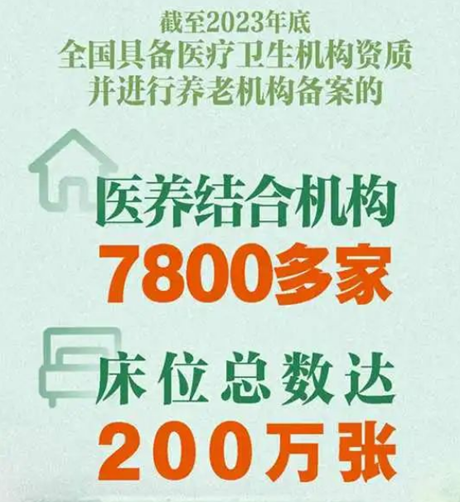
Group 1 - The core viewpoint of the articles highlights the urgent need for improved elderly care services in China due to the accelerating aging population and the introduction of new regulations to enhance elderly care and medical integration [1][2][5] - The second draft of the Beijing Elderly Care Services Regulation emphasizes the establishment of a visiting care system for elderly individuals, particularly those who are high-risk, such as the elderly living alone [1] - The report indicates that by 2053, the elderly population in China is expected to peak at approximately 487 million, marking a critical transition from moderate to deep aging society between 2021 and 2035 [2] Group 2 - The current medical and elderly care integration service models in China include four main types: medical collaboration, medical extension of care, care-based medical services, and community-based care [2] - As of 2023, there are 87,000 signed agreements between medical institutions and elderly care facilities, with over 7,800 integrated care institutions and 200,000 beds available [3] - Recommendations from the Comprehensive Development Research Institute suggest enhancing the integration of medical and elderly care services to meet the dual demands of the aging population, including expanding medical services in elderly care facilities and improving community health center capabilities [5]
武汉人均期望寿命达83.56岁
Chang Jiang Ri Bao· 2025-09-24 00:46
Group 1: Education and Employment - During the "14th Five-Year Plan" period, Wuhan will establish 202 primary and secondary schools and 304 public kindergartens, adding 353,000 new student places [1] - A total of 1.19 million new urban jobs were created, maintaining overall employment stability, with 1.498 million new college graduates finding employment or starting businesses [1] Group 2: Healthcare - Over the past five years, the number of tertiary hospitals in Wuhan increased from 61 to 85, ensuring that residents can access medical services within 15 minutes in urban areas [2] - The average life expectancy in Wuhan rose from 80.57 years to 83.56 years, with major health indicators ranking among the best in the country [2] Group 3: Social Welfare and Housing - Wuhan has built a comprehensive network of 3,740 various types of elderly care facilities, expanding home care services to 37 projects, serving 11 million people annually [2] - The city has established 236,700 affordable rental housing units, achieving 95% of the "14th Five-Year Plan" target of 250,000 units [2] Group 4: Medical Insurance - Over the past five years, Wuhan provided medical insurance benefits to 432 million people, with reimbursement rates for employee and resident insurance remaining stable at around 80% and 70% respectively [3] - The average financial subsidy for residents' medical insurance increased from 580 yuan to 700 yuan [3]
白银飙涨40%!怎么回事?
Jing Ji Ri Bao· 2025-09-23 06:54
Group 1 - Silver prices have been on an upward trend this year, with London spot silver prices surpassing $42 per ounce, marking a 14-year high and a cumulative increase of over 40% [1] - The Shanghai Futures Exchange's main silver futures contract has also exceeded 10,000 yuan per kilogram, achieving a nearly 13-year high with a cumulative increase of over 30% [2] Group 2 - The increase in silver prices is attributed to a significant supply-demand gap, with global silver production falling short of consumption by approximately 4,000 tons for the fifth consecutive year [3] - The rise in silver prices is closely linked to its financial attributes, driven by heightened risk aversion due to global trade policy uncertainties and geopolitical tensions, which have also boosted gold prices [3] - The gold-silver ratio has been correcting, attracting funds from gold to silver, as the previous strong performance of gold led to a historical high in the gold-silver ratio, indicating that silver was undervalued [3] Group 3 - Silver's physical and chemical properties make it valuable in various industries, including electronics, renewable energy, and healthcare, where it is used as a catalyst, conductive contact material, and antimicrobial agent [4] - According to the Silver Institute, in 2024, the downstream demand for silver is expected to be distributed as follows: 58% for industrial use, 18% for jewelry, and 16% for investment, with the photovoltaic sector accounting for 17% of industrial demand [5] Group 4 - Looking ahead, silver is expected to experience a significant upward trend, with international silver prices potentially reaching $50 per ounce and domestic prices projected to break through the range of 11,500 to 12,000 yuan per kilogram [6] - Short-term forecasts suggest that silver may outperform gold, as historical patterns indicate that liquidity easing often leads to a substantial decline in the gold-silver ratio, driving silver prices higher [7]