锂电材料

Search documents
湖南裕能三个月暴涨190%,宁德时代、比亚迪“喜提”70亿浮盈
Huan Qiu Lao Hu Cai Jing· 2025-11-13 12:19
与宁德时代不同,比亚迪在2024年第四季度减持了757.24万股。截至三季度末,其仍持有2235.07万股。 若至今未进一步减持,则其当前持股市值约为20.03亿元,浮盈达19.03亿元。两者合计浮盈高达70.65亿 元。 除湖南裕能外,宁德时代、比亚迪等新能源龙头企业近期在盛新锂能、天华新能等锂电材料供应商上也 收获颇丰。 以天华新能为例,10月31日公司公告称,实际控制人向宁德时代协议转让约1.08亿股,转让价格为24.49 元/股,总价款为26.35亿元。截至收盘,天华新能股价已涨至48.04元/股。若以入股价格估算,宁德时 代在该笔投资中目前浮盈约25.43亿元。 湖南裕能三个月飙涨190%,最大赢家浮出水面 11月13日,湖南裕能股价再度拉升,截至收盘报89.60元/股,续创历史新高,总市值突破680亿元。拉长 时间线来看,自8月11日起,湖南裕能进入上涨周期,短短三个月内区间涨幅高达192.70%。 伴随股价大幅攀升,宁德时代、比亚迪也成了这场资本盛宴的重要受益者。根据招股书披露,2020年12 月,宁德时代与比亚迪共同参与湖南裕能的增资,以每股3.34元的价格分别认购5984.61万股和2992 ...

【研选行业+公司】算力上天催化柔性钙钛矿需求,这些标的值得重点跟踪
第一财经· 2025-11-13 12:18
Core Insights - The article emphasizes the importance of timely and relevant research reports in identifying investment opportunities, particularly in the context of the energy storage and lithium battery materials sectors [1][2]. Group 1: Industry Trends - Energy storage is expected to drive a new lithium battery cycle, with structural shortages and price increases already observed in related materials [1]. - The article highlights a significant increase in net profit for a company, with a year-on-year surge of 1059% in the first three quarters, indicating a clear performance turnaround [2]. Group 2: Investment Opportunities - Companies such as Duofu Duo have seen stock prices rise nearly 40%, while Tian Ci Materials and Putai Lai have experienced close to 20% increases, showcasing the potential for investment in the lithium battery materials chain [1]. - The article suggests that the full industry chain layout of a specific company is outperforming competitors, with a 100% self-sufficiency rate in infrared detectors and accelerated penetration in the automotive pre-installation market, leading to a 40% premium space suggested by institutions [2].


华盛锂电:公司股票连续30个交易日内收盘价格涨幅偏离值累计达200%,严重异常波动!前三季营收增62%仍亏损
Ge Long Hui· 2025-11-13 09:02
格隆汇11月13日|华盛锂电公告称,公司股票在2025年9月25日至11月13日连续30个交易日内收盘价格 涨幅偏离值累计达200%,属严重异常波动。经自查,公司及控股股东、实控人无应披露未披露重大信 息,生产经营正常。2025年前三季度,公司营收53,855.53万元,同比涨62.29%,净利润亏损10,297.45 万元。因下游锂电行业恢复不确定,公司仍面临业绩下滑或亏损风险,提醒投资者注意风险。 ...

华盛锂电:股价严重异常波动,前三季营收增62%但仍亏损
Xin Lang Cai Jing· 2025-11-13 08:59
Core Viewpoint - The stock of Huasheng Lithium Battery experienced a significant price fluctuation, with a cumulative increase of 200% over 30 consecutive trading days from September 25 to November 13, 2025, indicating severe abnormal volatility [1] Financial Performance - For the first three quarters of 2025, the company reported revenue of 538.55 million yuan, representing a year-on-year increase of 62.29% [1] - The net profit for the same period showed a loss of 102.97 million yuan [1] Operational Status - The company conducted a self-examination and confirmed that neither it nor its controlling shareholders and actual controllers had any undisclosed significant information, and its production and operations are normal [1] Industry Outlook - The company faces risks of performance decline or continued losses due to uncertainties in the recovery of the downstream lithium battery industry, prompting a reminder for investors to be cautious [1]
约60万吨!昆仑新材下发电解液溶剂大单!
鑫椤锂电· 2025-11-13 06:21
Group 1 - The core viewpoint of the articles highlights the strategic partnerships formed by Haike Xinyuan with Kunlun New Material and Hefei Qianrui Technology for the supply of electrolyte solvents, indicating a trend towards collaboration in the lithium battery supply chain [1][2] - Haike Xinyuan and Kunlun New Material signed a strategic cooperation agreement on November 10, 2023, for the purchase of approximately 596,200 tons of electrolyte solvents from 2026 to 2028, emphasizing a long-term supply commitment [1] - The agreement with Kunlun New Material includes not only the current products but also a mutual intention to develop new products and applications, showcasing a focus on innovation and market expansion [1] Group 2 - The partnership with Hefei Qianrui Technology involves a similar agreement for the supply of 200,000 tons of electrolyte solvents and additives over the same period, further solidifying Haike Xinyuan's position in the market [2] - Both agreements are structured as order-based purchasing collaborations, ensuring that Haike Xinyuan is prioritized as a strategic supplier for raw materials, which is expected to enhance the stability of raw material supply for Kunlun New Material [1][2] - The strategic collaborations are anticipated to positively impact Haike Xinyuan's sales and brand influence, thereby increasing its competitiveness in the market [1]
创新药龙头获超200家机构调研!
Zheng Quan Shi Bao· 2025-11-13 03:45
Market Overview - Major market indices opened lower but turned positive, with the ChiNext Index rising over 1% [1] - Lithium battery concept stocks saw a surge, with companies like Fuxiang Pharmaceutical and Huasheng Lithium hitting the 20% daily limit up [1] - The organic silicon concept led the gains among various sectors, followed by fluorochemical, metal lead, and sodium-ion battery concepts [1] Financing and Investment Trends - As of November 12, the total market financing balance was 2.48 trillion yuan, a decrease of 30.78 billion yuan from the previous trading day [1] - The non-ferrous metals sector saw the largest increase in financing balance, up 6.55 billion yuan, followed by communication, electronics, and transportation sectors with increases of 5.66 billion yuan, 4.83 billion yuan, and 2.86 billion yuan respectively [1] - Nineteen sectors experienced a decrease in financing balance, with the computer, power equipment, and automotive sectors seeing the largest reductions of 14.78 billion yuan, 13.04 billion yuan, and 7.50 billion yuan respectively [1] Individual Stock Performance - On November 12, 411 stocks received net financing purchases exceeding 10 million yuan, with 29 stocks having net purchases over 1 billion yuan [2] - The top net purchase was for Zhongji Xuchuang, with a net buy of 1.06 billion yuan, followed by China Aluminum and Dongshan Precision with net purchases of 546 million yuan and 394 million yuan respectively [2][3] Institutional Research Activity - In the past five trading days (November 6 to November 12), approximately 235 companies were researched by institutions, with 17 companies receiving over 50 institutional visits [4] - The company with the most institutional interest was BeiGene, with 203 institutions participating in the research. BeiGene is a leading global company focused on innovative cancer treatments [4] - BeiGene reported third-quarter revenue of 10.08 billion yuan, a year-on-year increase of 41.1%, and a net profit of 689 million yuan [4][5] Shareholder Actions - On November 13, 13 companies announced shareholding reduction plans, with Haodangjia and Hendi Pharmaceutical planning the largest reductions [6]
华友钴业股价涨5.12%,恒生前海基金旗下1只基金重仓,持有3.21万股浮盈赚取9.95万元
Xin Lang Cai Jing· 2025-11-13 02:00
Group 1 - The core viewpoint of the news is that Huayou Cobalt Co., Ltd. has seen a significant stock price increase of 5.12%, reaching 63.65 CNY per share, with a total market capitalization of 120.69 billion CNY [1] - Huayou Cobalt's main business involves the research and manufacturing of new energy lithium battery materials and cobalt new materials, with revenue composition including nickel products (34.54%), cathode materials (16.28%), and other segments [1] - The company is located in Tongxiang Economic Development Zone, Zhejiang Province, and was established on May 22, 2002, with its listing date on January 29, 2015 [1] Group 2 - From the perspective of fund holdings, Huayou Cobalt is the top holding of the Hengsheng Qianhai Fund, specifically in the Hengsheng Qianhai Hong Kong-Shenzhen Emerging Industry Selected Mixed Fund (004332), which holds 32,100 shares, accounting for 2.43% of the fund's net value [2] - The fund has achieved a year-to-date return of 33.76%, ranking 2404 out of 8145 in its category, and a one-year return of 31.03%, ranking 1886 out of 8059 [2] - The fund manager, Xing Cheng, has been in position for 3 years and 237 days, with the best fund return during this period being 87.69% [3]

六氟磷酸锂现“一天一价” 供需错配掀产业链连锁效应
Zheng Quan Shi Bao· 2025-11-12 18:45
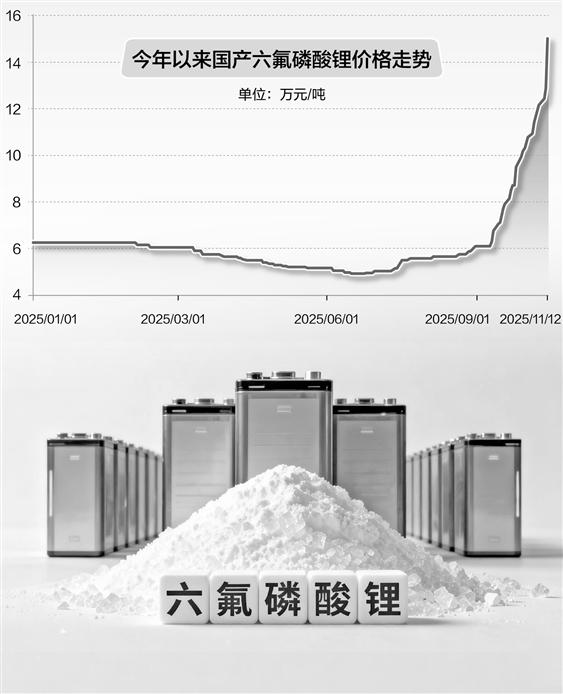
Group 1: Price Surge of Lithium Hexafluorophosphate - Lithium hexafluorophosphate prices have surged to 150,000 CNY/ton, doubling since mid-October [2][4] - The rapid price increase has led to a seller's market, with many manufacturers halting external quotes and requiring cash payments from smaller clients [4][6] - The core reason for the price surge is a mismatch between supply and demand, with explosive growth in demand from the downstream market and a contraction in supply due to the exit of many small enterprises [2][5] Group 2: Demand and Supply Dynamics - From January to September, global electric vehicle battery installations reached 811.7 GWh, a year-on-year increase of 34.7%, while global energy storage battery shipments grew by 90.7% [5] - Effective production capacity of lithium hexafluorophosphate has shrunk to around 300,000 tons, with the top three manufacturers accounting for over 70% of the market [5][11] - The expansion cycle for lithium hexafluorophosphate is long and subject to high technical and environmental standards, making it difficult to increase supply in the short term [5][11] Group 3: Price Transmission to Downstream - The price increase of lithium hexafluorophosphate has begun to transmit downstream, affecting the electrolyte segment, where costs account for 40%-50% of the total [6][10] - Electrolyte manufacturers have started to raise prices, with recent increases ranging from 3,000 to 5,000 CNY/ton, although this has not fully covered the cost pressures yet [6][10] - Long-term supply agreements have been signed between several battery manufacturers and major electrolyte suppliers, indicating confidence in future market conditions [9][10] Group 4: Market Outlook - The market is expected to maintain a tight balance between supply and demand for lithium hexafluorophosphate until 2026, with prices likely to continue rising [10][11] - Industry leaders emphasize the need for cautious expansion to avoid oversupply, advocating for a controlled growth rate of around 30% [12] - Despite the current optimism, long-term sustainability of rapid price increases is questioned, with expectations for prices to stabilize within a reasonable range that supports profitability [13][14]
与锂无关?锂电材料“涨价”转向“化工驱动”
高工锂电· 2025-11-12 12:39
Core Insights - The article highlights a significant shift in the lithium battery materials market, where prices of various materials such as lithium hexafluorophosphate and electrolytes are rising, driven not by lithium prices but by a robust chemical supply chain [2][3][4][6]. Price Dynamics - Since November, prices of lithium battery materials have been on the rise, including lithium hexafluorophosphate, electrolytes, and iron phosphate [2]. - Unlike previous trends where lithium prices dictated the market, this price increase is attributed to the strong performance of the chemical sector, indicating a shift from a "resource dividend" to a "process dividend" [3][4]. - The price of lithium carbonate has fluctuated around 80,000 yuan/ton, showing a slight downward trend, contrasting with the rising costs in the chemical raw material chain [7][21]. Chemical Sector Influence - Key chemical components such as yellow phosphorus and anhydrous hydrofluoric acid have seen price increases, which subsequently raise the costs of iron phosphate and lithium hexafluorophosphate [8][10]. - The price of yellow phosphorus has increased approximately 2% to around 22,000 yuan/ton since November, impacting the cost structure of lithium battery materials [8]. Demand and Supply Factors - The demand for VC (vinylene carbonate) has surged due to changes in battery demand structures, with total demand expected to exceed 70,000 tons this year against an effective production capacity of only 80,000 tons [15][17]. - The increase in demand for energy storage and LFP (lithium iron phosphate) vehicles has contributed to the recovery of iron phosphate prices [9]. Industry Trends - The article notes a structural shift in the lithium battery industry, where the focus is moving from lithium mining to chemical processing capabilities, indicating a new competitive landscape [55][59]. - Companies like Tianqi Materials and Duofluor have established integrated chemical systems, enhancing their competitive edge in the market [31][36]. Future Outlook - The upcoming 2025 High-Performance Lithium Battery Conference will address critical topics such as battery material innovation and the new supply chain ecosystem, reflecting the industry's evolving dynamics [60][61]. - The article suggests that the next decade will see a focus on chemical and process capabilities rather than just resource ownership, reshaping the industry's growth narrative [55][58].
六氟磷酸锂疯涨,带飞了谁的股价?
Guo Ji Jin Rong Bao· 2025-11-12 12:20
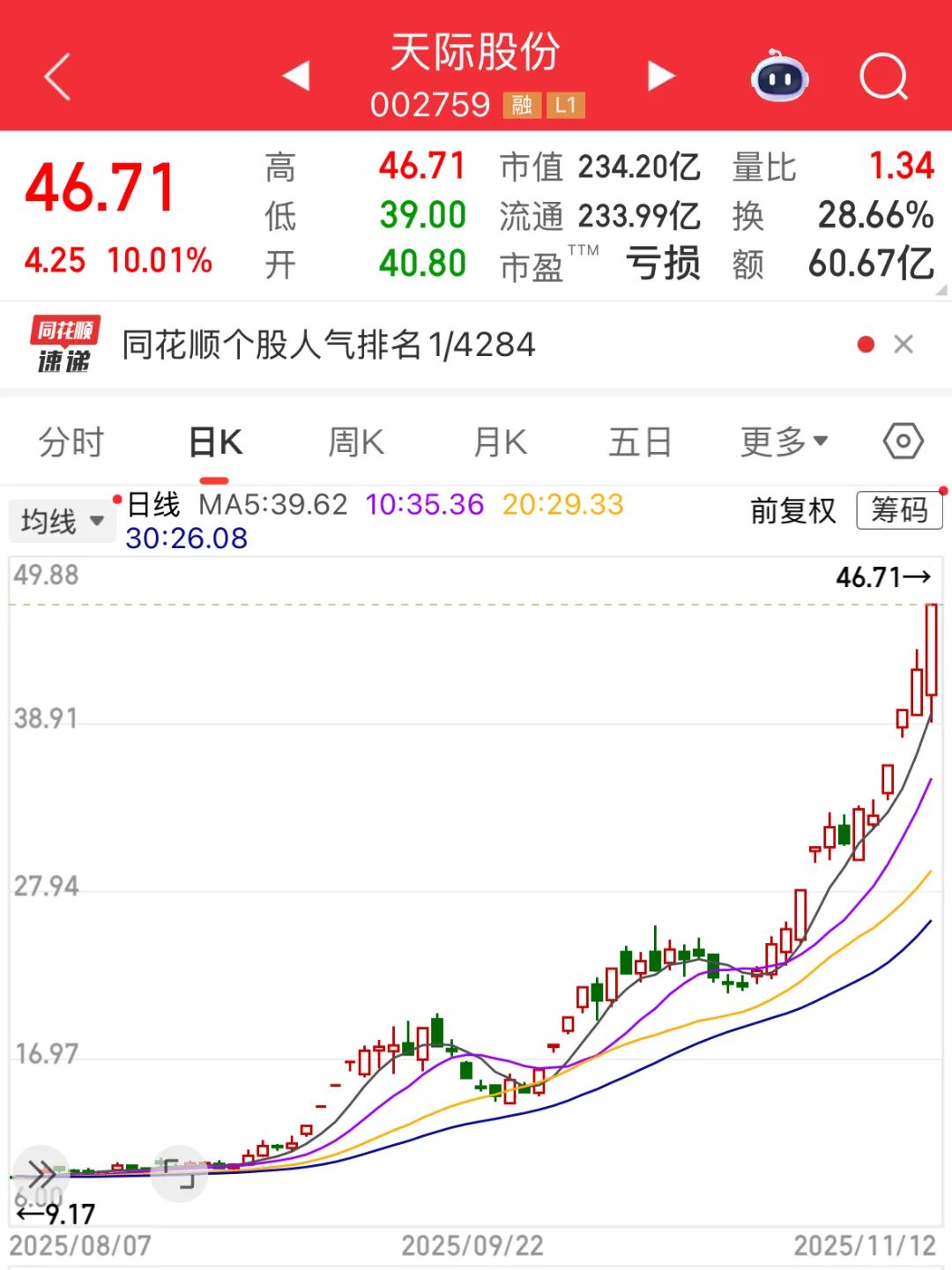
Core Viewpoint - The price of lithium hexafluorophosphate has surged dramatically, reaching 128,500 yuan/ton, with a forecast to potentially exceed 200,000 yuan/ton in the future, driven by strong demand from the electric vehicle and energy storage sectors [2][11]. Price Trends - From mid-July to the end of October, the price of lithium hexafluorophosphate increased from 49,800 yuan/ton to 110,800 yuan/ton, a rise of over 120%, with a monthly increase of 76% in October [2][12]. - The price had previously dropped significantly in 2023, reaching a low of around 50,000 yuan/ton before rebounding sharply [12]. Industry Impact - The soaring prices have led to significant stock price increases for companies in the lithium hexafluorophosphate supply chain, with Tianji Co. seeing its stock rise from under 10 yuan/share in August to nearly 50 yuan/share by November [4]. - Other companies like Tianci Materials and Duofluoride have also experienced substantial stock price increases, reflecting the broader market trend [6][8]. Supply and Demand Dynamics - The demand for lithium hexafluorophosphate is being driven by stable growth in the electric vehicle market and a surge in energy storage battery demand, particularly following regulatory changes that prompted a "rush to install" storage projects [13][14]. - The supply side is constrained, with many small producers exiting the market, leading to a concentration of production capacity among a few key players [14][15]. Future Outlook - The market is expected to maintain a tight supply-demand balance, with prices likely to remain elevated in the near term due to low inventory levels and ongoing demand [15]. - However, there are concerns about potential price corrections in 2026 and beyond as new production capacities come online [15]. Strategic Moves - Major battery manufacturers are engaging in "stockpiling" behavior, signing large supply agreements for lithium hexafluorophosphate to secure their supply amid rising prices [16]. - Companies like Tianji Materials have secured significant contracts for future deliveries, indicating strong anticipated demand [16][17]. Technological Considerations - Lithium hexafluorophosphate is also seen as a critical material in the transition to solid-state battery technologies, which are expected to become commercially viable after 2030 [18].