城市轨道交通

Search documents
世纪瑞尔:10月23日召开董事会会议
Mei Ri Jing Ji Xin Wen· 2025-10-23 08:48
Group 1 - The company, Century Real (SZ 300150), announced that its ninth board meeting will be held on October 23, 2025, to review the Q3 2025 report and other documents [1] - For the first half of 2025, the company's revenue composition is as follows: 64.77% from the railway industry, 34.84% from urban rail transit, and 0.39% from other industries [1] - As of the report date, the market capitalization of Century Real is 3.4 billion yuan [1]

壹探轨道|解码济南地铁4、6、8号线电客车
Qi Lu Wan Bao· 2025-10-22 08:16
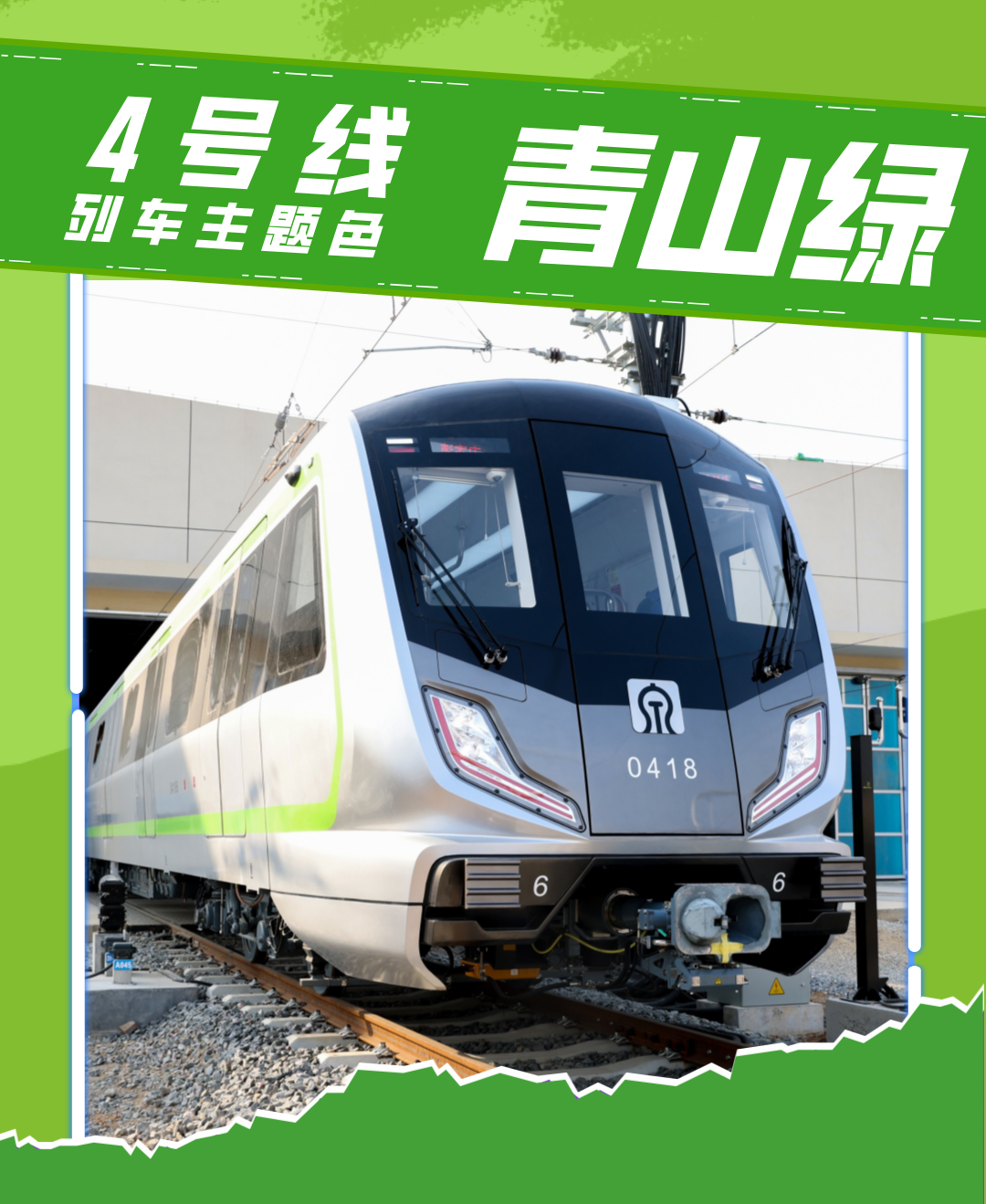
Core Viewpoint - The new trains for Lines 4, 6, and 8 in Jinan have commenced trial operations, showcasing advanced technology and design features aimed at enhancing passenger experience and operational efficiency [1]. Train Specifications - The trains are composed of 6-car A-type sets, measuring 140 meters in length and approximately 3 meters in width, with a rated capacity of 1,860 passengers and a maximum capacity of about 2,590 passengers [5][6]. Design and Aesthetics - The trains feature a modern design with sharp angles, embodying a futuristic technological concept, and are themed with distinct colors: "Qingshan Green" for Line 4, "Quanzhi Blue" for Line 6, and "Kechuang Purple" for Line 8, reflecting the cultural essence of Jinan [8][11][14][17]. Interior Features - The interior design aligns with the train's theme colors, featuring familiar elements such as row seating and triangular handrails, with seat widths consistent with previous lines to accommodate northern body types [19][21]. Safety and Technology - The trains are equipped with seven core subsystems, including intelligent sensing modules and advanced "Eagle Eye" technology for real-time obstacle detection and autonomous braking, along with a three-tier collision energy absorption structure for enhanced safety during automated operations [24]. Operational Status - Currently, the eastern sections of Lines 4, 6, and 8 are in the empty trial operation phase, undergoing system debugging, operational drills, and safety assessments to ensure high standards for opening by the end of the year [26].

地铁8号线南段力争明年底通车
Qi Lu Wan Bao· 2025-10-21 02:21
Core Points - Qingdao Metro Line 8 South Section has completed all tunneling work and aims to open by the end of 2026 [1][2] - The line connects major areas including Qingdao's main urban area, Chengyang District, and Jiaozhou City, facilitating access to Qingdao Jiaodong International Airport [1] - The entire Line 8 spans 61.4 kilometers with 18 stations, starting from Jiaozhou North Station to May Fourth Square [1] Summary by Sections North Section - The North Section of Line 8, which opened on December 24, 2020, runs 48.3 kilometers with 11 stations, including the longest underwater metro tunnel in China [1] - The underwater section is 7.9 kilometers long, with 5.4 kilometers under the sea, showcasing significant engineering challenges [1] - The North Section has seen increasing passenger traffic, especially during peak travel periods like the recent National Day and Mid-Autumn Festival [1] South Section - The South Section starts at Qingdao North Station and ends at May Fourth Square Station, covering 13.1 kilometers with 7 stations [2] - A significant milestone was achieved on September 26, 2023, with the successful completion of the first seamless rail joint, marking the acceleration of construction [2] Branch Line - The branch line of Line 8, connecting Jiaozhou and Qingdao, is currently in a critical construction phase, spanning 20.4 kilometers with 12 underground stations [2] - This branch line will enhance connectivity between Jiaozhou and the eastern and northern urban areas of Qingdao upon completion [2]
将阅读送到人们身边(编辑手记)
Ren Min Ri Bao· 2025-10-21 00:51
Core Insights - The article highlights the transformation of reading habits from traditional borrowing to electronic reading, symbolized by the worn-out earphone covers, reflecting the interaction between Wuhan Metro and its passengers [1] Group 1: Infrastructure and Resources - Over 150 metro libraries have been established, showcasing significant resource investment [1] - The libraries feature carefully curated thematic book selections, enhancing the reading experience for commuters [1] Group 2: Community Engagement and Activities - The initiative includes various innovative service activities, such as the Metro Reading Festival, aimed at promoting reading culture [1] - The metro libraries provide a tranquil space for busy commuters to enjoy reading, contributing to the cultural atmosphere of the city [1] Group 3: Future Aspirations - There is an expressed hope for more such explorations to spread the joy of reading throughout the city [1]
13年,地铁图书馆涵养城市书香(“十四五”的文化印记)
Ren Min Ri Bao· 2025-10-20 22:29
Core Viewpoint - The integration of reading services within Wuhan's subway system has created a unique cultural space for commuters, promoting both traditional and digital reading methods, thereby enhancing the overall reading experience in the city [4][8]. Group 1: Development of Subway Libraries - The first subway library in Wuhan was established in 2012 alongside the opening of Line 2, initially featuring 21 libraries with over 400 books each across various genres [4]. - As of the end of 2024, there are over 150 subway libraries across 312 stations in Wuhan's 12 operational subway lines, serving as a refuge for busy commuters who enjoy reading [4][8]. Group 2: Reading Trends and Adaptation - With the rise of smartphones, there has been a shift from physical to digital reading, leading to a decline in the usage of traditional libraries; however, Wuhan's subway has opted for transformation rather than closure by introducing digital reading resources [4][5]. - The introduction of reading stations with audio books and digital access has made reading more convenient for commuters, allowing them to engage with literature in various formats [5][6]. Group 3: Community Engagement and Cultural Impact - The subway reading festival, which has been held for 13 consecutive years, features interactive activities that promote reading culture throughout the city [6]. - The presence of themed libraries tailored to the demographics of specific subway stations reflects a thoughtful approach to enhancing the reading experience for passengers [4][8].
试点五年半后,北京地铁预约进站即将全面结束
Xin Jing Bao· 2025-10-20 10:52
Core Points - The trial of the reservation entry system for Beijing Metro will officially end after five and a half years, with the Changping Line's Shahe Station A entrance reverting to regular entry on November 3, 2025 [1] - The reservation entry service was introduced in March 2020 to optimize travel experience during peak hours, and the pressure on peak passenger flow at Shahe Station has been effectively alleviated [1][2] - The closure of the online reservation system will occur on October 31, 2025, followed by the adjustment of on-site entry channels [1] Industry Insights - The reservation entry trial represents a significant exploration in the field of smart travel by Beijing's transportation authorities [2] - The experience gained from this trial will be utilized to continuously optimize metro operation services, aiming to create a more efficient and convenient travel environment for passengers [2]
【百姓身边的“十四五”】日行万里 旅行“说走就走”
Zhong Guo Jing Ji Wang· 2025-10-19 04:33
Group 1 - The construction of China's comprehensive transportation system has made breakthrough progress during the 14th Five-Year Plan, with the national comprehensive three-dimensional transportation network framework largely completed, connecting over 80% of county-level administrative regions and serving about 90% of the national economy and population [2] Group 2 - The railway operating mileage has reached 162,000 kilometers, an increase of approximately 16,000 kilometers compared to the end of the 13th Five-Year Plan, with high-speed rail increasing by 10,000 kilometers [4] - The "Eight Vertical and Eight Horizontal" high-speed rail network has been completed and put into operation, covering 81.5% of the 19 major urban agglomerations, with a total high-speed rail operating mileage of 48,000 kilometers, accounting for 97% of the world's total high-speed rail mileage [5] Group 3 - The total length of highways has reached 5.49 million kilometers, an increase of approximately 290,000 kilometers, with expressways increasing by 30,000 kilometers [6] - The national expressway mainline has been basically completed, with expressway mileage reaching 191,000 kilometers, covering 99% of cities with populations over 20,000 [7] Group 4 - The number of certified civil aviation transport airports has reached 263, an increase of 22 [9] - Aviation services cover 92.6% of prefecture-level administrative units and 91.2% of the population [10][11] Group 5 - The urban rail transit operating mileage is approximately 11,000 kilometers, ranking first in the world, an increase of 48.5% compared to the end of the 13th Five-Year Plan [14] - The total length of urban bus operating lines has reached 1.75 million kilometers, an increase of 18.3% [15] Group 6 - 80% of newly built passenger hubs have an average transfer distance of no more than 200 meters [17] - Over 80 hub cities and more than 2,000 lines have achieved air-rail intermodal transport, with the rail access rate of hub airports reaching 81% [19] Group 7 - The postal industry has established over 500,000 business outlets [21] - There is a deep integration with the national comprehensive three-dimensional transportation network and national logistics hubs, actively constructing a modern logistics operation system of "hub + channel + network," with domestic express service timeliness, quality, and cost-effectiveness at a world-leading level [22]

解密济南地铁4号线的“出行智慧”
Da Zhong Ri Bao· 2025-10-16 02:10
Core Insights - The Jinan Metro Line 4 has commenced a three-month trial operation, focusing on the verification of its fully automated operation system, which is crucial for the city's public transport network [1][2] Summary by Sections Line Overview - Jinan Metro Line 4 is a U-shaped backbone line with a total length of 40.3 kilometers and 33 stations, resulting in an average station spacing of approximately 1.26 kilometers [2] - The station spacing is a result of a balance between urban planning, passenger demand, and engineering conditions, adhering to national design standards [2][3] Urban Planning and Passenger Flow - The line's design aligns with Jinan's elongated urban structure, effectively serving as a major passenger corridor along Jinan's central axis, Jingshi Road [3] - Predictions indicate that nearly 60% of passengers will travel less than 10 kilometers, catering to commuting, shopping, and medical needs, thus enhancing short-distance travel options [3] Connectivity and Network Integration - Line 4 connects with six transfer stations from previous metro phases and is designed to integrate with future lines and the ongoing Yunba system, enhancing the overall transport network [4] - This integration is expected to significantly improve the accessibility and reliability of the transport network, facilitating efficient movement of people and resources across the city [4] Public Transport Synergy - As of August, 218 bus routes have been integrated with the metro, representing 53.5% of the bus network, with a high rate of bus stops located within 50 meters of metro entrances [5] - The completion of Line 4 and Line 8 is projected to increase the number of connecting bus routes to over 240, promoting a more cohesive public transport system [6] Aesthetic and Functional Design - Line 4 is noted for its unique station designs, including the only semi-underground station at Quancheng Park, which integrates artistic elements with functional transport needs [6][7] - The design process considers urban aesthetics, ensuring that stations harmonize with surrounding landscapes and enhance the overall urban experience for commuters [7]
济南|解密济南地铁4号线的“出行智慧”
Da Zhong Ri Bao· 2025-10-16 01:03
Core Viewpoint - The Jinan Metro Line 4 is designed to balance service coverage and operational efficiency, catering to the city's elongated urban structure and high passenger demand along the Jing Shi Road corridor [2][4]. Summary by Sections Line Overview - The Jinan Metro Line 4 has commenced a three-month trial run, successfully completing the first phase of automated system functionality verification [2]. - The line spans 40.3 kilometers with 33 stations, featuring an average station spacing of approximately 1.26 kilometers [3]. Station Spacing and Design - The station spacing is a result of urban planning, passenger demand, and engineering conditions, adhering to national design standards [3]. - The average station distance is consistent with other major cities, ensuring a balance between service density in urban areas and operational efficiency in peripheral regions [4]. Passenger Demand and Usage - Data models predict that nearly 60% of passengers will travel less than 10 kilometers, indicating a focus on short-distance commuting, shopping, and medical visits [4]. - The line connects key locations such as parks and hospitals, addressing the "last mile" issue for residents [4]. Network Integration - Line 4 will connect with six existing transfer stations and future lines, enhancing the overall transit network's accessibility and reliability [5]. - The integration with other transport systems, including the bus network, is expected to improve urban mobility significantly [6][7]. Urban Development and Aesthetics - The line is designed to enhance the urban landscape, with stations that incorporate artistic elements and align with surrounding scenery [8]. - The construction of unique stations, such as the semi-underground station at Quancheng Park, exemplifies the blend of functionality and aesthetics in urban transit design [8].
地铁10号线二期进入开通运营倒计时
Nan Jing Ri Bao· 2025-10-16 00:23
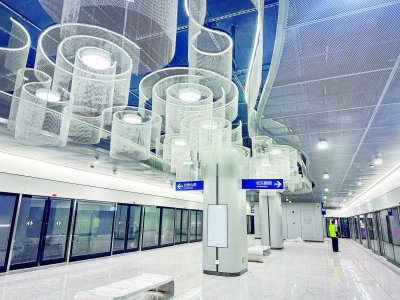
列车启动后,行驶过程平稳,沿途经过的每一座车站都会正常停靠。记者从卡子门站前往承天大道站, 值得一提的是,在设计上10号线二期延续了一期"炫彩金陵"的主题,多个车站暗藏独特巧思,承天大道 站便是二期的特色车站之一。 南京地铁10号线二期承天大道站以"涟韵新城"为设计理念。其天花板采用优质铝合金丝编织的金属网 帘,搭配柔和灯带,模拟水波纹曲线,营造出梦幻星河的效果。 南京日报/紫金山新闻记者 段仁虎 摄 上午9时,记者从地铁卡子门站7号口进入站内。站厅层入口处的闸门已安装就绪,沿着楼梯下行至站台 层,清晰的站台广播随即响起,此时轨道上已有列车缓缓穿梭。 没过多久,一阵清脆的到站提示音响起,列车平稳驶入卡子门站,车门自动开启。记者注意到,车门上 方的闪灯图上,"安德门至东麒路"沿线站点的显示灯已全部亮起,直观呈现出10号线二期的线路走向。 据悉,10号线一期的运营区间为安德门站至雨山路站,此次二期线路正通过"跑图"与一期系统进行深度 磨合。尽管处于空载试运行阶段,车厢内的显示屏等设备均保持正常开启状态,与正式运营时的场景几 乎一致,唯一不同的是,除工作人员外暂无其他乘客。 记者提前试乘新线路,打卡特色站点 地铁1 ...