造船业

Search documents
李在明对特朗普开启“夸夸”模式!但没用 3500亿美元换15%关税不变
Di Yi Cai Jing· 2025-08-26 01:22
Core Viewpoint - The meeting between South Korean President Lee Jae-myung and U.S. President Trump did not result in any modifications to the U.S.-South Korea trade agreement, despite efforts to negotiate better terms for South Korea [1][4]. Group 1: Trade Agreement and Economic Cooperation - Trump indicated a willingness to renegotiate the trade agreement but clarified that it does not guarantee better terms for South Korea [1]. - South Korea is set to invest $350 billion in the U.S., with $100 billion allocated for energy products and $150 billion specifically for a shipbuilding cooperation fund [5]. - The shipbuilding cooperation project, named "Make American Shipbuilding Great Again" (MASGA), aims to enhance the entire shipbuilding supply chain and is expected to significantly contribute to U.S.-South Korea economic discussions [5]. Group 2: Investment and Economic Impact - The shipbuilding industry accounts for approximately 7% of South Korea's GDP, highlighting its importance to the national economy [5]. - Trump's administration has been focused on revitalizing the U.S. shipbuilding industry through supportive policies [6]. Group 3: Diplomatic Dynamics - The meeting faced criticism from South Korean media due to the low-level reception by the U.S. side, which was seen as a departure from the traditional high-level welcomes for South Korean presidents [8][9]. - Prior to the meeting, there were tensions regarding the documentation of the $350 billion investment commitment, with the U.S. pressuring South Korea for detailed agreements on the investment [9].
李在明对特朗普开启“夸夸”模式,但没用
第一财经· 2025-08-26 01:21
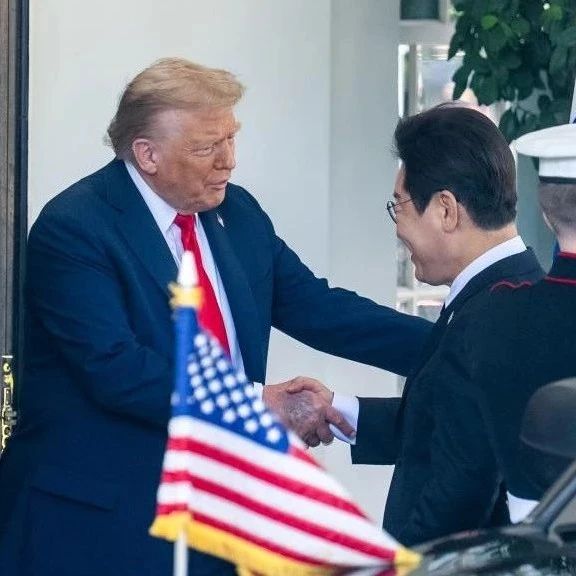
Core Viewpoint - The meeting between U.S. President Trump and South Korean President Lee Jae-myung did not result in any modifications to the U.S.-South Korea trade agreement, despite efforts from Lee to charm Trump. The existing trade terms will remain unchanged, and South Korea will not receive more favorable conditions [4][8]. Group 1: Trade Agreement and Economic Cooperation - Trump expressed willingness to renegotiate the trade agreement with South Korea but clarified that it does not guarantee any benefits for South Korea [4]. - South Korea has committed to investing $350 billion in projects selected by the U.S., with an additional agreement to purchase $100 billion worth of energy products [4][10]. - The proposed South Korea-U.S. shipbuilding cooperation project, "MASGA" (Make American Shipbuilding Great Again), aims to enhance the shipbuilding industry and includes a $1.5 billion fund dedicated to this initiative [8][10]. Group 2: Diplomatic Dynamics - Lee Jae-myung praised various aspects of the U.S. during the meeting, including the Oval Office's design and the performance of the U.S. stock market, which has seen record highs [6][7]. - The meeting faced criticism from South Korean media due to the low-level reception by the U.S., which was seen as a departure from the customary protocol for visiting South Korean presidents [12][14]. - Prior to the meeting, there were pressures from the U.S. regarding the documentation of the $350 billion investment commitment, which created uncertainty about the discussions [14][15].

李在明对特朗普开启“夸夸”模式!但没用,3500亿美元换15%关税不变
Di Yi Cai Jing· 2025-08-26 01:05
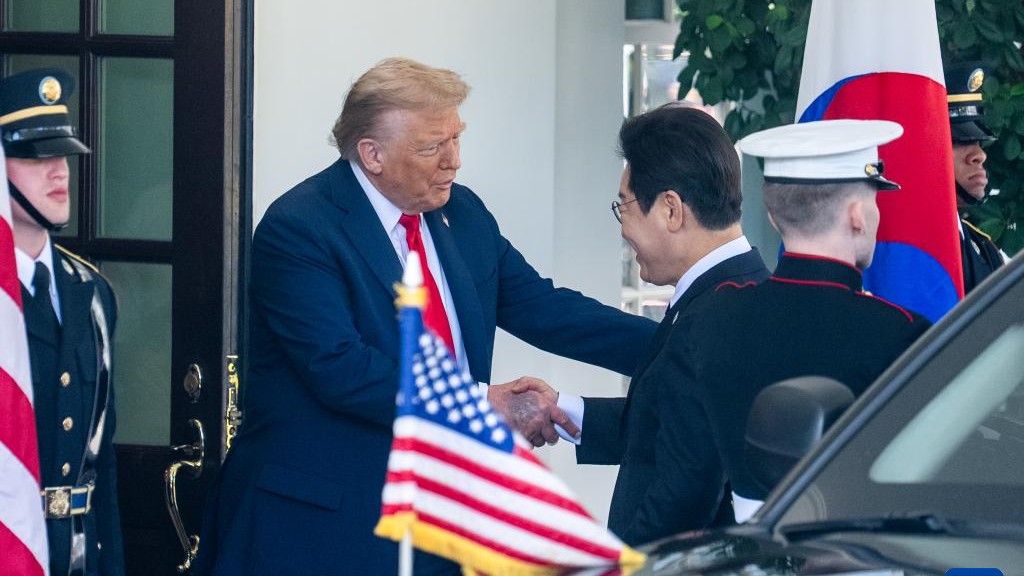
Core Points - The meeting between South Korean President Lee Jae-myung and U.S. President Trump did not result in any modifications to the U.S.-South Korea tariff agreement [1][3] - Trump expressed willingness to renegotiate the trade agreement but indicated that South Korea would not receive better trade terms [3] - South Korea committed to investing $350 billion in the U.S., with $100 billion allocated for energy products [3][9] Trade Agreement - The existing U.S.-South Korea trade agreement remains unchanged, with Trump previously stating a 15% tariff on South Korean goods [3] - South Korea's spokesperson noted that there was little consensus reached during the talks [3] Investment Commitments - South Korea's $350 billion investment includes a $150 billion fund specifically for U.S.-South Korea shipbuilding cooperation [9] - The shipbuilding cooperation project, "MASGA" (Make American Shipbuilding Great Again), aims to cover the entire shipbuilding supply chain [9] Economic Context - The shipbuilding industry accounts for approximately 7% of South Korea's GDP [9] - Trump has been focused on revitalizing the U.S. shipbuilding industry since the beginning of his second term [10] Diplomatic Dynamics - The meeting faced criticism from South Korean media due to the low-level reception by the U.S. [12][13] - There were pressures from the U.S. regarding the documentation of the $350 billion investment, which caused some tension before the meeting [14][15]
李在明访美手握“一个筹码”,韩国提出名为“让美国造船业再次伟大”项目
Huan Qiu Shi Bao· 2025-08-25 23:00
Group 1 - The core focus of the discussions between South Korean President Yoon Suk-yeol and U.S. President Trump revolves around the modernization of the U.S.-South Korea alliance and details of the trade agreement, particularly in the shipbuilding sector [1][4][6] - South Korea is the second-largest shipbuilding nation globally, following China, and has a significant advantage in terms of cost and time for constructing U.S. naval vessels compared to domestic U.S. shipyards [6][7] - The U.S. is looking to enhance its shipbuilding capabilities and has expressed interest in a large-scale shipbuilding agreement with South Korea, which includes a $150 billion fund for cooperation in the shipbuilding industry [6][7] Group 2 - The discussions also highlight the strategic importance of the shipbuilding industry as a bargaining chip for South Korea in its negotiations with the U.S., with the slogan "Make American Shipbuilding Great Again" being used to frame the partnership [5][6] - There are concerns among South Korean residents regarding the potential negative impact of increased cooperation with the U.S. on local shipbuilding investments, as more production may shift to U.S. facilities [7] - The visit includes a planned tour of a Philadelphia shipyard acquired by Hanwha, indicating a focus on expanding South Korean investments in the U.S. shipbuilding sector [8]
特朗普称不介意就美韩贸易协议进行重新谈判
Hua Er Jie Jian Wen· 2025-08-25 19:32
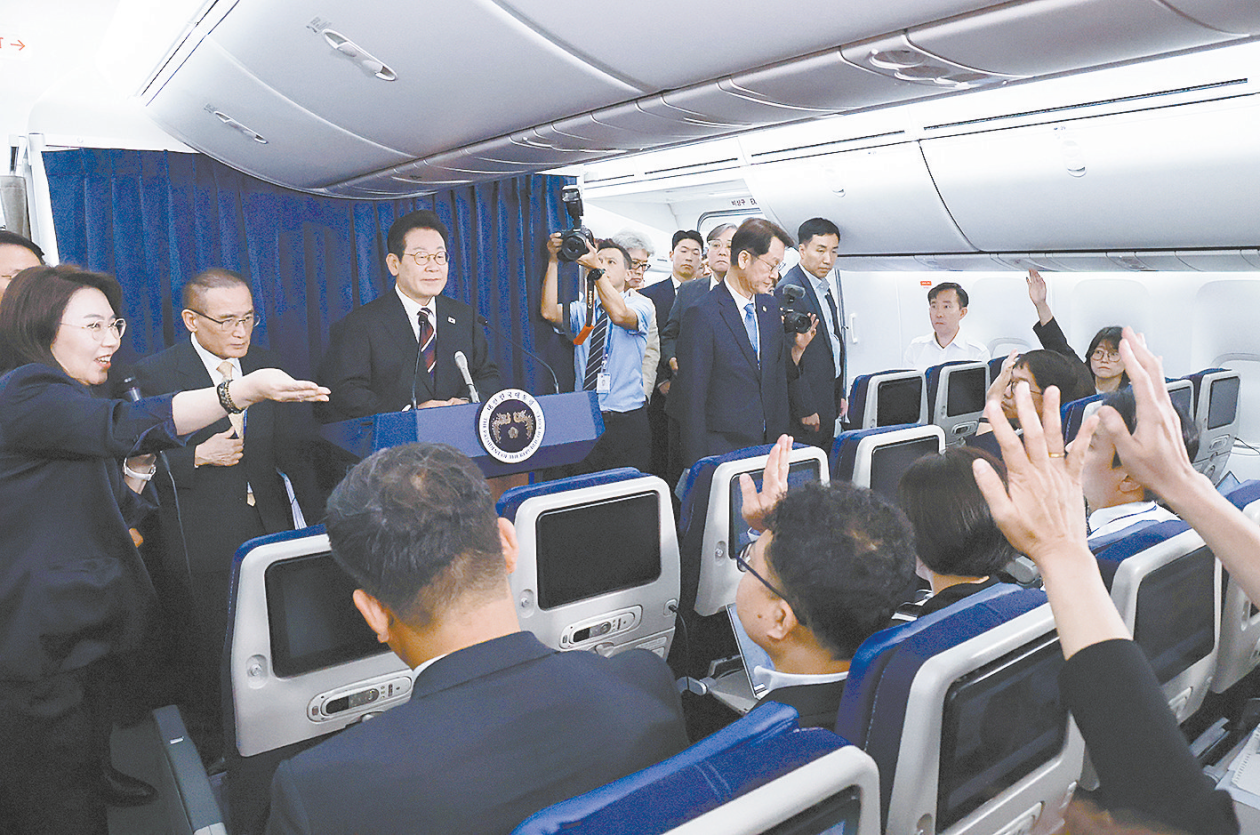
Core Points - The meeting between US President Trump and South Korean President Lee Jae-myung on August 25 focused on trade negotiations and potential military procurement [1] - The existing trade agreement includes a $350 billion investment fund aimed at supporting South Korean industries in the US market, particularly in shipbuilding, semiconductors, batteries, biotechnology, and energy [1] - A specific allocation of $150 billion from the fund is designated for shipbuilding cooperation between the US and South Korea [1] - Discussions also included reaching an agreement on oil drilling in Alaska, with plans to lift federal protections to allow exploration and mining in the region [1] Investment Opportunities - The $350 billion investment fund presents significant opportunities for South Korean companies to expand into the US market, particularly in high-growth sectors [1] - The focus on shipbuilding cooperation could lead to increased contracts and partnerships between US and South Korean firms, enhancing competitiveness in the global market [1] Industry Implications - The potential lifting of federal protections in Alaska may open new avenues for energy exploration and production, impacting the oil and gas industry [1] - The emphasis on advanced industries such as semiconductors and batteries aligns with global trends towards technology and renewable energy, indicating a strategic shift in investment priorities [1]
指望韩国拯救造船业,跟中国掰掰手腕?特朗普想得太简单了
Sou Hu Cai Jing· 2025-08-25 11:04
Group 1 - South Korean President Lee Jae-myung's visit to the U.S. aims to discuss security, defense budgets, tariffs, and other issues with President Trump, indicating no limits on the topics of discussion [1][3] - The media suggests that both leaders share common ground, such as past assassination attempts and interests in golf, which may facilitate cooperation in addressing the "Chinese threat" in Northeast Asia [4] - South Korea's shipbuilding industry, which remains strong, is highlighted as a key area for potential collaboration, especially in light of the U.S. military's declining shipbuilding capabilities [4][10] Group 2 - The U.S. Navy's shipbuilding efficiency is significantly lagging behind China's, raising concerns about America's maritime dominance [6][10] - Recent incidents, such as a U.S. Navy ship catching fire in Japan, underscore the challenges faced by the U.S. military in maintaining and deploying its fleet [8] - The decline of the U.S. shipbuilding industry has been a long-term trend, exacerbated by deindustrialization since the 1980s, leading to a lack of skilled labor and operational inefficiencies [8][10] Group 3 - Previous attempts by both Trump and Biden to engage South Korea in ship production and maintenance have not resulted in agreements, but there are suggestions for broader collaboration, including supply chain restructuring and workforce training [12] - The notion that South Korea could play a critical role in U.S.-China tensions reflects a sense of desperation within the U.S. regarding its strategic position [14]
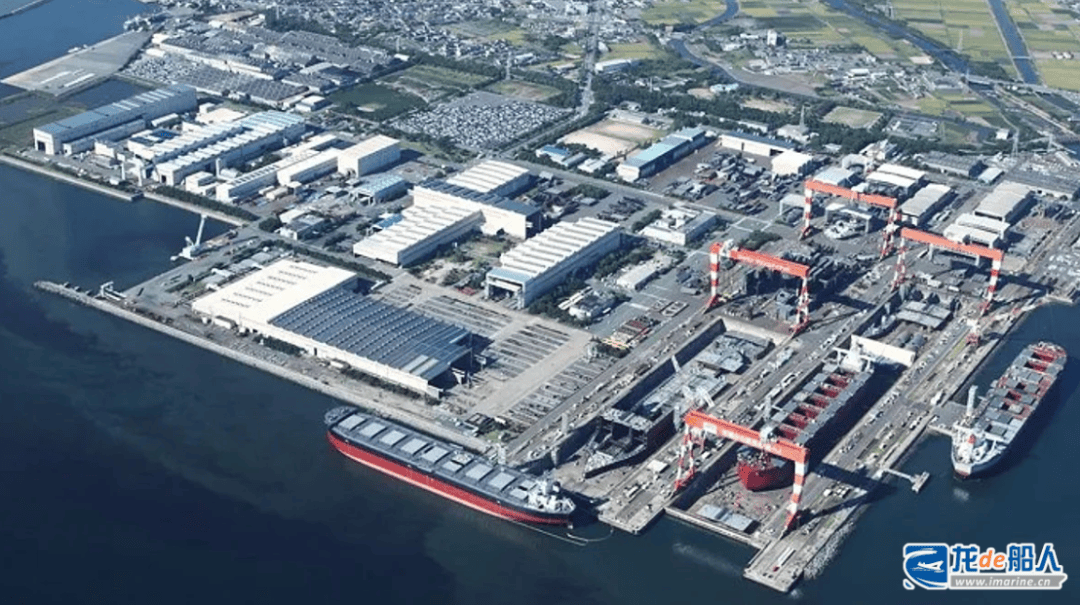
日本船企对美国造船业不感兴趣
Sou Hu Cai Jing· 2025-08-25 10:10
Group 1 - Japanese shipbuilding industry remains cautious about investing in the U.S. despite government pressure, primarily due to high labor costs and a fragile supply chain in the U.S. market [1][3] - The president of Imabari Shipbuilding stated that the company currently does not consider investments in the U.S. and prefers to focus on domestic shipbuilding [3] - Japan's market share in global shipbuilding has dropped to 13%, with the majority of new ship orders going to Chinese and Korean shipyards [4][6] Group 2 - Japan and the U.S. reached a new trade agreement, where Japan is set to provide $550 billion in investments and loans, focusing on key industries including shipbuilding [3] - The Japanese government aims to double shipbuilding output by 2030 and restore market share to 20% [6] - Major Japanese shipbuilders are withdrawing from the industry, indicating a decline in competitiveness [5] Group 3 - In contrast, South Korea's shipbuilding industry, which holds a 30% share of the global market, is actively pursuing cooperation with the U.S. and has established a $150 billion shipbuilding cooperation fund [4] - South Korean shipbuilders are leveraging foreign labor and robotic technology to address labor shortages, enhancing their competitive edge [4]
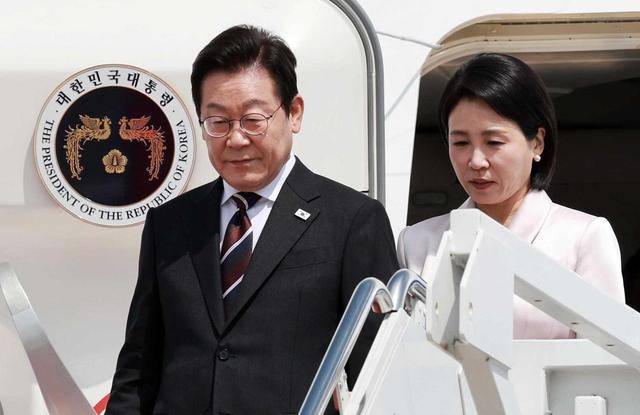
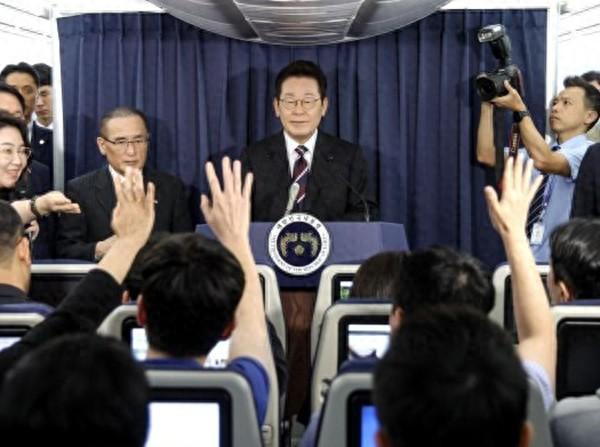
李在明抵美,美媒先嗨了:发生冲突时,韩国可以帮美国对付中国
Guan Cha Zhe Wang· 2025-08-25 08:07
Group 1: Security and Defense - South Korean President Lee Jae-myung's visit to the U.S. includes discussions on security, defense spending, and trade with President Trump [1][2] - There are concerns that U.S. demands for increased strategic flexibility may weaken South Korea's security and increase its involvement in potential conflicts in the Taiwan Strait [6] - The U.S. is pressuring South Korea to expand the scope of the U.S.-South Korea Mutual Defense Treaty to include the entire Indo-Pacific region [5][6] Group 2: Economic and Trade Relations - South Korea has committed to investing $350 billion in the U.S. and purchasing $100 billion worth of liquefied natural gas and other energy products, securing a 15% tariff rate [8][9] - The U.S. is expected to demand specific investment plans from South Korea during Lee's visit, with implications that the $350 billion investment will primarily benefit the U.S. [8][9] - South Korea's Hanwha Group has acquired a shipyard in Philadelphia, which is seen as a key part of U.S.-South Korea cooperation in shipbuilding and trade negotiations [11][12] Group 3: Shipbuilding Industry - South Korea is the second-largest shipbuilding nation globally, holding a 22% market share in commercial shipbuilding, significantly higher than the U.S.'s less than 1% [11][12] - The U.S. is looking to leverage South Korean shipbuilding capabilities to address its own production delays and enhance its naval strength in the Indo-Pacific region [12][13] - South Korean shipbuilders are exploring opportunities to participate in U.S. naval ship repairs, with potential regulatory changes being discussed to facilitate this collaboration [13]
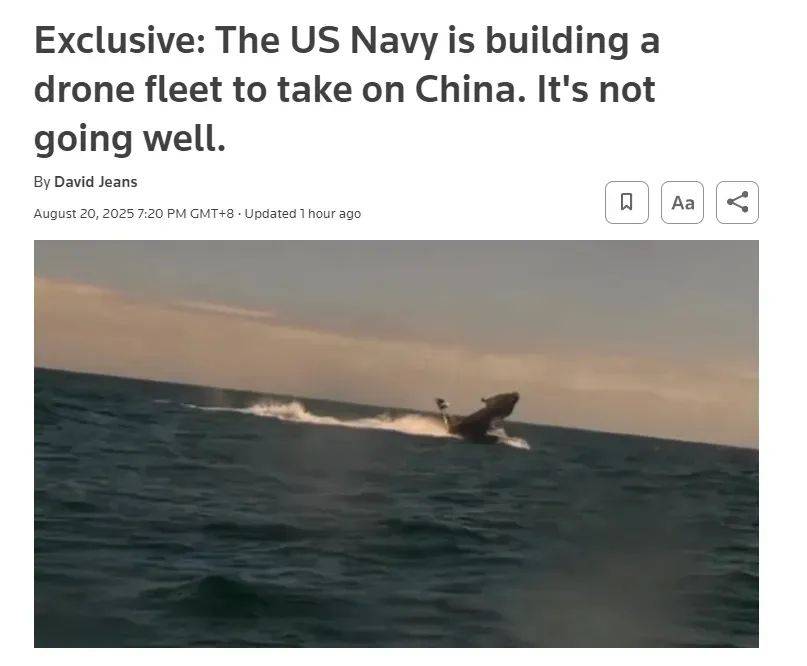
落后中国太多,美国开始步印度后尘,心急如焚的美政府四处求助
Sou Hu Cai Jing· 2025-08-25 04:53
Core Viewpoint - The United States is facing significant challenges in the shipbuilding industry, with China dominating the market and holding a 53% share, while the U.S. only accounts for 0.1% [1]. Group 1: U.S. Shipbuilding Industry Challenges - The U.S. shipbuilding capacity has significantly declined over the past two decades, with aging facilities and frequent equipment failures failing to meet the U.S. Navy's maintenance needs [1][5]. - The U.S. Navy's unmanned vessel projects have encountered multiple failures, including incidents of vessels losing control and sinking due to software issues and operational errors [2]. - The U.S. is attempting to collaborate with South Korea and Japan to bolster its shipbuilding capabilities, with South Korea proposing an investment of $150 billion [5]. Group 2: Structural and Policy Barriers - Long-standing protectionist policies, particularly the Jones Act, create substantial barriers for international cooperation in shipbuilding [7]. - The U.S. faces a labor shortage in skilled shipbuilding workers, making it difficult to compete with South Korea and Japan, which also rely on foreign labor [8]. - Even with foreign investment, the outdated U.S. shipyards may struggle to restore production capabilities in the short term [7]. Group 3: Future Outlook - The measures taken by the U.S. to counter China's dominance in shipbuilding, including seeking foreign partnerships and developing unmanned vessels, may not be sufficient to reverse the current trend [10]. - A comprehensive reform in technology innovation, talent development, and supply chain reconstruction is necessary for the U.S. to effectively compete with China in the shipbuilding sector [10].
中国造船占全球半壁江山,浙江船厂:订单排到2027年
Sou Hu Cai Jing· 2025-08-25 03:07
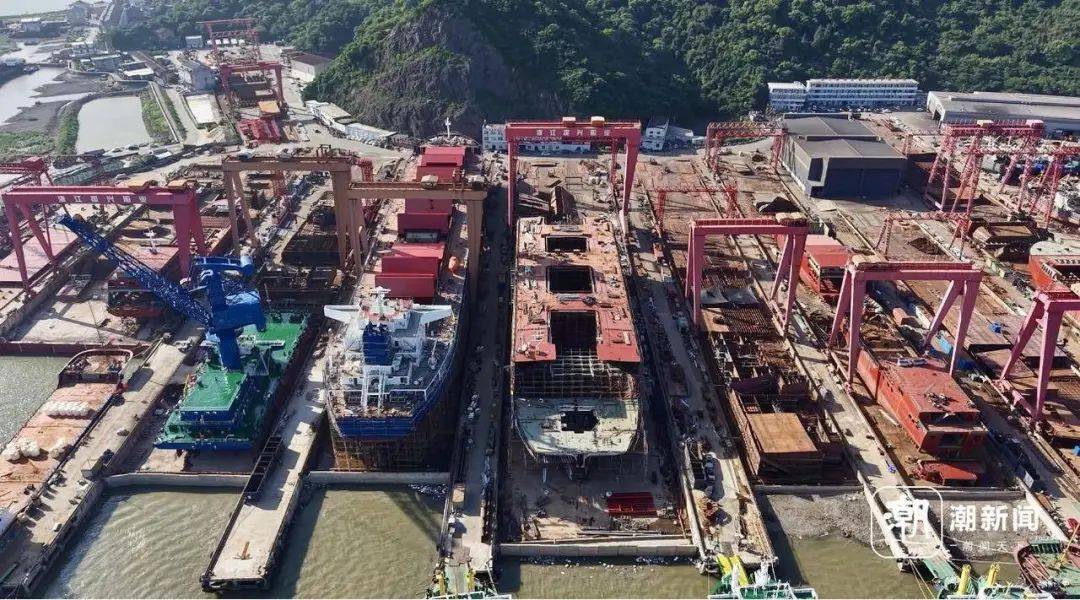
处暑刚过,暑气依旧发威。站在浙江振兴船舶修造有限公司办公楼走廊上,阵阵海风席卷热浪扑面而来。 和当前的气温一样,浙江振兴船舶修造有限公司的修造业务同样火热。 浙江振兴船厂。潮新闻记者 王嘉楠 摄。 浙江振兴船舶修造有限公司颜伟军介绍,自2023年以来,公司修造船舶订单数量开始稳步增长截至目前,仅造船订单已经达到15个,"排队已经排到2027 年,很多都是国外订单,包括东南亚国家的。" 颜伟军介绍,由于行业周期性等因素影响,整个造船行业都处于新一轮高峰。近两年来企业的龙门吊、船台、船坞都处于满负荷运转,甚至不够用。 浙江振兴船厂。 潮新闻记者 王嘉楠 摄。 据媒体报道,今年1-6月,全球新船订单总量为1938万修正总吨(647艘),其中中国船企订单量为1004万修正总吨(370艘),市占率52%,位居世界第 一。 "说明中国的制造技术已经被世界各国认可,这也让我们感到挺自豪的。"颜伟军说。 潮新闻 记者 王嘉楠 季建荣 ...