
纺织服装

Search documents
从“经典广货”到“科技广货”,解码“广货行天下”新路径
Nan Fang Du Shi Bao· 2026-01-13 13:04
Core Viewpoint - Guangdong is transforming its traditional manufacturing into high-tech "Guangdong goods," leveraging technological innovation to enhance competitiveness and drive high-quality development in the global value chain [1][4]. Group 1: High-Tech Manufacturing - Guangdong accounts for 40% of the country's industrial robots, 80% of service robots, and 18% of integrated circuits, showcasing its significant role in high-tech manufacturing [2]. - The province is a major hub for smartphone production, with one in three smartphones sold globally being manufactured by Guangdong enterprises, highlighting its dominance in the industry [3]. - Key technological advancements in the smartphone sector include breakthroughs in chip technology by Huawei and innovations in fast charging and foldable screens by various local brands [3][4]. Group 2: Traditional Industry Transformation - Guangdong's textile and apparel industry is the largest in China, with 4,240 registered enterprises, representing 18.34% of the national total [5][6]. - The integration of digital technologies in traditional industries is enhancing productivity, with companies achieving significant efficiency gains through smart manufacturing processes [6][7]. - Companies like Yida Textile are innovating in functional fabrics, meeting market demands and expanding their reach to 137 countries, with notable sales growth in outdoor functional clothing [6][7]. Group 3: Export and Market Expansion - Guangdong's exports of high-tech products increased by 13.3% in the first half of 2025, reflecting the province's strong export capabilities in innovative manufacturing [8]. - The "Guangdong Goods Going Global" initiative aims to enhance market access and brand recognition for local products through coordinated promotional activities and partnerships with major e-commerce platforms [9]. - A series of promotional events will be held in early 2026 to showcase Guangdong's industrial products, emphasizing the transition from traditional to high-tech goods [9].
全力以赴冲刺“千亿镇”,东莞这个经济大镇的底气在哪里?
Nan Fang Du Shi Bao· 2026-01-13 11:50
Core Viewpoint - Dongguan's Humen Town aims to achieve a GDP of over 100 billion yuan during the 14th Five-Year Plan period, with a focus on community development and industrial upgrades under the leadership of Li Huiqin [2][20]. Group 1: "Hundred Million Project" - Li Huiqin's community visits began in Danning, a leading community in collective economic development, which achieved a total income of 242 million yuan in 2023 and is part of the "Hundred Million Project" [4]. - The Danning community is emphasized for its efficient land use and social management, with ongoing projects like the Danning Baifu Intelligent Manufacturing Industrial Park [4]. - The Huai De community is also highlighted for its role in promoting high-quality industrial space and urban management, continuing the "Hundred Million Project" [5][7]. Group 2: District-Town Integration - Li Huiqin, also the deputy secretary of the Binhaiwan New District, focuses on integrating the planning and development of Humen Town with the district, particularly in the ShaJiao and Weiyuan Island areas [8][9]. - Key projects like the Shenjiang Railway and the city's Metro Line 2 are being prioritized for land preparation to support the Greater Bay Area's infrastructure [9][11]. - The integration strategy includes aligning community development with the district's planning, enhancing resource utilization, and promoting modern industrial park construction [16][17]. Group 3: Industrial Economy - Humen Town is pushing for the transformation and upgrading of traditional industries to build a modern industrial system, with a focus on optimizing the business environment and supporting enterprises [18][20]. - The "2333" modern industrial system aims to develop two major industries, three strategic emerging industries, and three future industries, alongside three modern service sectors [20][21]. - Efforts are being made to enhance the competitiveness of the textile and cable industries, promote digital transformation in manufacturing, and expand industrial development space [21][23].


华泰证券联合上交所走进沪市上市公司雅戈尔
Xin Lang Cai Jing· 2026-01-13 11:33
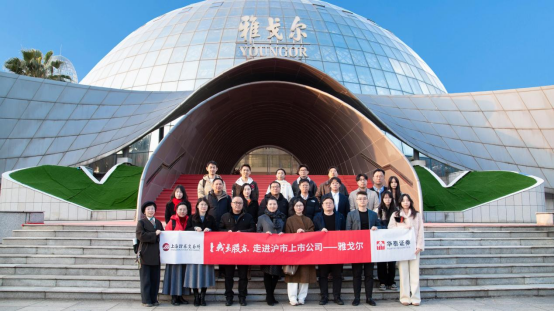
Core Insights - The event "I am a Shareholder - Visiting Youngor" was organized by Huatai Securities and Youngor on January 9, 2026, to enhance investors' understanding of the company's investment value and promote shareholder awareness and value investment concepts [1][9] - Nearly 30 investors participated in the event, which included a visit to Youngor's smart factory and discussions on the company's business development and financial performance [1][5] Company Overview - Youngor Fashion Co., Ltd. was listed on the Shanghai Stock Exchange on November 19, 1998, and aims to build an international brand while establishing itself as a leading player in the high-end apparel industry [8][15] - The company's brand value is reported at 40.589 billion yuan, with its main brand "Youngor" maintaining a dominant position in the domestic men's clothing sector [15] Factory Visit and Technology - Investors toured Youngor's smart factory, where they learned about the company's development history, industry layout, sales dynamics, core products, and technologies [3][11] - The factory features an automated hanging conveyor system that enhances production efficiency and product quality, along with a visualization electronic screen that updates production progress in real-time [3][11] Investor Engagement and Financial Insights - After the factory visit, a face-to-face discussion was held where Youngor's board secretary and securities representative shared business development updates and financial data for the first three quarters of 2025 [5][13] - Huatai Securities' consumer industry researcher provided insights into the overall development of the textile and apparel industry, analyzing market factors and opportunities for 2026 [5][13] Future Initiatives - Huatai Securities will continue to conduct the "I am a Shareholder - Visiting Listed Companies in Shanghai" series to help investors understand companies and industries better, promoting rational, long-term, and value investment concepts [8][15]

泰慕士:公司高度重视股价表现及投资者关切
Zheng Quan Ri Bao· 2026-01-13 11:13
Core Viewpoint - The company emphasizes the importance of stock price performance and investor concerns, stating that multiple factors influence the secondary market stock price [2] Group 1: Company Strategy - The company will focus on its core business and deepen innovation-driven initiatives to enhance core competitiveness and operational management [2] - The company aims to establish a solid foundation for long-term sustainable development [2]
南山智尚:截至2026年1月9日股东人数为31960户
Zheng Quan Ri Bao Wang· 2026-01-13 09:13
Group 1 - The core point of the article is that Nanshan Zhishang (300918) reported a total of 31,960 shareholders as of January 9, 2026 [1]
行业标准大户!山东主导参与制修订纺织服装国家标准630余项
Da Zhong Ri Bao· 2026-01-13 08:19
Group 1 - The article emphasizes the importance of standards as a technical support for economic activities and social development, highlighting the implementation of a strong standards initiative in the textile and apparel industry in Shandong Province [1] - Shandong Province has led the development and revision of 3 international standards, over 630 national standards, and 990 industry standards in the textile and apparel sector, achieving comprehensive coverage from fiber materials to end products [1] - The province is actively promoting the establishment of a technical committee for customized and functional clothing, involving key enterprises, educational institutions, and international standardization organizations to create an open and collaborative standards transformation platform [1] Group 2 - Shandong aims to optimize and improve its standard system by leveraging the complete textile and apparel industry chain and the concentration of leading enterprises, constructing a lifecycle standard system covering design, manufacturing, application, service, and recycling [2] - The province plans to accelerate the development of standards in emerging fields such as smart wearables, green materials, and digital services, ensuring the advanced and applicable nature of the standard system [2] - Shandong will enhance the dynamic monitoring and evaluation of the implementation of national standards in the workwear sector, addressing issues in standard execution promptly [2]
出台16条措施靶向发力,山东打造现代工装产业高地
Feng Huang Wang Cai Jing· 2026-01-13 07:22
Core Viewpoint - Shandong Province is focusing on building a high-quality development hub for the textile and apparel industry through the implementation of the "Action Plan for High-Quality Development of the Workwear Industry (2026-2028)" aiming to cultivate over five leading workwear enterprises with annual revenues exceeding 3 billion yuan by 2028 [2] Group 1: Industry Development - The textile and apparel industry in Shandong has been optimizing and upgrading, achieving simultaneous growth in quantity and quality, with a focus on the entire industrial chain from fiber raw materials to brand operation [4] - Shandong has over 50,000 production enterprises and 22 national-level industrial clusters, with significant revenue growth of 6.1% annually among large-scale enterprises during the 14th Five-Year Plan, surpassing the national average by 4 percentage points [6] - The province ranks first and second in the production of yarn and fabric respectively, with six companies in the top ten of China's cotton textile industry and four in the top ten of China's dyeing and finishing industry [6] Group 2: Technological Innovation - The industry is experiencing breakthroughs in technological innovation, with a focus on material innovation that supports sectors such as automotive, healthcare, deep-sea exploration, and military equipment [7] - Shandong has established a comprehensive industrial ecosystem covering various categories, including shirts, suits, down jackets, and home textiles, meeting broad market demands [7] Group 3: Workwear Industry Focus - The workwear industry in Shandong is a key focus area, with over 5,500 related enterprises generating approximately 45 billion yuan in annual revenue, and the establishment of the first national and third global arc-resistant fabric testing laboratory [7] - Future actions will focus on innovation and quality improvement in workwear, upgrading the workwear industry chain, enhancing product quality, and integrating AI technology into design and production processes [8]


渤海证券研究所晨会纪要(2026.01.13)-20260113
BOHAI SECURITIES· 2026-01-13 04:05
Group 1: Fund Research - The equity market saw all major indices rise, with the highest increase being 9.80% for the Sci-Tech 50 index during the week of January 5 to January 9, 2026 [2] - The average return for equity funds was 4.66%, with a positive return ratio of 98.63%, while fixed income plus funds averaged a 0.90% increase with a positive return ratio of 93.57% [3] - The ETF market experienced a net outflow of 57.215 billion yuan, with bond ETFs seeing the largest outflow of 66.431 billion yuan [3] Group 2: Industry Research - The U.S. Supreme Court has not yet announced a ruling on the Trump tariff case, which is being closely monitored, while the U.S. has postponed the tariff increase on certain imported furniture products [5] - The light industry manufacturing sector outperformed the CSI 300 index by 0.19 percentage points, while the textile and apparel sector underperformed by 0.13 percentage points during the same period [6] - China's emotional consumption market is projected to grow from 1.63 trillion yuan in 2022 to over 4.5 trillion yuan by 2029, indicating strong growth potential in sectors like trendy toys, pet consumption, and domestic fashion [7]
「链式革新」破局传统产业转型,SHEIN携手服装工厂的数智化征途
3 6 Ke· 2026-01-13 02:38
Core Viewpoint - The textile and apparel industry in China is undergoing a significant transformation driven by cross-border e-commerce and the need for digitalization and green transformation, with SHEIN acting as a "chain leader" to empower traditional factories through technology and innovative business models [1][19]. Group 1: Industry Transformation - The textile and apparel industry is a pillar of China's economy, with 99.8% of enterprises being small and micro-sized, facing challenges such as low digitalization, fluctuating orders, and difficulties in green transformation [1]. - SHEIN, as a leading global fashion retailer and cross-border e-commerce company, is injecting transformation momentum into traditional factories through technological innovation and ecosystem building [1][19]. - The shift from "scale expansion" to "value enhancement" is evident as factories adapt to new market demands and digital tools [1]. Group 2: Case Studies of Transformation - Chen Di's factory, which became a SHEIN supplier, successfully adapted to the "small order fast response" model, overcoming initial challenges with the help of SHEIN's support team [6][9]. - Sun He, operating in Dongguan, transitioned to digital heat transfer printing technology, which has seen a significant increase in production from 400 million meters in 2015 to 3.7 billion meters in 2023, with an annual growth rate of 37.4% [11][12]. - Yao Yuan's factory shifted from producing bulk orders for delivery service uniforms to flexible production of outdoor apparel, successfully implementing SHEIN's model to meet diverse consumer demands [15][16]. Group 3: SHEIN's Empowerment Model - SHEIN's empowerment system is not limited to technical support but extends to comprehensive training and operational guidance, enabling factories to optimize processes and improve efficiency [19][21]. - The company has developed over 180 lean tools, aiming to enhance operational efficiency by an average of 35% by the end of 2025 [21]. - SHEIN's investment in upgrading factories and training has created a ripple effect, allowing successful transformations to serve as benchmarks for other factories in the industry [21][22]. Group 4: Industry Impact and Future Outlook - The agile supply chain model represented by SHEIN is becoming a trend in manufacturing, facilitating collaboration among small factories and enhancing China's influence in the global fashion industry [22]. - The transformation stories of Chen Di, Sun He, and Yao Yuan illustrate how individual factory upgrades can lead to broader industry advancements, contributing to a more resilient and competitive textile and apparel sector [19][22].
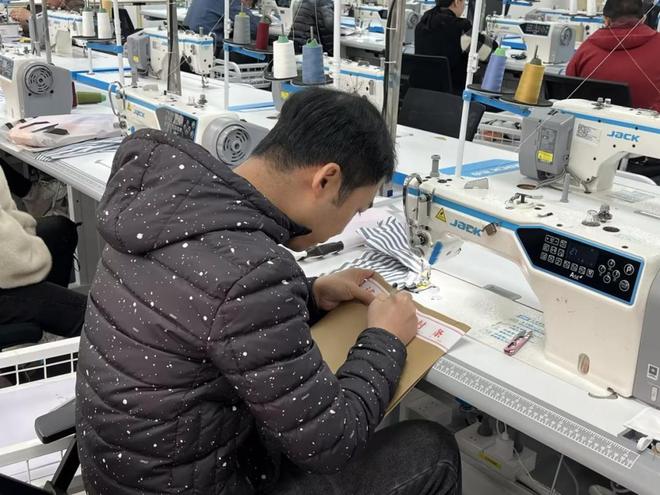
围绕债务化解与经营改善推进预重整
Xin Lang Cai Jing· 2026-01-12 23:10
Core Viewpoint - Zhejiang Bangjie Holdings Group Co., Ltd. (referred to as "Bangjie") has initiated a pre-restructuring process due to creditor applications, aiming to alleviate its debt pressure and attract potential investors [1][2]. Group 1: Pre-restructuring Process - Bangjie announced the initiation of public recruitment for restructuring investors and pre-restructuring debt claims on January 8, 2026, following the commencement of judicial procedures [1]. - The company has received inquiries from potential investors across various industries, with a focus on their financial strength and potential for industrial synergy [1][2]. - The local government has provided significant support for the debt risk resolution efforts, which is crucial for stabilizing expectations and facilitating the pre-restructuring process [1][2]. Group 2: Debt Pressure and Financial Situation - The primary goal for Bangjie is to resolve existing debt pressure, which imposes high requirements on the investment amounts from potential investors [1][2]. - As of the third quarter of 2025, the company's net assets were negative, which could lead to delisting risks if not addressed promptly [4]. - The financial pressure remains due to ongoing interest accrual on debts during the pre-restructuring phase [1][5]. Group 3: Business Operations and Challenges - The company faces significant operational pressure in its photovoltaic business, which is cyclical and capital-intensive, leading to increased risks during industry downturns [2][3]. - In contrast, Bangjie’s seamless garment business has shown stable development, with a relatively stable order structure in overseas markets [2][3]. - The company is exploring domestic sales channels and expanding its e-commerce presence, which is currently in the cultivation stage [3]. Group 4: Investor Considerations and Future Directions - Bangjie is particularly interested in investors who can provide support during the pre-restructuring phase to improve the company's financial situation [2]. - The company aims to attract investors that align with the local industrial structure, focusing on sectors like e-commerce, automotive parts, and chips [3]. - The restructuring process is legally distinct from bankruptcy liquidation, aiming to preserve the company's corporate identity and restore profitability [2].
