
互联网服务

Search documents
天地在线:公司在定期报告中披露对应时点的股东信息
Zheng Quan Ri Bao Wang· 2026-01-12 11:11
证券日报网讯1月12日,天地在线(002995)在互动平台回答投资者提问时表示,为保证所有投资者平 等获悉公司信息,根据信息披露公平原则,公司在定期报告中披露对应时点的股东信息。 ...

沸腾了 | 谈股论金
水皮More· 2026-01-12 10:18
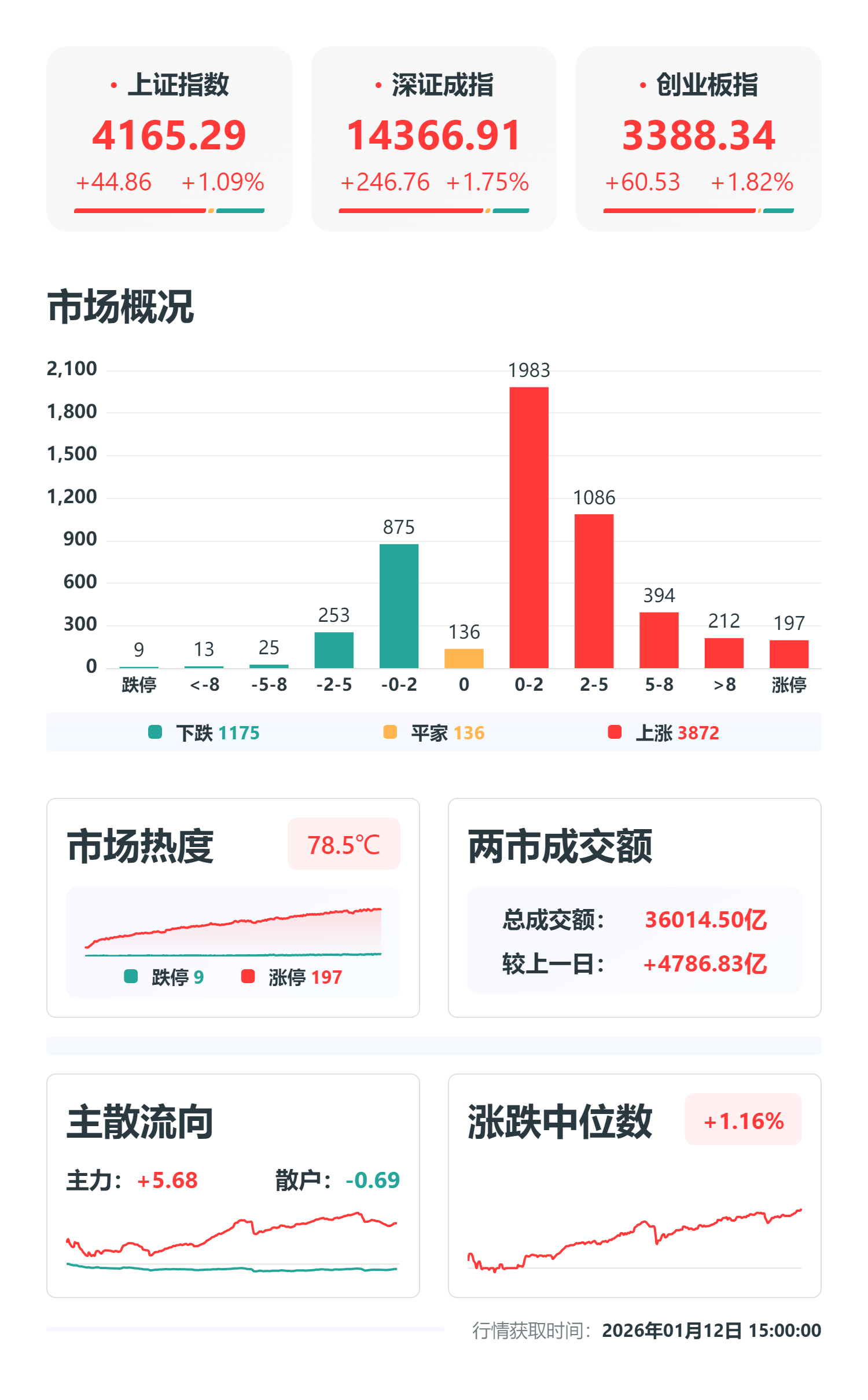
Market Performance - The A-share market continues to show strong performance, with the Shanghai Composite Index achieving a 17-day winning streak, closing at 4165.29 points, up 1.09% [2] - The Shenzhen Component Index rose by 1.75% to 14366.91 points, while the ChiNext Index increased by 1.82% to 3388.34 points [2] - The total trading volume in the Shanghai, Shenzhen, and Beijing markets reached 36.45 trillion, a significant increase of nearly 500 billion compared to the previous trading day, marking the highest trading volume in A-share history [2] Market Sentiment - The strong performance of the A-share market has exceeded market expectations, with a focus on trading volume rather than the number of consecutive gains [3] - The market is experiencing a "heating up" phase, with retail investors showing high enthusiasm, making it difficult for the market trend to reverse easily [3] - Despite some intraday sell-off signals, buying interest surged whenever there was selling pressure, indicating strong support from bullish investors [3] Sector Performance - The market's focus has shifted to small and mid-cap stocks, with the AI application sector showing the most significant gains, with top sectors rising over 7% [4] - The AI application sector's rally was sparked by the listing of companies like Zhizhu and MINI MAX, which saw substantial price increases, further fueling investor interest [4] - The commercial aerospace sector also saw a notable increase of nearly 6%, driven by positive news regarding satellite planning and development [5] Capital Flow - The market exhibited a broad upward trend, with 3900 stocks rising and only 1200 declining, although there was a net outflow of 34.4 billion from major funds and 29.4 billion from northbound trading [5] - The AI hardware sector, in contrast, experienced a corrective phase, with major blue-chip stocks in finance and petrochemicals also showing signs of adjustment [6] Overall Market Outlook - The current environment for small and mid-cap stocks is characterized by self-reinforcing speculation, reflecting a short-term risk accumulation despite the ongoing strong market performance [6]


技术看市:A股大幅刷新记录,车已起速坐好扶稳,牛市最优应对方案来了
Jin Rong Jie· 2026-01-12 10:03
Market Performance - The A-share market experienced a significant rally with 17 consecutive days of gains, marking a record trading volume of 3.64 trillion yuan, surpassing the previous record set on October 8 of last year [1] - Major indices saw substantial increases: the Shanghai Composite Index rose by 1.09% to 4165.29 points, the Shenzhen Component increased by 1.75%, the ChiNext Index gained 1.82%, the CSI 300 rose by 0.65%, and the STAR 50 surged by 2.43% [1] - Out of the stocks traded, 3872 rose, 1167 fell, and 144 remained unchanged [1] Capital Flow - The software development sector attracted the highest net inflow of funds, followed by internet services, cultural media, securities, and computer equipment [7] - Conversely, the electronic components sector experienced the largest net outflow, followed by batteries, specialized equipment, non-ferrous metals, and semiconductors [7] Market Sentiment - Market expert Xu Xiaoming commented on the current bullish trend, indicating that the market is in a primary upward phase, suggesting that rapid increases are indicative of a strong market period [7] - Xu emphasized that during such rapid rallies, it is often safer to hold onto stocks rather than attempt to time the market, as adjustments typically result in gradual declines or sideways movements rather than sharp drops [7] - The recommendation is to maintain a simple investment strategy, focusing on holding stocks rather than frequent trading, which is deemed optimal in a bull market [7]
GEO革命:AI流量入口重构,借道传媒ETF华夏一键布局
Xin Lang Cai Jing· 2026-01-12 08:05
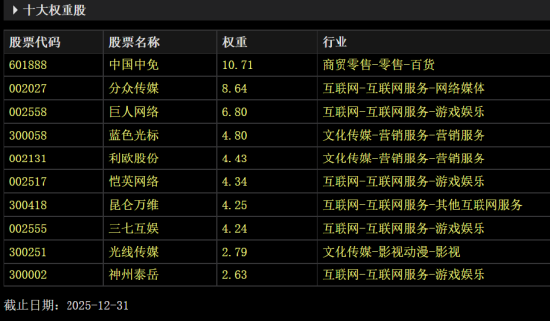
Core Viewpoint - A marketing revolution is underway, transitioning from "keyword ranking" to "AI answer priority," significantly impacting the media sector and leading to a surge in the Media ETF Huaxia (code: 516190) as investors position themselves for the GEO (Generative Engine Optimization) era [1][9]. Group 1: GEO Revolution - GEO is an optimization strategy for generative AI platforms aimed at ensuring brands, products, or services are prioritized in AI-generated responses [11]. - Unlike traditional SEO, GEO requires content to be logically coherent, data authoritative, and emotionally resonant, marking a shift in advertising demand from "ranking priority" to "answer priority" [11]. - The Chinese GEO market is projected to reach approximately 2.9 billion RMB by 2025 and 24 billion RMB by 2030, with the global market expected to exceed 100 billion USD [11]. Group 2: Media ETF Huaxia - Media ETF Huaxia (516190) is positioned as a primary investment tool for the GEO revolution, with its constituent stocks highly aligned with GEO concepts [13]. - The ETF covers key sectors such as online retail, advertising, film publishing, gaming, and digital media, with top holdings including Focus Media, Giant Network, BlueFocus, and Kunlun Wanwei [13][14]. - As of January 9, 2025, the ETF has achieved a year-to-date return of 13.15% and a one-year return of 52.38%, significantly outperforming the CSI 300 index [15].
光环新网成交额创2025年3月13日以来新高
Zheng Quan Shi Bao Wang· 2026-01-12 06:30
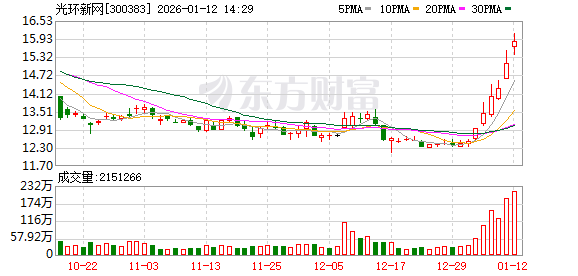
数据宝统计,截至14:04,光环新网成交额32.30亿元,创2025年3月13日以来新高。最新股价上涨 4.36%,换手率11.43%。上一交易日该股全天成交额为28.64亿元。 (文章来源:证券时报网) 据天眼查APP显示,北京光环新网科技股份有限公司成立于1999年01月27日,注册资本179759.2847万 人民币。(数据宝) ...

消费维权去哪里?盘点正规高效的投诉途径与平台
Xin Lang Cai Jing· 2026-01-12 02:41
Group 1: Official Complaint Channels - The official complaint platforms have strong legal validity and standardized processing procedures, serving as an important foundation for resolving consumer disputes [8] - The 12315 platform, operated by the State Administration for Market Regulation, is the most well-known consumer complaint channel, covering the entire country and allowing consumers to report issues through various means [8] - The 12345 government service hotline integrates multiple government services, making it suitable for complex disputes that involve multiple departments or regions [8] Group 2: Internet Complaint Platforms - Internet complaint platforms have gained popularity due to their convenience, strong dissemination capabilities, and high interactivity, especially among younger consumers [9] - The Black Cat Complaint platform, a public welfare platform under Sina, allows users to submit complaints quickly, generally within five minutes, significantly lowering the barriers to consumer rights protection [12] - The platform features an "enterprise service red and black list" module that regularly publishes service evaluation rankings based on various metrics, encouraging companies to improve their after-sales service quality [12] Group 3: Industry-Specific Complaint Channels - Different industries have corresponding regulatory agencies, making complaints more targeted, such as the 12381 for telecommunications and the 12363 for financial consumer protection [11] - For transportation-related complaints, the 12328 hotline is suitable for issues related to ride-hailing, passenger transport, and freight [11] Group 4: Preparation for Complaints - To increase the success rate of complaints, it is crucial to prepare adequately by organizing evidence such as order screenshots, payment records, contracts, and communication logs [10] - Clearly stating demands such as refunds, compensation, or service improvements is essential for effective complaints [10] - Maintaining communication after filing a complaint is important to respond promptly to any inquiries from the platform or the company [10]
购物维权不再难:四大投诉渠道帮你高效解决纠纷
Xin Lang Cai Jing· 2026-01-12 01:51
Core Viewpoint - The article emphasizes the importance of consumer rights protection in the era of online shopping, highlighting various channels available for consumers to address issues such as product quality, false advertising, and after-sales service problems. Group 1: Official Channels - The National 12315 platform is a key official complaint and reporting platform managed by the State Administration for Market Regulation, providing a one-stop service for consumers [1][10] - The platform has strong authority, wide coverage across all consumer sectors, and a standardized processing procedure, making it the most direct and effective route for addressing clear violations [10][4] - The China Consumers Association and local consumer associations serve as neutral third-party organizations that mediate disputes and support consumers in litigation for significant infringement cases [4][10] Group 2: Internal Mechanisms of Shopping Platforms - Major shopping platforms have their own customer service and dispute resolution mechanisms, which typically offer faster response times and easier access for consumers [2][9] - These platforms often have management rules for merchants and can enforce penalties through a deposit system, ensuring compliance with resolutions [10][4] - Internal channels are recommended for initial transaction disputes, such as non-receipt of goods or refund requests, as they provide the quickest resolution [10][4] Group 3: Third-Party Complaint Platforms - Third-party platforms like Black Cat Complaint play an increasingly important role in consumer rights protection, acting as a bridge and catalyst for resolving disputes [3][11] - Black Cat Complaint offers a user-friendly interface and facilitates direct communication between consumers and merchants, enhancing resolution efficiency [12][11] - The platform maintains a neutral stance, focusing on information transmission and communication facilitation without intervening in specific disputes [14][11] Group 4: Specialized Channels for Specific Issues - Certain consumer categories have dedicated complaint channels, such as postal complaints for logistics issues and cultural market reports for counterfeit products [15][7] - A stepwise approach to dispute resolution is recommended, starting with internal negotiations, followed by third-party intervention, official complaints, and, if necessary, legal action [17][13] Group 5: Evidence Preservation - Preserving evidence such as order screenshots, payment records, and communication logs is crucial for effective consumer rights protection [16][8] - Understanding and utilizing diverse channels for dispute resolution can empower consumers to assert their rights more effectively in the online shopping environment [16][8]
GEO专家交流-如何看待GEO底层技术及产业机遇
2026-01-12 01:41
Summary of GEO Technology and Industry Opportunities Company Overview - **Company**: Baidu - **Business Segment**: GEO (Generative Engine Optimization) - **Revenue Contribution**: GEO accounts for approximately 40% of Baidu's advertising search business, which contributes two-thirds of the annual revenue [1][2] Core Insights and Arguments - **Technological Framework**: Baidu's GEO utilizes a technology toolchain that includes RAG optimization, large model base, and vector database retrieval to achieve precise marketing and content distribution [1][2] - **Content Service Ecosystem**: Baidu has established over 20 data crowdsourcing bases across the country to gather data annotation materials, which support AI training and enhance optimization capabilities [5][6] - **Marketing Solutions**: The company offers end-to-end marketing strategies through keyword package services, enabling clients to achieve targeted exposure on various AI platforms [6][7] - **AI Content Generation**: Baidu integrates its Wenxin large model with GPU collaboration to provide toolchain services, allowing users to optimize content through conversational interfaces [1][7] - **Regulatory Compliance**: In response to AI regulatory policies, Baidu has implemented safety controls on its GEO engine and Wenxin model, ensuring that AI-generated content is clearly marked for compliance [8][9] Performance Metrics - **Optimization Results**: The optimization engine has reportedly increased retention rates and click-through rates by approximately 260% across platforms [12] - **GO Advertising Pricing**: GO advertising is priced about 30% higher than traditional advertising, with an expected long-term value increase of around 10% [21][27] Additional Important Points - **Client Industries**: GEO primarily serves industries such as tourism, legal, consumer goods, and e-commerce, with a focus on sectors that benefit from increased exposure and click rates [17] - **Cost Structure**: The pricing model for GEO includes toolchain fees, data services charged by person-days, and project-based pricing for marketing solutions [18][20] - **Competitive Advantage**: Baidu's integration of large model capabilities creates a significant technical barrier, allowing for automated strategy generation and optimization [22][23] - **Future Strategy**: Baidu's future plans focus on technology integration, compliance system development, and ecosystem collaboration to transition smoothly from the search era to new media and short video platforms [10][25] Conclusion Baidu's GEO technology represents a significant advancement in AI-driven marketing and content optimization, with a robust framework that supports compliance and enhances client engagement across various industries. The strategic focus on technology integration and regulatory adherence positions Baidu favorably in the evolving digital landscape.

嘉兴乐鲜科技有限公司成立
Zheng Quan Ri Bao Wang· 2026-01-11 14:14
Group 1 - The establishment of Jiaxing Lexian Technology Co., Ltd. has been officially registered with a capital of 5 million yuan [1] - The company's business scope includes network technology services, Internet of Things technology services, ticketing agency services, and information system integration services [1] - Jiaxing Lexian Technology Co., Ltd. is wholly owned by Meituan's Zhejiang Lexian Technology Co., Ltd. [1]

上海喊你来吃意大利菜!
Xin Lang Cai Jing· 2026-01-11 14:09
【#上海喊你来吃意大利菜#!】1月9日,2026年"上海环球美食汇Global Taste in Shanghai"暨"欧陆风味 季"开幕。美团发布了环球美食指南-欧陆篇,推出评分4.0分及以上的意大利、西班牙、法国、德国等 欧陆风味高品质餐厅338家。为契合首月"意大利美食月"主题,指南中包含了173家极具代表性的意大利 菜餐厅。记者走访了沪上多家知名意大利餐厅,请中意老饕推荐他们心中最值得品尝的意大利美食。 (记者 吴婉珍) ...