储能

Search documents
未知机构:储能板块大跌点评主要受锂矿停止出口情绪影响实际成本传导和下游电站开工好于预-20260228
未知机构· 2026-02-28 02:50
Summary of Conference Call Notes Industry Overview - The energy storage sector experienced a significant decline, primarily influenced by the suspension of lithium exports from Zimbabwe, which affected market sentiment [1] - Despite the downturn, actual cost transmission and downstream project commencement are better than expected [2] Core Insights and Arguments - The introduction of capacity pricing is expected to improve financial models in terms of cash flow, duration, and financing rates, with positive impacts not yet recognized by the market [2] - Leading integrators and battery manufacturers reported minimal impact on project commencement due to the current market conditions [3] - Battery manufacturers indicated that all production lines are fully operational post-Chinese New Year [3] - In January and February, bidding reached 94 GWh, a year-on-year increase of 120%, with significant procurement activities from state-owned enterprises and active demand in provinces like Xinjiang [3] - The recent system bidding price stabilized above 0.53 CNY/Wh, with collective procurement cell prices reaching 0.35 CNY, showing a notable recovery from last year's average low of 0.42 CNY [3] - The capacity pricing catalyst effect is significant, with estimates suggesting that a price of 165 CNY/kW for a 6-hour duration could increase revenue per kWh discharged by 0.08 CNY, enhancing project IRR by 3 percentage points [3] Additional Important Points - The actual impact on project commencement is minimal due to extended project lifecycles and financing durations, even if companies bear the full increase in lithium prices, valuations remain below 20 times [4] - Recommended companies with strong downstream price increase capabilities and significant production increases include Deye, Airo, and Goodwe, all maintaining valuations below 20 times, with ongoing production increases expected [4]
易事特储能申请储能系统多并机黑启动方法专利,实现极快速响应不受电站规模限制
Jin Rong Jie· 2026-02-28 02:37
Group 1 - The core viewpoint of the news is that Yisite Energy Technology Co., Ltd. has applied for a patent for a multi-machine black start method and system, which significantly improves the efficiency and reliability of energy storage systems [1] - The patent application was published under CN121584726A, with an application date of December 2025, indicating the company's focus on innovative energy storage solutions [1] - The proposed method allows for rapid response and synchronization of large-scale energy storage systems (GWh level), reducing startup time compared to traditional methods, which can take several minutes [1] Group 2 - Yisite Energy Technology Co., Ltd. was established in 2020 and is located in Sanmenxia City, focusing primarily on research and experimental development [2] - The company has a registered capital of 100 million RMB and has made investments in six other enterprises, indicating its active role in the industry [2] - Yisite has participated in 20 bidding projects and holds 78 patents, showcasing its commitment to innovation and development in the energy sector [2]

中创新航2025年业绩预期翻倍:核心业务持续高增长,全球发展势能强劲
Cai Fu Zai Xian· 2026-02-28 01:22
Core Viewpoint - The company, Zhongchao Innovation, anticipates a significant increase in net profit for the year 2025, projecting between RMB 20.25 billion and RMB 21.93 billion, representing a year-on-year growth of approximately 140% to 160% due to sustained high growth in its leading technology products across various sectors [1] Group 1: Financial Performance - The company expects a net profit of approximately RMB 20.25 billion to RMB 21.93 billion for 2025, marking a year-on-year increase of about 140% to 160% [1] - The annual global installed capacity of the company's power batteries reached 62.8 GWh, a year-on-year increase of 52.6%, securing a position among the top four globally with a market share of 5.3% [1] Group 2: Product and Market Development - In the passenger vehicle sector, the company has established deep collaborations with major clients such as XPeng, Leap Motor, Geely, and Toyota, achieving significant growth in high-end vehicle markets and expanding its product offerings [2] - The company’s 5C ultra-fast charging battery has become the largest delivery volume product globally, while its "top-tier all-round" cylindrical semi-solid-state battery has achieved high energy density and ultra-fast discharge capabilities [2] Group 3: Commercial Vehicle and Energy Storage Solutions - The company has successfully implemented its "Zhiyuan" all-scenario solution in the commercial vehicle sector, leading to exponential growth in vehicle installation and new model announcements [3] - In the energy storage sector, the company has introduced new products in the "Zhijiu" series, achieving record high shipment volumes and project deliveries, while expanding its market presence in Europe and the Middle East [3] Group 4: Industry Outlook - Industry analysts indicate that the global energy transition and electrification trends are accelerating, leading to long-term growth in the demand for power batteries and energy storage [3] - The company has built a unique competitive advantage through its strong technical foundation, comprehensive product layout, and deep partnerships with leading enterprises, positioning itself as a leader in driving high-quality development in the global new energy industry [3]
资源股与科技股双线开花 A股三大股指马年首周收涨
Zhong Guo Zheng Quan Bao· 2026-02-27 22:55
Core Viewpoint - The A-share market has shown a collective rise in major indices during the first trading week after the Spring Festival, with active trading and a focus on resource and technology sectors as key market themes [1][2][3] Market Performance - As of February 27, the Shanghai Composite Index closed at 4162.88 points, up 1.98% for the week; the Shenzhen Component Index rose 2.80% to 14495.09 points, while the ChiNext Index increased by 1.05% to 3310.30 points [2] - Daily trading volume averaged 2.44 trillion yuan, a 15% increase compared to the previous week [2] Sector Performance - Resource and technology sectors have been the main focus, with steel, non-ferrous metals, and coal seeing significant gains due to rising international commodity prices and domestic PPI data [3] - The steel sector led with a weekly increase of 12.27%, while non-ferrous metals and basic chemicals also performed well [3] - In the technology sector, both communication and electronics industries saw weekly gains exceeding 4% [3] Capital Flow - Major funds have been flowing into both resource and technology sectors, with the electronics sector attracting nearly 60 billion yuan in net inflows over five trading days, leading all sectors [4] - The non-ferrous metals sector followed closely with net inflows of 43.11 billion yuan [4] Market Outlook - Analysts believe that the trend of price increases will be a key trading theme for 2026, with implications for market stability and sector performance [5] - The upcoming months are seen as a critical window for validating the price increase logic, with expectations of further price rises across various sectors [5][6] Investment Recommendations - Investors are advised to focus on growth and cyclical sectors, particularly in oil and gas, non-ferrous metals, and energy storage [1][7] - Specific areas of interest include AI-related sectors, human-robot interactions, and industries benefiting from rising commodity prices [7]
上海派能能源科技股份有限公司2025年度业绩快报公告
Xin Lang Cai Jing· 2026-02-27 20:32
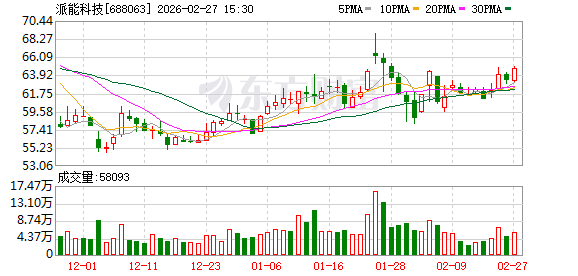
Core Viewpoint - The company reported significant growth in total revenue for 2025, driven by increased demand in both international and domestic energy storage markets, despite a decline in operating profit and total profit due to heightened competition and rising costs [1][2][3]. Financial Performance Summary - Total revenue for 2025 reached 3,158.14 million RMB, representing a year-on-year increase of 57.53% [1][3]. - Operating profit and total profit decreased by 76.59% and 75.25% respectively compared to the previous year, attributed to intensified industry competition and increased costs from changes in export tax rebate policies [2][3]. - Net profit attributable to shareholders of the parent company was 84.12 million RMB, a year-on-year increase of 104.64%, with basic earnings per share rising by 105.88% to 0.35 RMB [1][3]. Factors Influencing Performance - The increase in revenue was primarily due to the recovery of international energy storage market demand and the growth in domestic energy storage and lightweight power markets, along with optimized resource allocation in sales and R&D [2][3]. - The decline in operating profit and total profit was mainly due to increased competition, pressure on product sales prices, and rising costs linked to changes in export tax rebate policies [2][3]. - The growth in net profit was supported by significant increases in production and sales scale, improvements in the operations of certain subsidiaries, and the recognition of deferred tax assets related to unrecognized profits from internal transactions and deductible losses from subsidiaries [2][3].

汉星能源王雅琪:以技术开路 抢占储能行业制高点
Shang Hai Zheng Quan Bao· 2026-02-27 19:04
Core Insights - The article highlights the successful transition of Hanxing Energy from photovoltaic to energy storage, emphasizing the company's confidence in the national new energy strategy [2][3] - Hanxing Energy has established itself as a leading player in the energy storage sector in Anhui Province, focusing on a full-chain layout in electrochemical energy storage [2][4] Company Development - Hanxing Energy has achieved an annual energy storage output of 3 GWh, with a potential to reach 5 GWh at full capacity, positioning itself as a leader in both technology and market scale within the region [2][4] - The company has received several accolades, including being recognized as a national high-tech enterprise and a provincial specialized and innovative enterprise [3] Strategic Focus - The company has concentrated 90% of its business on the energy storage sector, with the remaining 10% in charging and swapping [4] - Hanxing Energy plans to invest over 11 million yuan in research and development over the next three years, aiming to leverage capital markets for accelerated growth [5] Technological Advancements - The company is focusing on the development of sodium-ion battery technology, aiming to establish a new production base for this next-generation technology [6] - Hanxing Energy employs a flexible production model across two bases to meet both large-scale and customized energy storage orders [7] Long-term Vision - The company emphasizes a balanced approach to revenue and risk, focusing on stable cash flow from core product sales while being selective in project partnerships [8] - Hanxing Energy acknowledges industry challenges such as competition, funding issues, and talent shortages, and is committed to enhancing innovation and maintaining its market leadership [9] Future Aspirations - The company aims for steady growth rather than rapid expansion, aspiring to be a socially responsible enterprise that benefits shareholders, employees, and customers alike [9]


派能科技:2025年度业绩快报公告
Zheng Quan Ri Bao· 2026-02-27 14:19
Group 1 - The company announced a total operating revenue of 3,158.14 million yuan for the year 2025, representing a year-on-year increase of 57.53% [2] - The net profit attributable to the parent company's owners reached 84.12 million yuan, showing a year-on-year growth of 104.64% [2]
海博思创业绩快报:2025年归母净利润9.49亿元,同比增长46.49%
Ge Long Hui· 2026-02-27 13:53
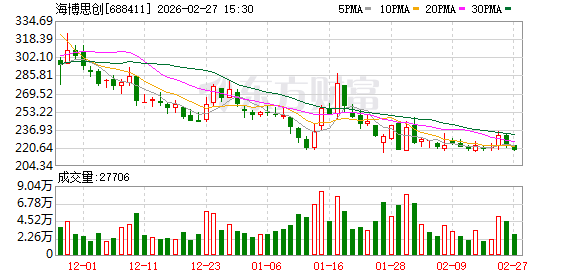
Core Viewpoint - Haibosi Chuang (688411.SH) reported significant growth in its 2025 annual performance, driven by the rapid development of the domestic energy storage market and the company's competitive advantages in market, technology, and research and development [1] Financial Performance - The company achieved an operating revenue of 11.604 billion yuan, representing a year-on-year increase of 40.32% [1] - The net profit attributable to the parent company was 949 million yuan, reflecting a year-on-year growth of 46.49% [1] - The net profit attributable to the parent company after deducting non-recurring gains and losses was 876 million yuan, which is a year-on-year increase of 39.53% [1] Market Position and Strategy - The company capitalized on the historical opportunity presented by the rapid growth of the domestic energy storage market, securing a high market share [1] - It is also accelerating its expansion into global markets, contributing to the sustained growth in revenue and profits [1]
绿能慧充:公司无人机业务根据订单确定排产情况
Zheng Quan Ri Bao· 2026-02-27 13:37
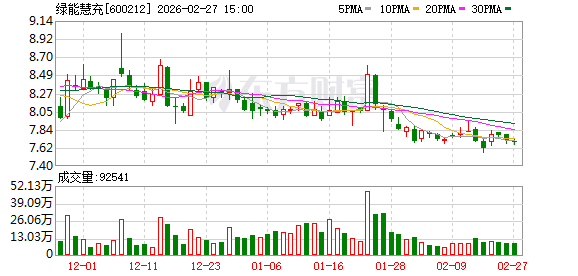
Core Viewpoint - The company, Green Energy Smart Charging, emphasizes its focus on energy storage products that cater to various applications in the power distribution network, distributed generation, and microgrid sectors, highlighting its capabilities in green energy consumption and efficient charging solutions [2] Group 1: Energy Storage Products - The company's energy storage products are primarily used in medium and low-voltage distribution networks, distributed generation, microgrids, and user-side applications [2] - These products meet the demands of ultra-fast charging stations, microgrids, generation-side, and grid-side applications, enabling functions such as green energy consumption, peak shaving, and efficient charging [2] Group 2: Drone Business - The company's drone business production is determined by order volume, with sufficient production capacity available [2] - Specific production quantities will be disclosed in the company's regular reports [2] - The company has obtained relevant export licenses for some overseas orders in its drone business, which require compliance with regulations regarding dual-use items and technology [2]

海博思创:2025年度业绩快报公告
Zheng Quan Ri Bao· 2026-02-27 13:10
Group 1 - The company Haibosi Chuang announced that it expects to achieve an operating revenue of 1,160,424.35 million yuan in 2025, representing a year-on-year growth of 40.32% [2] - The net profit attributable to the parent company's shareholders is projected to be 94,903.60 million yuan, reflecting a year-on-year increase of 46.49% [2]