高等教育

Search documents
海南师范大学科研创新中心项目开工建设
Hai Nan Ri Bao· 2025-12-30 01:17
作为海南省重点大学、全国深化创新创业教育改革示范高校、海南省院士工作站设站单位,海南师 范大学长期以来高度重视科技创新体系建设。学校始终以提升人才培养质量为根本,以学科建设为核心 引领,以教师教育为鲜明特色,坚定秉持内涵发展、创新发展、开放发展、特色发展、协调发展理念, 锚定"特色鲜明、国内一流、国际知名的高水平师范大学"建设目标稳步前行。 海南日报讯(海南日报全媒体记者 刘冀冀 通讯员 曹柳)近日,海南日报全媒体记者从海口江东新 区管理局获悉,位于海口江东新区高教科研组团内的海南师范大学科研创新中心已取得施工许可证并开 工建设。项目的建设将为学校搭建高水平科研创新平台,在海南自由贸易港正式启动全岛封关带来的政 策赋能与资源集聚效应下,加速教育科创体系完善,为海南自贸港建设注入强劲动能。 据介绍,该科研创新中心位于海南师范大学江东校区,规划用地面积约3.2万平方米,总建筑面积 约6.1万平方米,其中地上建筑面积约5万平方米、地下建筑面积约1.1万平方米。项目将新建一栋地上9 层、地下1层的科研创新中心大楼,功能布局涵盖科研、科研辅助、公用设施、管理及生活服务等配套 用房,同步建设兼顾人防功能与停车需求的地下人 ...
韩媒:韩国为何频现“空壳高校”?
Huan Qiu Shi Bao· 2025-12-29 23:04
将中老年人注册为新生 全韩国因生源短缺而濒临关闭的大学不计其数,有的地方大学不惜做出违规的事情,招收"幽灵学生",变成了"僵尸大学"。报道称,光州广域 市某私立大学教授们替"幽灵学生"代考,目的是防止学科被裁撤。如果学生们因成绩不达标被开除学籍,整个学科就会消失。教授们为了阻止 学科废除,制造"幽灵学生",涉案的教授们直接招收40—50多岁的"学生",甚至捏造了考试成绩。随着新生补充率成为国家奖学金等政府财政 支援的核心标准,一些教授们为了奖学金而犯罪。 此外,韩国另一所大学的教授们因将家人、朋友、亲戚注册为"新生",受到警方调查。还有一所大学被指将大批中老年人注册为学生,补充未 招满的学科,或者保留不在校的学生学籍,量产"幽灵学生",充分说明地方大学的危机非常严重。 吸引外国学生 韩国《朝鲜日报》 12 月 29 日文章,原题:僵尸大学频现,量产幽灵学生 近日,济州岛某大学被爆出招收"幽灵学生"(名义上占据入学名额、 但实际上并不来上课的学生——编者注)的丑闻,该校今年总招生数量虽为1480名,但当前实际在校人数仅有205名。又因为课程大多集中在 一周中的某一天上,不少教授干脆采取线上授课的手段,导致校园里 ...


贵阳贵安与中南大学合作座谈会召开
Xin Lang Cai Jing· 2025-12-29 20:21
Core Viewpoint - The cooperation between Guiyang Gui'an and Central South University aims to enhance local economic and social development through talent cultivation, medical service improvement, and technological innovation [1][2]. Group 1: Cooperation Goals - Guiyang Gui'an and Central South University are focusing on building a high-quality talent team by leveraging the university's strengths in education and healthcare [1]. - The partnership will enhance the quality of local medical services by increasing support for Guiyang Gui'an's medical institutions [1]. - There is an emphasis on digital empowerment, aiming to deepen collaboration in areas such as computing power, data, scenarios, and security [1]. Group 2: Areas of Focus - The collaboration will prioritize talent training, clinical technology application, medical big data, and scientific innovation [2]. - Both parties will seek innovative cooperation models and pathways to accelerate the development of their partnership [2]. - The establishment and utilization of the Central South University Guizhou Research Institute and other innovation platforms will be crucial for the transformation of scientific achievements in Guiyang Gui'an [1].
以体育人,助学生划好人生“每一桨”
Xin Lang Cai Jing· 2025-12-29 20:21
体育是强健体魄的手段,更是铸魂育人的载体。中共中央、国务院印发的《教育强国建设规划纲要 (2024—2035年)》系统擘画育人蓝图,提出健全德智体美劳全面培养的教育体系,将"体教融合"作为 推动教育高质量发展的重要路径,以身心健康为突破点强化"五育"并举,促进学生全面发展。12月23 日,光明日报《教育周刊》对"体教融合"进行深度探讨,引发笔者深思。近年来,高校积极创新育人模 式,把德育贯穿于智育、体育、美育、劳动教育全过程,通过协同育人激活各类育人资源。 以文化为舵,筑牢精神底色 以上海立信会计金融学院为例,我们以一条校内河道为起点,用体教融合的特色实践探寻高校"以 体育人"的鲜活路径。 上海立信学生水上运动俱乐部成立于2017年。8年间,俱乐部从仅有几条旧船和一群零基础的学生 队员起步,逐步发展为累计培养260余名在校生、斩获中国大学生赛艇锦标赛16金3银5铜,并培育出世 界大学生运动会选手的优秀团队。伴随这一跨越的,不仅是成绩的突破,更是水上运动育人价值的不断 彰显——它让学生们实现了从"怕水新手"到"敢闯健儿"、从"关注个人"到"融入集体"、从"畏惧挫 折"到"坚韧乐观"的嬗变,每一次劈波斩浪,都是感 ...
坚定理想信念锤炼过硬本领勇担时代使命 为全面建设社会主义现代化国家贡献智慧力量
Xin Lang Cai Jing· 2025-12-29 19:18
Group 1 - The core viewpoint emphasizes the importance of deepening reform and opening up as a key strategy to activate development momentum and vitality, while enhancing the well-being of the people as the fundamental purpose of advancing Chinese-style modernization [1] - The construction of "Five Centers and Five Places" is highlighted as a means to promote high-quality development and achieve greater results in modernization [1] - Higher education institutions, particularly Chengdu University, are recognized as vital forces and valuable assets for high-quality development, with a focus on cultivating socialist builders and successors [1] Group 2 - The report stresses the need for educational institutions to adhere to the correct political direction and improve the quality of education, forming a high-level talent cultivation system to better serve national and local development strategies [1] - Teachers are encouraged to promote the spirit of educators, remembering their mission to nurture talent for the party and the country, and to strive to be satisfactory "four-haves" teachers [1] - Youth students are urged to integrate personal ideals into the party and national endeavors, fostering a strong belief, embracing dreams, and taking on responsibilities to shine on the broad stage of the new era [1] Group 3 - Prior to the report, a visit was made to Chengdu University's Film and Animation College to investigate the Sichuan Animation Research Center and the Sichuan Provincial Animation and Tourism Collaborative Innovation Center, focusing on talent cultivation, product creation, and school-enterprise cooperation [1]
录取分数线超过“985”,这些新大学凭什么?
Xin Lang Cai Jing· 2025-12-29 12:51
新型研究型大学快速崛起,探索破解中国高等教育同质化困局的新路径 文│《财经》记者 鲁伟 编辑│朱弢 "这里的建筑风格与传统大学截然不同,处处体现出学术与产业深度融合的独特氛围,让人感受到浓厚 的家国情怀。"近期,一位资深教育工作者在参观福耀科技大学后发出感慨。 2025年正式招生的福耀科技大学,定位为"高起点、小而精、研究型、国际化"的新型研究型大学。2025 年,除福耀科技大学,大湾区大学、宁波东方理工大学也正式成立,而由农夫山泉创始人钟睒睒捐资的 钱塘大学正在筹建中。 值得注意的是,在2025年首次招生中,上述三所新型研究型大学的录取分数线已比肩甚至超过部分传 统"985"高校。其中,福耀科技大学在广西的最低投档分为616分,超过北京师范大学、厦门大学、华南 理工大学等"985"高校;大湾区大学在广东的最低投档分为622分,与华南理工大学持平;宁波东方理工 大学的分数线达656分,同样超过多所"985"院校。 作为刚成立的新大学,它们凭什么能获得如此高的认可? 大湾区大学创校校长、中国科学院院士田刚曾公开表示:"我相信,未来的湾大在重点发展方向上可与 相关"985"高校媲美。未来就业招考也会打破985、2 ...

万千气象看海洋丨福建率先构建海洋文化通识教育体系 筑牢蓝色人才根基
Xin Hua Wang· 2025-12-29 12:00
Core Viewpoint - The article highlights the innovative approach taken by Xiamen University in conducting a unique final exam focused on marine themes, particularly the El Niño phenomenon, as part of the "Eighteen Lectures on Marine Culture" course, showcasing the development of marine culture education in Fujian province [1] Group 1: Marine Culture Education - "Eighteen Lectures on Marine Culture" is the first comprehensive marine education textbook aimed at university students in China [1] - The initiative has been implemented in six universities in Fujian, including Xiamen University and Jimei University, establishing a marine culture education system that spans both higher education and vocational institutions [1] - The program encourages the creation of high-quality courses, promotes interdisciplinary integration, and engages in practical activities such as species release, enhancing students' interest in marine exploration [1] Group 2: Talent Development - The marine culture education initiative aims to strengthen the foundation of blue talent necessary for building a strong marine nation [1]

甘肃智能建造专业人才竞技 推动“三链”深融
Xin Lang Cai Jing· 2025-12-29 11:01
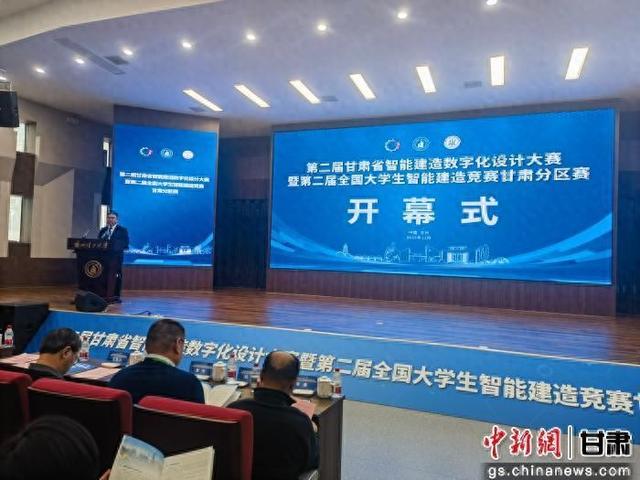
中新网甘肃新闻12月29日电 近日,第二届甘肃省智能建造数字化设计大赛暨第二届全国大学生智能建 造竞赛甘肃分区赛在兰州理工大学举行。甘肃省土木建筑学会理事长马育功表示,甘肃作为国家新能源 与基础设施建设的重要区域,对工程质量与协同创新提出了更高要求。兰州理工大学承办此次赛事,为 校企合作搭建交流平台,有力促进跨学科融合与产学研用联动。 本次赛事以"数字孪生智慧场景"为主题,设立土木、设备、水利与交通四个竞赛组别。各参赛队伍运用 数字孪生、物联网传感器及专业软件等工具,对相关工程场景进行数智建模与方案设计。经过两天的激 烈角逐,分别评选出本科及职业院校一、二、三等奖及优秀组织单位。赛后评审专家表示,参赛作品整 体质量高、专业性强,充分展现了省内高校师生扎实的专业基础、创新的思维能力和良好的团结协作精 神。 教育部高等学校土木工程教学指导分委员会委员季静在致辞中强调,新一轮科技革命和产业变革正深刻 重塑建筑行业,数智化已成为建筑业转型升级与高质量发展的核心引擎。甘肃分区赛紧密结合西部地域 特点与实际工程需求,全面考察学生在感知分析、建模仿真与优化决策等方面的综合素质。 本次大赛的举办,不仅为全省各院校智能建造专业 ...
浦东新区人民政府与同济大学战略合作项目签约仪式举行
Zheng Quan Shi Bao Wang· 2025-12-29 10:30
Core Viewpoint - The signing ceremony between the Pudong New Area Government and Tongji University marks the initiation of strategic cooperation, focusing on 12 collaborative projects in various fields [1] Group 1: Project Focus Areas - The first batch of signed projects emphasizes artificial intelligence, technology transfer, urban construction, education, and healthcare [1] - Specific areas of collaboration include medical concept validation, urban renewal, smart vehicles, health and wellness, digital economy and legal research, and low-altitude economy [1] Group 2: Future Collaboration - The partnership aims to expand cooperation areas and enhance collaboration capabilities, contributing to the ongoing development of Pudong as a leading district [1]
一体推进教育科技人才发展:超常布局急需学科专业,加强拔尖人才培养
Xin Lang Cai Jing· 2025-12-29 08:55
Core Viewpoint - The article emphasizes the urgent need for integrated development of education, technology, and talent in China to achieve high-quality development and self-reliance in technology, particularly in strategic fields and innovative talent cultivation [2][4]. Group 1: Integrated Development Initiatives - The Chinese Academy of Sciences (CAS) is leading the establishment of demonstration zones for integrated education, technology, and talent development, with a focus on strategic planning and collaboration with universities [4]. - The CAS has highlighted the importance of deep cooperation between universities and research institutes, particularly in the context of the China University of Science and Technology (USTC), which has produced a significant number of academicians [4]. - The "14th Five-Year Plan" emphasizes the need for a coordinated approach to education, technology, and talent development, with specific tasks outlined for 2026 [2][6]. Group 2: Regional Development Examples - The Xi'an Xixian New Area is set to establish an integrated development demonstration zone by 2024, aiming to attract 30,000 research talents and establish several national-level innovation platforms by 2027 [5]. - Beijing is also promoting integrated development through the Huairou Science City initiative, which focuses on creating a collaborative environment for education and technology [5]. Group 3: Mechanism Improvement - The article discusses the necessity of establishing a coordinated mechanism for integrated development, addressing past issues of independent operation in education, technology, and talent sectors [6][7]. - Local governments are forming leadership groups to facilitate the integration of education and technology, which is seen as a key measure for advancing this initiative [7]. Group 4: Strategic Talent Development - The Ministry of Science and Technology is adjusting higher education disciplines to align with national strategic needs, having updated over 20% of academic programs since 2023 [8][10]. - There is a focus on developing urgent disciplines and enhancing collaboration between educational institutions and industries to meet the demands of emerging fields [9][10]. Group 5: Evaluation and Incentives - The article highlights the importance of reforming talent evaluation and incentive systems to support integrated development, including long-term evaluations for researchers and competitive salaries for overseas talents [11][12].