服装零售

Search documents
特朗普带货广告点燃American Eagle股票涨势,分析师称出现迷因股色彩
Jin Rong Jie· 2025-08-04 21:04
Core Viewpoint - American Eagle Outfitters Inc. experienced a significant stock increase of 23.65%, marking its best single-day performance since 2000, largely influenced by President Trump's promotion of the company's advertisement featuring actress Sydney Sweeney [1] Group 1: Stock Performance - The stock surge of 23.65% is the highest single-day increase for the company since 2000 [1] - The increase in stock price indicates heightened investor interest, particularly from those betting on the hype surrounding the stock, suggesting it has characteristics of a meme stock [1] Group 2: Market Context - Analysts highlight that the true test for American Eagle will be its performance during the critical back-to-school season, as consumers begin to stock up on jeans and other fall essentials [1] - Trump's comments did not provide new information regarding the company's performance but did generate additional excitement around the stock [1]
日播时尚成立上海日播信息科技有限公司
Zheng Quan Zhi Xing· 2025-08-03 11:54
Group 1 - Shanghai Ribao Information Technology Co., Ltd. has been established with a registered capital of 2 million yuan [1] - The legal representative of the company is Wang Weiping [1] - The business scope includes technology services, advertising design and agency, information consulting services, and various retail and wholesale activities [1] Group 2 - The company is wholly owned by Ribao Fashion [1]

These Analysts Increase Their Forecasts On Boot Barn Following Better-Than-Expected Results
Benzinga· 2025-08-01 18:04
Financial Performance - Boot Barn Holdings Inc reported quarterly earnings of $1.74 per share, exceeding the analyst consensus estimate of $1.52 per share [1] - The company reported quarterly sales of $504.067 million, surpassing the analyst consensus estimate of $492.339 million [1] Guidance Update - Boot Barn raised its FY2026 GAAP EPS guidance from $5.50-$6.40 to $5.80-$6.70 [2] - The sales guidance was boosted from $2.070 billion-$2.150 billion to $2.100 billion-$2.180 billion [2] Growth Highlights - CEO John Hazen noted a strong start to fiscal 2026, with high-single digit consolidated same-store sales growth and 19% overall revenue growth [3] - Demand was broad-based, showing strength across all major merchandise categories and geographies [3] Stock Performance - Boot Barn shares gained 0.2% to trade at $172.16 following the earnings announcement [3] Analyst Ratings - Piper Sandler analyst Peter Keith maintained an Overweight rating and raised the price target from $185 to $218 [5] - Keybanc analyst Ashley Owens also maintained an Overweight rating, increasing the price target from $195 to $210 [5] - BTIG analyst Janine Stichter maintained a Buy rating and raised the price target from $200 to $218 [5]



绫致电商负责人:淘宝闪购增长超预期 成为品牌生意增量
Sou Hu Cai Jing· 2025-08-01 03:51
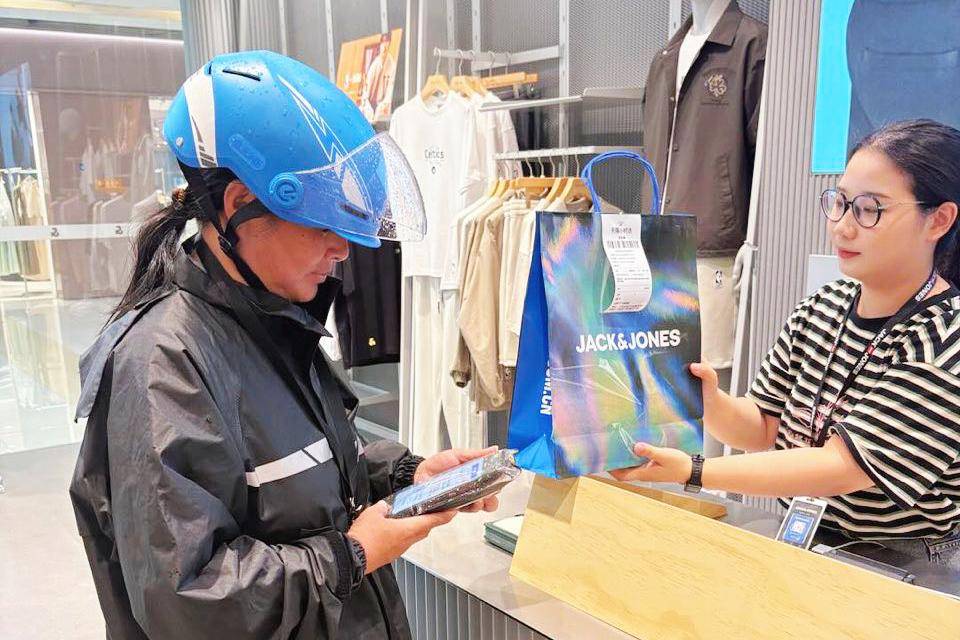
Core Insights - Taobao Flash Sale is experiencing a surge in new brand registrations, with a 110% month-on-month increase in July compared to June, adding over 12,000 new non-food brand stores [1][7] - The platform is enhancing consumer shopping experiences by allowing users to purchase clothing as easily as ordering takeout, with significant growth in orders for brands like JACK & JONES, ONLY, and VERO MODA [1][3] Brand Performance - The entry of brands like MO&Co, Semir, and Qipilang into Taobao Flash Sale is contributing to a rapid increase in sales, with some brands reporting order volume growth exceeding 300% since their launch [1][3] - The best-selling items include T-shirts for men and dresses for women, with jeans being the top-selling item overall, selling over 10,000 units [4] Consumer Behavior - A significant portion of orders (approximately 30%) is driven by urgent needs, such as business trips or unexpected events, highlighting the demand for quick delivery services [3] - The platform has adapted to consumer needs by adjusting store locations to include more business districts, resulting in a notable increase in order volume in urban areas like Beijing and Shenzhen [4][5] Operational Efficiency - The integration of Taobao Flash Sale into brand order systems has improved operational efficiency, with a lower return rate compared to other online channels [5] - The platform is fostering a new retail ecosystem by attracting a diverse range of brands, which is expected to enhance overall sales and profitability for participating merchants [11]
Compared to Estimates, Boot Barn (BOOT) Q1 Earnings: A Look at Key Metrics
ZACKS· 2025-08-01 00:01
Financial Performance - Boot Barn reported revenue of $504.07 million for the quarter ended June 2025, marking a year-over-year increase of 19.1% [1] - The EPS for the same period was $1.74, compared to $1.20 a year ago, indicating significant growth [1] - The reported revenue exceeded the Zacks Consensus Estimate of $495.72 million by 1.68% [1] - The EPS surprise was 12.26% over the consensus estimate of $1.55 [1] Key Metrics - Same Store Sales growth was 9.4%, surpassing the average estimate of 7.2% based on four analysts [4] - Boot Barn opened or acquired 14 stores, matching the average estimate based on two analysts [4] - The average store square footage at the end of the period was 11,220, slightly above the average estimate of 11,183 [4] - The total number of stores operating at the end of the period was 473, consistent with the average estimate [4] - Total retail store square footage at the end of the period was 5.31 million, exceeding the average estimate of 5.29 million [4] Stock Performance - Boot Barn shares returned +10.4% over the past month, outperforming the Zacks S&P 500 composite's +2.7% change [3] - The stock currently holds a Zacks Rank 3 (Hold), suggesting it may perform in line with the broader market in the near term [3]
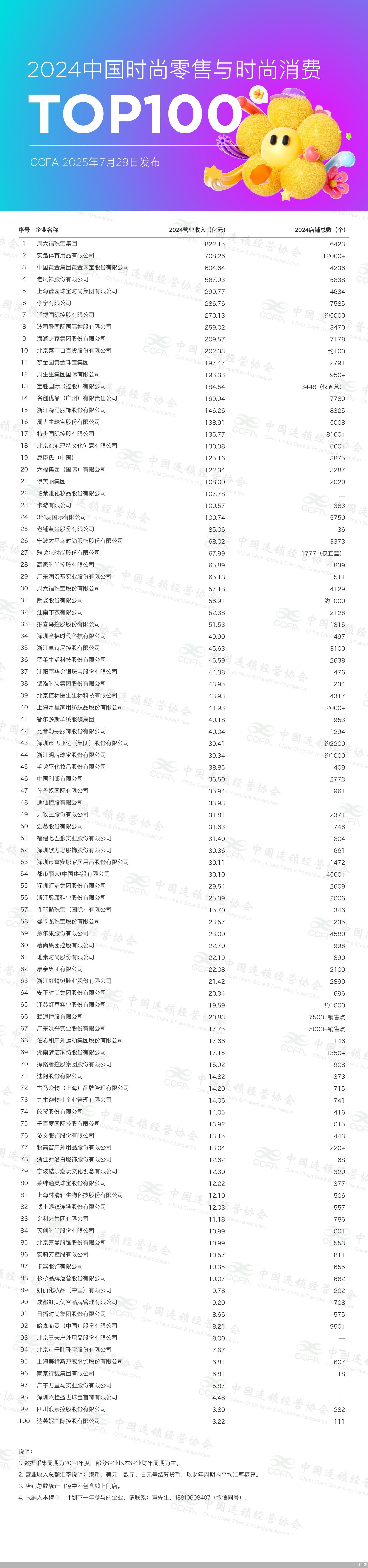
黄金珠宝零售企业占居高位 2024年中国时尚零售与时尚消费TOP100企业营收达8206.8亿元
Bei Jing Shang Bao· 2025-07-30 07:13
Core Insights - The "2024 China Fashion Retail and Fashion Consumption TOP 100" report indicates a decline in overall revenue for the top companies, totaling 820.68 billion yuan, a year-on-year decrease of 2.44% [1] - The total number of stores for these companies also saw a decline, with a year-on-year decrease of 7.50% [1] - Approximately 60% of the companies reported a decrease in revenue, primarily slight declines, while 40% experienced revenue growth, indicating a trend of industry differentiation [1] - Only 37% of the companies managed to increase their store count in 2024, with most companies reducing their number of stores compared to the previous year [1] - Some companies are shifting their focus from expanding store numbers to enhancing store quality to adapt to market changes and strengthen core competitiveness [1] Revenue and Store Count - The overall revenue for the top 100 companies in the fashion retail sector is 820.68 billion yuan, reflecting a 2.44% decrease compared to the previous year [1] - The total number of stores across these companies has decreased by 7.50% year-on-year [1] - A significant portion of companies, nearly 60%, reported a decline in revenue, while 40% achieved growth, showcasing a mixed performance across the industry [1] Strategic Adjustments - Companies are increasingly optimizing resource allocation and adjusting business strategies, focusing on improving store quality rather than merely expanding the number of stores [1] - This strategic shift is aimed at adapting to market changes and enhancing competitive advantages in a challenging retail environment [1]






北京发布暴雨红色预警 京东服饰带来全方位防雨水出行穿搭指南
Zhong Jin Zai Xian· 2025-07-30 02:01
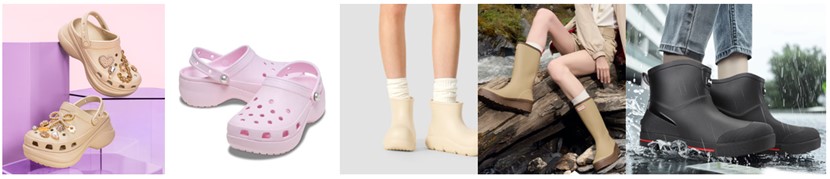
Core Viewpoint - The article emphasizes the importance of appropriate outdoor gear during heavy rainfall, highlighting various products available on JD.com to ensure safety and comfort while navigating wet conditions [1][5]. Group 1: Weather Impact - Continuous heavy rainfall has been reported in multiple regions including Shaanxi, Shanxi, and Hebei, with a red rainstorm warning issued in Beijing, predicting localized heavy to torrential rain from July 28 to 29 [1]. - The article advises minimizing outdoor activities during severe weather and suggests protective gear for those who must go out [5]. Group 2: Recommended Footwear - For outdoor activities in wet conditions, specialized footwear such as creek shoes or sports sandals is recommended, including options like Hoka Hopera creek shoes and ASICS sports sandals, which provide breathability and grip [2]. - Other footwear options include Crocs and BEYS rain boots, designed for water resistance and safety on slippery surfaces [1][2]. Group 3: Recommended Outerwear - A high-performance waterproof and windproof jacket is essential for staying dry during rain, with various options available such as the Explorer brand jackets and North Face jackets, which utilize advanced materials to prevent moisture accumulation [3]. - JD.com offers a wide range of waterproof jackets from brands like Helly Hansen and Columbia, catering to consumers' needs for protection against rain [3].
港股异动 宝胜国际(03813)盈警后跌超7% 预期中期纯利同比减少约44.1%
Jin Rong Jie· 2025-07-30 01:56
Group 1 - The core viewpoint of the article indicates that Baoshan International (03813) has issued a profit warning, leading to a decline of over 7% in its stock price, which is currently down 5.56% at HKD 0.51 with a trading volume of HKD 1.8409 million [1] - The company anticipates a revenue of approximately RMB 9.159 billion and a profit attributable to shareholders of about RMB 188 million for the six months ending June 30, 2025, representing a year-on-year decrease of approximately 8.3% and 44.1% respectively [1] - The announcement highlights that the group is facing a rapidly changing consumer landscape, with weak consumer confidence in mainland China and high inventory levels, resulting in sluggish foot traffic and intense price competition [1] Group 2 - The sales momentum of the retail network has further slowed down, leading to a same-store sales decline of 10% to 20% [1] - Lower-tier cities are also experiencing weak foot traffic, significantly impacting the performance of the group's franchise channels [1] - Despite stringent cost control measures, the decline in sales scale has resulted in operational leverage, compounded by increased discounting in a promotional environment, which has adversely affected the company's profitability [1]
港股异动 | 宝胜国际(03813)盈警后跌超7% 预期中期纯利同比减少约44.1%
智通财经网· 2025-07-30 01:41
Core Viewpoint - Baoshan International (03813) issued a profit warning, leading to a decline of over 7% in its stock price, which is currently down 5.56% at HKD 0.51, with a trading volume of HKD 1.8409 million [1] Financial Performance - The company expects to achieve a revenue of approximately RMB 9.159 billion and a profit attributable to shareholders of about RMB 188 million for the six months ending June 30, 2025, representing a year-on-year decrease of approximately 8.3% and 44.1% respectively [1] Market Conditions - The group is facing a rapidly changing consumer landscape, with weak consumer confidence in mainland China and high inventory levels, resulting in sluggish foot traffic and intense price competition [1] - The sales momentum of the retail network has further slowed, leading to a same-store sales decline of 10% to 20% [1] - Lower-tier cities are also experiencing weak foot traffic, significantly impacting the performance of the group's franchise channels [1] Operational Challenges - Despite ongoing stringent cost control measures, the decline in sales scale has resulted in operational leverage issues, compounded by increased discounting in a promotional environment, which has adversely affected the company's profitability [1]
娃哈哈宏盛因合同纠纷起诉娃哈哈服饰公司
第一财经· 2025-07-29 10:28
浙江娃哈哈服饰有限公司成立于2021年9月,法定代表人为郑道哈,注册资本500万元人民币,经营范围包 括服装服饰批发、服装服饰零售、箱包销售等,由杭州娃哈哈宏盛食品饮料营销有限公司、丽水音速新零 售有限公司、浙江银基贸易有限公司分别持股40%、35%、25%。 爱企查App显示,近日,杭州娃哈哈宏盛食品饮料营销有限公司与浙江娃哈哈服饰有限公司相关合同纠纷案 件新增开庭公告,原告为杭州娃哈哈宏盛食品饮料营销有限公司,该案件将于8月1日在杭州市萧山区人民 法院开庭审理。 ...