水泥制造

Search documents
行业周报:大基建继续维稳经济,建材反内卷进行时-20250817
KAIYUAN SECURITIES· 2025-08-17 10:08
Investment Rating - The investment rating for the construction materials industry is "Positive" (maintained) [1] Core Views - The construction materials sector is benefiting from significant infrastructure projects, such as the establishment of the new Tibet Railway Company with a registered capital of 95 billion yuan, which is expected to drive GDP growth by approximately 0.18 percentage points annually [3] - The report highlights key companies in the consumer building materials segment, including Sankeshu (channel expansion), Dongfang Yuhong (waterproofing leader), Weixing New Materials (high retail business proportion), and Jianlang Hardware [3] - The cement sector is expected to benefit from the National Development and Reform Commission's energy-saving and carbon reduction initiatives, aiming to control cement clinker capacity at around 1.8 billion tons by the end of 2025 [3] - The report also notes the positive impact of "equal tariffs" on glass fiber leaders with overseas production bases, enhancing profitability [3] Summary by Sections Market Performance - The construction materials index increased by 2.88% in the week from August 11 to August 15, 2025, outperforming the CSI 300 index by 0.51 percentage points [4][13] - Over the past three months, the CSI 300 index rose by 8.87%, while the construction materials index increased by 16.67%, outperforming the CSI 300 by 7.80 percentage points [4][13] - In the past year, the CSI 300 index increased by 25.61%, and the construction materials index rose by 35.30%, outperforming the CSI 300 by 9.69 percentage points [4][13] Cement Sector - As of August 15, 2025, the average price of P.O42.5 bulk cement in China was 275.14 yuan/ton, reflecting a 0.52% increase from the previous period [6][23] - The cement clinker inventory ratio was 66.18%, down by 1.30 percentage points [6][23] - Regional price variations were noted, with Northeast China seeing a 2.64% increase, while North China experienced a 0.75% decrease [6][23] Glass Sector - The average spot price of float glass as of August 15, 2025, was 1209.38 yuan/ton, down by 3.97% [6][77] - The average price of photovoltaic glass was 116.41 yuan/weight box, reflecting a slight increase of 0.13% [6][85] - National float glass inventory increased by 118 million weight boxes, a rise of 2.15% [6][79] Glass Fiber Sector - The market prices for various types of glass fiber remained stable, with some flexibility in transactions [6][4] - The report indicates that the glass fiber sector is also experiencing positive trends, with specific companies highlighted for their performance [6][4] Consumer Building Materials - The report notes that raw material prices for consumer building materials are maintaining a slight fluctuation trend [6][4] - Key companies in this segment are also tracked for their valuation performance [6][4]
(活力中国调研行)变废为宝 重庆城市垃圾的“再就业”之路
Zhong Guo Xin Wen Wang· 2025-08-16 06:07
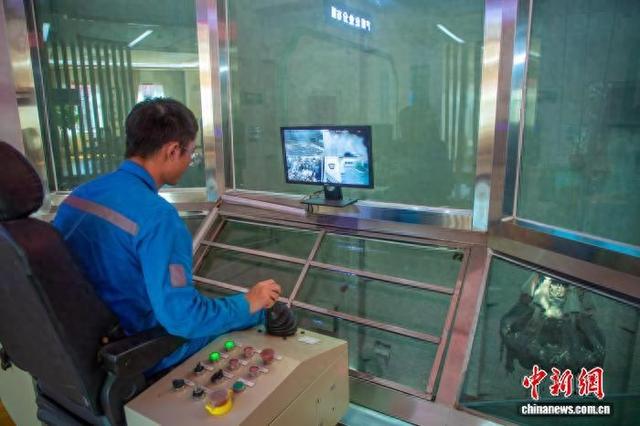
Core Viewpoint - The article highlights the innovative waste management system in Chongqing, where municipal waste is processed and repurposed into resources for cement production, contributing to environmental sustainability and resource efficiency [1][3][8]. Group 1: Waste Processing Technology - The waste processing system in Chongqing can handle 200 tons of municipal waste daily, utilizing cement kilns for collaborative disposal [3]. - The energy generated from waste processing can replace approximately 4% of the thermal energy required in cement production, while about 10% of solid waste can be used as raw materials for cement [3]. Group 2: Environmental Benefits - The high-temperature and alkaline environment of cement kilns effectively decomposes toxic organic chemicals that are typically produced during conventional incineration, addressing significant environmental concerns [5]. - Kitchen waste is also processed, yielding water, organic matter, and inorganic materials, with the latter serving as alternative fuel for cement kilns [5]. Group 3: Contribution to Sustainable Development - The repurposing of various types of waste into resources for cement production exemplifies a model for effective urban waste management, supporting green development in Chongqing [8].

浙江尖峰集团股份有限公司 十二届11次董事会决议公告
Zhong Guo Zheng Quan Bao - Zhong Zheng Wang· 2025-08-16 06:07
Group 1 - The board of directors of Zhejiang Jianfeng Group Co., Ltd. approved the extension of a financial assistance loan to its wholly-owned subsidiary, Guizhou Huangping Jianfeng Cement Co., Ltd., for an outstanding balance of 3.8064 million yuan, extending the repayment period by two years without interest [3][8][17] - The board meeting was held on August 15, 2025, with all nine directors present, and the resolution was passed unanimously with 9 votes in favor [4][9] - The financial assistance provided is not expected to have a significant adverse impact on the company's operations or asset status, and there are no conflicts of interest with shareholders [8][18] Group 2 - Guizhou Huangping Jianfeng Cement Co., Ltd. provided a loan of 23 million yuan to Huangping Urban Construction Investment Co., Ltd. on August 18, 2023, for a two-year term, of which 19.1936 million yuan has been repaid, leaving a balance of 3.8064 million yuan [8][9] - The loan extension is necessary due to ongoing relocation projects related to the raw material mining area, which have not yet been completed [9][17] - The total financial assistance provided to Huangping Urban Construction Investment Co., Ltd. after this extension will amount to 15.8064 million yuan, representing 0.3% of the company's latest audited net assets [18]

浙江尖峰集团股份有限公司关于子公司财务资助余额展期的公告
Shang Hai Zheng Quan Bao· 2025-08-15 19:30
Core Viewpoint - Zhejiang Jianfeng Group Co., Ltd. has announced the extension of a financial assistance loan provided to its wholly-owned subsidiary, Guizhou Huangping Jianfeng Cement Co., Ltd., to support the completion of relocation projects related to the raw material mining area [2][12]. Summary by Sections Financial Assistance Extension Overview - On August 18, 2023, Guizhou Jianfeng provided a loan of 23 million yuan to Huangping Urban Construction Investment Co., Ltd. for a two-year term, with 19.19 million yuan already repaid and a remaining balance of 3.81 million yuan to be extended for another two years without interest [2][3][12]. Details of the Borrower - Huangping Urban Construction Investment Co., Ltd. is a state-owned enterprise with a registered capital of 1.1 billion yuan, established on May 6, 2011, and has total assets of 2.373 billion yuan and a debt-to-asset ratio of 60.85% as of December 31, 2024 [4][5]. Board Meeting and Approval - The extension of the financial assistance was approved unanimously by the board of directors during the 11th meeting of the 12th session on August 15, 2025, with all nine directors present [12][15]. Cumulative Financial Assistance - After the extension, the total financial assistance provided to Huangping Urban Construction Investment Co., Ltd. amounts to 15.81 million yuan, representing 0.3% of the company's latest audited net assets, with no overdue amounts reported [13].
109只个股连续5日或5日以上获主力资金净买入
Zheng Quan Shi Bao Wang· 2025-08-14 03:19
据iFind统计,截至8月13日,沪深两市共有109只个股连续5日或5日以上获主力资金净买入。连续获主 力资金净买入天数最多的股票是青松建化,已连续16个交易日获净买入;连续获主力资金净买入天数较 多的还有保利发展、博汇纸业、兴业银行、济川药业、山东药玻、伊利股份、鼎阳科技、普邦股份等 股,分别获11个、11个、10个、10个、10个、10个、9个、9个交易日净买入。 (文章来源:证券时报网) ...





上峰水泥拟5000万参投半导体光掩模企业
Ju Chao Zi Xun· 2025-08-13 12:43
Core Viewpoint - The company, Shangfeng Cement, announced an investment of 50 million yuan in Guangzhou Newray Photomask Technology Co., Ltd., focusing on the semiconductor sector, which aligns with its strategy in new economy sectors such as semiconductors, new energy, and new materials [1] Investment Details - The investment in Guangzhou Newray Photomask is the third project funded by the Newcun Fund, which was established in partnership with Suzhou Industrial Park Lanpu Venture Capital Management [1] - The Newcun Fund has previously invested a total of 50 million yuan in two projects: Jiaxing Light Dragon Optoelectronics Technology Co., Ltd. and Anhui Yinen Automotive Technology Co., Ltd. [1] Financial Performance - In the first quarter of 2025, the company reported a revenue of 951 million yuan, representing a year-on-year increase of 4.64% [1] - The net profit attributable to the parent company was 79.93 million yuan, showing a significant year-on-year growth of 447.61% [1]

海螺水泥成立新公司 注册资本8000万元
Zheng Quan Shi Bao Wang· 2025-08-13 07:49
Group 1 - The establishment of Hetian Conch Cement Co., Ltd. has been reported, with a registered capital of 80 million yuan [1] - The company's business scope includes sales of cement products, sales of building materials, sales of non-metallic minerals and products, and manufacturing of cement products [1] - Conch Cement indirectly holds 100% ownership of the newly established company [1]
海螺水泥在新疆和田成立3家新公司 注册资本合计5.6亿
Xin Lang Cai Jing· 2025-08-13 07:25
Group 1 - Three new companies have been established: Hetian Conch Cement Co., Ltd., Yutian Conch Cement Co., Ltd., and Moyu Conch Cement Co., Ltd. with registered capital of 80 million RMB, 80 million RMB, and 400 million RMB respectively [1] - The business scope of these companies includes the manufacturing of cement products [1] - All three companies are jointly held by Conch Cement (600585) and its subsidiary Conch (Shaanxi) Holding Co., Ltd. [1]
四川双马股价下跌1.8% 原料药生产基地建设持续推进
Jin Rong Jie· 2025-08-12 20:37
Group 1 - The stock price of Sichuan Shuangma closed at 19.59 yuan on August 12, 2025, down 1.80% from the previous trading day [1] - The trading volume on that day was 109,418 lots, with a total transaction amount of 215 million yuan [1] - Sichuan Shuangma's main business includes cement manufacturing and pharmaceutical health sectors [1] Group 2 - The company has established 10 production lines for peptide active pharmaceutical ingredients at its Hubei Jianxiang base, compliant with EU and FDA standards [1] - An A16 workshop is currently under construction, which is expected to significantly enhance production capacity once completed [1] Group 3 - On August 12, the net outflow of main funds was 18.76 million yuan, with a cumulative net outflow of 51.14 million yuan over the past five days [1]

扩内需政策效应持续显现 7月物价数据释放积极信号
Xin Hua Wang· 2025-08-12 09:31
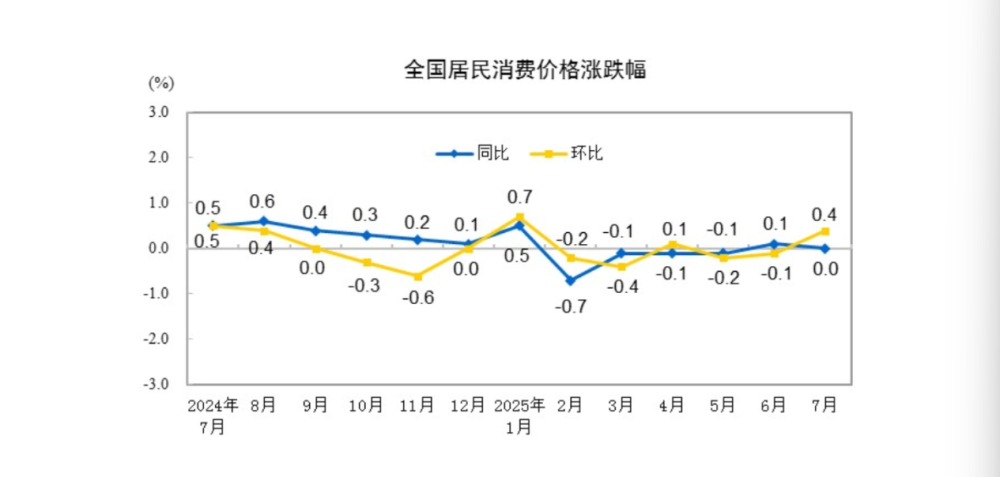
Core Viewpoint - The latest data from the National Bureau of Statistics indicates a shift in the Consumer Price Index (CPI) in July, with a month-on-month increase of 0.4% and a year-on-year stability, signaling positive trends in consumer spending and economic recovery [1][5]. Group 1: Consumer Price Index (CPI) Trends - In July, the service prices rose by 0.6% month-on-month, contributing approximately 0.26 percentage points to the CPI's month-on-month increase, marking a significant factor in the CPI's positive shift [5]. - The core CPI, excluding food and energy prices, saw a year-on-year increase of 0.8%, with the growth rate expanding for three consecutive months [1]. Group 2: Consumer Activity and Promotions - Various regions have launched over 2,000 promotional activities to stimulate consumption during the summer, enhancing consumer engagement and spending [6]. - The "Follow the Movie to Tour Zhejiang" initiative has led to increased visitor numbers at local attractions, boosting related industries such as accommodation and dining [11]. Group 3: Industrial Producer Price Index (PPI) Insights - The PPI showed a month-on-month decline of 0.2% in July, but the rate of decline has narrowed by 0.2 percentage points compared to the previous month, indicating a potential stabilization in industrial pricing [12][18]. - The government is focusing on regulating low-price competition among enterprises to enhance product quality and promote orderly market conditions [15]. Group 4: Supply and Demand Dynamics - Macro policies are being implemented to strengthen new growth drivers in various industries, leading to improved supply-demand relationships and positive price changes [19]. - The demand for high-quality consumer goods is increasing, with significant growth in sales of energy-efficient air conditioning units and smart home appliances [23][24].