Electronics

Search documents
TDK Ventures bets on hardware, deep-tech as it steps up India investments
BusinessLine· 2026-01-19 01:23
Core Insights - TDK Ventures, the corporate venture arm of TDK Corporation, focuses on deep-tech and hardware-led startups globally, with a significant emphasis on India as a strategic market [1][4] Investment Thesis - TDK Ventures was established in 2019 to partner with early-stage founders and startups, leveraging TDK's expertise in material science and process innovation to inform its long-term product roadmap [1] Fund Structure - TDK Ventures manages a total of $500 million across four funds, including a $50 million fund from 2019 and three subsequent $150 million funds, primarily investing at Series A with initial checks up to $5 million and potential follow-ons up to $15 million per company [2] Sector Focus - The firm invests at the intersection of deep-tech and hardware, focusing on two main themes: energy transformation (including new energy generation and storage) and digital transformation (covering semiconductors, mobility, space-tech, robotics, and industrial tech) [3] Importance of India - India is a key market for TDK Ventures, with the company operating five component manufacturing facilities and large battery plants, employing nearly 5,000 people, and having made four investments in local startups [4] Portfolio Companies - TDK Ventures' Indian portfolio includes startups such as Infinite Uptime (industrial AI), Exponent Energy (ultra-fast EV charging), Ultraviolette (electric motorcycles), and a precision agritech company focused on sensor-IoT and AI technologies [4] Views on Deep-Tech Exits - The primary challenge in deep-tech is securing intermediate capital, as monetization signals appear later, although successful IPOs like Ather and Ola Electric demonstrate that hardware-led companies can scale and exit within comparable timelines [5]


十九城产业新坐标·河南经济新方位丨洛阳 硬核智造 连接未来 中航光电定义高端互连新高度
He Nan Ri Bao· 2026-01-18 23:45
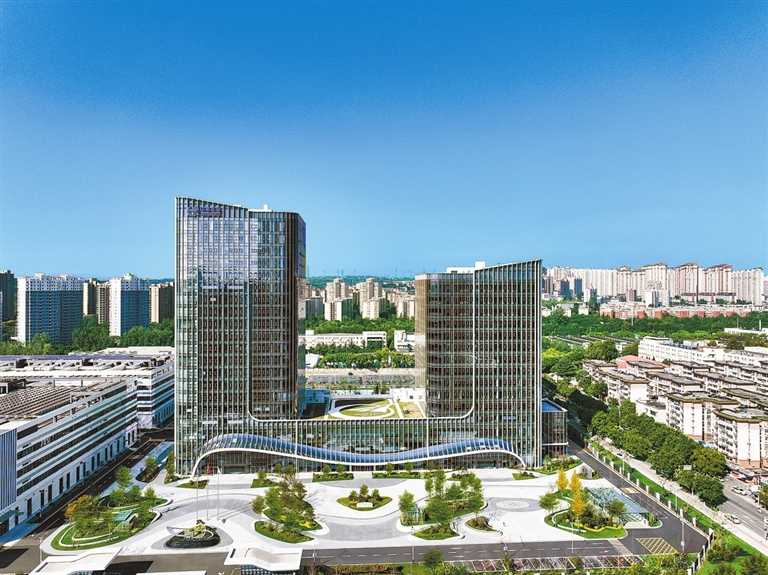
Core Insights - The article highlights the technological advancements made by AVIC Optoelectronics, showcasing a significant reduction in data transfer time from minutes to seconds using their 224Gbps high-speed interface [1] - The establishment of a new high-end interconnect technology industrial community in Luoyang, Henan, is positioned as a strategic hub for innovation and regional industrial upgrading [1][2] Group 1: Project Overview - The project has a total investment of 2.72 billion yuan and commenced construction in October 2023, featuring a global operation center, innovation incubation center, and smart factory [2] - The industrial park aims to create a seamless integration of research, trial production, manufacturing, office, and leisure spaces, forming a complete innovation ecosystem [2] Group 2: Technological Innovations - The smart manufacturing facility utilizes AGV logistics robots and automated systems for material handling, significantly reducing reliance on manual labor [4] - The entire production line is designed for automation, allowing for real-time monitoring and efficient operation [4] Group 3: Employee Well-being and Sustainability - The employee center includes various amenities such as a cafeteria, talent apartments, sports facilities, and a library, promoting a "park-like office" concept [4] - The park emphasizes green and low-carbon initiatives, including a rooftop solar power system generating 3.8 million kWh annually and a rainwater recycling system [5] Group 4: Market Position and Future Goals - The industrial community focuses on the development of high-reliability connectors and microwave photonic devices, with an expected annual production capacity of 3.15 million high-end connectors [5] - AVIC Optoelectronics aims to transition from being a domestic leader to a global frontrunner in the industry, contributing to the establishment of a billion-level industrial cluster [5]


2025年GDP30强看区域经济:长三角10席,珠三角6席,川渝、京津冀各3席
Sou Hu Cai Jing· 2026-01-18 13:44
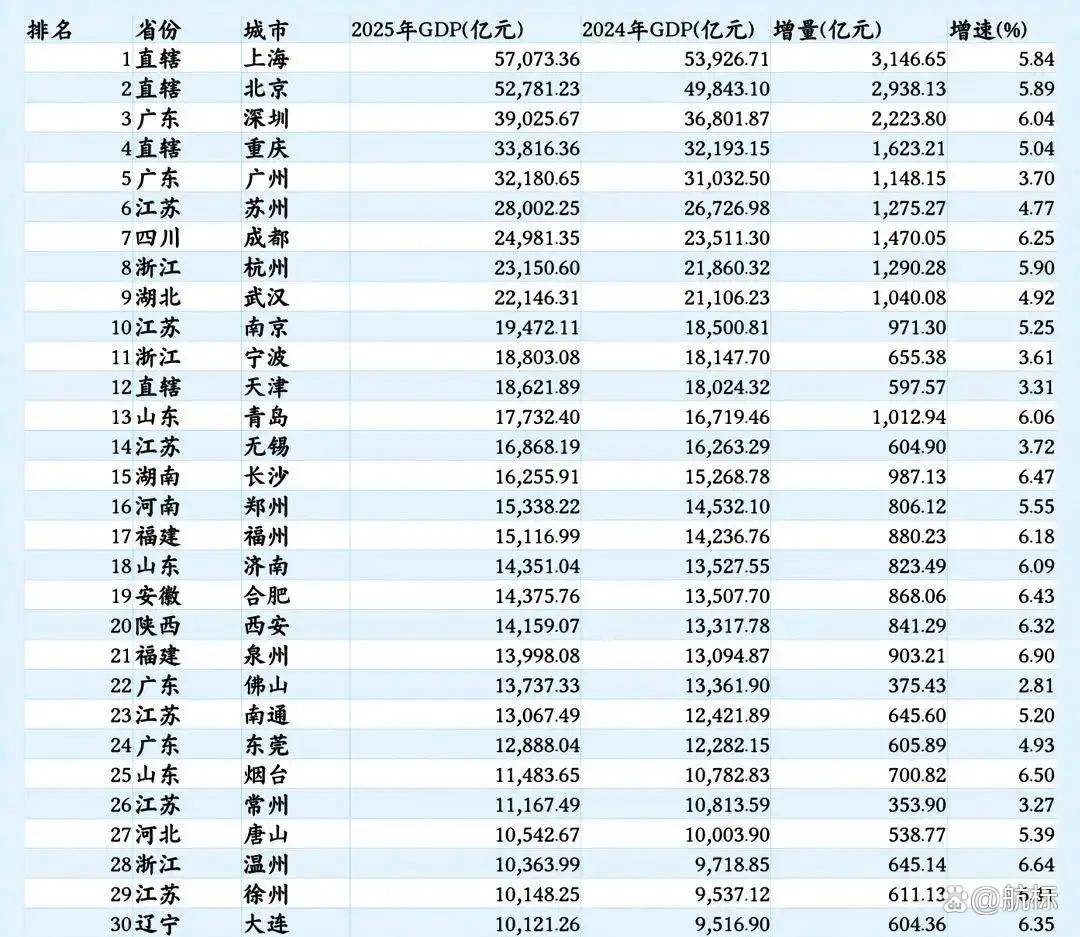
Core Insights - The 2025 GDP ranking of cities shows that the Yangtze River Delta, Pearl River Delta, Chengdu-Chongqing, and Beijing-Tianjin-Hebei economic zones occupy 22 out of 30 positions, accounting for over 80% of the list, reflecting China's economic resilience and regional coordinated development strategy [1] Group 1: Yangtze River Delta - The Yangtze River Delta holds 10 positions in the top 30, with Shanghai leading at a GDP of 57,073.36 billion yuan and a growth of 5.84%, contributing 3,146.65 billion yuan to the total increment [2] - Hangzhou leads the new first-tier cities in the Yangtze River Delta with a growth rate of 5.90%, where the digital economy's core industries account for 37% of its GDP [3] Group 2: Pearl River Delta - The Pearl River Delta has 6 cities in the top 30, with Shenzhen achieving a GDP of 39,025.67 billion yuan and a growth rate of 6.04%, marking it as a dual champion [4] - Dongguan, with a GDP of 12,888.04 billion yuan, shows resilience in its transformation from a "world factory" to a "smart manufacturing hub" [5] Group 3: Chengdu-Chongqing - The Chengdu-Chongqing region has 3 cities in the top 30, with Chengdu leading at a growth rate of 6.25% and an increment of 1,470.05 billion yuan [7] - Chongqing's GDP stands at 33,816.36 billion yuan with a growth rate of 5.04%, indicating challenges in traditional industrial transformation [7] Group 4: Beijing-Tianjin-Hebei - The Beijing-Tianjin-Hebei region has 3 cities in the top 30, with Beijing's GDP at 52,781.23 billion yuan and an increment of 2,938.13 billion yuan [8] - Tianjin shows steady growth at 3.31%, with its biopharmaceutical industry revenue exceeding 800 billion yuan [8] Group 5: Overall Economic Insights - The data reflects the comprehensive results of regional strategic positioning, industrial layout, and infrastructure investment, showcasing differentiated growth across the four economic zones [11]
一块布,卡了英伟达的脖子?
首席商业评论· 2026-01-18 04:41
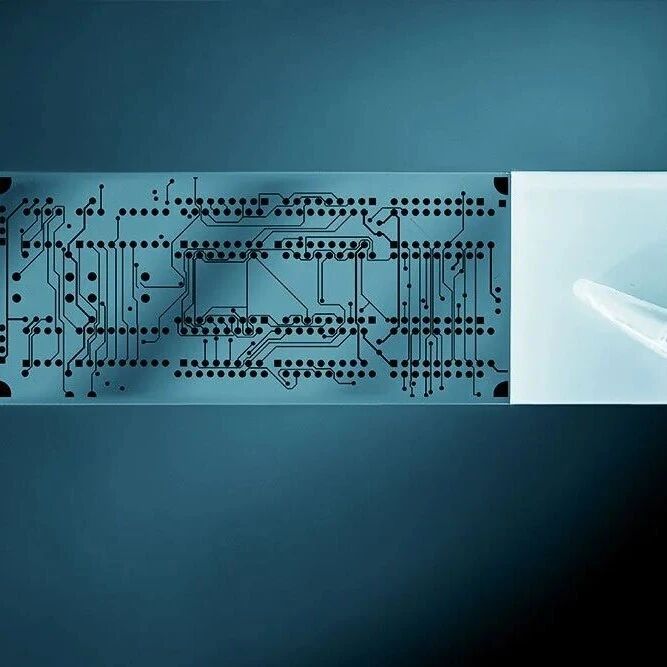
Core Viewpoint - The article emphasizes the critical role of high-end electronic fabric in the AI computing power revolution, highlighting that Japanese companies dominate this market, controlling nearly 70% of the global high-end electronic fabric market, which is essential for AI chip performance [4][6][9]. Group 1: Japanese Dominance in High-End Electronic Fabric - Japanese companies such as Nitto Denko, Asahi Kasei, and AGC dominate the high-end electronic fabric market, which is crucial for AI computing power [6][9]. - These companies have established a significant competitive advantage through decades of research and development, creating a robust patent network that covers the entire production process [9][10]. - The high cost of entry into this market, with investments in production facilities reaching up to 1.5 billion yuan, deters potential competitors, allowing Japanese firms to maintain their market position [9][10]. Group 2: Chinese Companies' Response and Innovations - Chinese companies have begun to challenge the Japanese monopoly, with firms like Honghe Technology and Linzhou Guangyuan making significant advancements in ultra-thin and low-dielectric electronic fabrics [10][11]. - Honghe Technology successfully produced 9-micron ultra-thin electronic fabric in 2021, breaking the long-standing foreign monopoly [10][11]. - Linzhou Guangyuan achieved mass production of low-dielectric fabric in 2021, marking a significant milestone in the industry [11][12]. Group 3: Material Revolution and Future Opportunities - The next generation of quartz electronic fabric is emerging as a critical material for AI applications, providing an opportunity for Chinese companies to leapfrog in technology [12][19]. - Companies like Feilihua are leading the charge in developing M9-level quartz fabric, which has been certified by NVIDIA, thus providing an alternative to Japanese suppliers [12][14]. - The ongoing material revolution is seen as essential for China's technological independence and advancement in various high-tech sectors, including aerospace, new energy, and semiconductors [19][20].

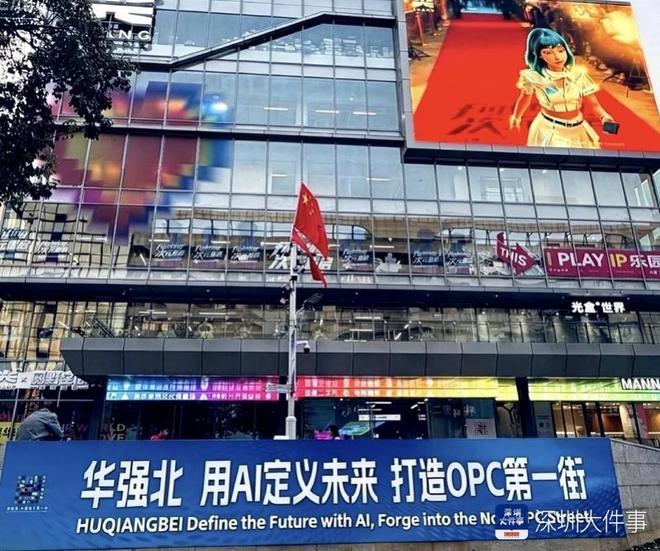
从“一米柜台”到“一人公司”:华强北打造“OPC第一街”
Nan Fang Du Shi Bao· 2026-01-17 11:55
Core Viewpoint - Huaqiangbei is transforming from a "one-meter counter" connecting China's electronics industry to an "AI-enabled One Person Company (OPC)" model, opening a new growth curve in the AI wave [1][9]. Group 1: OPC Model and AI Integration - The OPC model allows individuals to operate as companies, leveraging AI tools to convert client ideas into circuit designs and manage the entire production process within a one-kilometer radius [3][4]. - The "single person + AI" entrepreneurial model is defined as OPC, enabling creators to efficiently handle global orders with minimal resources [3][4]. Group 2: Ecosystem and Infrastructure - Huaqiangbei's success in implementing the OPC model is attributed to a "three-circle interaction" ecosystem, which includes a complete industrial chain from chip production to terminal sales, efficient collaboration of resources, and rapid manufacturing processes [4][6]. - The area has transformed over 100 incubators into "OPC communities," providing shared resources and support for entrepreneurs, thus facilitating a practical market environment [6][8]. Group 3: Policy and Support Initiatives - Huaqiangbei has introduced policies to support OPC entrepreneurship, focusing on creating a comprehensive support system that covers all aspects from space and policy to AI empowerment [8]. - The local government has outlined plans to position Shenzhen as a leading hub for AI innovation and entrepreneurship, with Huaqiangbei at the forefront of this initiative [7][8]. Group 4: Future Outlook - The ongoing evolution of Huaqiangbei aims to redefine production relationships, moving towards a model that combines AI tools with agile supply chains and individual entrepreneurs [7][9]. - The area is committed to fostering a vibrant entrepreneurial ecosystem, enabling innovation to thrive and ensuring that every creative idea can quickly transition to market-ready products [9].
Q-TECH(1478.HK):POSITIVE FY25 PROFIT ALERT; NON-MOBILE(HANDHELD/AUTO/XR)GROWTH TO CONTINUE INTO 2026
Ge Long Hui· 2026-01-17 06:10
Core Viewpoint - Q-Tech announced a positive profit alert for FY25, with expected earnings growth of 400-450% YoY, driven by non-mobile business segments and operational improvements [1][2] Financial Performance - Non-mobile business (IoT, auto, XR) contributed significantly with a 110% YoY growth in CCM shipments, supported by strong demand and leading customer orders [2] - Gross profit margin (GPM) improved due to upgrades in mid-to-high-end mobile CCM and FPM, along with better product mix and operational efficiency [2] - One-off gain from the disposal of 51.08% equity in Q-Tech India and a turnaround in Newmax's performance, reporting a profit of RMB103 million compared to a loss of RMB37 million in FY24 [2] Future Outlook - For FY26, non-mobile CCM is expected to be a key growth driver, with projected revenue growth of 42% YoY, accounting for 40% of Q-Tech's revenue [3] - Smartphone CCM is anticipated to decline by 16% YoY due to industry challenges, including a 7% drop in shipments and a 10% decrease in average selling price (ASP) [3] - Long-term growth is supported by Q-Tech's vertical integration capabilities and a strong global client base, particularly in the drone, handheld camera, XR, AI glasses, and robotics sectors [3] Valuation and Recommendations - The company maintains a BUY rating with a new target price of HK$13.18, based on a 17x FY26E P/E, reflecting adjustments due to smartphone industry headwinds [4][6] - The stock is currently trading at 13.2x/10.5x FY26/27E P/E, which is considered attractive [6] - Upcoming catalysts include potential IoT client wins, orders for handheld and drone products, and guidance for FY26E [6]
6家企业集体遭警示
21世纪经济报道· 2026-01-16 13:56
Core Viewpoint - The article highlights the increasing regulatory scrutiny and penalties faced by companies in Dongguan, particularly ST Huilun, for financial misconduct and inadequate internal controls, indicating a broader trend of compliance issues among listed companies in the region [1][5]. Group 1: Regulatory Actions and Penalties - ST Huilun was fined 11.4 million due to concealing related party fund occupation and committing financial fraud for two consecutive years [1][4]. - ST Quanwei received a regulatory letter for related party fund occupation and internal control deficiencies, with a loan of 1.3 million from a related party identified as a significant issue [2][3]. - Guangdong TuoStar was issued a warning for inaccurate revenue recognition, including prematurely recognizing 7.9686 million in revenue, leading to inflated profits [3][5]. Group 2: Internal Control Issues - ST Huilun failed to disclose fund occupation matters, with a total fund occupation of 28.33 million, representing 5.12% of net assets, and inflated revenues by 25.49 million and 62.33 million in 2021 and 2022 respectively [4][5]. - Entropy Technology was warned for multiple financial disclosure violations, including inaccurate revenue recognition and insufficient bad debt provisions [3][5]. - Guangbo Laser faced regulatory measures for internal control deficiencies, including improper revenue recognition and failure to disclose related party transactions accurately [5][6]. Group 3: Broader Implications - The regulatory actions reflect a growing emphasis on compliance and the need for companies to enhance their governance and internal controls to protect investor interests [5][6]. - The penalties serve as a warning to other companies about the consequences of non-compliance, emphasizing the importance of accurate and reliable information disclosure [6].




诺瓦星云:公司已推出核心集成电路、核心检测装备并不断迭代升级
Zheng Quan Ri Bao Zhi Sheng· 2026-01-16 10:39
Core Viewpoint - Nova Star Cloud emphasizes the importance of MLED technology in expanding LED displays from professional markets to commercial and consumer markets [1] Group 1: Technology Development - The company has launched core integrated circuits and core testing equipment, continuously iterating and upgrading these technologies [1] - Products in the ultra-high-definition video field cover 4K and 8K resolutions, with ongoing research for 16K product technology [1] Group 2: Future Directions - The company will continue to track the development of new technologies in MLED and ultra-high-definition video industries, reinforcing technological innovation [1] - There is a commitment to provide technical support for the large-scale commercialization of MLED applications and the upgrade of the ultra-high-definition video industry [1]
时代电气(688187.SH):目前已有产品中,少量双极器件应用于数据中心机房设备中
Ge Long Hui· 2026-01-16 09:52
Core Viewpoint - The company, Times Electric (688187.SH), is actively monitoring the demand in data center and SST sectors, indicating a strategic focus on these growing markets [1]. Group 1: Company Developments - The company has a small number of bipolar devices currently applied in data center equipment [1]. - Continuous attention is being given to the needs in data centers and SST fields, suggesting potential for future product development and market expansion [1].

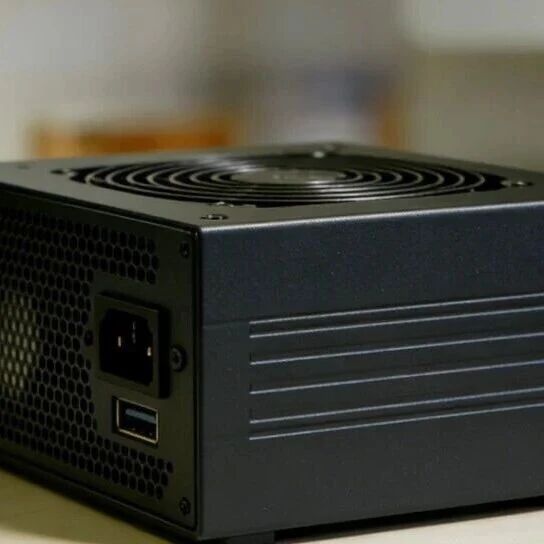
PC硬件全线告急!电源与散热器也扛不住了?装机成本再增
猿大侠· 2026-01-16 04:11
Core Viewpoint - The budget threshold for assembling a computer is expected to rise significantly in the coming months due to price increases in various components, including power supplies and coolers, which were previously considered stable [1][14]. Price Increases in Components - Recent market dynamics indicate that power supplies and coolers are about to experience a significant price surge, following previous increases in memory, hard drives, and graphics cards [1][2]. - A notice from Guangzhou Xinhongzheng Electronics Technology has circulated, stating that core raw material prices for power supplies and coolers have risen sharply due to global market influences [3][5]. Raw Material Price Trends - The core raw materials for power supplies and coolers include copper, silver, tin, and aluminum, all of which have seen substantial price increases since 2025 [5]. - Copper prices have led the surge with an annual increase exceeding 37%, while aluminum prices surpassed 22,000 yuan per ton by the end of 2025, marking the highest level since 2022 [6]. Impact on Various Industries - The rising prices of metal raw materials have been transmitted to multiple industries closely related to daily life, with nearly 20 lighting companies recently announcing price hikes attributed to the soaring costs of base metals like gold, silver, and copper [9]. - Electronic component manufacturers, such as Sunlord Electronics and Fenghua Advanced Technology, have also announced price increases for certain products due to rising raw material costs [9]. Specific Price Adjustments - A price adjustment notice from Delixi Electric indicates a range of price increases for various product categories, with adjustments ranging from 3% to 30% depending on the product type [11]. - The expected cost increases for power supplies are projected to be between 6% and 10%, while coolers may see increases of 6% to 8% [16]. Consumer Implications - The final retail prices may rise more than the cost increases due to the situation with distributors, potentially leading to shortages or the need for consumers to pay higher prices [17][19]. - Starting February 1, all promotional activities will be canceled, and prices may increase further, suggesting that consumers should consider purchasing now to avoid higher costs later [20].