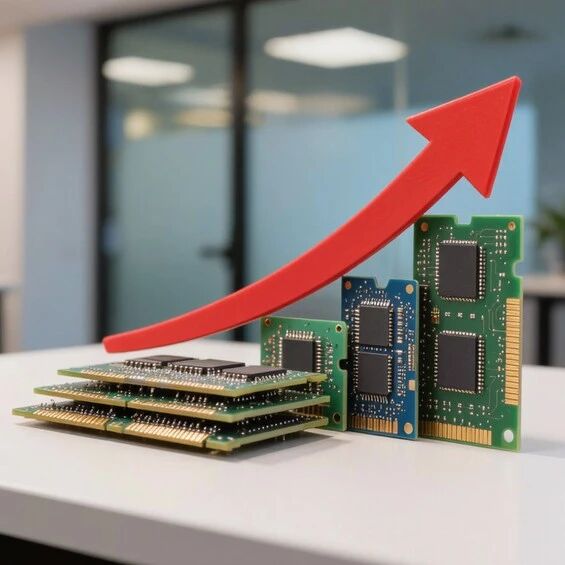
DDR5内存条

Search documents
存储价格崩盘?记者实探华强北
新华网财经· 2026-04-01 06:45
Core Viewpoint - The recent decline in memory prices is attributed to market fluctuations, but the overall supply shortage remains unchanged, with major clients accelerating purchases to mitigate ongoing shortages [1][4][9]. Group 1: Market Dynamics - The memory market has experienced a price drop of 300 to 500 yuan compared to the peak at the end of January, but the notion of widespread panic selling among individual merchants is not entirely accurate [1][4]. - The price of DDR5 32G memory modules is influenced by various factors, with current market prices for popular models ranging from 2600 to 2800 yuan, reflecting a decrease of 300 to 500 yuan from previous highs [6][8]. - Reports of panic selling in the market are linked to a new AI memory compression technology introduced by Google, which has caused some fear among traders, although the actual impact on prices has been limited [5][9]. Group 2: Supply and Demand - The storage market is expected to remain in a state of "tight balance" or even "hard shortage" for at least the next 24 months, driven by the increasing demand for AI applications [11]. - The core driver of the current price surge is the shift in demand from traditional consumer electronics to AI-related needs, which has created a structural mismatch between supply and demand [9][10]. - Analysts predict that DRAM prices will continue to rise until 2027, primarily due to high visibility in data center infrastructure demand from cloud service providers [10].


内存涨价潮要结束了?“最痛苦的时刻还没来”
虎嗅APP· 2026-03-31 00:31
Core Viewpoint - The article discusses the recent price fluctuations in memory chips, particularly DDR5 and DDR4, highlighting a significant price drop in DDR5 but a mixed market response, indicating that the decline is not widespread and may not reflect a true supply-demand shift [5][6]. Group 1: Price Trends and Market Dynamics - Recent reports indicate that DDR5 memory prices have dropped by hundreds to over a thousand yuan, but this is not a universal trend across the market [5]. - The average transaction price for DDR5 on the second-hand market is around 1000 yuan, reflecting a decrease of 80 yuan from the previous week, while DDR4 prices have increased by 30 yuan to 415 yuan [5]. - Analysts suggest that the slight price decrease is influenced by market supply-demand dynamics and inventory holding behavior rather than a fundamental shift in supply-demand balance [6]. Group 2: Future Outlook and Industry Insights - Silicon Motion's CEO predicts that 2026 will be a challenging year for shortages and price increases, with 2027 expected to be even worse [6][16]. - The price of DRAM and NAND Flash has reached the highest levels since 2016, with some models experiencing cumulative increases of up to 369% [8]. - The rising costs of memory chips are significantly impacting the BOM (Bill of Materials) for smartphones, with memory now accounting for over 20% of costs, and in some mid-range models, this figure approaches 30-40% [9]. Group 3: Impact on Major Companies - Major smartphone manufacturers like Xiaomi are feeling the pressure from rising memory prices, with forecasts indicating that global memory chip prices in Q1 are approximately four times higher than the same period last year [9]. - Price adjustments have been observed across various smartphone brands, with Samsung, OPPO, and vivo all announcing price increases for their models [9]. - The ongoing memory price surge has led to strategic shifts, with some companies like Meizu halting new product development due to unsustainable costs [9]. Group 4: AI's Role in Market Changes - The rapid growth of AI infrastructure is driving unprecedented demand for storage solutions, leading to severe shortages in DRAM and NAND [12][13]. - North American cloud service providers are significantly impacting the supply chain by purchasing large quantities of memory resources, exacerbating shortages for other sectors [13]. - The shift in demand towards high-bandwidth memory (HBM) is causing traditional consumer electronics to face resource allocation challenges, as major manufacturers prioritize HBM production over standard memory chips [13][14]. Group 5: Long-term Industry Challenges - The cyclical nature of the memory market is being disrupted, with traditional analysis frameworks failing to predict the current crisis [16]. - Supply chain constraints and cautious capital expenditure from NAND manufacturers are expected to prolong the current shortage and price increases [16][17]. - The article emphasizes that the ongoing crisis is fundamentally a resource "crowding out" effect caused by AI infrastructure demands, leading to significant challenges for traditional consumer electronics [17][21].



【早报】法案通过!伊朗:拟对霍尔木兹海峡征收通行费;美油近四年来首次站上100美元
财联社· 2026-03-30 23:12
Macro News - The Chinese Ministry of Foreign Affairs emphasized that dialogue with Japan regarding Taiwan should respect mutual interests and adhere to existing agreements [4] - The State Administration for Market Regulation announced measures to combat "involution" in key industries such as platform economy, photovoltaic, lithium batteries, and new energy vehicles [4] - U.S. President Trump threatened to destroy Iran's energy infrastructure if a deal is not reached soon, specifically targeting power plants, oil wells, and desalination facilities [4][5] - Iran's parliament approved a bill to charge fees for ships passing through the Strait of Hormuz, which will be implemented in Iranian rials and will prohibit U.S. and Israeli vessels from passing [4] Industry News - The World Data Organization was established in Beijing, aiming to bridge the data gap and enhance the digital economy [8] - The demand for various types of aviation engines in China is expected to exceed 11,600 units over the next 20 years, with a market value of over 85.17 billion yuan [8] - Samsung Electronics has completed the first phase of process upgrades at its Xi'an factory, transitioning from traditional 128-layer NAND flash to mass production of 236-layer products [9] - Morgan Stanley analysts reported that the oil market is depleting its buffer stocks, with significant production and refining capacities currently offline [9] - The aluminum price on the London Metal Exchange (LME) rose significantly due to attacks on major aluminum plants in the UAE and Bahrain [23] Company News - Guizhou Moutai announced an increase in the sales contract price of its 53-degree Flying Moutai from 1,169 yuan to 1,269 yuan per bottle [11][12] - China Merchants Energy announced a total contract value of approximately 8.566 billion yuan for the construction of 10 VLCC oil tankers [13] - Midea Group plans to repurchase A-shares worth between 6.5 billion and 13 billion yuan [14] - Agricultural Bank of China reported a net profit of 292 billion yuan for 2025, a year-on-year increase of 3.3% [19] - China Bank reported a net profit of 243.021 billion yuan for 2025, a year-on-year increase of 2.18% [20]






DDR 5,开始崩了?
半导体芯闻· 2026-03-30 10:36
Core Viewpoint - The recent significant price drop in DDR5 memory in both domestic and international markets indicates a potential shift in supply and demand dynamics, influenced by technological advancements and market reactions [1][2][3]. Group 1: Domestic Market Trends - In late March, the price of mainstream 16GB DDR5 memory in the domestic market fell from 1000 yuan to around 700 yuan, while 32GB kits dropped by 27% from 3000 yuan to 2200 yuan within a month [1]. - A wholesale dealer reported a drastic price drop, with a single day seeing a decline of over 100 yuan for a popular 16GB memory module, attributing the decline to reduced demand as prices had risen too high [1]. - Sales volume for memory products has reportedly decreased by over 60% compared to the period before November last year [1]. Group 2: International Market Dynamics - In the U.S., major e-commerce platforms like Amazon and Newegg have seen DDR5 memory prices drop significantly, with some products experiencing price reductions of up to 29% [2]. - The introduction of Google's TurboQuant memory compression technology has raised concerns about a potential sharp decline in AI-related memory demand, impacting major memory manufacturers like Micron and Western Digital [2]. - Morgan Stanley argues that the market is overlooking the economic principle that efficiency improvements can lead to overall growth, suggesting that reduced costs in AI memory could spur new applications and increase demand [2]. Group 3: Technological Impact and Future Outlook - TurboQuant primarily optimizes inference caching and has limited impact on HBM (High Bandwidth Memory), which is crucial for AI training [3]. - The three major DRAM manufacturers (Samsung, SK Hynix, Micron) are likely to continue focusing on high-margin data center and HBM products, keeping supply tight for conventional DDR products aimed at smartphones and PCs [3]. - The recent price drop in DDR5 is viewed as a short-term reaction by spot traders to technological changes rather than a fundamental shift in market supply and demand [3]. Group 4: European Market Insights - In Germany, the average price of 20 DDR5 memory products decreased by 7.2% in March, with some products seeing reductions of up to 10% [5]. - Despite the recent price drops, DDR5 memory prices remain significantly higher than last year, with an average increase of 308% compared to July of the previous year [5]. - SSD prices have increased by 3.4%, while graphics card prices have decreased by 3.4% [5].
存储模组厂三巨头业绩狂飙,谁在靠周期?谁在靠能力?
芯世相· 2026-03-24 06:53
Core Viewpoint - The storage industry is experiencing a significant upward trend, with companies like Baiwei Storage reporting impressive profit forecasts, indicating a potential revaluation of the sector [6][8]. Group 1: Monthly Performance Forecasts - Baiwei Storage announced a monthly performance forecast for January-February 2026, expecting a net profit of 1.5 to 1.8 billion yuan, nearly double its total net profit of 867 million yuan for the entire year of 2025 [8]. - The proactive disclosure of monthly operational data is uncommon in the A-share market, reflecting the company's urgency to stabilize its market value amid declining storage sector performance [8][9]. - Analysts caution that financial data can be manipulated, especially in cyclical industries like storage, where profit recognition can vary significantly across reporting periods [8][9]. Group 2: Inventory Levels - High inventory levels are a common characteristic among major storage module manufacturers, with Baiwei Storage's inventory reaching 5.695 billion yuan (43.16% of total assets) and Jiangbolong's at 8.517 billion yuan (43.68% of total assets) as of Q3 2025 [10]. - The inventory serves as a strategic bet on price cycles, where higher inventory can lead to quicker profit realization during price increases but also poses risks during downturns [10][12]. - Analysts highlight that while increased inventory can enhance profit elasticity, it also exposes companies to risks associated with price declines and inventory depreciation [15][16]. Group 3: Expansion Strategies - Major storage manufacturers are aggressively expanding production capacities, with companies like Demingli planning to raise 3.2 billion yuan for new solid-state drive and memory production, while Jiangbolong aims to raise up to 3.7 billion yuan for AI storage and chip development [17][18]. - The expansion plans are synchronized across the industry, with a focus on increasing capacity and moving into higher value-added segments [18]. - However, the timing of these expansions raises concerns about potential oversupply if demand does not keep pace, as seen in past cycles where rapid expansion led to market imbalances [20][21]. Group 4: Profitability Analysis - The storage industry is witnessing a recovery in profits driven primarily by price increases, with DDR5 memory prices rising over 300% [22]. - Baiwei Storage's profit growth is attributed to both price increases and structural growth from AI-related products, while Jiangbolong benefits from cost optimization through in-house chip development [25][27]. - In contrast, Demingli's rapid revenue growth is accompanied by declining profit margins, raising concerns about the sustainability of its profitability amid a cyclical industry [28][30].

内存暴涨,华强北姐弟半年猛赚400亿
创业邦· 2026-03-22 10:15
Core Viewpoint - The article discusses the significant price increases in the semiconductor storage market, particularly highlighting the remarkable growth of Shenzhen Jiangbolong, which has become a leading player in the industry due to strategic decisions and market dynamics [4][6][40]. Group 1: Market Trends - In 2025, gold prices increased by 65%, copper by 42%, and silver by 147.8%, but the price of DDR5 memory modules surged by 300%, with a single 256G module exceeding 40,000 yuan [4][5]. - The semiconductor storage market has experienced substantial price hikes since the second half of 2025, with Jiangbolong's market capitalization reaching 150.6 billion yuan in March 2026, making it the top independent storage manufacturer in China and second globally [6][40]. Group 2: Company History and Development - Jiangbolong was founded in 1999 by siblings Cai Huabo and Cai Lijiang, starting from a small counter in Huaqiangbei, focusing on the trade of storage products [9][10]. - The company initially faced the cyclical nature of the storage industry, experiencing both significant profits and losses due to market fluctuations [11][14]. - In 2011, Jiangbolong launched its own brand, FORESEE, targeting the enterprise market and later attempted to enter the consumer market through partnerships, which proved challenging [22][23]. Group 3: Strategic Shifts - To mitigate the risks associated with trading and manufacturing, Jiangbolong transitioned to a manufacturing model and focused on developing its own technology and products [15][19]. - The company made a significant acquisition in 2017 by purchasing the Lexar brand from Micron Technology, which tripled its sales revenue and marked a pivotal moment in its growth strategy [23][24]. - Jiangbolong has invested heavily in R&D, increasing its budget from 219 million yuan to 910 million yuan between 2020 and 2024, and expanding its technical workforce significantly [29][30]. Group 4: Future Outlook - The company is preparing for a new cycle of price increases in the storage industry, driven by the explosive demand from the AI sector, with expected revenue in 2025 projected to reach 22.5-23 billion yuan, a year-on-year increase of 150.66%-210.82% [36][40]. - Jiangbolong's strategic initiatives, including building a robust inventory and enhancing its technological capabilities, position it well to navigate future market fluctuations and aim for a top-three global ranking in the storage industry [33][40].

内存暴涨,华强北姐弟半年猛赚400亿
36氪· 2026-03-21 13:35
Core Viewpoint - The article highlights the remarkable growth of Jiangbolong, a semiconductor storage company that emerged from Huaqiangbei, showcasing its journey from a small trading business to a major player in the global storage market, driven by strategic shifts and market dynamics [3][6][51]. Group 1: Market Dynamics - In 2025, significant price increases were observed in various commodities, with gold rising by 65%, copper by 42%, and silver by 147.8%, but the most notable was the 300% increase in memory prices [3][4]. - The semiconductor storage market experienced substantial price hikes starting in the second half of 2025, with DRAM prices expected to rise by approximately 46.9% and NAND Flash prices by about 56.6% [5][49]. Group 2: Company Growth and Strategy - Jiangbolong's market capitalization soared to 150.6 billion yuan in March 2026, making it the largest independent storage manufacturer in China and the second globally, with the founders' wealth increasing significantly [6][51]. - The company transitioned from a trading model to manufacturing, driven by the need to mitigate risks associated with market volatility and to establish a competitive edge through proprietary technology [18][23]. Group 3: Historical Context and Founding - The founders, Cai Huabo and Cai Lijiang, started Jiangbolong in 1999 from a small booth in Huaqiangbei, initially focusing on trading storage products [10][11]. - The company faced significant challenges due to the cyclical nature of the storage industry, which is characterized by unpredictable demand and supply mismatches, often referred to as the "pig cycle" [12][14]. Group 4: Strategic Shifts and Innovations - Jiangbolong adopted a strategy of private label manufacturing to buffer against market fluctuations, which proved successful during the 2008 financial crisis [20]. - The launch of the brand FORESEE in 2011 marked a significant milestone, allowing Jiangbolong to penetrate the enterprise market and secure large orders from major companies [25][27]. Group 5: Mergers and Acquisitions - In 2017, Jiangbolong acquired the high-end consumer storage brand Lexar from Micron Technology, a move that significantly boosted its market presence and revenue [28][30]. - Following the acquisition, Jiangbolong's revenue surged from 4.228 billion yuan to 9.74 billion yuan over four years, reflecting the success of its strategic initiatives [30]. Group 6: Future Outlook and Challenges - Jiangbolong aims to become one of the top three storage brands globally, necessitating continuous revenue and profit growth amidst industry challenges [31][34]. - The company is focusing on building a robust supply chain and increasing its inventory to mitigate risks associated with market volatility, with stock levels reaching 8.517 billion yuan by Q3 2025 [45].
内存暴涨,华强北姐弟半年猛赚400亿
商业洞察· 2026-03-21 09:22
Core Viewpoint - The article discusses the significant price increases in the semiconductor storage market, particularly highlighting the success of Shenzhen Jiangbolong Electronics Co., Ltd. (江波龙) as a leading player in this sector, achieving remarkable growth and market position due to strategic decisions and market dynamics [4][5][43]. Group 1: Market Trends - In 2025, gold prices increased by 65%, copper by 42%, and silver by 147.8%, but the price of DDR5 memory modules surged by 300%, with a single 256G module exceeding 40,000 yuan [4][5]. - The semiconductor storage market has experienced substantial price hikes since the second half of 2025, driven by demand from the AI industry [39][42]. Group 2: Company Background - Jiangbolong was founded in 1999 by siblings Cai Huabo and Cai Lijiang, starting from a small counter in Huaqiangbei, focusing on the trade of storage products [9][10]. - The company initially faced the cyclical nature of the storage industry, experiencing both significant profits and losses due to market fluctuations [12][14]. Group 3: Strategic Shifts - To mitigate the risks associated with trading, Jiangbolong transitioned from a trading model to manufacturing, emphasizing the importance of having its own brand and production capabilities [20][21]. - In 2011, Jiangbolong launched its own brand, FORESEE, targeting the enterprise market and later attempted to penetrate the consumer market [23][24]. Group 4: Mergers and Acquisitions - In 2017, Jiangbolong acquired the high-end consumer storage brand Lexar from Micron Technology, significantly increasing its market presence and revenue [24][25]. - Following the acquisition, Jiangbolong's revenue grew from 4.228 billion yuan to 9.74 billion yuan within four years, marking a growth of over 130% [24][43]. Group 5: Future Outlook - Jiangbolong aims to become one of the top three storage brands globally, with a focus on continuous revenue and profit growth [25][43]. - The company has increased its R&D investment significantly, from 219 million yuan to 910 million yuan between 2020 and 2024, to build competitive advantages [31][32]. - As of the third quarter of 2025, Jiangbolong's inventory reached 8.517 billion yuan, positioning the company to better withstand market fluctuations [36][43].

A股存储模组厂三巨头业绩狂飙,谁在靠周期?谁在靠能力?
雷峰网· 2026-03-10 03:47
Core Viewpoint - The storage industry is experiencing high inventory, high profits, and high expansion, indicating a strong cyclical trend that exceeds many expectations [2][3]. Group 1: High Inventory - Inventory in the storage industry is not just an operational metric but a bet on price cycles, with high inventory leading to quicker profit release during price increases and greater losses during price declines [4][5]. - As of Q3 2025, major storage companies like Baiwei and Jiangbolong have inventory levels at historical highs, with Baiwei's inventory at 5.695 billion yuan (43.16% of total assets) and Jiangbolong's at 8.517 billion yuan (43.68% of total assets) [4]. - Demingli's aggressive inventory expansion shows 7.058 billion yuan in inventory (65.05% of total assets) and a significant increase in contract liabilities, indicating growth in on-hand orders [5][6]. Group 2: High Expansion - The current recovery in storage prices has prompted major storage manufacturers to initiate expansion plans, with significant investments in new production capacities [10][11]. - Baiwei, Jiangbolong, and Demingli are all pursuing expansion strategies, with projects requiring 2-3 years to complete, leading to a potential mismatch between supply and demand cycles [12][13]. - The expansion is driven by anticipated growth in AI-related storage demand, which is expected to create a substantial and sustained market need [13][14]. Group 3: High Profits - The storage industry is witnessing a profit recovery driven primarily by price cycles, with DDR5 memory prices increasing over 300%, allowing companies to release profits from previously low-cost inventory [18][19]. - Baiwei's profit growth is attributed to both price increases and structural growth from AI terminal markets, with projected revenue from AI-related products reaching 960 million yuan in 2025 [21]. - Jiangbolong's profitability is linked to cost optimization through self-developed control chips, while Demingli's rapid revenue growth is accompanied by declining profit margins, raising concerns about the sustainability of its profit structure [22][24].

中信证券:继续看好存储需求超预期 且供不应求将持续至2027年上半年
Zhi Tong Cai Jing· 2026-03-07 01:13
Core Viewpoint - The storage industry remains in a high state of prosperity, driven by strong demand and better-than-expected performance from key players like Kioxia and Bawei Storage, with expectations of supply shortages continuing into the first half of 2027 [1][8]. Price Review - DRAM prices showed a mixed trend in February, with spot prices fluctuating between -3% to +12%, while contract prices for DDR5 and DDR4 increased by 4% and 8% respectively [1]. - NAND Flash prices continued to rise significantly in February, with spot prices increasing by 10% to 26% and contract prices up by 37% to 67% [1]. - Module prices for DDR4/5 remained stable, while SSD prices increased by 0% to 13% and mobile storage prices rose by 10% to 25% [2]. Price Outlook - DRAM contract prices are expected to rise by 90% to 95% in Q1, with major manufacturers like Samsung and SK Hynix planning further price increases in Q2 [2]. - NAND Flash prices are projected to increase by 85% to 90% in Q1 due to strong demand from AI servers, surpassing previous expectations of 55% to 60% [2]. Demand Assessment from Overseas Manufacturers - SK Hynix anticipates a year-on-year growth of over 20% in DRAM bit demand and 15% to 20% in NAND bit demand for 2026, with inventory levels at approximately four weeks [4]. - SanDisk expects data center bit demand to grow by over 60% in 2026 [4]. - Kioxia forecasts a long-term CAGR of about 20% for NAND market bit demand, with significant revenue growth expected in FY4Q25 [4]. Domestic Storage Company Performance Expectations - Bawei Storage projects revenue of 4 to 4.5 billion yuan for January-February, representing a year-on-year increase of 340% to 395%, with net profit expected to rise by 922% to 1086% [5].